
Five weeks after the Devana Kandu deaths: what the recovery divers saw and what investigators want
Probes into the Maldives' deadliest diving incident converge on a camera.
Artwork: Dosain
11 Jun, 15:36
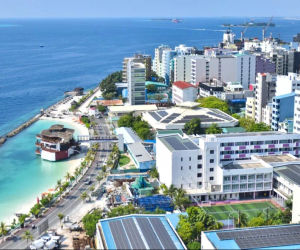
Five weeks ago today, five Italian scuba divers died inside Devana Kandu, a submerged cave system off the Alimatha resort island in Vaavu atoll. Two days later, Coast Guard Sergeant First Class Mohamed Mahudhee, 43, died during the recovery operation. A Finnish technical-diving team dispatched by DAN Europe recovered all five Italian bodies over four operational days between May 18 and 21.
In the weeks since, the focus has shifted to parallel investigations in Rome and Malé and to the unanswered question of how a group of recreational divers came to be 60 metres down inside an overhead environment they were neither equipped nor permitted to enter.
What Rome is chasing
Prosecutors in Rome have sent Maldivian authorities an international rogatory – a formal request for judicial cooperation – seeking the return of the equipment the five divers used, together with their personal belongings.
The most consequential item is a camera. Investigators want the GoPro recovered from inside the cave, which they regard as essential to reconstructing what happened at depth. The recovery team also retrieved the group's underwater video cameras during the operation.
Separately, the Genoa Flying Squad has seized mobile phones, computers, tablets, USB drives and a hard drive belonging to the victims. According to Corriere della Sera, the devices were brought back to Italy by Stefano Vanin, an associate professor of zoology at the University of Genoa who had been aboard the same livea-board, the Duke of York, as the group that died.
The autopsies, conducted at Gallarate hospital, were completed on May 26 and found no injuries or trauma, according to Giuseppe Pugliese, a lawyer for the Montefalcone family, leaving the cause of death to be established by toxicology.
Inside the cave: the recoverers' account
The Finnish divers have been speaking to the media, providing the first expert eyewitness account of conditions inside Devana Kandu.
Sami Paakkarinen told Italian state broadcaster TG1 that the group was "too deep, in a place where they were not supposed to be." Footage the recovery team shot inside the cave – showing the route from the first, light-filled chamber into the dark second chamber – aired on 28 May. DAN Europe asked media not to publish images of the recovered bodies or the recovery itself.
Paakkarinen described finding the victims through a tunnel that was not marked on the cave map, following marks in the sand. He has said he intends to return to the Maldives to survey the cave properly, arguing that an accurate map is the only way to prevent further deaths at the site.
Grönqvist told Finnish public broadcaster Yle that the divers had broken multiple rules before they ever entered the cave, whose entrance lies at about 55 metres, well below the Maldives' 30-metre recreational limit. They carried standard recreational compressed-air cylinders – "tourist tanks," in his description – rather than technical equipment. At 60 metres, such a tank lasts tens of minutes, with additional gas needed for the ascent. Two of the divers wore only thin neoprene over swimwear.
In his assessment, the critical error was the failure to lay a guideline, the cardinal rule of cave diving. Fins stir up sediment. Without a line, divers who turn back may find the way out has vanished into silt. The four divers found deep inside the cave were clustered together in a dead-end side passage. "They couldn't see anything anymore, and their tanks gradually ran out of air," Grönqvist said.
The Finnish team located the bodies with about five minutes of search time remaining before they would have been forced to surface.
The university question
In Italy, the dispute over who sanctioned the dive has sharpened around the University of Genoa. Lawyers for the victims' families argue the Maldives dives were tied to the university's academic activity and conducted with its knowledge on a recurring basis. The university has reactivated the online scientific profiles of Monica Montefalcone, the marine ecology professor who led the group, and researcher Muriel Oddenino, a step family lawyers may read as institutional acknowledgment, though the university has not accepted that the fatal dive was university business.
Mohamed Hussain Shareef 'Mundhu,' the Maldives government's chief spokesman, said in May that the group had been issued a diving permit but that authorities did not know the expedition would involve cave diving, and that the government's investigation would focus on whether the organisers took the correct precautions. Italian media reporting subsequently established that the permit allowed dives to 50 metres, 20 metres beyond the recreational limit, but shallower than the cave's interior.
Three academics from Montefalcone's department have been interviewed by Italian investigators conducting the inquiry running parallel to the Maldivian probe, according to Italian media reports.
The Maldivian side
In response to questions from the Maldives Independent, the presidential spokesman said all matters raised were "related to investigations" and that he could not provide any updates.
The questions included whether the government's inquiry announced in May has concluded or has a timeline; whether Maldivian authorities have received the rogatory from Rome and whether the divers' equipment and the camera recovered from the cave will be returned; and the status of any MNDF review of the recovery dive in which Sergeant Mahudhee died.
The six who died
The five Italians were Monica Montefalcone, 51, professor of marine ecology at the University of Genoa; her daughter Giorgia Sommacal, 23; Muriel Oddenino, 31, a researcher at the university; Federico Gualtieri, a recent graduate in marine biology and ecology; and Gianluca Benedetti, 44, a diving instructor and manager with the tour operator running the trip. Benedetti's body was recovered near the cave entrance on 15 May by divers from safari vessels assisting the search; the other four were found together deep inside the cave. Sergeant First Class Mohamed Mahudhee of the MNDF Coast Guard, who died on May 16, had briefed President Dr Mohamed Muizzu at the site the day before his final dive.
Update, 6 August: Sergeant Mahudhee's family has publicly disputed the recorded cause of death, and hospital records show he had no pulse from the moment he surfaced. Read our investigation.
Discussion
No comments yet. Be the first to share your thoughts!
No comments yet. Be the first to join the conversation!
Join the Conversation
Sign in to share your thoughts under an alias and take part in the discussion. Independent journalism thrives on open, respectful debate — your voice matters.
Support Independent Journalism
Help us keep the news free and fearless
Give once
$
or
Become a memberfrom $5/month