
The Devana Kandu tragedy: criminal probe, regulatory gaps, and the questions left unanswered

How a coral research trip ended in the country's worst diving disaster.
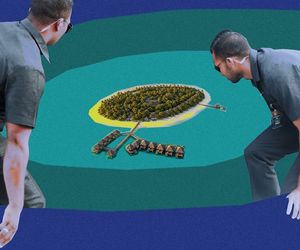
Artwork: Dosain

Artwork: Dosain

1 hour ago

What happened

Five Italian tourists died on the afternoon of Thursday, May 14, inside Devana Kandu (also referred to as Dhekunu Kandu), a submerged cave system off the resort island of Alimatha in Vaavu atoll. The cave mouth begins at around 50 to 58 metres below the surface. Its three chambers extend about 200 metres into the rock and reach a maximum depth of about 70 metres, according to the chief government spokesman Mohamed Hussain Shareef. The Maldives' legal limit for recreational diving, set under the 2003 recreational diving regulation, is 30 metres.
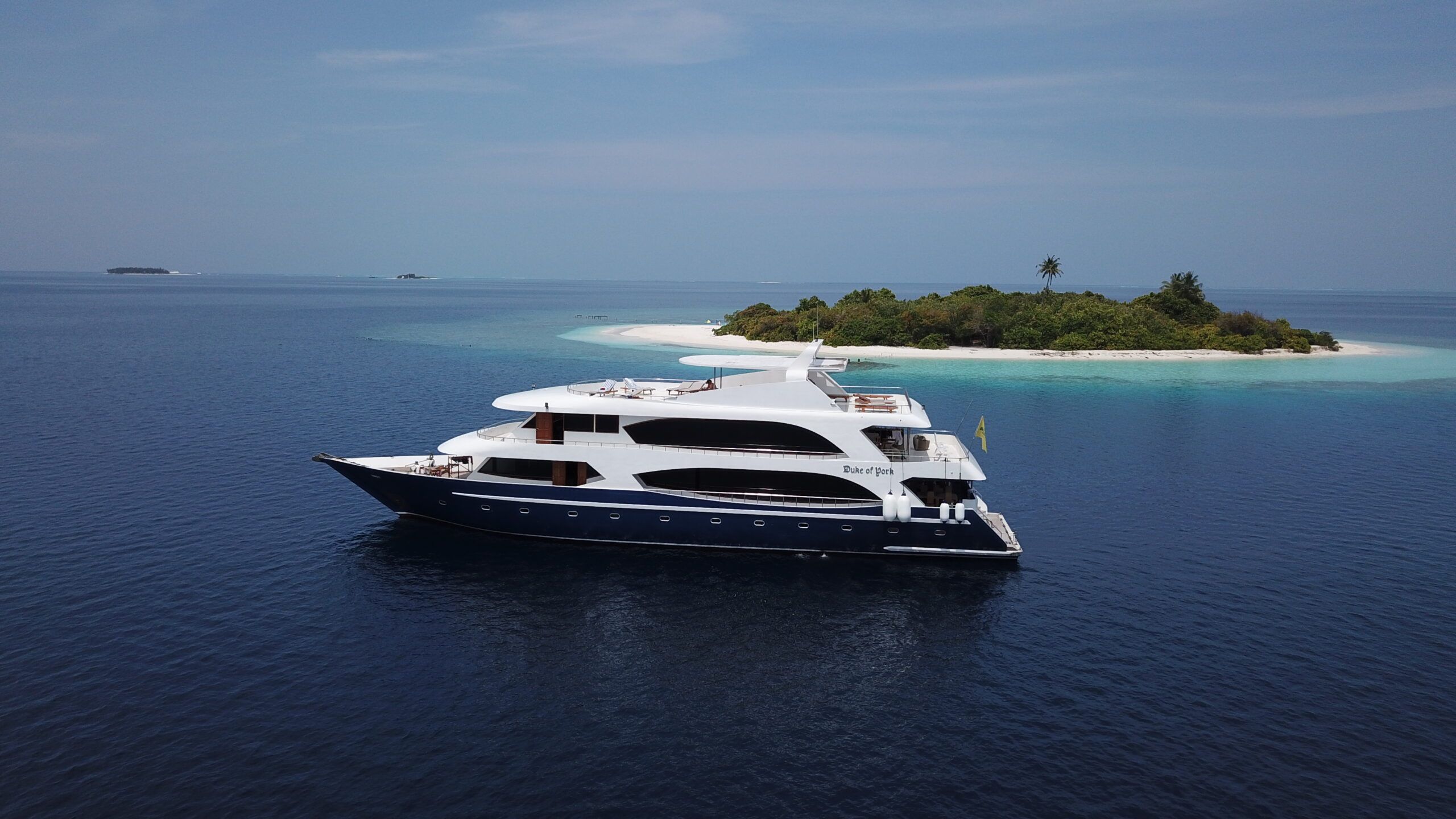
The five had been guests on the MV Duke of York, a Maldivian-flagged live-aboard chartered through the Italian tour operator Albatros Top Boat. The week-long trip carried about 20 other Italian passengers. The group had a research permit issued by the Maldivian government to study soft corals at the site, Shareef told Reuters. "What we didn't know was that it was cave diving," he said.
Six divers from the group entered the water on Thursday morning. A white alert warning of rough seas and strong winds of up to 24 miles per hour was in effect at the time. According to authorities, a sixth person decided not to dive once the others had gone in. The alarm was raised at around 1:45pm.
The body of Gianluca Benedetti, the Duke of York's operations manager and a dive instructor, was recovered at 6:13pm on Thursday by Maldivian National Defence Force divers. "The body was found inside a cave about 60 metres deep," MNDF said. According to the Italian foreign ministry, it was found near the cave entrance. The two accounts have not been reconciled. 
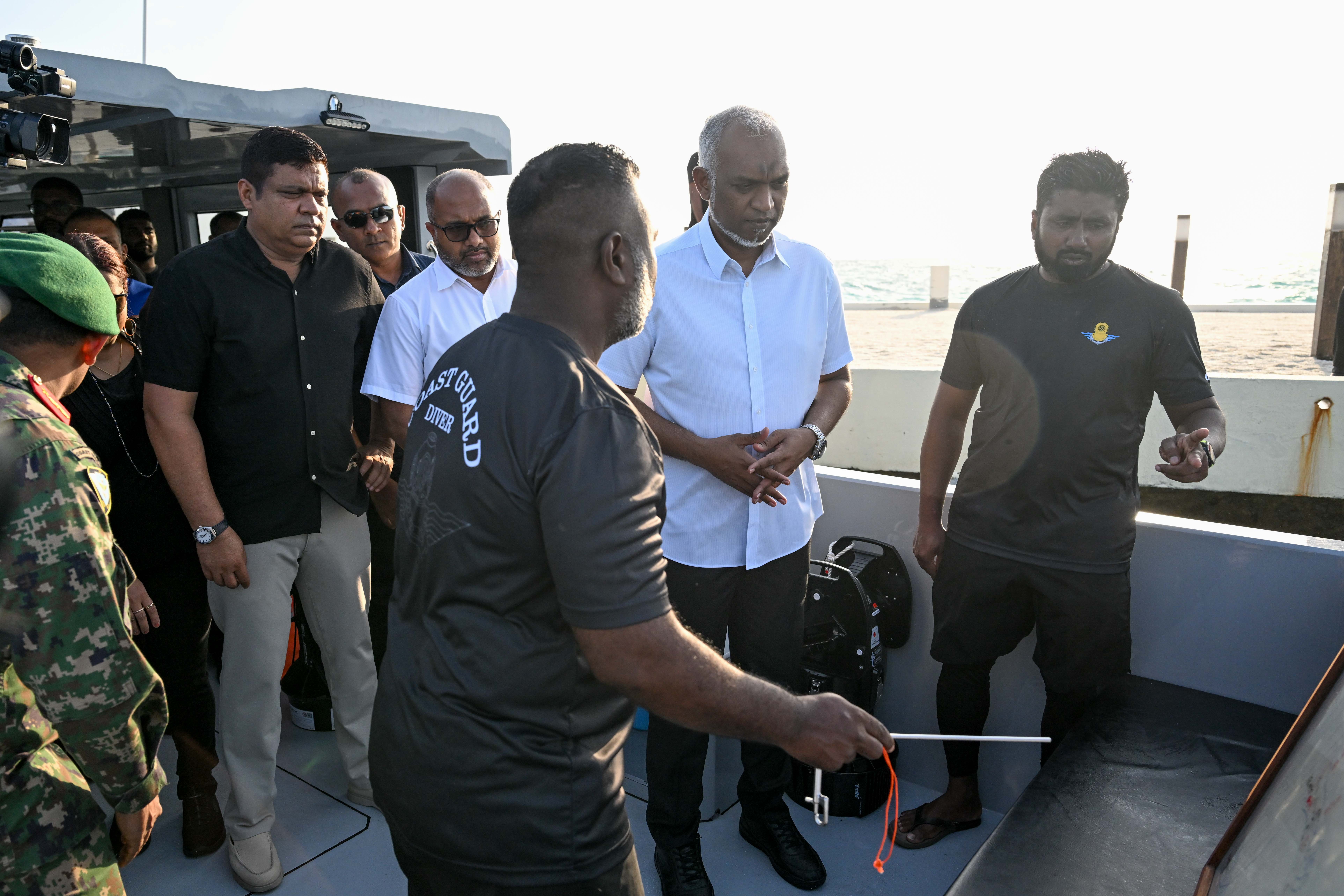
On Saturday afternoon, Sergeant First Class Mohamed Mahudhee, 43, of the MNDF Coast Guard, died during a second recovery dive. He had been part of the team that recovered Benedetti the day before. The team briefed President Dr Mohamed Muizzu at the site on Friday. The MNDF suspended the operation.
The Maldivian government accepted offers of technical assistance from Italy, the United Kingdom and Australia.
Three Finnish technical cave divers arrived in Malé on Sunday morning, mobilised by Divers Alert Network (DAN) Europe at the request of the Maldivian government. On Monday, they located all four remaining bodies in the cave's third and deepest chamber, at around 60 metres. On Tuesday, the Finnish divers brought out the bodies of Monica Montefalcone and Federico Gualtieri, according to Antonello Riccio, a lawyer representing the Gualtieri family. The bodies of Giorgia Sommacal and Muriel Oddenino were recovered on Wednesday, completing the recovery operation. All five have been transferred to a mortuary in Malé.
The Finnish team has handed GoPro cameras and other diving equipment recovered from inside the cave to the Maldives Police Service. The footage and gear are likely to be the most important physical evidence in both the Italian and Maldivian investigations.

The cave

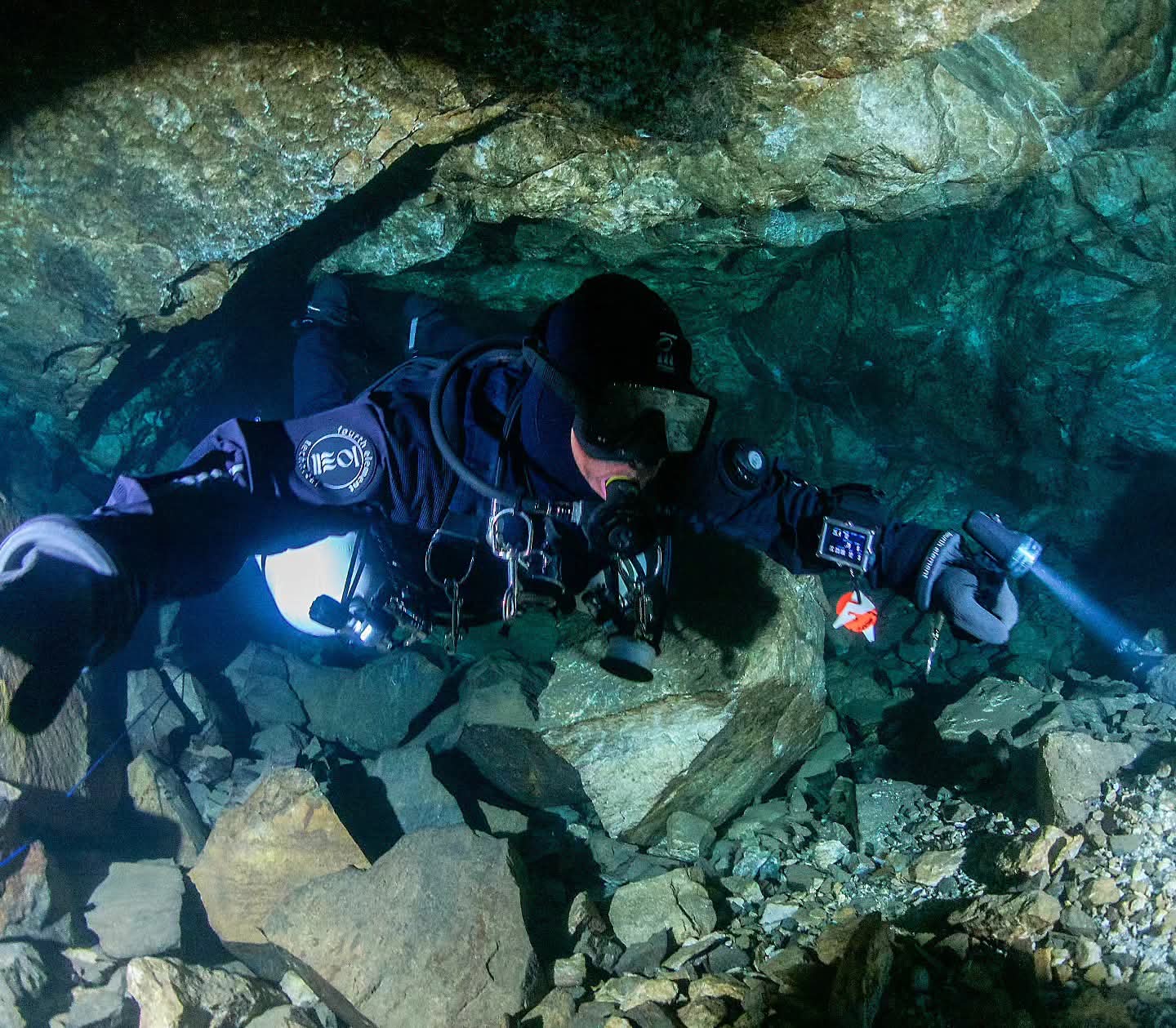
Devana Kandu is one of several submerged cave systems in the Maldives' central atolls. It is not a recognised recreational dive site. The mouth lies well below the 30-metre legal limit. Penetration into its inner chambers – particularly the third – requires technical cave-diving certification, redundant breathing systems, and gas mixes that protect divers against nitrogen narcosis and oxygen toxicity at depth.
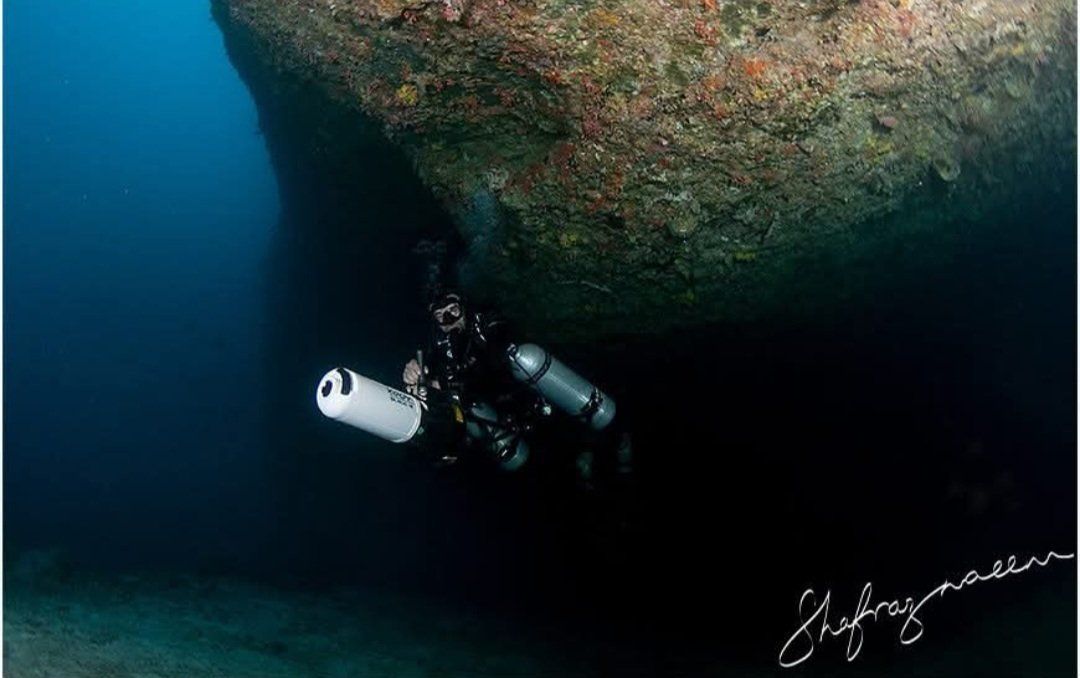
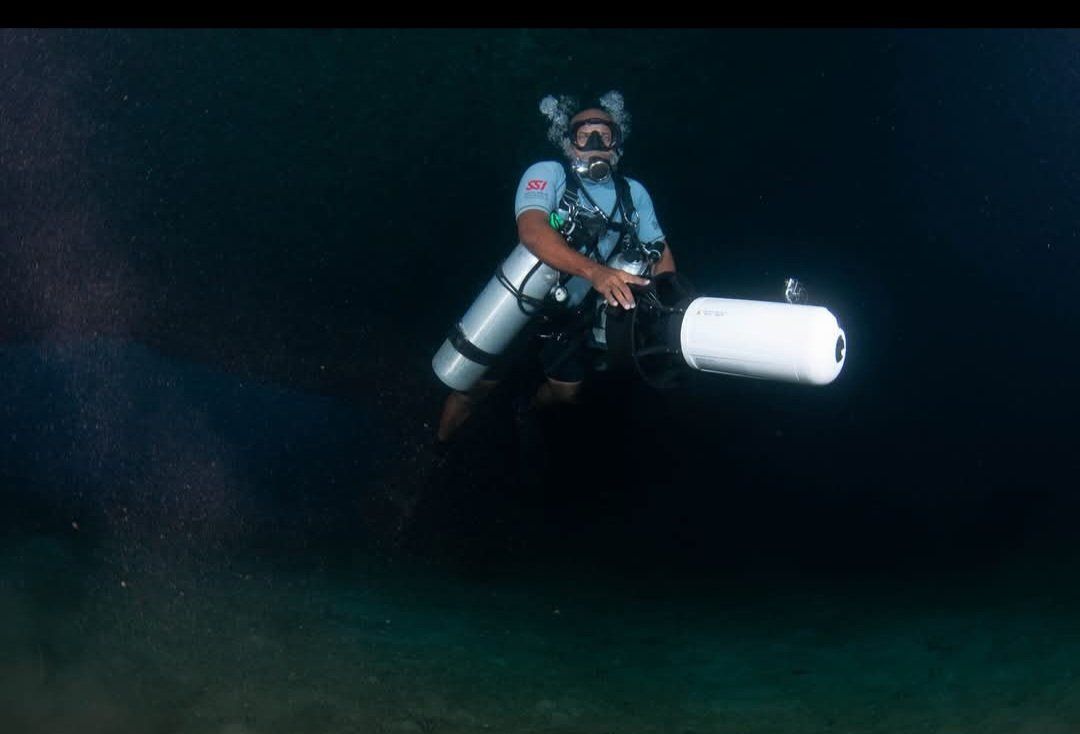
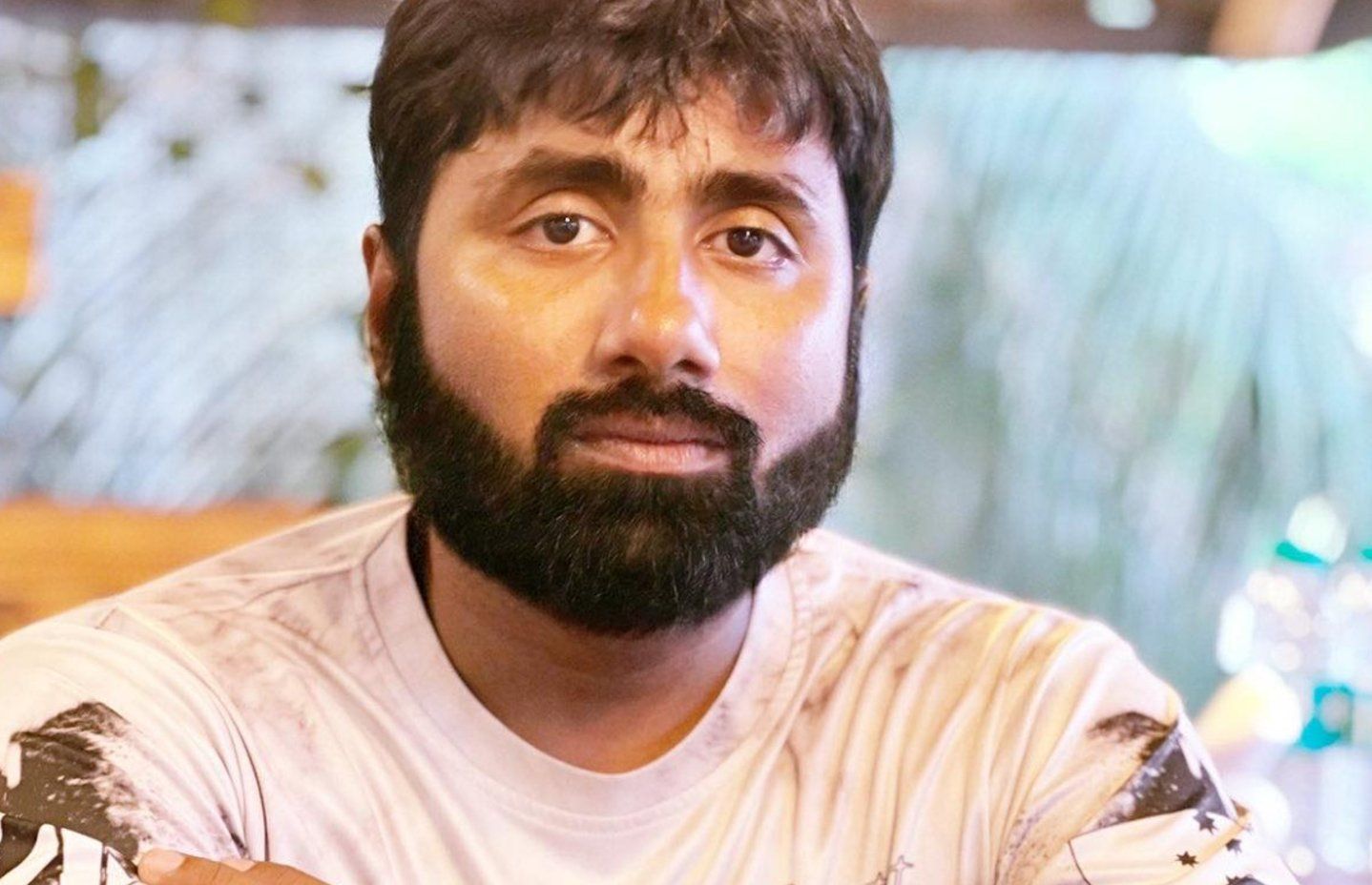
The site is, however, known to a small number of Maldivian technical divers. Shafraz Naeem, a Maldivian diving veteran who now consults for the country's diving regulator, told the Maldives Independent he has explored Devana Kandu more than 30 times on a deep-exploration permit. That permit framework – separate from recreational and dive-school licensing – is the only legal route into the cave. The Italian group did not hold it.
Devana Kandu. Photo: Shafraz Naeem.
Dhevana Kandu. Photo: Shafraz Naeem.

The five who died

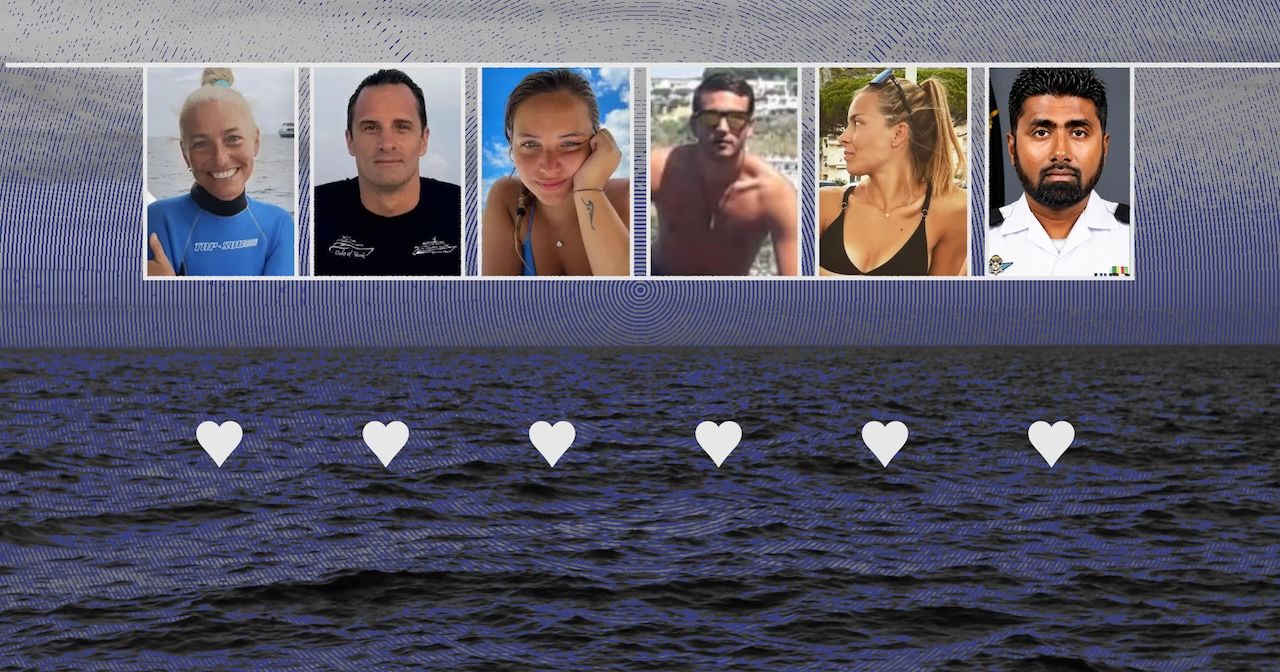
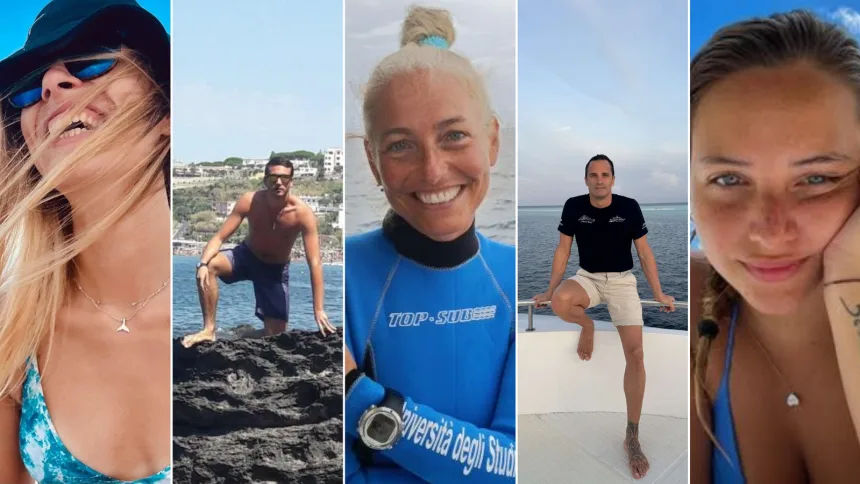
The five Italians who died in the cave have been named by Italian authorities, the University of Genoa and the Italian National Institute of Geophysics and Volcanology as:

Monica Montefalcone, 51, associate professor of marine ecology at the University of Genoa, who led the group. She had run coral research projects in the Maldives for more than a decade and authored over 130 scientific publications. Her body was recovered on Tuesday.

Giorgia Sommacal, 23, Montefalcone's daughter and a biomedical engineering student at the University of Genoa. She and her mother had logged around 500 dives together. Her body was recovered on Wednesday.

Federico Gualtieri, a recent University of Genoa graduate in marine biology and ecology, who had recently completed doctoral work on Maldivian corals under Montefalcone's supervision. His body was recovered on Tuesday.

Muriel Oddenino, a University of Genoa research fellow on Montefalcone's project. Her body was recovered on Wednesday.

Gianluca Benedetti, a dive instructor and operations manager aboard the Duke of York. He had lived in the Maldives for seven years. His body was recovered on the evening of the dive.
The University of Genoa has stated that only Montefalcone and Oddenino were on the official scientific mission for which the research permit was issued, and that the fatal dive was undertaken privately.
Speaking to Italian media, Montefalcone's husband Carlo Sommacal described her as “one of the best divers on the face of the earth" and a disciplined diver who carefully assessed risk and would never have put her daughter or colleagues in danger.  “She must have completed 5,000 dives,” Sommacal told Italian newspaper la Repubblica.
He has asked rescuers to look for a GoPro camera she habitually carried. The Finnish team has now recovered several GoPros from inside the cave and handed them to Maldivian police.
A sixth member of the group, reported to be a female University of Genoa student, did not enter the water on Thursday and is assisting investigators.

Sergeant Mahudhee

Sergeant Mahudhee, 43, served in the military for 20 years, four months and 27 days. He is survived by two children. The MNDF hailed him as an experienced and capable diver who had completed extensive training in the discipline both in the Maldives and overseas. His qualifications included Open Water Diving, Ship Diver, Dive Master, Rescue and Salvage Command, and Vessel Board Search and Seizure for boarding teams and MIO operations. He had served as an instructor on Open Water Diving courses and was involved in the MNDF's development of human resources in the field.
He had also completed the MNDF NCO Academy's Corporal and Sergeant career courses. Over his service, he was awarded four medals and nine commendation ribbons. The medals included the 17th SAARC Summit Medal, the Independence 50 Medal, the Republic 50 Medal, and the Humanitarian Service Medal (Covid-19). His colours included the Medal of Honour at first, second and third class; and colours for Achievement, Distinguished Service, Military Service, Skill, Long Service, and Bravery.

How he died

According to the presidential spokesperson, Mahudhee died from complications during the decompression phase of his second dive into the cave. CNN reported that during Saturday's operation, two divers had marked the cave entrance by sending a balloon to the surface, allowing other crew to swim directly to it and maximise time inside.
The MNDF Coast Guard's diving capability is officially certified to 50 metres. Training to a 100-metre operating depth has "now begun," with a target completion date before the end of 2026, Brigadier General Mohamed Saleem told state media on Friday. Mahudhee's team is reported to have reached the second of the cave's three chambers.
Mahudhee was evacuated by Coast Guard from Vaavu atoll to ADK Hospital in Malé, which operates a hyperbaric treatment unit. The distance to the capital is about 90km. Decompression sickness treatment depends on rapid recompression; every hour between symptom onset and treatment worsens the prognosis.
According to diver Shafraz Naeem, the MNDF divers descended on compressed air – not the trimix gas blend that is the international technical-diving standard at those depths – and no portable recompression chamber was on site during the operation.

What the Coast Guard says

A clip from Coast Guard Commander Brigadier General Mohamed Saleem's appearance on PSM's Raajje Miadhu on Friday night circulated widely after Mahudhee's death. In it, Saleem said MNDF Coast Guard divers were capable of diving to 70 metres on compressed air.
The remarks drew sharp criticism from the local diving community. By international technical-diving standards, dives on compressed air at 70 metres and beyond are well outside accepted safe practice: at those depths the oxygen partial pressure approaches the convulsion-risk threshold, and nitrogen narcosis can be incapacitating. Trimix – a gas blend that substitutes helium for some of the nitrogen and reduces the oxygen fraction – is the standard for technical diving beyond 50 metres.
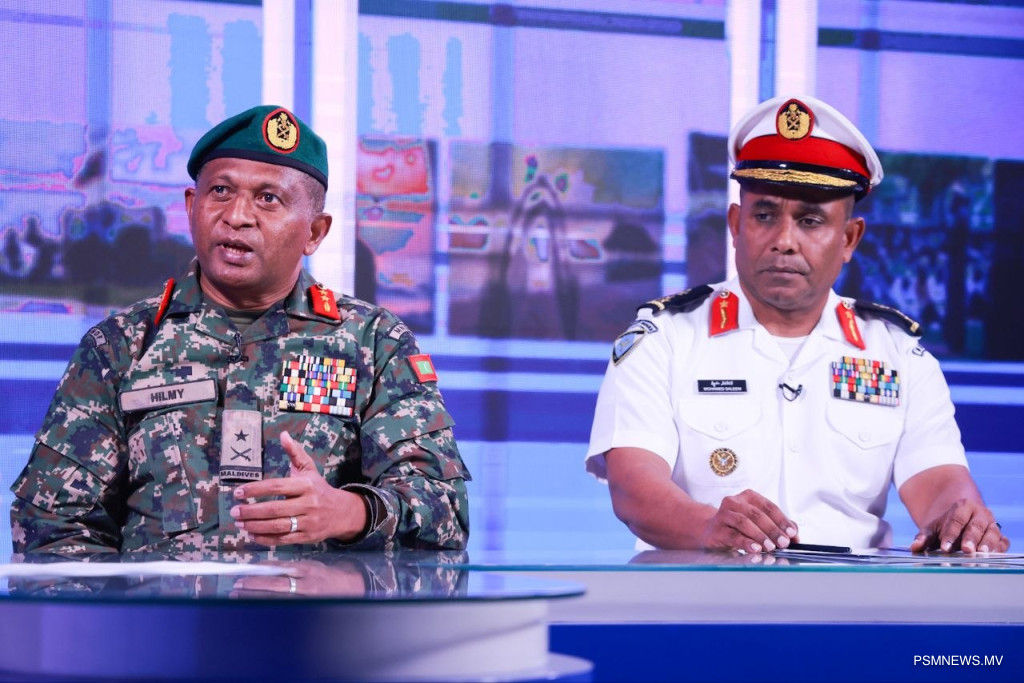
On Monday night, Saleem and Chief of Defence Forces Major General Ibrahim Hilmy appeared together on PSM. Saleem said his earlier remarks had been "misconstrued maybe because of how I phrased it" and that "Coast Guard divers dive very deep on normal air and they don't dive the way recreational divers dive." 
“Our officers have done military diving training and obtained a lot of experience in various operations and practice dives. They have done a lot of dives. The way we have practiced it historically has been diving on normal air to depths much deeper than recreational divers do. I mentioned something that we were doing to do it more safely, that is training a group to dive with rebreathers and tri-mix gas used in technical diving. So I meant that a special group has now been trained to dive to 50 metres. I didn’t mean that other Coast Guard divers weren’t trained to dive deep. That training is going on in stages and currently they can dive at 50 meters and God willing by year’s end they will be able to dive much deeper, perhaps 100 meters," he said.
Saleem defended the operation that ended in Mahudhee's death. The concerns being voiced publicly came from people assuming this was the first time MNDF divers had operated at such depth, Saleem suggested.
"Coast Guard divers are people who have been diving deeper than this on normal air for a long time. They are not recreational divers. They are people who have built up extensive experience across many military diving and body-recovery operations," he said. 
"Coast Guard divers have successfully conducted many operations at 70 metres and 80 metres in the past. These are military-trained divers who have safely carried out such dives within the procedures we use in the military."
He added: "No diver involved in this operation was acting under compulsion. They went on this operation because they had previously conducted many similar dives successfully, and because they themselves were strongly determined to do so as a matter of national duty."
The dive had been carefully planned and Mahudhee was rushed to hospital quickly because the team had prepared for that eventuality, he said. "This was a dive that was planned with safety in mind. But an incident occurred. We are not people who avoid risk. We have conducted many body-recovery operations even deeper than this."
"One of our most capable divers was lost in this incident. It is a great sadness. But we are people who will continue to take risks in matters of national importance. That is how we are training and building our people."
Saleem reiterated that training to a 100-metre operating capability is on course to be completed before the end of the year.
Chief of Defence Force Major General Ibrahim Hilmy told the state broadcaster that the MNDF's preliminary recovery work had "expedited" the foreign team's operation, and that the bodies had been located through a "systematic joint operation" involving the Coast Guard, Maldives Police Service and the Italian-arranged international diving team. Hilmy reiterated that MNDF divers operate exclusively under designated plans, "with no personnel being compelled to undertake unsafe actions."
Coast Guard divers are “military divers” that operate in a different role compared to civilian divers, he added.
“We are a different kind of people. We wear this uniform because we are different. So we will face those dangerous conditions and continue this work to save the lives of civilians and their assets," the army chief said. "So in any scenario we have to operate under, we maintain our safety standards, but the point is we wear this uniform and we are different. We are military divers.”
Photo: PSM
Photo: PSM

A competing hypothesis

The Italian Society of Underwater and Hyperbaric Medicine has floated an alternative explanation for what happened inside Devana Kandu. If borne out, it would place the cave's hydrodynamics rather than the divers' depth alone at the centre of the case.
Speaking to Adnkronos and Repubblica after seeing a diagram of the cave produced from DAN Europe's remote-operated vehicle survey, the society's president, Alfonso Bolognini, said the group's experience made it unlikely they had improvised a deep cave penetration without preparation. He suggested they may instead have been conducting a visual inspection from outside or near the cave mouth, with a view to a future exploration, and been pulled in by a powerful current.
"A formidable Venturi effect is formed" by the cave's geometry, Bolognini said, a reference to the acceleration of water as it passes through a narrowing space. He proposed two possible sequences: that the entire group was sucked in together, or that one diver was pulled in and the others tried to rescue them.

What the Finnish team did differently

Divers Alert Network Europe (DAN Europe), a Malta-registered non-profit specialising in diving medicine, safety and emergency response, activated its task force on May 16.
The three Finnish divers it deployed – Sami Paakkarinen, Jenni Westerlund and Patrik Grönqvist – are among the most experienced deep-cave recovery divers in the world. Paakkarinen and Grönqvist were both part of the 2014 recovery of two Finnish divers from Norway's Plura cave system at 130 metres, an operation widely regarded as the global benchmark for deep-cave body recovery, and the subject of the documentary Diving Into the Unknown. Paakkarinen and Westerlund also worked on a major cave recovery in Mexico the same year.
The team's first dive, on Monday morning, began at around 8:30am Maldives time and lasted about three hours. It located all four remaining bodies in the cave's third chamber and gathered the operational data needed to plan recovery.
On Tuesday and Wednesday, the four remaining bodies were brought out. According to DAN Europe, the Finnish divers transported the victims from inside the cave to about 30 metres, where MNDF divers – "operating in coordinated deep and shallow support groups" – completed the transfer to the surface and onto Coast Guard vessels. 
The Finnish team used closed-circuit rebreathers, high-performance underwater scooters (DPVs), and fully redundant life-support configurations. According to DAN Europe, this equipment allowed extended dives at 60 metres "while maintaining exceptionally high operational safety margins."
"Today's operation required further coordination, technical skills, and mutual trust between the international dive team and the Maldivian authorities managing the intervention locally," DAN Europe's chief executive, Laura Marroni, said after Tuesday's recovery.
Paakkarinen, speaking for the Finnish team, said: "The Finnish rescue team would like to express its deepest condolences to the families of the victims and wishes to do its part in helping bring them home … We kindly ask for privacy and working peace during the operation."

What is a rebreather?

The Italian divers, according to the operator's lawyer, appear to have been using "standard recreational gear." The Finnish team that recovered their bodies used closed-circuit rebreathers. The difference is consequential.
A standard scuba setup is open-circuit: the diver inhales gas from a tank and exhales bubbles into the water. At depth, gas is consumed quickly, and the breathing mix is fixed at the surface.
A rebreather is closed-circuit. It recycles the diver's exhaled breath, scrubs out the carbon dioxide chemically, and automatically replaces the oxygen that has been metabolised. According to DAN Europe, this allows "significantly longer dives, minimal bubble production, reduced gas consumption, and precise control of breathing gas composition." Such capabilities become essential beyond 50 metres, where the wrong gas mix is lethal within minutes.
Rebreathers are not recreational equipment. They require specialist certification, dedicated training and disciplined maintenance.

What local divers are saying

The Maldivian diving community has spent much of the week processing both the original tragedy and the operation that killed Sergeant Mahudhee. The conversation has hardened into specific, technical criticisms of MNDF equipment and Maldivian regulation.
Azim Musthaq, a dive instructor at Maldives Dhiffushi, told the Maldives Independent he was shocked at the gear MNDF divers had used in the recovery operation.
"I saw the pictures and it's embarrassing to see the gear they had," Azim said. "Not only did they not have technical gear that they should have for such a mission – they had recreational dive gear, and even those were the most ordinary mask and fins. Not even good brands of recreational gear."
"Our military divers can be highly skilled and willing to put their life on the line for rescue and recovery," he said. "But it's a responsibility of the state to provide them the equipment for them to do their job."
Azim noted that the rebreathers and portable recompression chambers were supplied by the Japanese government. 
He said the case had exposed the absence of a technical-diving regulatory framework in the Maldives. A handful of dive centres have recently begun training divers on sidemount configurations – a technical setup in which two cylinders are carried on either side of the body rather than on the back – but the country has no licensing structure that distinguishes technical from recreational diving below the existing 30-metre recreational ceiling.
Another diver, speaking on condition of anonymity, told the Maldives Independent that Mahudhee's death had triggered serious internal discussion within diver groups about safety and regulation.
"Even the recreational diver regulations we have are from 2003," the diver said. "Divers have been talking about a need to update the regulations for some time now. There's renewed discussions because of this now."
The 2003 rules remains the principal legal framework governing scuba diving in the Maldives. It pre-dates the widespread availability of rebreathers, the growth of the country's live-aboard market, and the emergence of the deep-exploration permit framework that, in practice, is the only legal route to dive sites such as Devana Kandu.

The Duke of York and its operator

The MV Duke of York is a Maldivian-flagged live-aboard. Its operator, Abdul Muhsin Moosa, has told Reuters the vessel held a recreational diving permit for depths up to 30 metres, and that the Italian guests were briefed on arrival about the 30-metre legal limit.
Government spokesman Mohamed Hussain Shareef said the boat's licence has been suspended. "The regulations here say that if you want to take divers on expeditions, you need a dive school permit, which they didn't have, sadly," he told Reuters.
Albatros Top Boat, the Italian tour operator that chartered the trip, has separately said through its legal representative Orietta Stella that it never authorised – and would never have authorised – a 50-metre cave penetration. The trip's stated programme, Stella told the Italian newspaper Corriere della Sera, involved coral-sampling dives at standard recreational depths. The victims, she said, appeared to have been using "standard recreational gear rather than the sort of technical equipment required for deep cave diving."
Photo: Luxury Yacht Maldives

Two investigations

Italian prosecutors in Rome opened a culpable homicide investigation into the deaths of the five divers on Tuesday, the Italian news agency ANSA reported. The probe's specific target has not been disclosed.
The Maldives government has launched its own investigation, which Shareef said would focus on whether those leading the dive had "taken the correct precautions" and undertaken adequate planning. "We believe that the retrieval of the bodies will itself reveal a lot, as far as that part of the investigation is concerned," Shareef told the Associated Press. "But that doesn't take from the fact that cave diving in itself is very, very dangerous."
In statements to international media on Tuesday, Shareef said the group had been issued a research permit. But "while they had a permit, there are certain gaps in the research proposal," he said. The government had not been told the dive would involve entering an underwater cave, and did not know "the exact location they were diving." Two of the five who died were not on the list of researchers submitted by the organisers. "So we didn't know they were part of the expedition as well. So, all these factors are being reviewed."
The University of Genoa has separately confirmed that Professor Montefalcone and Muriel Oddenino had been in the Maldives on an official scientific mission to study the effects of climate change on tropical marine biodiversity, but stated that the fatal dive itself had been "undertaken privately" and that the three other divers – Giorgia Sommacal, Federico Gualtieri and Gianluca Benedetti – had not been part of the official mission.

Managing the message

The chief government spokesperson, Mohamed Hussain Shareef, has been the sole official voice on the operation for the international press through the week, including for Reuters, the Associated Press, ABC News, CNN and El Mundo.
Speaking to CNN on Monday night, shortly after the four remaining bodies had been located by the Finnish team, Shareef was asked whether authorities might at some point determine the recovery operation was too dangerous to risk further lives over.
"We're trying our best, of course. It's not just a search operation, it's a recovery operation now," Shareef said. "Because we understand and we appreciate the need for closure for the families. And we're talking about Italy, by the way – tourism in the Maldives was actually pioneered by an Italian. That's the sort of special relationship we have with Italy, one of our biggest markets in tourism. And for now we are confident that we can, using the expertise, the experience and also the technology available, continue the search. But of course it's going to be reviewed based on the progress in the coming days. For now we are trying our level best to find the four missing divers."
In an interview with El Mundo published earlier the same day, Shareef set out the terms of the research permit issued to the group. It authorised research on soft corals and the composition of Maldivian reef systems and allowed dives to depths of 50 metres. But it did not mention diving in caves and was missing the names of two of the divers who died.
"I can confirm the existence of the permit, valid from May 3rd to 17th, for six different atolls, including Vaavu," Shareef said. "The vessel, the 'Duke of York', and the equipment are correctly listed. Although we still don't know what equipment they were using during the dive. That's part of the investigation."

The unanswered questions

A week on, the following remain unanswered.
What gear the Italians used. Stella's claim that the divers were on "standard recreational gear" has not been confirmed or denied by Maldivian authorities, who have custody of the recovered equipment. A penetration to 60 metres on recreational open-circuit air would, by international diving standards, be lethal in itself.
Why the MNDF pressed ahead on Saturday. Coast Guard Commander Saleem's position is that the dive was a planned operation within the MNDF's normal range of experience. That account does not address why the Saturday dive was authorised given that international cave-diving specialists were known to be arriving the following morning, or whether the option of waiting for them – and operating in the kind of shallow support role MNDF has played successfully this week – was considered and rejected.
Italian prosecutors in Rome have opened a culpable homicide probe but have not publicly identified a target. The Maldives investigation will examine whether dive leadership "took the correct precautions." Both will turn substantially on what the recovered GoPros and dive computers show.
Editor's note: In line with the request from DAN Europe, we have not published photographs or video showing the recovered divers' bodies or the recovery itself.

Discussion

No comments yet. Be the first to share your thoughts!

No comments yet. Be the first to join the conversation!

Join the Conversation

Sign in to share your thoughts under an alias and take part in the discussion. Independent journalism thrives on open, respectful debate — your voice matters.

Support Independent Journalism

Help us keep the news free and fearless

Give once

or
Become a memberfrom $5/month

Explore more