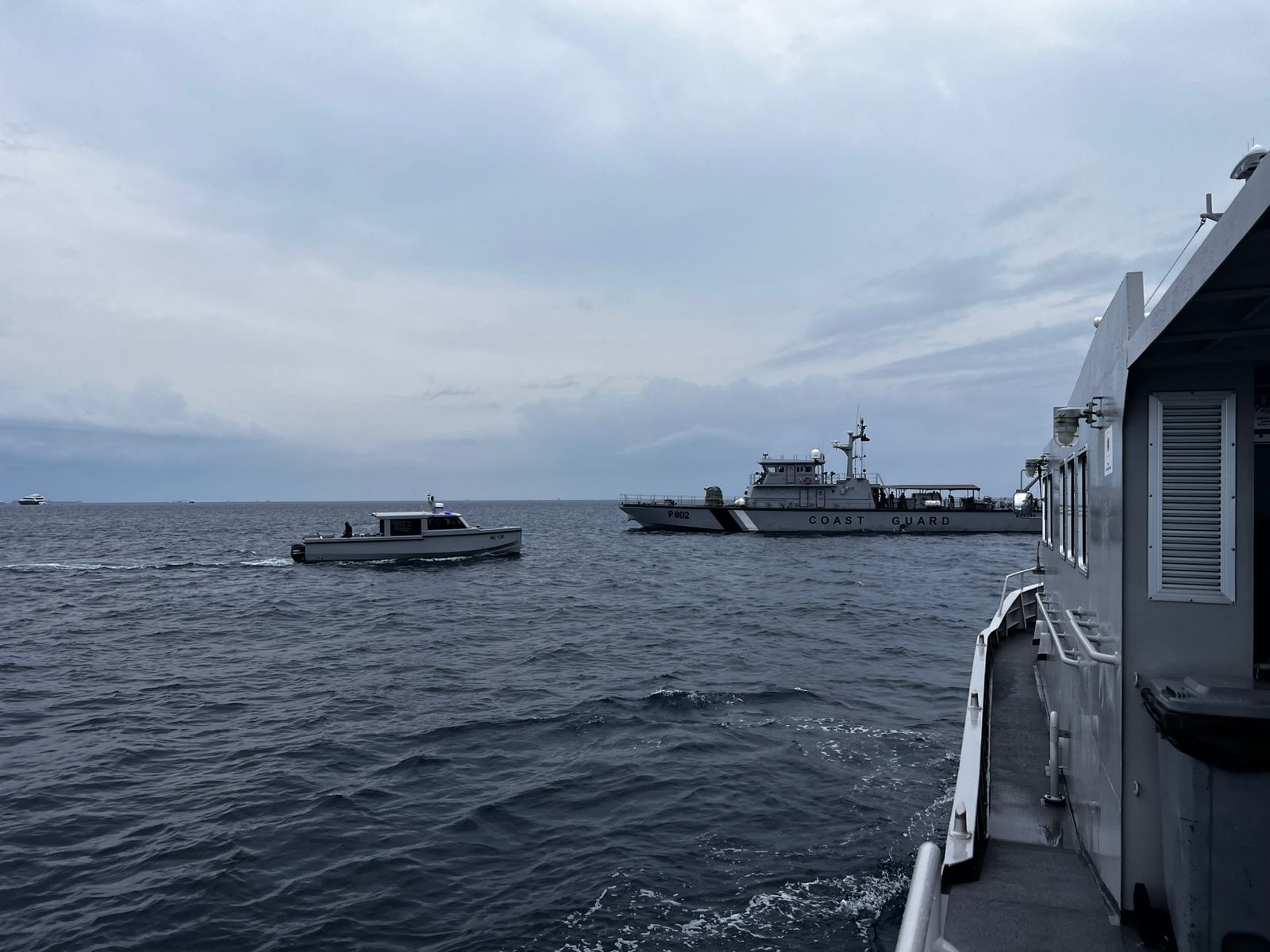
Two of the four Italian divers whose bodies were located inside the Vaavu cave were recovered on Tuesday, with the remaining two expected to be brought up on Wednesday, government spokesperson Mohamed Hussain Shareef said. The two bodies – a man and a woman – were retrieved from the third chamber of the cave by the Finnish technical-diving team after a two-hour operation. MNDF divers took over at a depth of 30 metres and police divers at seven metres. The bodies were brought to Malé for identification. Cause-of-death investigations now turn on the dive's regulatory status. Shareef told the BBC the team had a permit to dive to 50 metres but had not mentioned the cave in their proposal. The University of Genoa, where four of the dead were affiliated, said it had not authorised any deep-sea dive for the team's scientific research, stating that "the requests submitted to the Maldivian authorities... were evidently made outside the scope of the mission authorised by the university" and that the dive was carried out "in a personal capacity." Sommacal's father Carlo Sommacal – Montefalcone's husband – publicly disputed the university's statement, telling La Repubblica that Montefalcone was the world's most published researcher on the corals in question and that "hundreds of graduate students" used data she gathered. "It makes me laugh," he said. The cave, known locally as "shark cave," has an entrance at 47 metres and chambers at varying depths down to 60 metres.
Finance Minister Moosa Zameer assured the public that despite fuel import costs rising 110 percent – from US$ 50 million to US$ 116 million per month – due to the Middle East conflict, electricity prices will not increase and the government will absorb the additional burden. Fisheries Minister Ahmed Shiyam said the government has supplied 2.5 million litres of subsidised fuel to 1,832 fishing vessels across nine locations since February, though some delays in STO-mediated distribution persist. Shiyam also noted that MIFCO faces the same cost pressures as private fish processing companies, particularly the rising cost of air freight for fish exports, with the government working to negotiate better rates with airlines. Tourism and Civil Aviation Minister Mohamed Ameen reported that cancelled Gulf airline flights have dropped from 99 to 70 per week – a 22 percent improvement – with all five major Gulf carriers now operating to the Maldives again, and the year-on-year decline in tourist arrivals narrowing from 22 percent in March to 17 percent this month. Jet fuel prices have also been reduced from US$ 1.9 to US$ 1.6 per litre to incentivise more airline capacity.
The High Court accepted an appeal filed by Adhadhu CEO Hussain Fiyaz Moosa challenging the Criminal Court's sweeping gag order, which prohibits all citizens from discussing or sharing any information related to a documentary about President Muizzu's alleged affair with a staffer. The order, issued by Judge Muzzammil Nasir in connection with qazf charges against Fiyaz and managing editor Hassan Mohamed, also mandates that the trial be held behind closed doors.
A private individual asked the Criminal Court to find former presidents Mohamed Nasheed and Abdulla Yameen in contempt for openly defying the gag order on the Adhadhu documentary. The letter alleges that both former presidents have repeatedly discussed the documentary's contents in speeches and public statements, breaching the Criminal Court's order prohibiting any direct or indirect discussion of the film. The letter also names several other figures for allegedly defying the order, including President Muizzu himself, MPs Mohamed Ibrahim, Meekail Naseem, Hussain Ziyad, and Ameen Faisal.
MDP's Zaima Mohamed was elected vice president of the Mahibadhoo Council after eight rounds of voting, securing three votes in the decisive final round to break a prolonged deadlock. The first seven rounds ended in a two-two tie between Zaima and PNC's Mohamed Maumoon, with one spoiled ballot repeatedly preventing a majority outcome.
Three former presidents – Nasheed, Yameen, and Solih – wrote to foreign diplomatic missions urging them to call on the Maldives government to release jailed journalists and end what they describe as systematic attacks on press freedom. The letter highlighted the Criminal Court's unprecedented gag order, the jailing of two Adhadhu journalists without adequate legal representation, and the arrest of protesters who demonstrated for their release. The former presidents also raised broader democratic concerns, including constitutional amendments that weakened independent institutions, a media law granting a government-controlled commission powers to shut down outlets, and a deteriorating economy.
The Human Rights Commission launched an investigation after visiting jailed Adhadhu journalists Leevaan Ali Nasir and Mohamed Shahzan, as well as protesters arrested during ongoing opposition demonstrations, and documenting their concerns. Leevaan's lawyer has raised concerns about his alleged transfer to a solitary cell in a unit housing murder convicts, though Corrections denies he is in solitary confinement.
The final group of Maldivian pilgrims left for Hajj on Tuesday, the Islamic ministry said, completing this year's departures. The last flight carried 253 pilgrims, bringing the total to 1,019 across four flights. Of the 1,000-person quota the Maldives received, 500 travelled on Maldivian Airlines and the rest on Saudia. As in previous years, pilgrims used the Makkah Route initiative, a Saudi programme that allows immigration formalities to be completed at the country of departure, enabling pilgrims to bypass Jeddah immigration on arrival and have their luggage transported directly to their hotels. The initiative is normally extended to countries sending at least 20,000 pilgrims a year, but Saudi Arabia has granted it to the Maldives despite its smaller annual quota of 1,000. The Hajj Corporation has said pilgrims will spend 22 days in Saudi Arabia, returning from early next month after completing the pilgrimage.