

The day Iruvai ended: reading the rains in a season that no longer behaves
What Nakaiy and forecasts agree on as Hulhangu arrives.

Artwork: Dosain
19 May, 19:55
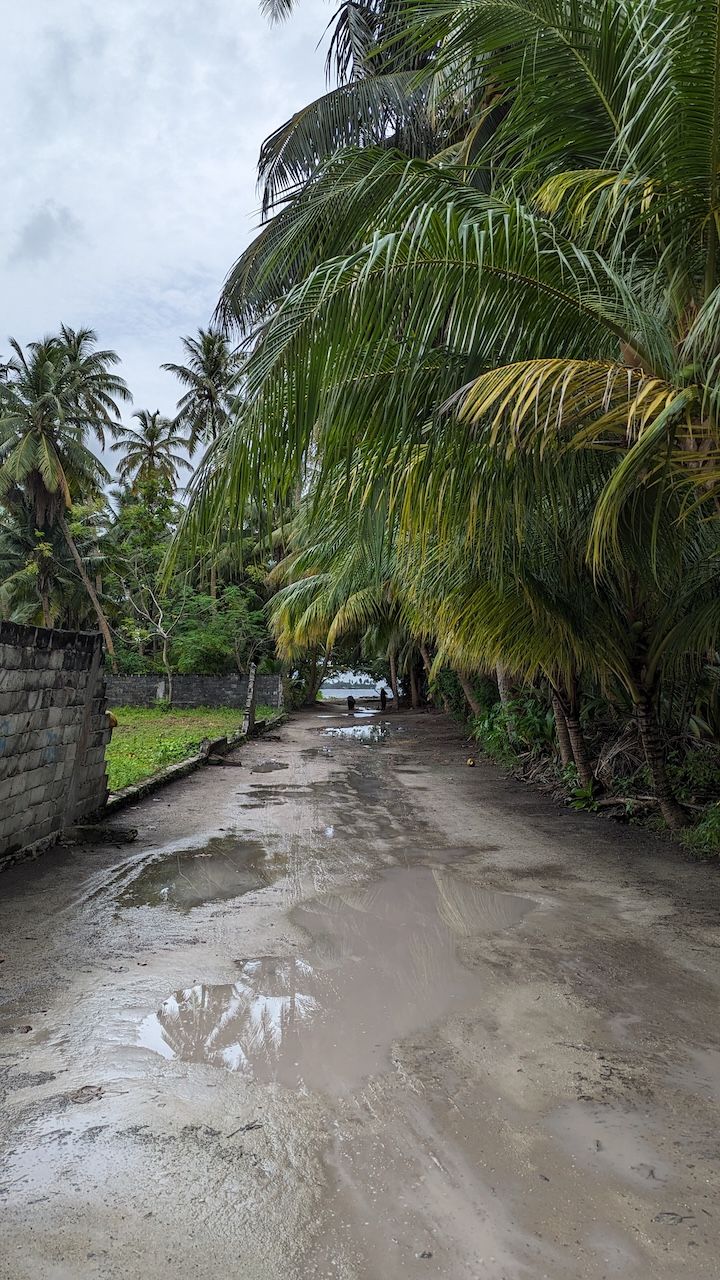
On a tin roof somewhere in the atolls, a man is clearing leaf debris from an askani with his hands. The water has been pooling. Below him, someone has moved the drinking jugs from the mosque tap to the rainwater drum. In the capital, residents are donning raincoats and gumboots, preparing to navigate the waterlogged streets. The abrupt rain breaks the dry heat with thick droplets drumming against asphalt.
Hulhangu has arrived. The southwest monsoon winds are shifting towards the Himalayas.
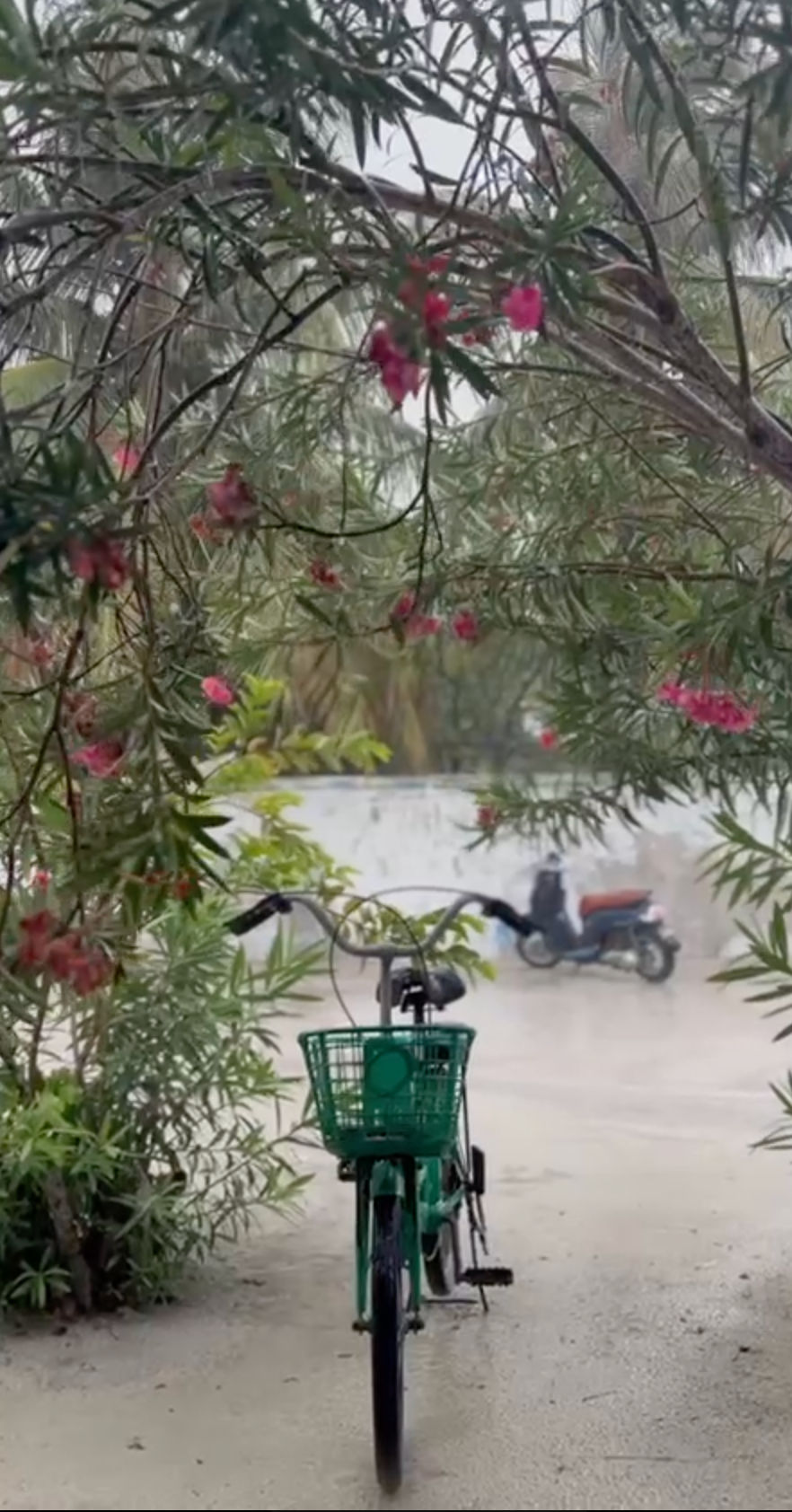
The change of season was marked by bihuroazu, an event once awaited with anticipation and celebrated as a turning point. It comes in the middle of bahaaru moosum: a time of pink trumpet flowers blooming and falling like cherry blossoms, of ripe mangoes hanging heavy waiting to be plucked.
"Bihuroazu is a day of blessings. This region celebrates the day as the new year of monsoons," Abdulla Rasheed, an astronomer and historian who documents weather patterns, told the Maldives Independent.
By the reckoning of the centuries-old Nakaiy calendar, that day was April 14, the seventh of Assidha.
“There is a distinct dry spell in Iruvai. During this dry spell that is the hottest days of the Nakaiys, the sun travels over Malé," Rasheed explained. "From the dryness, the rejuvenation of land begins on April 14th, that is the seventh day of Assidha Nakaiy. I have noticed there is always rain on April 14th in the past few years.”
Nakaiy is a codified system of two-week intervals that guided Maldivians through monsoon cycles. Each interval has distinct characteristics, often marked by the abundance of a species of fish. The Nakaiy calendar, which has its roots in the Indus Valley civilisation, divides the year into 27 Nakaiy split between the southwest monsoon (Hulhangu) and the northeast monsoon (Iruvai).
"Hulhangu starts with Kethi nakaiy until Hey nakaiy," said Rasheed, referring to the period from May 6 to October 31.
For centuries, Nakaiy guided fishers on when to set sail and farmers on when to plant. In the present, experts combine modern forecasts with traditional calendars to better anticipate what Hulhangu will bring.
By the Maldives Meteorological Service's reckoning, Hulhangu arrived on May 8.
"The effects of the southwest monsoon are initially felt in the southern region during the first or the second week of May, gradually extending to the central regions and eventually covering the entire country by the end of the month," the Met office said on Sunday.
Both calendars are telling the Maldives that the rains have come. The indigenous almanac developed by ancestors who navigated by the stars, and the Met Office, with its satellites and models. This year, the modern instruments and the inherited knowledge agree.
What the models say
Colloquially known as "the rainy monsoon," this year's wet season came with its own surprises: lightning struck a building in Hulhumalé and a water spout formed near Dhiffushi.
At the end of April, climate scientists in the region gathered in the Maldives to discuss what's ahead in the 34th Session of South Asian Climate Outlook Forum.
"Below normal rainfall is most likely during the 2026 southwest monsoon season (June – September) over most parts of South Asia, particularly across the central parts of the region," according to the forum's published findings. "However, some areas over the north-western, north- eastern, and parts of the southern region are likely to experience normal to above normal rainfall."
The outlook also predicts increased temperature variability across South Asia this monsoon, driven not only by the developing El Niño in the equatorial Pacific, but also by changes in the Indian Ocean Dipole, a phenomenon involving alternating patterns of warmth between the eastern and western Indian Ocean.
"El Niño conditions are likely to develop during the 2026 monsoon season. Neutral Indian Ocean Dipole conditions currently prevail over the Indian Ocean, and climate models indicate that a positive IOD phase is likely to emerge later in the monsoon season," SASCOF reported.
"The Indian Ocean Dipole is similar to El Niño, which occurs due to temperature imbalances between Australia and Peru. In the Indian Ocean, this means fluctuating temperatures between Africa and maritime regions like Indonesia," climate expert Ahmed Shabin told the Maldives Independent. "These patterns are natural processes, not direct results of climate change."
Shabin explained how El Niño and IOD interact: "If an El Niño meets a negative Indian Ocean dipole, it weakens the effect. And if it meets a positive one, it exacerbates. It depends on the combination and how long the effect is."
The effects in the Maldives are uncertain.
"Even if there's an El Niño in the Pacific it will take about three to four months to delay the climate in Maldives. Obviously there will be an effect on temperature phenomena. The El Niño event is upcoming but there's a lot of uncertainty around it. So from May-June there is usually a spring uncertainty period. So after June weather models become clearer about what happens."
Under stress
The heat from an El Niño and a positive Indian Ocean Dipole will also be felt beneath the surface. Coral reefs will face acute stress. Elevated temperatures cause the colourful, symbiotic algae that nourish corals to produce toxins, prompting corals to expel them. This process, known as coral bleaching, turns corals white and leaves them vulnerable. If ocean temperatures remain high, corals may not recover, eventually leading to large-scale die-offs. Even minor temperature shifts can trigger widespread bleaching events.
Warmer ocean temperatures can also disrupt the marine ecosystems, resulting in coral mortality, reduced fish populations, and loss of biodiversity. These impacts can affect coastal fisheries and tourism industries dependent on healthy reefs.
Previous El Niño events took place in 2023-2024 and 2015-2016. The last El Niño saw temperatures soar to a record 'feels like' temperature of 46.3°C.
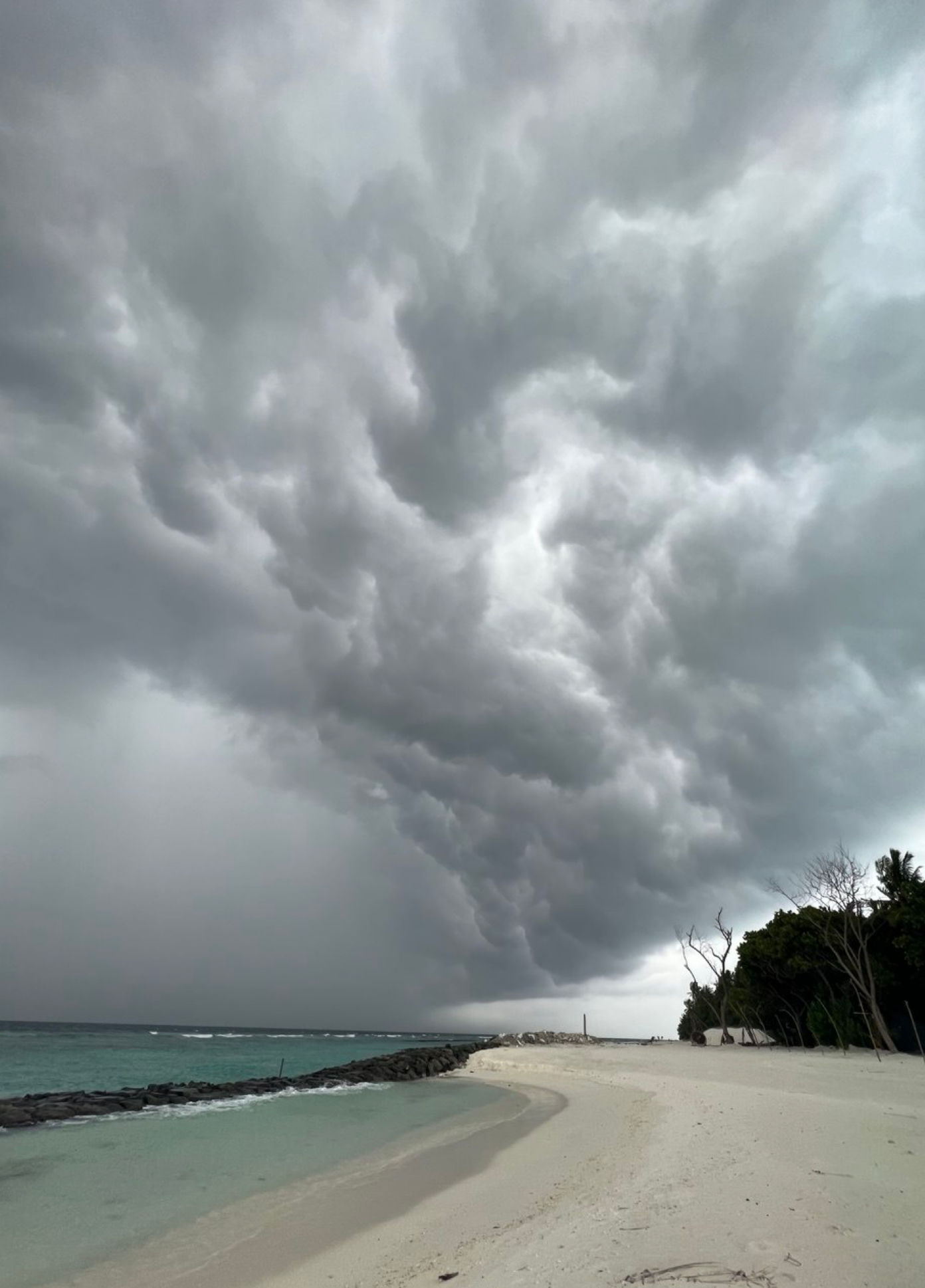
The rougher seas meanwhile pull sand from exposed western beaches and deposit it on eastern shores and sheltered lagoons. Maldivian islands have always moved, but climate change is accelerating the natural redistribution and what was once seasonal reshaping is now permanent loss. For low-lying islands, that is a threat to infrastructure and to habitability itself.
On a tin roof somewhere in the atolls, a man will clear leaf debris from an askani again next year. The Nakaiy will name the days and climate models will sharpen after June. The question this monsoon is whether the two will keep agreeing.
Discussion
No comments yet. Be the first to share your thoughts!
No comments yet. Be the first to join the conversation!
Join the Conversation
Sign in to share your thoughts under an alias and take part in the discussion. Independent journalism thrives on open, respectful debate — your voice matters.
Support Independent Journalism
Help us keep the news free and fearless
Give once
$
or
Become a memberfrom $5/month