
Comment: Nationalise the resorts

Halve the industry, expel foreign investors and repurpose the islands.
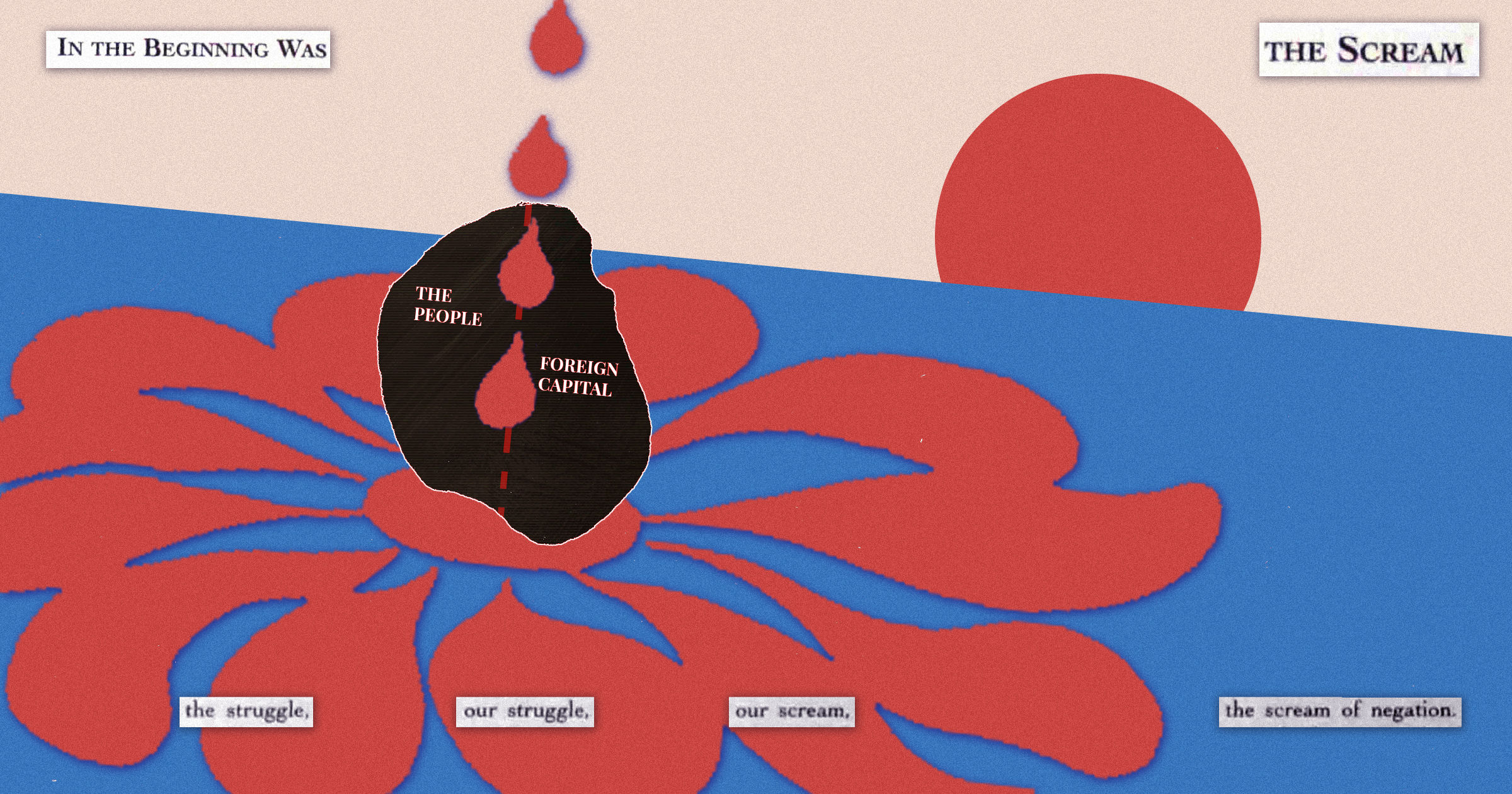
Artwork: Dosain

Artwork: Dosain

The resort "industry" holds our people hostage more than it "sustains" our "economy." It always has. It has never benefited us; this ill-intentioned "industry" kept us drunk on a 50-year long perverted illusion of “ތަރައްޤީ” as it exploited the country to give free hand-outs to lazy suit-wearing elites who do no real work, leeching off of everyone else’s labour.
From Kurumba Village in 1972 to the Maldives Tourism Development Corporation (MTDC) in 2006 to the neoliberalisation disguised as freedom in 2008 to our present-day foreign-dominated economic order, this op-ed covers our economic history of industrialisation and makes the case for a merciless purge of foreign companies/investors from our lifeblood industry, as well as the repurposing of half or more of these resorts into administrative, residential, and/or community hubs.
Furthermore, "nationalisation" here does not mean state-run. Secondly, I am not calling for industrial nationalisation now; revolutionary overhaul of neoliberal-capitalism comes first. This will be explained further in this op-ed. This is not something we can achieve with electoral politics. This is just to help you picture that future.

History and the present

Note: the honorific "president," "parliament member," etc. will be herein replaced with "comprador." Add that to your economic vocabulary. Why are we still calling them “ރައީސް ނަޝީދު” or “ރައީސް ޔާމީން” or “ރައީސް މައުމޫނު”? Are they holy idols to be ennobled with a sacred permanent status, or are they flesh and blood like the rest of us?
1972-1978
Ex-comprador Ibrahim Nasir and his bureaucrat-capitalists like Hussain Afeef  and Umar Maniku started this depraved one-island one-resort project. They enlisted the help of George Corbin, an investor-capitalist who, according to an interview, "brought the first group to ever visit Saudi Arabia as tourists. Sudan, Egypt, Eritrea and more, are all destinations I have initiated tourism in since the late sixties," whose "dream" was "to discover a place like the Maldive islands [to develop for profit], and that’s why I call the Maldives 'paradise.'"
1979-2007
Ex-comprador Maumoon Abdul Gayoom, with his Zionist-backed Saudi-loyalist counterparts, rapidly moved to industrialise the nation while politicising and homogenising its population, as Xavier Romero-Frias observes (see pages 650-652). To be precise, he laid foundations for this industrialisation to be concentrated in the hands of Maldivian and foreign elites, not the people. Like the Saudis have done with Makkah and Madina, ex-comprador Maumoon placed himself in the position of God, and his word above scripture, and his (and the Saudis’) interpretations over everyone else’s. This provided two key functions relevant to the tourism-industrial complex:

Shield function: with Maumoon’s words made equivalent to that of God’s and the nation’s identity enshrined as "100% Muslim" (the only other country in history to do this is Saudi Arabia, even the prophetic Constitution of Medina wasn’t like this), he can deny any criticism of his policies as serving the western empire that he claimed to be against (for example, the post-1988 commercial laws in the Maldives were based on English capitalist laws "with little to no alteration." How is that anti-west?)

Sword function: similarly, alignment with the Saudis (and therefore the Americans, their silent backers) allowed Maumoon to implement western-style industrialisation like an invincible sword. 1979 was when we industrialised the fishing industry too, and from then onwards, the nation began to westernise its economic apparatus (our commercial laws, import laws, and so on), and no one could even point out this blatant westernisation because, like his Saudi masters, Maumoon pretended that this was actually "anti-west" when it really wasn’t!

Unlike many other countries, capitalism as a system is still barely out of its infancy stage in the Maldives because we had no industrial-capacity for anything before 1979. This is an important thing we need to understand. In this view, people like the parliamentarian-comprador Qasim Ibrahim are not rags-to-riches success stories; what they are is a real-world demonstration of the Maoist-Fanonist theories of class mobility wherein labour aristocrats and petite bourgeoisies can easily move upwards in hierarchy under the machinery of capitalism – i.e., the story of how the “ބޭކަލުން” eventually matched and replaced the “ބޭފުޅުން”.
2008-2012
Inevitably, Maumoon’s regime fell apart. The economic and political conditions from the outset in 1978 ensured this outcome. Maumoon’s entire political economy was a massive contradiction: on one hand, the lies and pretence about being "anti-west," and on the other hand, rapid industrial westernisation. These two realities were bound to collide eventually. 
And because Maumoon had set the stage by copying British laws into most of the nation’s industrial lifeblood, ex-comprador Mohamed Nasheed along with his neoliberal Maldivian Democratic Party found it much easier to capture since they were actually backed by the British conservatives. It’s a no-brainer that the British would be better at playing a game they invented themselves. Maumoon was far too drunk on his ego and informal power to see otherwise (much like how Nasheed and MDP are too drunk on their own supply to foresee the inevitable collapse of their contradictory systems today).
Ex-comprador Nasheed is a smaller elite member himself (as so admitted here: "Our whole family was a merchant family…our family was a little prosperous…We had some old money too." – stark contrast to the “ރައްޔިތުންގެ ރައީސް” image he presents himself with). Along with MDP, following the British conservatives’ policymaking agenda, ex-comprador Nasheed and MDP finished the job started by ex-comprador Nasir and Maumoon: that is, they neoliberalised (Reaganised) the political economy. Cue the rapid inflow of "foreign investors" along with new neoliberal frameworks like the tourism land rent framework. Not only did they throw away a golden opportunity to nationalise our lifeblood industry away from private profits for a one per cent elite, they also paved the path for that industry to get captured by global capitalists.
2013-2023
By the time ex-comprador Abdulla Yameen Abdul Gayoom came into power, the stage was already set, and local ownership of resorts had plummeted down to 45.5 per cent from 79 per cent. Every law and commercial framework for commodifying our islands had already been drafted, ratified, passed, and implemented. Think of it this way: ex-comprador Yameen got to play this game starting from someone else’s save file.
Ex-comprador Yameen uniquely accomplished two things:

The industrial-commodification of land itself via the Special Economic Zone Act in 2014

Setting a precedent in weaponising the sale of islands and mass-contracting projects as an automated measure of corruption, of which the MMPRC corruption scandal is a paramount example

Yameen, like his half-brother Maumoon, tried to employ the same sword and shield of Saudi ideology in deflecting from the fact that he was actively aiding the western imperial machine. This, however, was an evident failure, as most Maldivians correctly recognise the Zionist-sponsored Saudi ideology of the Saudis as a tool of political control in favour of the American empire, hence his ousting in 2018. 
It is an oversight on the part of both the fascists and the liberals that most Maldivians today no longer identify with the moderatism and liberalism of the west as much as they no longer identify with Saudi ideologies also sponsored by the west. Most people can see that this is an illusion of "two opposing sides" when they are, in fact, one and the same: a tool of the US-Israeli political and economic machine. Nationalism is a disease.
Ex-comprador Ibrahim Mohamed Solih, like his predecessors, only continued their work, eventually ratifying an amendment to the Immigration Act that allowed foreign nationals to obtain corporate residency visas by investing only US$250,000 as opposed to the US$50 million prior. This is the final piece of this five-decade long puzzle.
2024-Today
The present comprador, Mohamed Muizzu, isn’t doing anything different from his predecessors. Everything from Project Ayla to the Henley & Partners investment scheme to the rampant ecocides are just continuations of the works of his predecessors. The debt crisis, too, is the result of the decisions made in the past 50+ years by ex-compradors Nasir, Maumoon, Nasheed, Yameen, Mohamed Waheed Hassan and Solih.
What we see today is the culmination of a five-decade project of economic invasion by multinational capitalists, aided at every turn through every form of government we had by every ruler and their respective parties. The stage is now set for not just selling off islands for commercial purposes, but also for selling them off as entirely private resident islands for the wealthy to escape, or in their own words, "the ultimate hedge against geopolitical conflict or global pandemics." The final stage – grand apartheid in our own lands – has crossed the horizon.
I do not use the word "grand apartheid" lightly. It’s not a metaphor. Should the SEZ vision be realised in full, that paves the path for zones with exclusive laws and rules that do not apply to Maldivian nationals (or, where Maldivian national laws do not apply to the residents of SEZ regions). 
Resorts already have us deadlocked in early-stage forms of grand apartheid by setting us apart from our national resources (lands, lagoons, et cetera), the wealth derived therefrom, and the fact that certain laws in place (such as the restrictions on alcohol) do not apply to tourists in resort islands. 
Literal petty apartheid is visible from the fact that Maldivians are not allowed on these islands without paying a luxury sum for it or an invitation to an event. "Anyone’s free to buy rooms for a night" is not a valid argument when just two nights in a room for US$200 a night means burning away an average Maldivian’s entire monthly salary, especially when we’re ranked highest in living costs in all of South Asia just recently! This is segregation and petty apartheid masked as free market enterprise.
This is the culmination of the great work of all our compradors and ex-compradors (Nasir, Maumoon, Nasheed, Waheed, Yameen, Solih, and Muizzu) and their allies and parties combined. This is the result of an unaltered 5-decade long economic project.
Bearing in mind that, according to official datasets, the resort industry raked in more than US$59.6 billion over time with only an average of 17.71 per cent of that allocated for our national revenue, it should really make you question whether maintaining these systems or supporting these people was really worth sacrificing the lives you could’ve had if we aimed for a non-capitalist mode of politics followed by industrial nationalisation, i.e., a life where staple foods, clean water, sanitation, electricity, healthcare, and higher education were all guaranteed rights without any sort of means-testing – or, a life where you could really be free without worrying about bills or slaving away under the threat of poverty and homelessness.

The case for nationalisation: a thousand-year voyage
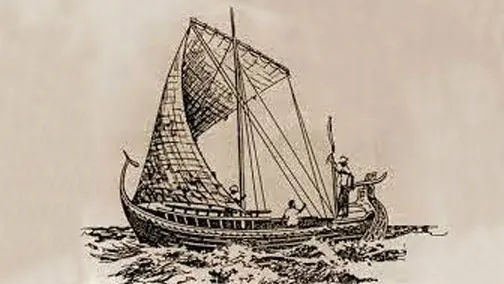
The Kalhuohfummi.
The Kalhuohfummi.
Creating an NGO, a corporation, or making it "state-run" isn’t the solution here. Bear with me for a while. Public ownership ≠ state ownership; public ownership ≠ public limited corporations or NGO operations either.
Let me be brutally honest: the best time for nationalisation of our industry was 18 years ago, in 2008. Instead, 2008 ended up being a rebellion, not a revolution. The next best time is as soon as possible. However, if nationalisation occurs without revolutionary overhaul and a transition away from the liberal capitalist bureaucracy we have today, what will end up happening is the same thing that happened with Zimbabwe: with no measure of accountability or power among the people, those elevated to positions of power over capital (likely the same names and faces in politics today) will simply end up gobbling up everything for themselves.
That is also pretty clear with the disgusting abomination that is MTDC. People often point to this as a potential failure of nationalisation, but this is severely misguided. 
First of all, according to their own annual report in 2024, MTDC exists as a public limited state-owned enterprise – it is a corporation, not an institutional measure – with a shareholding structure of 47 per cent government shares and 53 per cent public shares. Worse yet, in the resorts they’re operating (which are registered under other subsidiary private companies) they only hold 20 per cent (ENA Hotel Holding Company) and 15 per cent (Global Resorts and Development Maldives). The majority shareholders, in both cases, are foreign multinational companies. Does that sound like "nationalisation" to you? 
Second of all, even if MTDC was "perfectly" executed, that entity would exist under the material reality of capitalist markets and bureaucracy, in which the capitalists with the economies of scale as well as direct access to global finance capital will simply wipe it out before it could even materialise. There is no winning when you play by their rules, on their field, and with their referees.
So, remember, whatever new policy idea I propose is possible and try to persuade you for, the hard prerequisite is revolutionary change away from capitalism and neoliberal democracy. That is the first thing we all need to think about and work on together. That is the one thing that we should really be focused on and talking about: "how do we make that happen first?" Everything else (including industrial nationalisation) comes afterwards. We need to try, fail, try again, fail again, and keep trying.
As the revolutionary Mao Tse-Tung writes: "If a man wants to succeed in his work… he must bring his ideas into correspondence with the laws of the objective external world; if they do not correspond, he will fail in his practice. After he fails, he draws his lessons, corrects his ideas to make them correspond to the laws of the external world, and can thus turn failure into success."
So, let’s walk you through the mathematics and economics of this.

The mathematics and economics: the 'easy' part

By 2025 (see this compilation for the sources):

We had 175 operational resorts, of which 129 (74 per cent) were partially or fully foreign-owned

Resorts contributed US$4.7 out of US$5.6 billion of 2025’s total tourism value

The nation, on average, gets only 17.71 per cent of the wealth generated. The rest (83.29 per cent) flows into the hands of the elites. In 2025 figures alone, that means out of the US$5.6 billion we generated, the nation only received US$894.44 million, of which a majority is spent on politicians’ wages, construction projects, and dredging (did you know? In almost every year’s budget since the Maumoon era to this day, dredging is the single biggest individual capital expenditure)

Yet on average, tourism makes up 40.49 per cent of our entire national budget revenue

Obviously, foreign-owned resorts would take more of a cut from this, but for the sake of an approximate calculation, let’s say the US$4.7 billion mentioned above is evenly distributed between all 175 resorts. That amounts to about US$27 million per resort (in revenues, not profit) every year. We can even be charitable and assume that their operating expenditures consume half of their revenue (this is a pretty big margin!), rounding it down to a profit figure of US$13.5 million per resort

For context, Maldives has 186 inhabited islands and 179 operational resorts today, in 2026. Almost as many resorts as inhabited islands: do you see the insanity here?

According to the 2025 yearbook, the bed capacity in resorts during 2024 was 44,383 beds, or about 11.6 per cent of our national Maldivian population, or 27.7 per cent of Malé city’s population alone. And that is without apartment complexes or the assumption of household sharing. For further context, the registered households in Malé city alone is about 42,571.

Suppose we did nationalise the inflow of revenue to 100 per cent. 
Then, suppose we halved the number of resorts, kicked out every single foreign "investor" and corporation, and repurposed the rest into residential islands for Maldivians to live on, leaving us with 87 resorts only.
If we distributed the same US$13.5 million (profit, not revenue) among the remaining 87 resorts annually, that is US$1.18 billion every single year. Since we’ve lowered the supply and are assuming that the demand remains static, we can expect at least 15 per cent more in profits. Not only would we not lose anything in the process, but in fact, even at the static rate, the entire nation would be making US$285.56 million more than what we were initially making with tax revenue (US$1.18 billion – 894.44 million = US$285.56 million). Bear in mind that US$13.5 million is a conservative estimate. If we assume that the "leaseholder" dynamic would be erased after nationalisation, the real profit-rate would be much higher, as the operating expenditures for a resort would be mostly recurrent (food, fuel, staffing, maintenance, etc., since it doesn’t involve any primary or secondary elements of production).
That is excluding the reparations we can seize from the billions stolen from us over time by our domestic and foreign elites, as I have detailed out in my other data piece.
Don’t just take my word for it. Please. I’m begging you. I’m pleading with you. Go to these datasets, go to these sources, observe the numbers, and realise this for yourself. When you do, you will see for yourself for just how long we had been lied to and made fools out of by the very people we revered, called heroes, and respected, from the very beginning.
You will also come to a breakthrough realisation: we don’t need "foreign investments." We don’t need foreign capital. That is the one thing they hold over our heads when we argue for nationalisation, that foreign investors will leave.
"The foreign investors will leave!" So what? Who cares? Go back to where you came from, then, you suit-wearing psychopaths. We don’t need "foreign investment." We are perfectly capable of operating these resorts by ourselves, from our national budget, with more of a profit than we can ever make by letting these people "invest" in our country, especially when we cut down spending on useless stuff like dredging and futsal fields and whatever else since we’d have 88 more islands for residential use now (and therefore no more need for all this “ތަރައްޤީ”). Our lands are not your commodity, you bloated imperial pigs.
For 50 years, our electoral democrat politicians, with all their parties and different forms of governance, have kept us spellbound, hypnotised, and asleep under an idealistic and utopian capitalist dream of “ތަރައްޤީ”. What I’m trying to do is wake you up and realise that reality is far more beautiful and profound than any dream they can weave over your eyes.
Furthermore, with 88 islands repurposed for residential purposes and potentially converted into administrative, industrial, and necessary centres, we can obtain all the benefits of these stupid dredging projects (90 per cent of which still remain unused and undeveloped after over two decades, most of which are initiated to put profits in the pockets of our politicians, by the way) for literally none of the costs, whether financial or environmental.
Let me put it another way. There are currently 88 different islands equipped with basic medical, residential, utility, sanitation, and other facilities paired with amenities and lush greenery just waiting to be lived in. For free. They’re currently just being used as resorts to generate profits and nothing else.
Any additional costs would simply go into improving already existing facilities, such as for expanding residential capacity or improving medical facilities to provide necessary healthcare or initiating academic sites and so on. Pair this with a transition to renewable energies like floating solar, roof-mounted solar, and OTEC, and we’re looking at a much better (and much, much quicker) alternative for housing, proper healthcare, good higher education, etc. than you can ever achieve with the empty promises of “ތަރައްޤީ” and cramming more people into Malé while dumping sand into our lagoons.
A better future is right under our noses, don’t you see?

Common counterpoints and responses

"This will kill competition and innovation without the profit motive"
If organised into a public-owned (not state-owned, see the section below) industry, that means healthy competition would actually exist and be increased in capacity. A resort run by two different islands in a southern atoll may experiment with new things and find out this works far better, for example, and others may follow suit or even improvise better, because better performance means greater regional share of the benefits. Instead of these uniformly similar resorts we have today, we’d actually see a broader diversity of experimentation if we open up access to the broader public.
"Without leadership structures, it’ll be complete chaos"
Leadership structures will exist. Did I ever say it wouldn’t? I’m not an anarchist. Leadership structures will always exist, formally or informally, whether it’s in a ship’s crew or a restaurant kitchen or even in academia. What this does is abolish the barriers to accessibility, making it easier for people to hold leaders accountable, override decisions with due process, or even access those positions themselves. In that vein, these resorts will be community-run, not by the government or private entities, and the structures and frameworks for that are something we have to think about and work on as a nation collectively. See the section below.
"But without foreign investments, we’ll perform poorly"
What exactly are these "foreign investments" used for? Think about that. Where has all of that "foreign investment" gone into if we’ve now linearly progressed into the brink of economic collapse and an external debt that is far above our annual production of wealth? Most of that has gone straight into the pockets of our politicians and industrial corporations, and you know it. Otherwise, we’d be seeing nationwide prosperity instead of more concrete skyscrapers and “ތަރައްޤީ” projects in the Malé region while everyone is impoverished. And, more importantly, I’ve demonstrated with the numbers above that we’d actually be better off without foreign intervention

The politics: the 'hard' part – public ownership, not state or private ownership

Politics is what I do not have an answer for, but it’s okay to not have individual answers for something we must collectively arrive at. Take Lenin’s words: "we do not claim that Marx or the Marxists know the road to socialism in all its completeness. That is nonsense. We know the direction of this road, we know what class forces lead along it, but concretely and practically it will be learned from the experiences of the millions who take up the task."
What I know is that this is not a reality we can vote our way into. Anyone who turns to electoral politics in the efforts realising this destiny is lethally mistaken. Do you really think any of them would let you just vote or protest their powers away? Do you really think they will listen to all this and go, "oh, okay, that sounds reasonable," and just make the world a better place right away? You know they won’t. This is where the "struggle" part of "class struggle" comes in, and it is something we are so highly averse to because we’ve been comfortable for so long in the last 50 years. 
Every coup, every rebellion, every overthrow we’ve had were never backed by popular mass support (even in 2008, MDP only won in the second round rather than in a landslide victory. That division in population has remained to this date) nor were they revolutionary in capacity. At most, they were performances. They were hollow. They only changed the guard; the castle and kingdom remains as it was 50 years ago.
A distinction must be made between different types of ownership as well.
Ownership Types, Characteristics, and Examples
TypeDefinitionExamples
Personal Property that you own to use for yourself The house you live in; your phone; your television; your toothbrush; machinery to generate electricity for household use
Private Property owned and inherited by an elite few to produce surplus value to obtain more capital A factory; other people's labour; houses you own only to rent, not to live in
State Property owned by the government wherein only the elected officials have the final and highest say in what is to be done with them
Public Property that belongs to everyone equally, wherein everyone has an equal say in what is to be done with them as well as equal power and ownership of these things
While we want to abolish private property (ރައުސުލްމާލީ މުދާ), the imperialists want to abolish personal property (އަމިއްލަ މުދާ), and transfer the remaining dimensions of power into state ownership (ދައުލަތުގެ މުދާ) rather than giving the masses any power by turning it into public property (އާންމު މުދާ).
In simpler words, they want you to never own your homes and keep on paying rent or be indebted to the government for social housing while we want to abolish that system and allow you to actually own the homes you live in for a lifetime, indefinitely. That is the same principle we’re approaching industrial nationalisation with: we don’t want our nation’s biggest wealth inflows to be owned by a few wealthy elites or the government, we want everyone to have equal ownership and direct power over these things, and for these industries to be community run. The early frameworks already exist.
A distinction must also be made between capitalism and commerce. Commerce is the bartering and exchange of goods and services for mutual gain, this has existed in informal and organised forms for millennia across history. Capitalism is simply a way of organising commerce – and it does so by centring capital and the accumulation thereof into the hands of a few private and government elites with profit-maximisation as the central mechanism that operates it. 
This means any efforts at nationalising industrial elements will not include things like restaurants, cafés, local retail chains, corner stores, gymnasiums, etc. If anything, because industrial surplus value is now subsidised, everyone in these fields too would earn more for their labour in the absence of taxes and presence of universal subsidies. This is far more achievable and realistic than capitalism’s idealistic, utopian on-paper ideology of "trickle-down economics." When exactly is it going to trickle down if the glass at the top just keeps getting bigger and bigger?
It is therefore evident that whatever grand national ideas we come up with – whether it’s political and economic decentralisation over MDP’s mere administrative decentralisation in 2010, universal basic income, industrial nationalisation, a majority-transition to renewable energy, or whatever else – revolutionary overhaul of our political ecosystem comes first. Dissolution of the neoliberal executive, legislative, and judiciary bodies and the replacement thereof with a worker’s state with direct participation, ownership, and accountability measures for all of the population rather than vesting them in elected representatives comes first.
How we will get there and what we must do after we get there is something we must find out together, in conversation and in shared practice, over thousands of trials and errors, and with revolutionary praxis as an active form of participation even after we’ve crossed the finish line to revolution. 
Beyond that horizon is the shining beacon of paradise.
I know this article, written in English, published online, will only reach a privileged portion of our population, but that is my target audience. My only request to you, if any of this resonates with you, if you’ve made it this far, is to take all of this and communicate it with less privileged people around you, in your neighbourhoods, in your islands, in your proximity. Use your privileges. It is far better that you spend time with five over-exploited working class people than it is to waste your time persuading a thousand liberals or conservatives.
Mahal Ibrahim Abdulla is a writer, artist, musician, and an interdisciplinary researcher. He is a co-founder of Moosumi. He is an honours graduate in Politics and Social Policy from the University of Leeds. His current research interest is post-growth economics, and is studying physics to progress into a multi-disciplinary post-graduate pathway in his academic career.
Note: The revenue and profit figures in this piece are the author's own estimates, modelled from published tourism statistics. Sources are linked throughout.
All comment pieces are the sole view of the author and do not reflect the editorial policy of the Maldives Independent. If you would like to write an opinion piece, please send proposals to editorial@maldivesindependent.com.

Discussion

No comments yet. Be the first to share your thoughts!

No comments yet. Be the first to join the conversation!

Join the Conversation

Sign in to share your thoughts under an alias and take part in the discussion. Independent journalism thrives on open, respectful debate — your voice matters.

Support Independent Journalism

Help us keep the news free and fearless

Give once
or
Become a memberfrom $5/month

Explore more