
Fifty-two discoveries in Maldivian waters, no Maldivian authors
Maldivians led just seven per cent of 40 years of marine research.
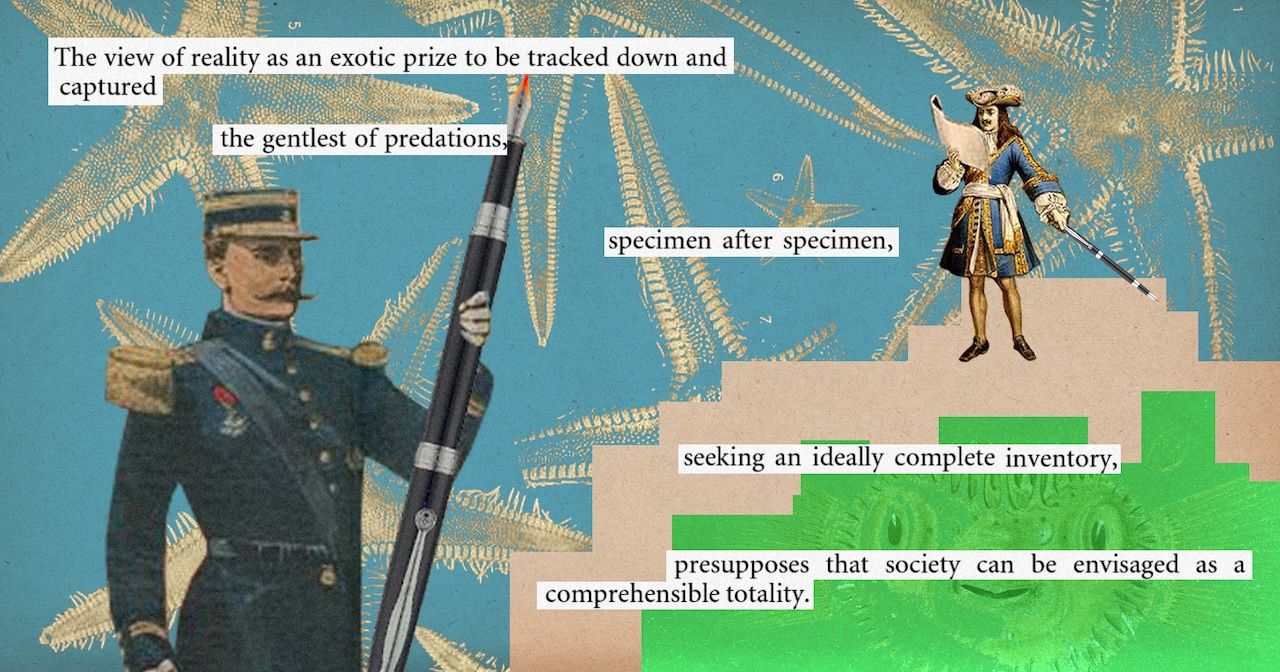
Artwork: Dosain
10 Aug, 20:14
Over four decades, scientists documented new species, new behaviours and new discoveries about the Maldivian marine environment in 60 peer-reviewed studies. Fifty-two of them did not include a single Maldivian author.
The studies where local knowledge might be expected to count for most are the ones where Maldivians are least present. That is the picture that emerged from a study conducted by Hana Amir and Aishath Sara Hashim. Their abstract asked the question directly: Dhivehin kobaa? (Where are the Maldivians?)
Their study examined scientific literature published between 1985 and 2025. It did not focus on policy interventions, Hana said, but this is the first time that "anyone's put numbers on the problem".
Across 460 peer-reviewed studies about the Maldives published over 40 years, Maldivians led just seven per cent.
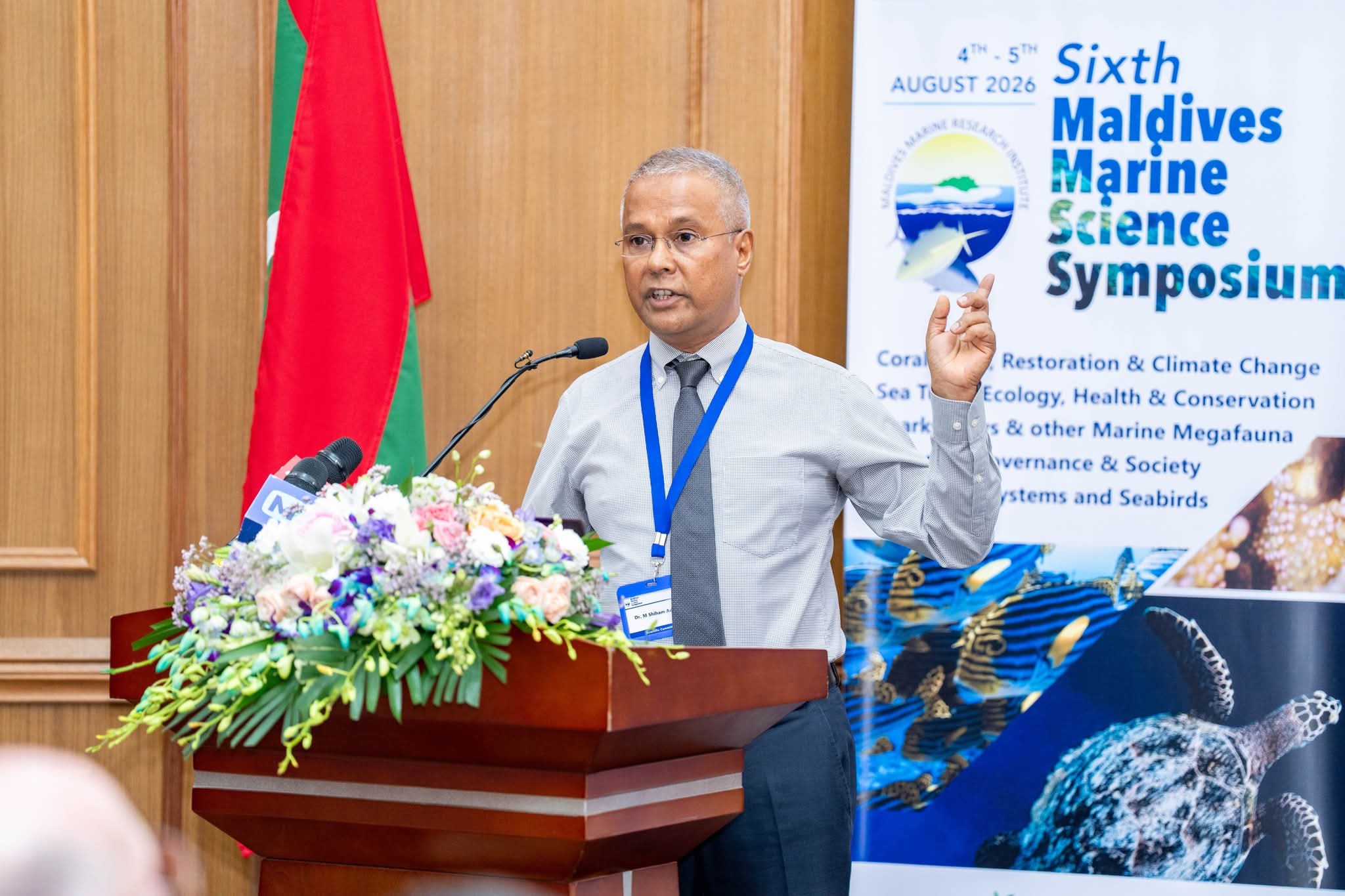
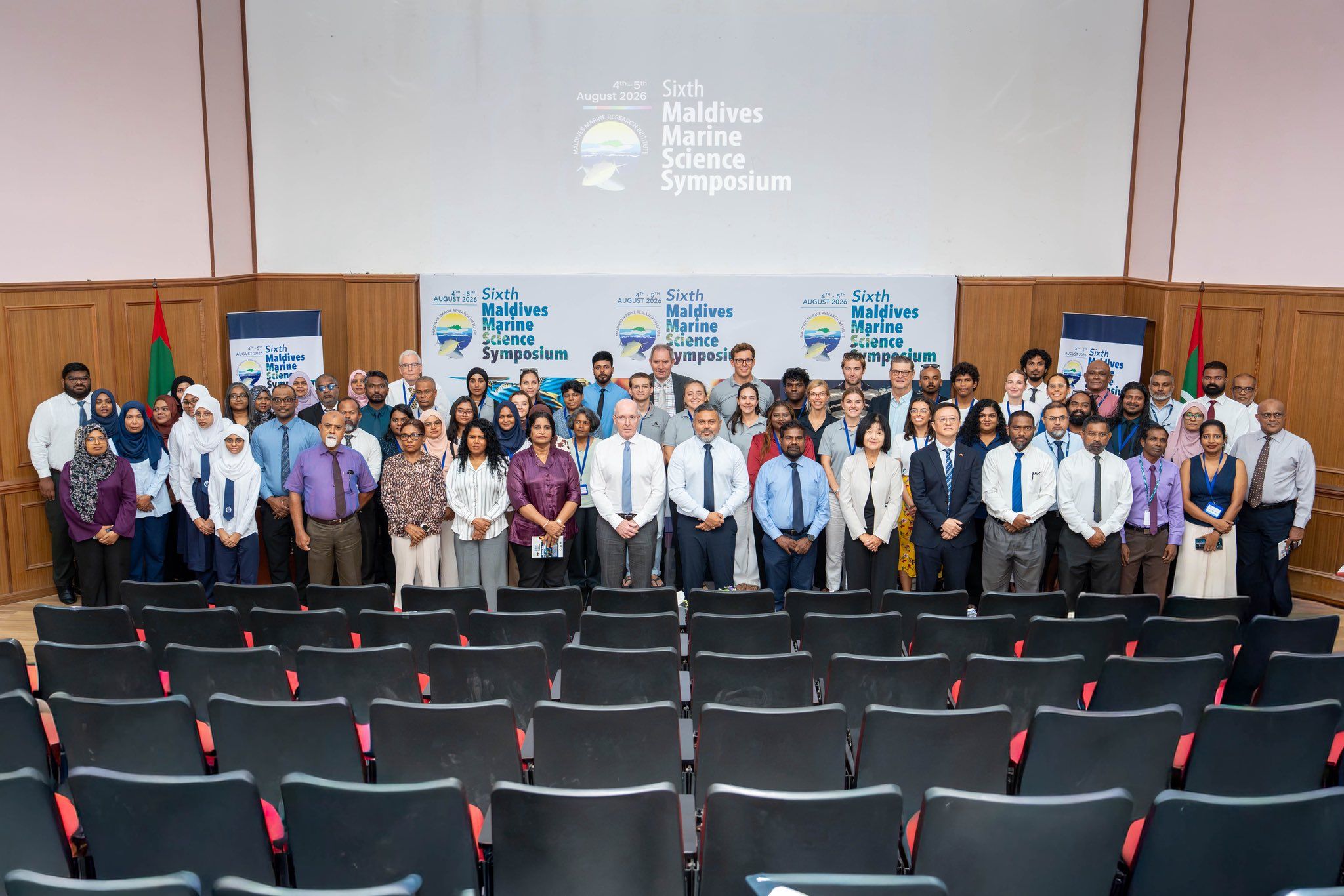
Hana, a coral ecologist, presented the findings last Tuesday during the Sixth Maldives Marine Science Symposium. Sara is a researcher at the Maldives Marine Research Institute, which organised the symposium, a two-day biennial event that gathers local and foreign researchers and conservationists to present their ongoing and completed research.
In his remarks at the opening ceremony, veteran fisheries researcher Shiham Adam cited sea surface temperatures rising by almost a quarter of a degree each decade, with reefs projected to cross further thermal thresholds within 10 years. A growing body of megafauna research was establishing the Maldives as an international reference point, said Shiham, who sat on the scientific committee that reviewed this year's abstracts.
He asked the audience to consider the same question posed by Hana and Sara: who is doing this science?
"It's a fair question and a necessary one because for decades much of our marine research has been conducted, analysed and published by people who came, sampled, observed and left," he said.
'Officially report'
In 2023, researchers at the Marine Research and Higher Education Centre in Faafu Magoodhoo, an outpost of the University of Milano-Bicocca, published what they described as the first scientific record of bull sharks in the Maldives.
But both the Maldives Marine Research Institute and the national shark management plan had recorded the species before.
When the Maldives Independent asked about this in June, MaRHE researcher Davide Seveso drew a distinction. The centre was not the first to observe the sharks, but the first to report the finding in a scientific journal, he said. "It's different, people do science in Maldives, of course. Maldives Marine Research Institute – but if they don't publish in international certified journal the results, they are not known. I don't know, they are not official," he explained.
MaRHE rejected accusations of "parachute science" as unfair. The term is used to describe foreign researchers conducting studies in developing countries with limited local participation or benefit. But the Italian research outpost acknowledged it did not focus enough on local collaboration since it was established 16 years ago. Of more than 100 scientific papers affiliated with the centre, only five had a Maldivian co-author.
The university's joint masters programme also failed to produce any Maldivian graduates in that period. Former students told Maldives Independent that they were required to complete an intermediate Italian course and faced administrative difficulties with the programme. MaRHE's director said in June that is no longer delivered and that the masters and the centre are separate entities.
Counting the absence
The question Hana and Sara wanted to answer was straightforward: "To what extent are Maldivians represented in the peer-reviewed academic marine sciences related to the Maldives?"
They began with 6,425 peer-reviewed articles identified through a standardised search string from academic journal databases. After screening titles and abstracts and removing duplicates and irrelevant or out-of-context papers, they were left with 460 articles published between 1985 and 2025 that were relevant to marine science in the Maldives.
The decision to focus specifically on peer-reviewed literature was deliberate. "The accessibility to publishing peer-reviewed papers and also to read peer-reviewed papers is a very big limitation to Maldivians," she explained.
Only 39.5 percent of the 460 studies had any affiliation with the Maldives.
That figure does not tell the whole story.
"What we found was that just because a study was affiliated with the Maldives, it doesn't necessarily mean that the local authors are present," Hana said.
Of the 182 studies affiliated with the Maldives, only 110 included a Maldivian author; 72 studies carried a Maldives affiliation with no Maldivian author on them. Even when Maldivians were included, they were often tagged on to a long list of authors. Only 34 papers – 7.4 percent of all the studies examined – had a Maldivian as the first or primary author.
"It's a bit sad as a local to see that number. And most of these studies are concentrated in fisheries," Hana said.
Of those 34 papers, 13 were about fisheries, nine about coastal ecosystems, six about coral reefs, three about mangroves, two about oceanography and one about mesophotic and deep-sea ecosystems.
Most of the authorship roles given to Maldivians were in review and editing of a scientific text. Investigation, which includes data collection, came in second.
"Another somewhat concerning trend is that review and edits were the highest because in this global conversation about parachute science, this is a specific category that is being flagged as a way to fulfil that local representation in a paper," Hana noted.
She highlighted papers that involved scientific discoveries, "where there should be local authorship and local representation, because you are discovering something about the country."
Of the discovery studies analysed, only eight included Maldivian representation. Fifty-two had no Maldivian authors at all.
Where the research happens
Geography revealed another layer to the problem.
As might be expected, the central atolls around Malé accounted for the highest concentration of studies. Biodiversity hotspots such as Baa and Alif Dhaalu, as well as atolls with established research outposts such as Faafu and Laamu, also attracted more research than others.
The northernmost and southernmost atolls have the least.
Raa and Meemu atolls had no local representation in any of the peer-reviewed studies conducted there.
Faafu Atoll – home to the Italian university outpost – had the third-highest number of studies, but the lowest representation of local authorship.
But a majority of the newer research in the more remote atolls is being conducted with Maldivian authors, said Hana, who previously led national coral reef monitoring and reef restoration efforts at MMRI.
"So far what we can conclude from our analysis is that the situation in the Maldives in terms of marine sciences does very much reflect the global discussion that's been gaining increasing attention," she observed.
The cost of publishing
MaRHE's researchers offered an explanation for the shortage of Maldivian co-authors: there was nobody to co-author with. There are many scientists in the Maldives but very few who publish, Seveso said in June. Hana's presentation set out why.
Enas Mohamed Riyaz, known as 'Tonti,' a conservation biologist at the Environmental Regulatory Authority and a Chevening scholar who recently completed her masters in the UK, asked about the challenges in getting a PhD.
Hana, who is currently completing her PhD at Bangor University in Wales, responded: "For PhD programs, one of the first things they look at is, do you have a peer-reviewed publication under your name? And then as a Maldivian you go, 'Oops no.'"
Publication charges for scientific journals can run upwards of US$2,000, Hana said.
Government reports and other grey literature carry their authors' names and may be just as robust scientifically, but without peer review in a journal, "doesn't count for anything unfortunately," she said.
"That's a real barrier to folks to do their PhDs or masters or being seen as having something valuable to say."
Speaking from personal experience, Hana said collaboration needed to be more genuine and knowledge should be shared without "locals having to chase" after foreign researchers.
Maldivians also find it hard to remain in the field because the available jobs do not pay well enough for those required to support families, she said.
"I've been very fortunate that I have had scholarships to carry me through high school, undergrad, masters and now the PhD. But I'm maybe less than one per cent of the very very lucky few that can maybe continue with it," she said.
"But even for me, looking at the opportunities that are in the Maldives once I complete my PhD, it is kind of dull. There isn't much out there."
The conversation
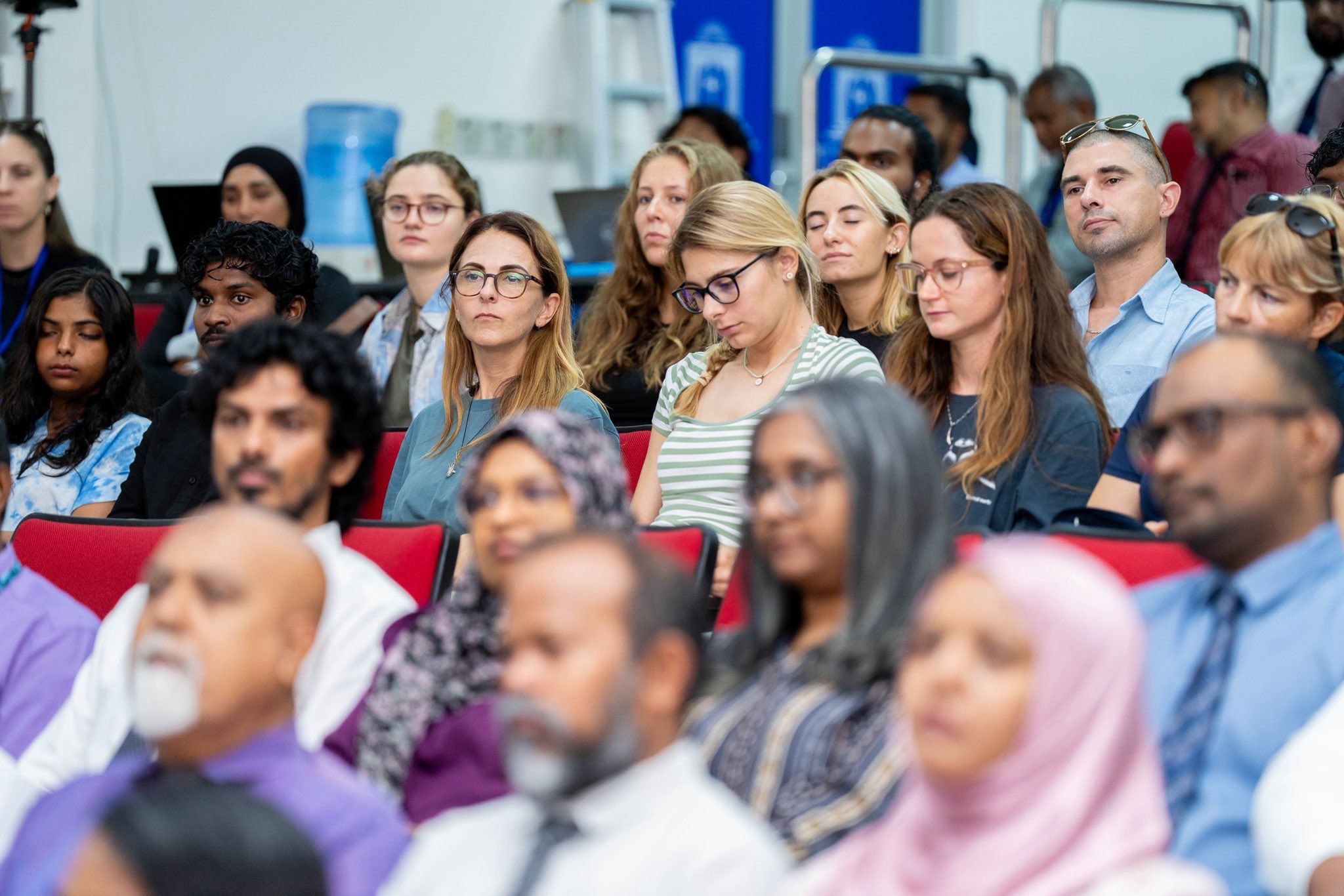
This year's symposium featured 47 abstracts (32 oral presentations and 15 posters) across five themes. The attendees were a familiar mix of Maldivians and foreigners from marine research organisations, government institutions and resort marine biology teams. The lively chatter of colleagues and friends re-uniting and catching up filled the hall before the event began.
After Hana finished her presentation in the afternoon, there was a palpable sense of appreciation.
While the preceding presentations involved sophisticated and convoluted science (including by Hana herself), the social study drove at the heart of a subject that has been quietly discussed among Maldivian conservationists for years. It ignited conversation like none of the earlier presentations.
"Thank you so much Hana for putting this together. I think you have tugged at the heartstrings of all Maldivians here," said Tonti, the environment analyst.
Mohamed Shimal, the MMRI's director general, also joined the discussion, thanking Hana for her contribution.
"I have somewhat of a 2,000 to 3,000 dollar question for you: do you wish to publish this study? Because I'm afraid that the conversation that we are having today and the information that's been presented here is going to be lost and or not available in the future."
The attendees had the abstract "but not the whole information," he noted. "I would hope to see it published, so that this conversation can keep going on," Shimal said.
Shiham, who moderated the discussion, concurred with Shimal and urged Hana to publish the findings. In his earlier remarks, the veteran marine researcher pointed to signs of progress: Maldivians led close to half of this year's oral presentations and the majority of the poster presentations.
"That matters for reasons beyond fairness," he said.
"Local leadership means that the questions that we ask are the questions that matter here – reef restoration techniques suited for our own logistics, turtle conservation grounded in our own communities' relationship with the animal, shark science that speaks to our own tourism economy. It means capacity that stays in the country after the symposium ends."
Hana meanwhile talked about how the idea for the study came to her.
"I'm doing my PhD and one of the chapters is on the Maldives, and I was genuinely so sad to not be able to cite local authors," she said.
"This came from an emotional, sad place where, how do we show that locals are underrepresented, and how do we give a push to the locals to be like, I can do it as well. As a local, I'm not special. There's a whole bunch of us who are incredibly intelligent and who deserve to have their knowledge seen. So that's what motivated this specific study."
She added: "It would be really nice, as a local, to [be able to] say, I don't know, Enas et al instead of John et al."
Hana said she has discussed publishing the study with her research partner and hoped it would appear in the academic journal of her university.
Before ending her talk, she noted that the study would not have been possible without access to the academic system it was examining.
"I want to mention that this is a work that was done by Sara and myself and it wouldn't have really been possible if I wasn't in a university because accessing the articles to see them, while I could do it, Sara in the Maldives could not, and that says a lot!"
Discussion
No comments yet. Be the first to share your thoughts!
No comments yet. Be the first to join the conversation!
Join the Conversation
Sign in to share your thoughts under an alias and take part in the discussion. Independent journalism thrives on open, respectful debate — your voice matters.
Support Independent Journalism
Help us keep the news free and fearless
Give once
$
or
Become a memberfrom $5/month