

To graduate in the Maldives, you must first learn Italian
Milano-Bicocca has not graduated a single Maldivian in 15 years.
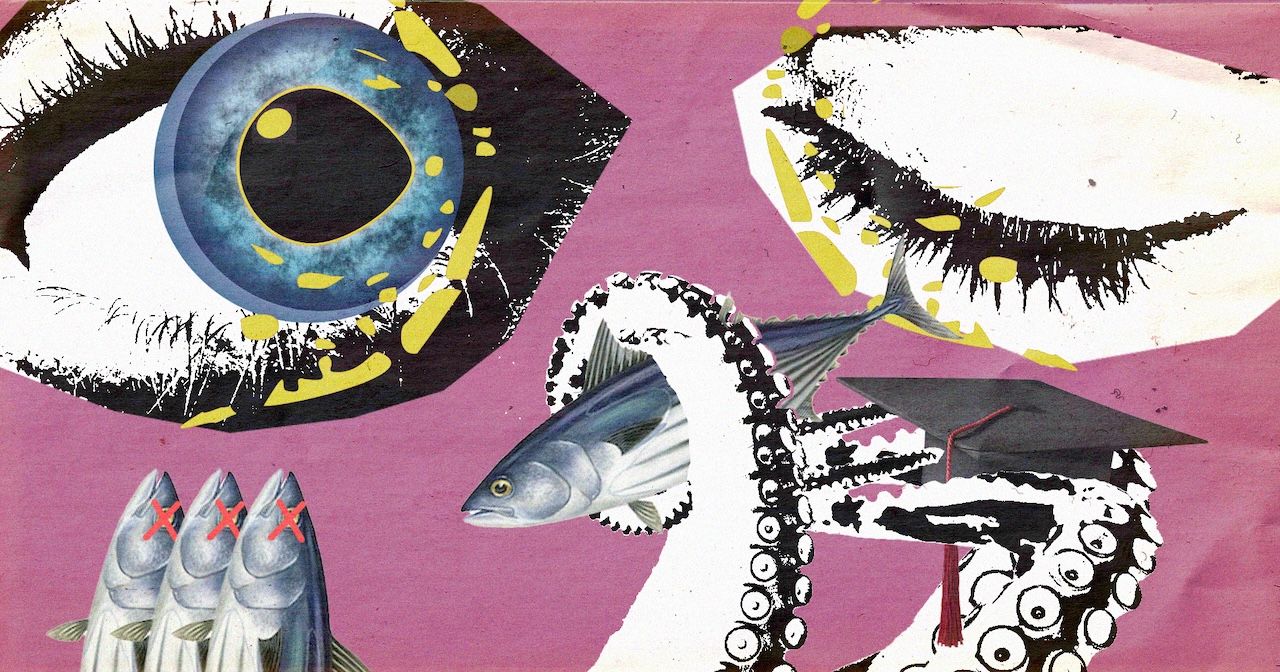
Artwork: Dosain
05 Mar, 17:50
To graduate from the only foreign university based in the Maldives, students must pass an upper-intermediate Italian proficiency exam. Since the Italian marine research outpost opened 15 years ago, it has hosted hundreds of foreign students and produced more than 100 scientific papers. Only five of those papers had a Maldivian co-author. Not a single Maldivian has graduated.
The University of Milano-Bicocca's Marine Research and Higher Education (MaRHE) Centre was promised as “a chance for Maldivians to study at a world class university, without having to leave the Maldives.” Former President Mohamed Nasheed opened the facility on January 29, 2011 in Magoodhoo, an island with a population of 700 people in Faafu atoll.
MaRHE was to be an “outpost which would offer students at the University of Milano-Bicocca the opportunity to conduct marine research in one of the world's most spectacular tropical ecosystems, which is also at the climate change frontlines.”
The centre hosts several of its own students and researchers from other foreign universities every year to study the island's marine environment.
Language prerequisite
Azim Musthaq, a Maldivian dive instructor turned environmental consultant, finished his undergraduate degree from Australia and decided to join a masters program offered by MaRHE in 2018.
"I approached Bicocca University because they are based in Maldives. They were very nice at first, they asked to go meet the director of the facility," he recalled. The application process went smoothly. Azim started attending online classes, an option he was grateful for as he worked full-time in Malé.
"Their program, the professors and the content they deliver is very solid. The professors they brought in were leading people in the field. As far as the university ranking goes, they are highly rated, an emerging university but very good. But the structure of the university is very difficult."
Prior to the Covid-19 pandemic, the university was not equipped for online learning: "Some professors might have their video off. Some might have their video on but not have the slides on. Some days the video might be okay but the audio wouldn't be set up correctly and you would just hear people chattering."
Azim managed to complete his courses by following the content. The problems started in his second year.
“There was a foreign language requirement for the course from the beginning, but it had the option to select English, which made sense for us because English is a foreign language for us. So we went through the first year without any issues. But suddenly we got an email from the university secretariat saying that Maldivians couldn’t keep English as the foreign language option, and that we had to select Italian.”
The required Italian course was a B2 level one, an upper-intermediate level that would require students to understand the main ideas of complex texts, interact fluently with native speakers, and produce clear, detailed speech and writing on a wide range of topics.
“We had to complete that level without doing any prerequisite courses. I tried asking them to let us keep English but their point was that Italian is needed to speak to Italian colleagues. So I asked them to let us do a lower level course like A1, but they did not agree to it.”
Azim also faced difficulty coordinating with the university for his study abroad semester, which coincided with the global Covid lockdowns. But it was ultimately the Italian language requirement that forced him to quit.
Another student who joined the program alongside Azim in 2018 also left for the same reason. Four Maldivian students who joined Bicocca the previous year did not finish their programs either.
“Four of us completed the Bachelor of Environmental Management program from the Maldives National University that was first started during Nasheed’s time," one of the students told Maldives Independent on the condition of anonymity. "After we graduated from MNU, we waited to see if MNU would start a masters program but we were told instead that a joint masters program with Bicocca University would start. We were excited to join because it was a foreign-affiliated program."
But the students faced difficulties seeking clear instructions. They were informed the full program could be done online, but they found out from other students that the final semester had to be completed in person. Two dropped out. The other two went to Milan for a study abroad semester. But they also learned of the Italian language requirement from other students.
“Myself and another student finished three months there and came back and were almost close to graduating, but we learned that we could not graduate without completing the Italian course," he said. "I did not want to spend two additional years learning Italian, I did not have that kind of time as someone who works full-time."
“Parachute science”
Azim, who went on to earn a Masters of Science in International Marine Science from Heriot-Watt University, now works as an environmental consultant and a marine scientist. The Milano-Bicocca experience represented symptoms of a larger problem, he suggested.
“Most of the collaborations by foreign organisations and Maldivians are at a token level. It did not start with Bicocca university. But they are a big organisation, and the only foreign university based here. They have to take a big chunk of responsibility for being unable to develop locals all this time," he argued.
“A lot of organisations in Maldives do the same. Maldivians are utilised in a lot of their work but they are not involved in the research that they do, and even when they do it is very tokenistic. Very few organisations actually try to develop locals in this field.”
MaRHE has been successful in its scientific pursuits in Maldives.
In 2020, Professor Paolo Galli, the centre’s director, penned an op-ed touting the achievements.
“In 2019, MaRHE Center hosted 43 professors and researchers, and 223 students. The affiliated staff published 12 articles in international journals, participated in 15 scientific congresses, took part in three international expeditions, supported 23 Master’s thesis, and organised 17 national and international events," he wrote.
The centre’s website includes a detailed list of all scientific publications it has contributed to scientific journals between 2017 and 2021. Out of 91 total publications within this period, only one paper was co-authored by a Maldivian. Mohamed Shifah was listed as one of 12 co-authors for a study on the use of legal and illegal substances in Malé by assessing wastewater. Shifah is also the only Maldivian on the MaRHE’s 16-member team or 13-member scientific committee.
The centre's output is unmatched in the country, Azim noted. "It is a big accomplishment for an institute to produce so many papers. But there are so few Maldivians involved,” he observed.
“They are using our natural capital for their scientific use. And they utilise Maldivians at a tokenistic level...That’s when it becomes parachute science. We have given them the chance to research in a place like Maldives. It is fairly easy to do research here compared to some place like India or Indonesia. They can even take samples abroad within proper procedures. But after all this time, have they done enough? There has not been a Maldivian who finished a program. I think it is a fair expectation.”
But there has been some improvement following criticism of the lack of local involvement, Azim noted. A PhD program was recently offered to a Maldivian. Three additional Maldivian researchers were listed as co-authors in four scientific papers published last year, although it has not been added to the website. This includes a research paper on sharks, and three research papers on mangroves.
In 2019, the former administration extended the Bicocca University's agreement for a further 10 years.
The Maldives Independent was awaiting a response from the university at the time of publication.
Local collaboration
Despite the lack of local graduates, the MaRHE centre’s presence in Magoodhoo is a good thing for the island, Abdulla Waheed, the island’s council president, told the Maldives Independent.
"The council has taken over the catering for US$ 45 per head. So for each batch there are 25 to 45 students who visit here. So there’s about three batches visiting every month and they are here for a period of eight months every year. So for this period, it’s a significant amount," he said.
"In addition to it, they pay us US$ 3,500 per month because we look after the premises and do repairs even when they are not here."
The council does not collect rent for the property or plot of land used by the centre because it is used for educational purposes, Abdulla said. The US$ 3,500 fee covers only maintenance, repairs and upkeep throughout the year.
MaRHE has also helped with installing solar panels on the council building, and arranged an exchange trips to members of the community, including fishermen, teachers, students and council staff, Abdulla said.
“As far as I know, they have agreements with the police service to use their laboratory for tests, and they have an agreement with the national university as well. There’s been three batches of students from MNU who have come to the centre for field visits.”
A lecturer from the Maldives National University confirmed the field trips undertaken by three batches, each consisting of 15 to 20 students. However, the previous joint masters program was difficult for local students due to “communication gaps” and the foreign language requirement, the lecturer acknowledged.
Asked about the lack of Maldivian graduates, the Magoodhoo council president said he had raised concerns with the higher education ministry.
“I have informed them to advertise it more and even among schools in Malé so that this opportunity is used. The council will help and make accommodations to help in any way we can," Abdulla said.
“But in sum, I would say that it has been beneficial for Magoodhoo."
Discussion
No comments yet. Be the first to share your thoughts!
No comments yet. Be the first to join the conversation!
Join the Conversation
Sign in to share your thoughts under an alias and take part in the discussion. Independent journalism thrives on open, respectful debate — your voice matters.
Support Independent Journalism
Help us keep the news free and fearless
Give once
$
or
Become a memberfrom $5/month

