Minister ordered approval of Addu wetland reclamation over regulator's objections
ERA said damage couldn't be mitigated; ministry rezoned protected area to proceed.
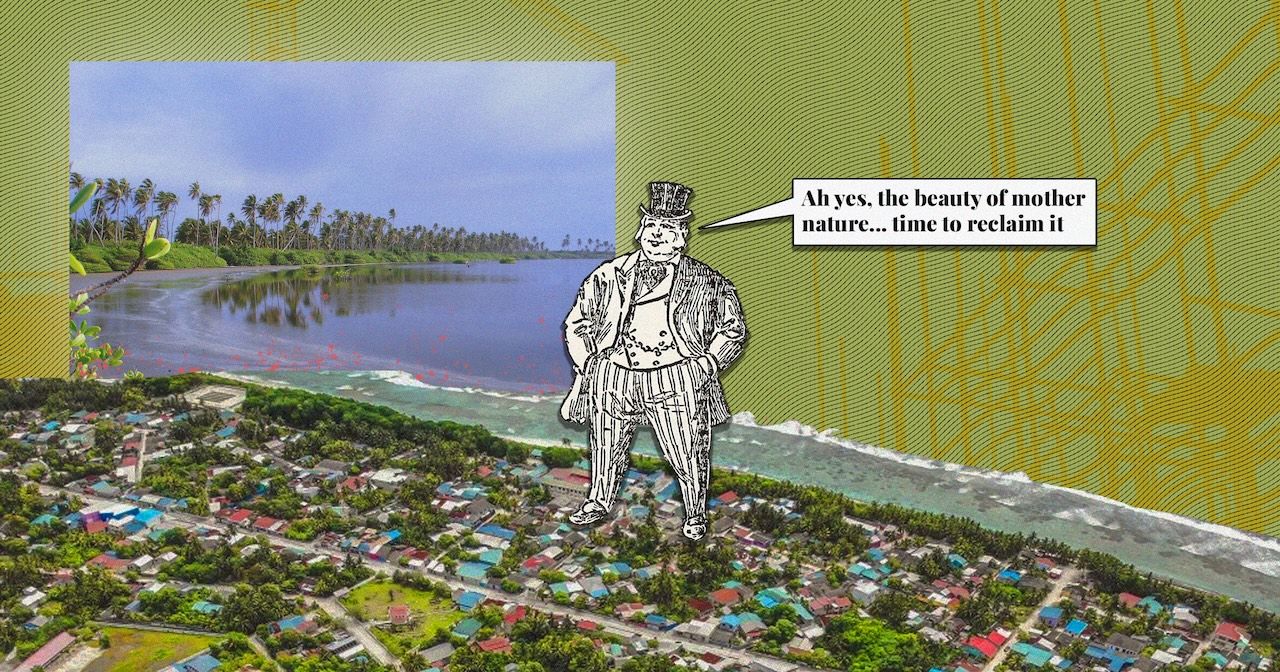
Artwork: Dosain
03 Jun, 19:31
The Environmental Regulatory Authority warned that wetland reclamation in Addu would cause damage that could not be adequately mitigated. The project is due to go ahead anyway after the environment minister ordered the regulator to grant approval over its own objections.
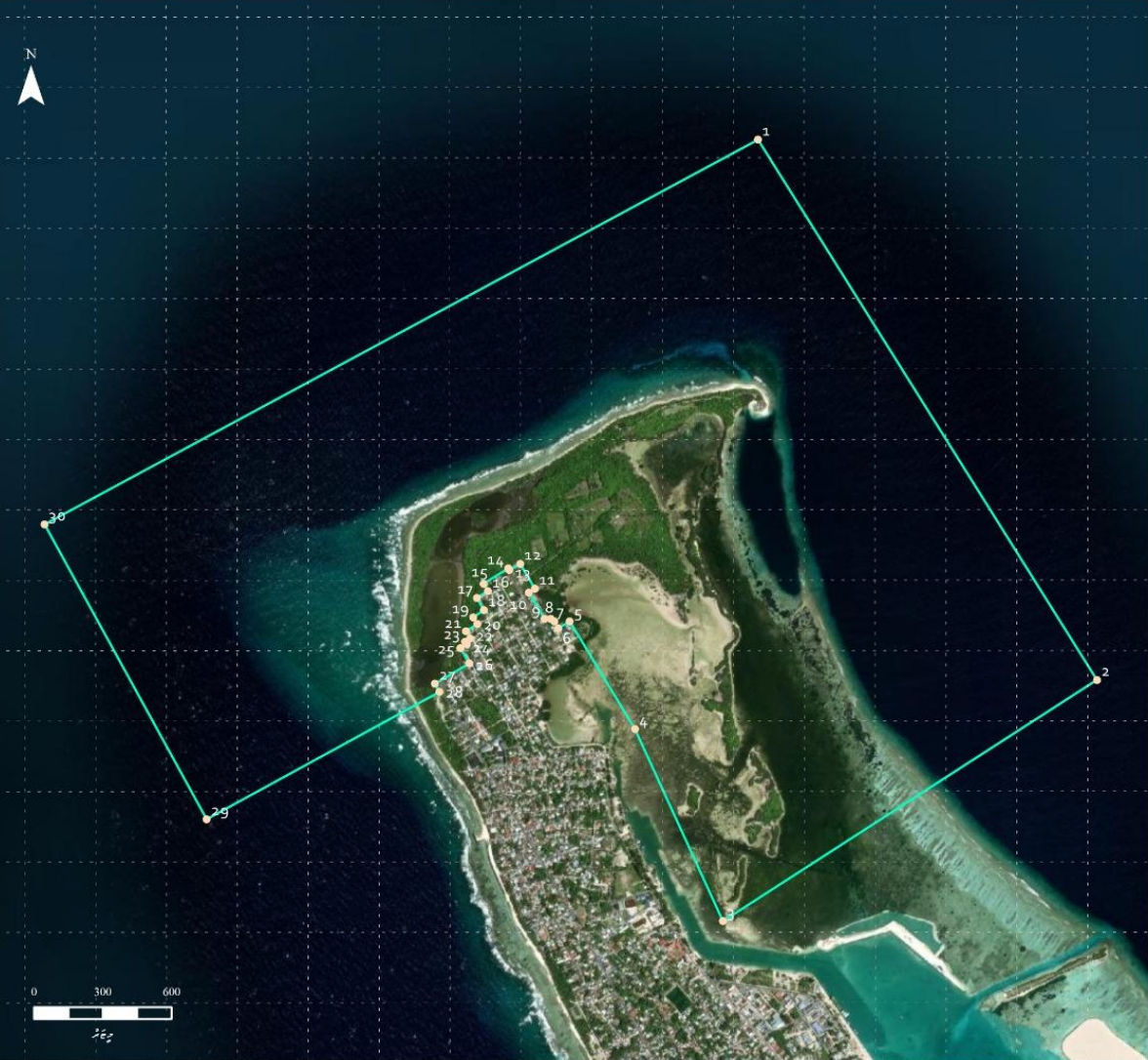
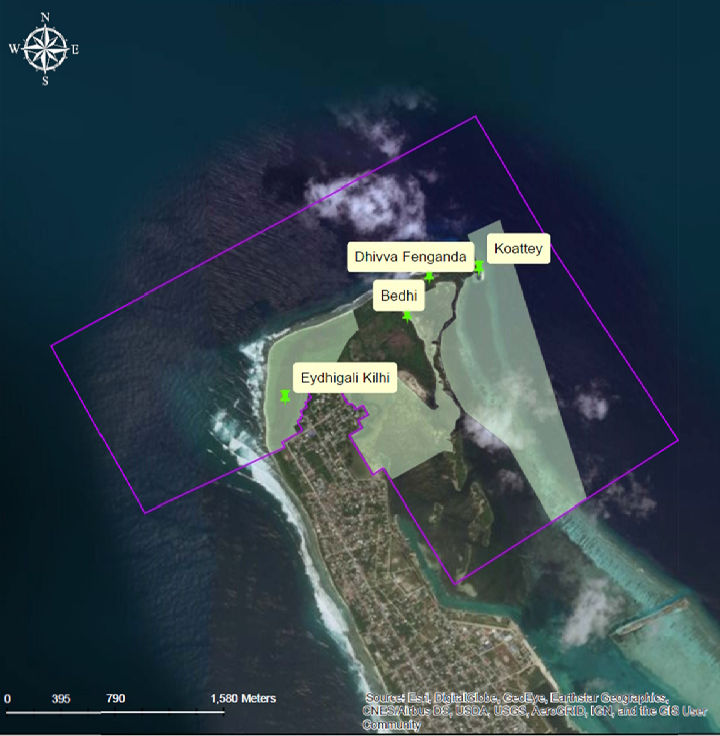
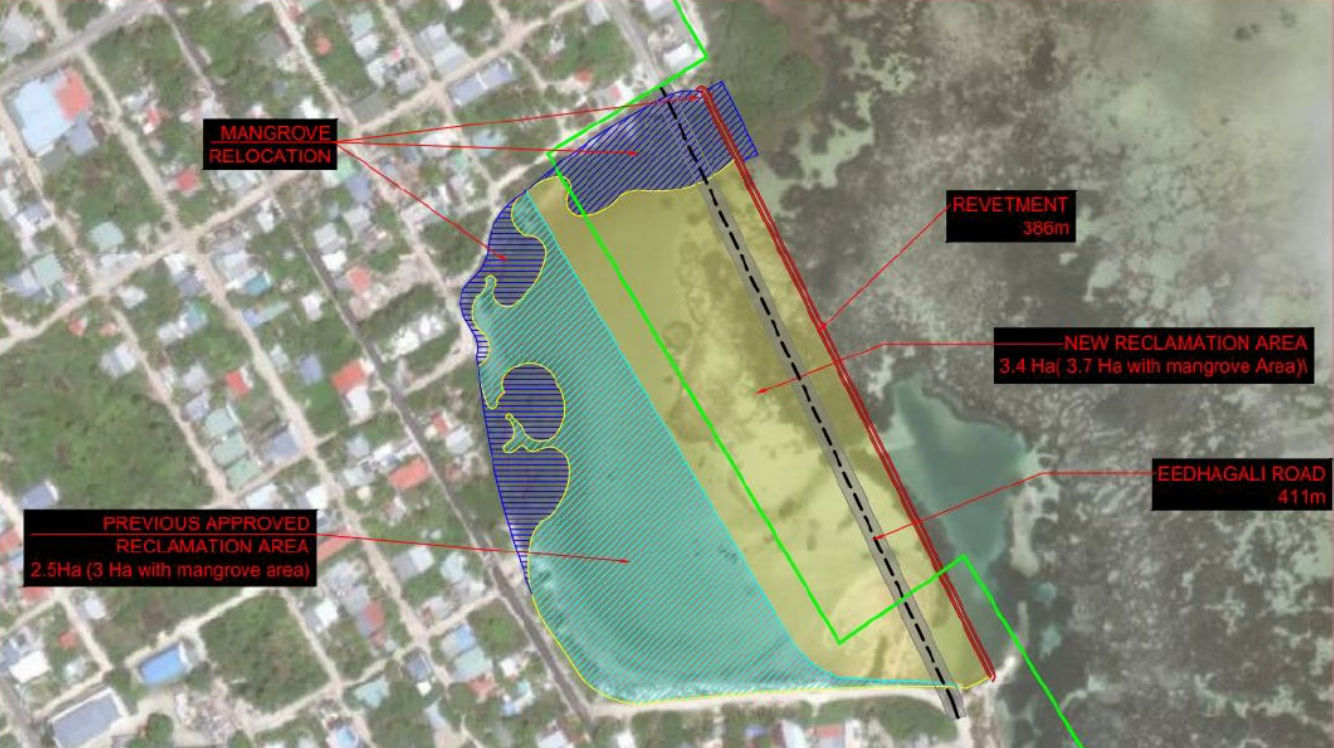
The project involves dredging a further stretch of Fishimathi Moolekede, a wetland beside the protected Eedhigali Kilhi, to reroute a planned road. Moving the road north pushes the reclamation over the boundary of the adjacent Addu Nature Park protected area, which the ministry redrew to facilitate the project – days ahead of a parliamentary by-election in the Hithadhoo North constituency where the wetland is located.
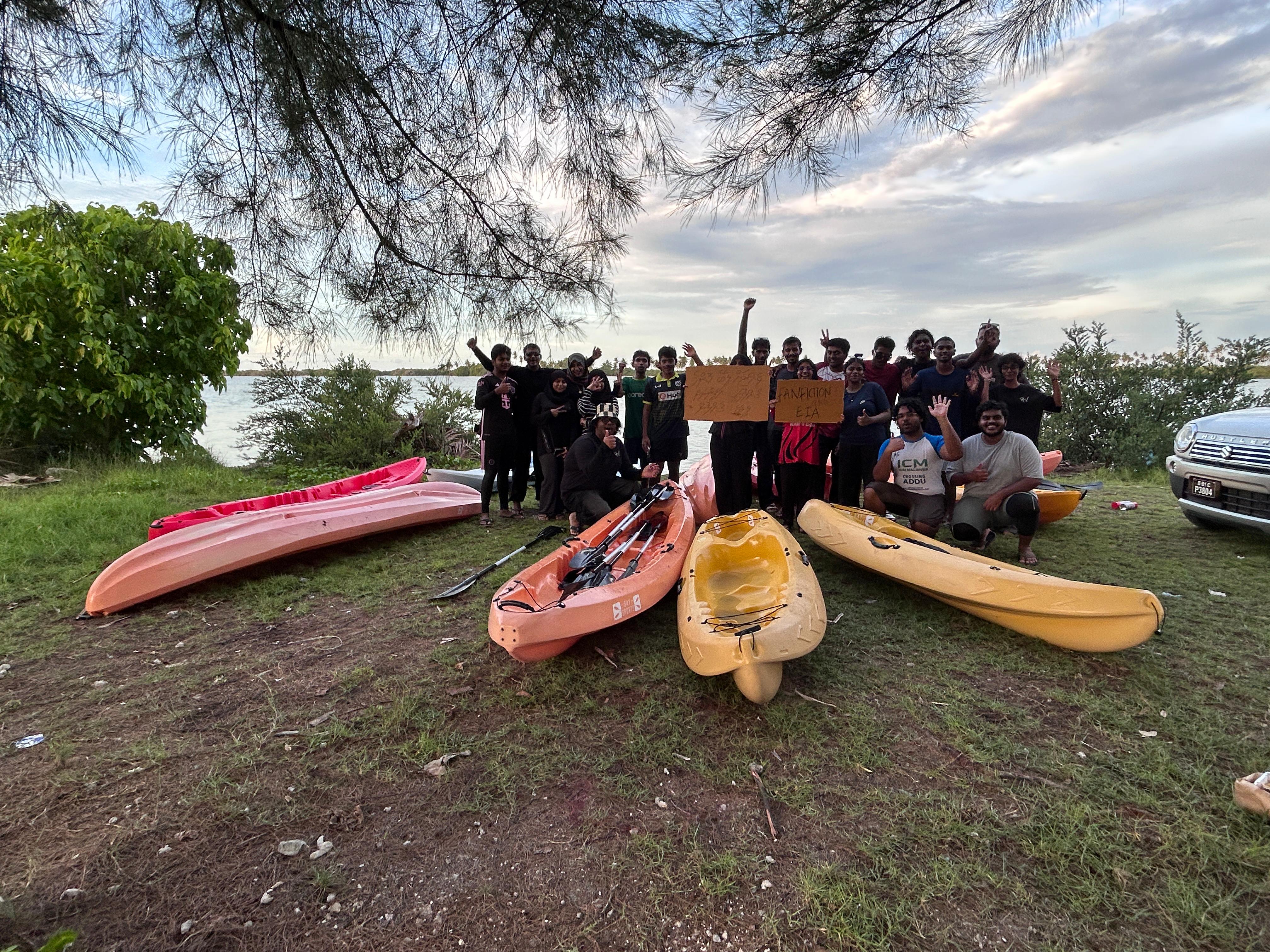
Environmental activists from the Addu-based Project Thimaaveshi demonstrated against the project today. Despite social media advocacy, letters to the president, and petitions submitted to parliament, they say their concerns have gone unheard.
“They're ignoring a lot of concerns by the community, by young people, when in fact last year on this exact issue, when the president was asked about it, he pledged to include youth opinions in any decision made about the environment moving forward. So this is him going back on his pledge," said Mishal Mushahid from Project Thimaaveshi.
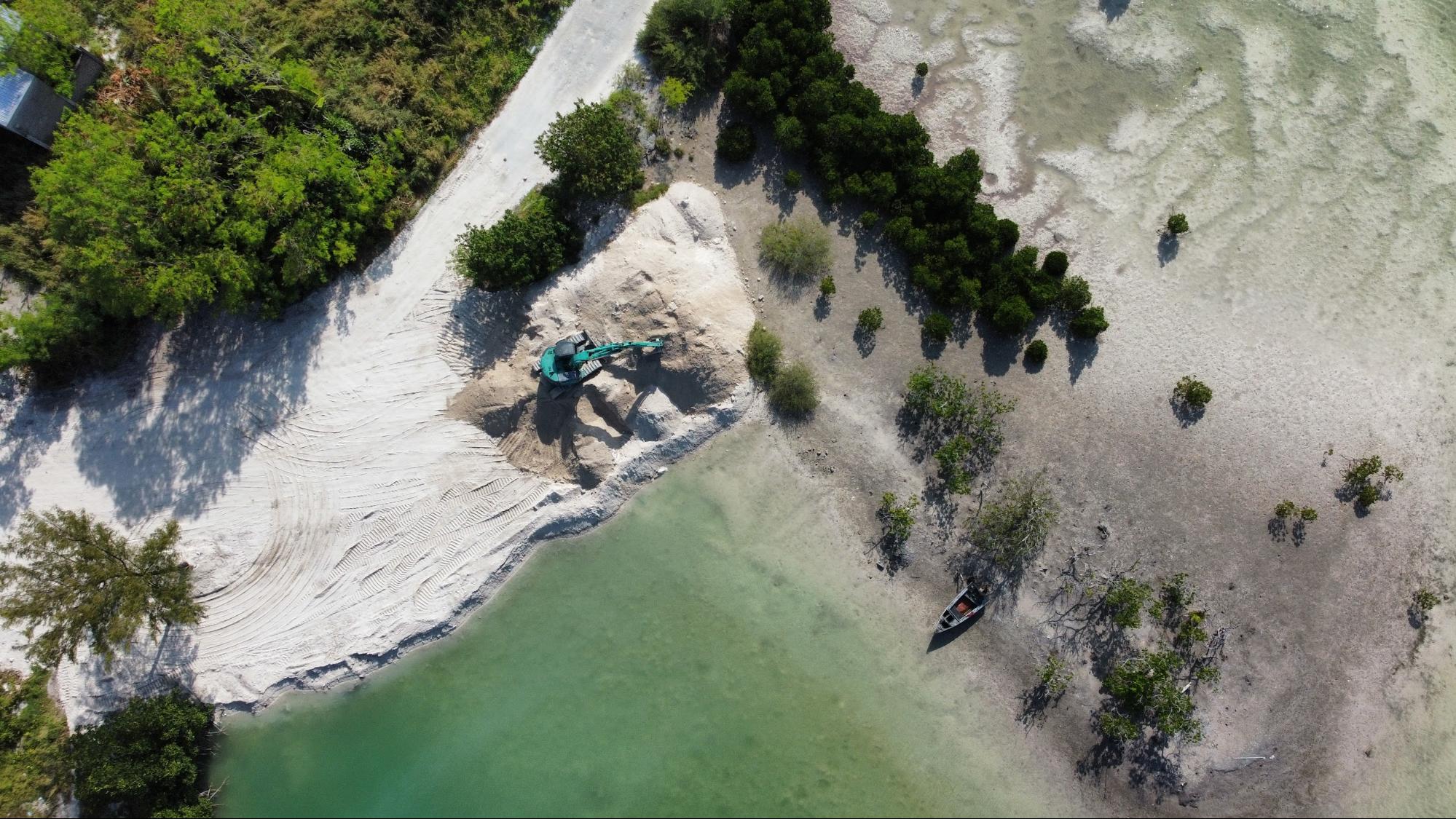
The initial reclamation started in November after the environment minister bypassed environmental safeguards to fast-track it as a “priority development project” under revised environment rules. The purpose of the original project was to build a road to “address traffic bottlenecks”.
An additional area has now been designated for land reclamation to shift the planned road northward after residents near the original alignment objected. The ERA approved the project during the Eid holidays last week, following instructions from Environment Minister Ali Shareef.
The expedited approval to pour sand over a “protected” wetland zone came in the same week the foreign ministry signed a financing agreement with the European Union for a grant of € 4 million for a community-based mangrove protection and regeneration project.
Fast-tracked
On May 18, the environment ministry rezoned the Addu Nature Park to move the boundary of the protected area. The chief government spokesman confirmed that the change was made to facilitate a development project.
After the re-zoning, the infrastructure ministry submitted an undated application for a dredging permit. The project brief said the road was being moved because residents in the neighbourhood wanted more land. The brief cited complaints about “foul smell, unusable ground water and nuisance of pets in the muddy land in this area".
“The boundary of the protected area has been recently re-configured under the Protected Regulation Act under the R-45/2026 gazetted on 18 May 2026. Therefore, the new road will not be within the protected area, however adjacent to the protected area," the brief stated.
According to the socioeconomic impact section, "more than 63% of the people within the close and most immediate boundary of the wetland" favoured the project.
“However, there were results from much larger communities not necessarily from the immediate vicinity, indicating that this project will damage the wetland area and the connected ecosystems, remove the flora and fauna. They also most importantly highlighted that this is a UNESCO biosphere reserve and this project will give a bad reputation to the Maldive that this status might remove the label when Maldives have been championing as an environmental protector," it added.
On May 26 – when government offices were closed for the Hajj and Eid al-Adha holidays – the consultant firm Theorem International submitted an addendum to the project’s initial environment impact assessment (EIA) from last year, which included impact assessments for an extension of the reclamation area and aligning the proposed road with the existing outer road.
Two days later, the ERA wrote to the minister citing an internal review of the EIA that found the proposed mitigation measures inadequate.
“The consultant has failed to state an acceptable reason that this project is necessary to be conducted in a manner that conflicts with the protocols set up to protect the environment," Hassan Mohamed, the chief executive of ERA wrote in a letter to the minister. The ERA was yet to receive information mandated when it approved the reclamation project last year, he noted.
A four-page report outlining what was lacking in the EIA – along with the ERA’s reasoning and recommendations – was attached with the letter.
The ERA letter referred to an “instruction note” from the environment minister on May 19, which designated the reclamation as a “priority project” and directed the regulator to fast-track the EIA. This was done under category four for “fast-tracked procedural arrangements," which include special procedures that allow the consultant’s EIA to be conducted without a further scoping visit. The provisions also limit engagement of stakeholders to only those in the general vicinity of the project zone. The ERA was asked to internally review the EIA within two days of receipt. If ERA reviewers needed more information, the approval was to be referred to the environment minister for final determination.
Notwithstanding the objections, the minister ordered the ERA to issue a decision statement and dredging permit on the same day. The chief executive subsequently signed and issued the statement later that day. But the decision statement also recorded that the ERA had been directed by the minister to issue it.
Despite approving the project, the ERA reprimanded the environmental consultant in the annex of the decision statement over missing information in their EIA report. The consultant was asked to submit 12 pieces of missing information within 30 days. This included a missing endangered species assessment, inadequate biodiversity baseline data, a quantified habitat loss assessment, a detailed groundwater assessment, an independent protected area impact assessment, inadequate alternatives assessments and a detailed mangrove compensation plan.
“The report lacks clear legal justification for encroaching on protected areas, as it does not demonstrate why avoidance is impossible, why public interest outweighs ecological loss, or why alternative options are infeasible," reads the decision statement.
Stakeholders
A member of Addu City Council told the Maldives Independent in November that the initial road project had been a pledge to Hithadhoo North constituents by the ward’s then-ruling party MP Mohamed Sinan.
Sinan lost his seat in April after the Supreme Court disqualified him over the failure to repay a loan in accordance with a magistrate court order. The expansion of the road project comes just days ahead of the June 6 by-election for the vacant seat. Addu City Council member Ahmed Saeed 'Soda' from the ruling People's National Congress is facing off against former mayor Abdulla Sodiq 'Soabe.'
Asked about the project at his weekly press briefing on May 23, chief government spokesman Mohamed Hussain Shareef 'Mundhu' said the environment minister assured him that residents near the wetland area had been consulted.
“I believe the most important stakeholders are those that live their daily life in that area. The decision was taken after reviewing the impact on their groundwater, living environment and their homes," he said.
Project Thimaaveshi activist Yameen Maumoon rejected Mundhu's suggestions that only Hithadhoo North constituents counted as stakeholders.
“Their whole argument is that we don't live in that area. There is no Hithadhoo North. No, it's Hithadhoo, it’s Addu. This ecosystem doesn't differentiate or act differently based on constituency and the boundaries. This will affect all of us, this will affect our future, and it will be unfair for us, for the future people in our position, if we don't do anything," he said.
“This is a lot of energy we are putting into it, although we don't see any results, but we have to do it!”
Mundhu insisted that the government was trying to “strike a fine balance between environmental protection and sustainable development”.
“Some people might not see the importance given to our human environment during their environmental protection advocacy. There are inhabited populations near Eedhigali Kilhi, the minister assured me that the residents of the area were consulted," he told reporters.
“But at the same time, if the area that a work is being done has a very vulnerable environment or if that area has special environments that need to be protected, even if we are doing something next to it, compared to other areas we will take extra care not to do any work without monitoring it in many ways in a very detailed manner. If any work is done in such an area, the highest priority will be to do it in a way that causes the least amount of damage.”
The spokesman echoed remarks by Environment Minister Ali Shareef during an interview with the Edition earlier in May. He said “sometimes sacrifices have to be made” for development.
“Environment in the sense is a very broad thing, it’s not just the living organisms or the physical environment there, No you have to consider the whole spectrum of the environment and then when you weigh and do it. Okay, what’s the most balance that you want to strike or what’s the most dire need that you want to address while you sacrifice the other thing and how much and what’s the level of sacrifice that you could do, in order to get the socioeconomic benefit," he said.
“You would have to think ok this is the most priority that we are going to give, while I sacrifice ten from a hundred on the other side. That’s the balance that we are thinking about, what we would have to think about when we talk about this.”
The approval came in the same week a new research paper found that 4,198 hectares had been reclaimed between 2000 and 2024, an area that exceeds the combined total land reclaimed in Africa and Europe since 2000.
It analysed 109 reclamation projects across 18 atolls and 69 inhabited islands with 85 projects completed, 19 ongoing and five planned. It found that 71 percent of reclamation was concentrated in Male atoll. Outside Malé atoll, the largest reclamation volumes were in Thaa (332 hectares), Addu (285), Haa Alif (198), Dhaalu (167) and Shaviyani (128); Laamu had the least at 15 hectares over the 25-year period. Ninety percent of projects expanded existing inhabited islands, but 40 percent of the total reclaimed area is in entirely artificial islands.
The paper observed a “pronounced surge in reclamation” since the transition to a multi-party democratic system in 2008. In particular, a peak 25 projects were initiated in 2023, it noted, raising questions about “political incentives, electoral cycles, and development decision-making in the absence of binding national planning frameworks.”
Discussion
No comments yet. Be the first to share your thoughts!
No comments yet. Be the first to join the conversation!
Join the Conversation
Sign in to share your thoughts under an alias and take part in the discussion. Independent journalism thrives on open, respectful debate — your voice matters.
Support Independent Journalism
Help us keep the news free and fearless
Give once
$
or
Become a memberfrom $5/month