
"Media control bill" heads for Monday vote after secret committee review
Editors vow defiance despite looming regulatory crackdown.
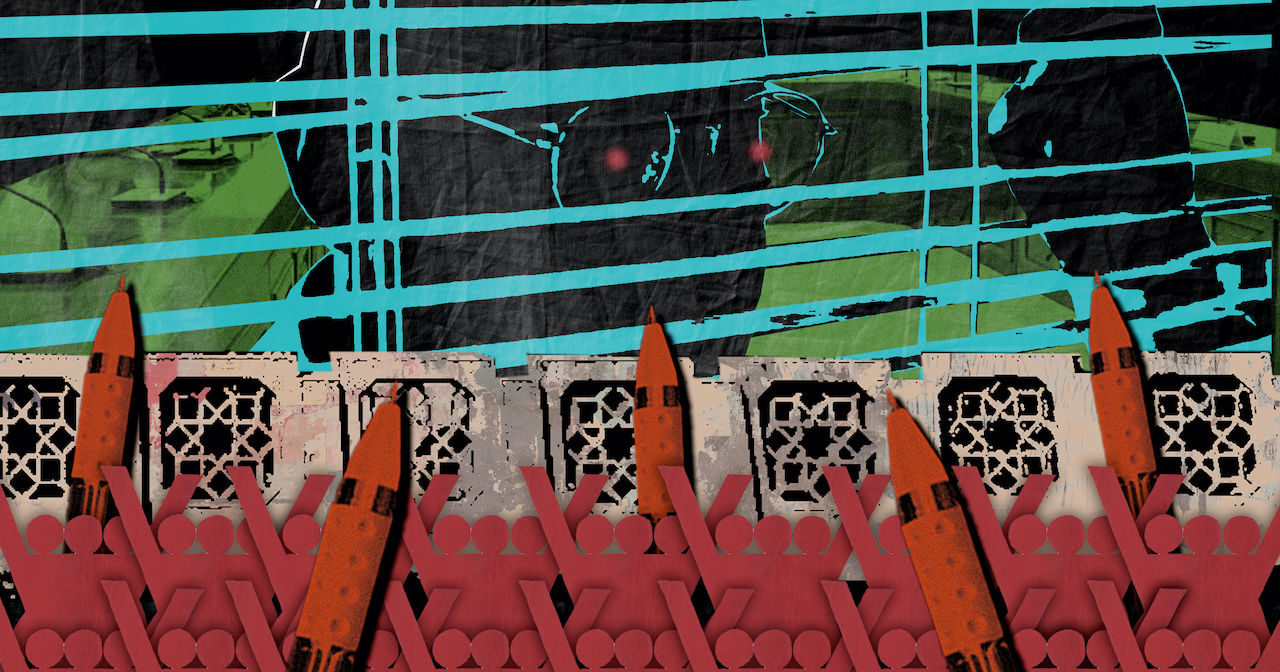
Artwork: Dosain
11 Sep 2025, 19:27
The "media control bill" appears set for passage on Monday after parliamentary security forcibly removed reporters from a committee meeting on Wednesday – an unprecedented escalation in the monthlong standoff over legislation that journalists fear could sound the death knell for press freedom in the country.
A week after representatives from 21 media outlets unanimously demanded the bill's withdrawal during a four-hour hearing – backed by a petition signed by 151 journalists from 41 outlets – parliament's independent institutions committee conducted its review behind closed doors.
"They are proceeding in secret because they also know that what they're doing is seriously wrong," MP Meekail Naseem, the sole opposition Maldivian Democratic Party member of the committee, told journalists after they were expelled. "So they don't want their fouling up visible to the public."
The ruling party-controlled committee justified the closed sessions by citing privacy for those who submitted comments on the bill. But parliament's standing orders only permit barring the public and the media in the interests of protecting personal information, child welfare, or national security.
"While there is no such situation, the review of comments that the public needs to know about continues today [...] Nevertheless, it appears that these comments are being treated as secrets by the current People's Majlis committee," Meekail said.
The forced removal of journalists Ahmed Naaif and Leevan Ali Naseer drew immediate international condemnation. When the Committee to Protect Journalists called out the unheard-of incident, the parliament secretariat accused journalists of "forcibly" entering the committee room despite being notified of the closed meeting, a claim that was easily refuted by video showing journalists being properly escorted in after security checks.
Meekail confirmed that the committee reviewed comments from state institutions including the Attorney General's office during Wednesday's closed-door sessions. He expected the bill to be approved ahead of an extraordinary sitting scheduled for next Monday (September 15), the deadline set by the committee to send the bill to the floor. The agenda for the sitting remains unclear. Regular sittings will resume when parliament returns from recess in October.
The bill is widely expected to be put to a vote and rammed through by the ruling party supermajority. However, a committee meeting scheduled for Thursday morning was cancelled.
Concessions
The Maldives Journalists Association has consistently called for the bill to be scrapped entirely, castigating it as ill-intentioned, irredeemable and fundamentally flawed. The government countered by insisting that changes could be made during the committee stage.
The changes proposed by the Attorney General's office include removing a provision that would have allowed penalties against individual journalists, and eliminating presidential involvement in appointing three of the proposed new regulator's seven members – though parliament would still control the selection process. But in a key change, parliament would not be allowed to dismissal any of the four members elected by the media, whose removal would require a no-confidence vote among media outlets.
The amendments explicitly add provisions requiring the regulator to prevent content "against Islam," "morally degrading speech," and material that "encourages immoral acts." The AG also proposed adding requirements for editor qualifications to be determined by the new "Media and Broadcasting Commission" and establishing temporary adjudication committees to investigate complaints.
The 14 government-sponsored amendments include removing a provision that allows the commission to temporarily revoke the registration of media outlets during the investigation of complaints, AG Ahmed Usham tweeted.
Notwithstanding the concessions, the commission would retain sweeping powers to fine outlets up to MVR 100,000 (US$ 6,485), block websites, halt broadcasts, and pursue permanent closure through the courts.
Defiance
Despite the looming threat of a fresh crackdown, editors of top mainstream outlets expressed defiance rather than defeat.
"If it gets passed, they will have the official power to judge us guilty. But I don't believe they can keep us quiet," said Hassan Mohamed, editor of Adhadhu, the chief platform for adversarial journalism over the past two years, whose newsroom has already been "financially targeted" with staff cut from 30 to less than half even before the bill's passage.
"If the websites get blocked, there will be social media. We will keep working with the values we believe in... We would not stop. Even now, we get a lot of information, because we write what a lot of places won't cover," Hassan said.
The bill would give authorities "the power to use law enforcement to shut down news organisations when something big is happening in the country," Hassan warned, citing the attempted shutdown of Channel 13's live broadcast of a rally by former president Abdulla Yameen's People's National Front in late August.
While the AG's amendments remove direct fines on individual journalists, Hassan warned that the threat remains real. "They will make an example out of someone at some point," he said. "We're thinking what we could do legally at that point. We don't know yet, but for sure we will not stop writing."
Nazim Hassan, sub-editor of newspaper Mihaaru, acknowledged the bill would force changes in journalism practices, particularly provisions requiring "fair and balanced" coverage even in corruption investigations. But he pointed to history as a guide.
"Even when the [repealed] Defamation Act was passed with huge fines [in August 2016] – they even fined TV stations millions – journalists didn't step back even one inch," Nazim said. "No matter what punishment they face, even if they have to go to jail, no matter how much fines are imposed... the bill won't be able to stop journalists."
Self-regulation
Editors accused the government of manufacturing a crisis of supposedly unrestrained defamation to justify control over media that should remain self-regulated.
"We don't believe media should be regulated by the government, and that media should act how the government wants and rubber stamps," said Ahmed 'Hiriga' Zahir, a veteran with more than 30 years of experience. "Our constitution that we all accept gives the freedom to practice journalism in a very liberal manner – we can talk about anything as long as it doesn't contradict with a tenet of Islam."
While the Maldives Journalists Association has proposed a four-month period to develop an alternative regulatory framework, Hiriga noted the absence of "lawyers trained on media law in Maldives." Previous media legislation was formulated with foreign technical assistance that did not restrict constitutional freedoms, he added.
"I don't believe there is such an urgency in this matter. Maldivian media aren't as misbehaving as they are describing," Hiriga said, adding that provisions banning media from promoting ideologies "contradicts with our multi-party democracy system."
Journalists are already struggling with government opacity, he continued.
"The problem is we are not able to get information from the government, they are not accountable to the truth, there's no mechanism to respond, RTIs are left unanswered," he explained. "So it's keeping journalists and the public in the dark. It's a problem we face even now, so that shadow will get even bigger."
He feared the proposed law could "give way to a more uncivilised brand of journalism" but remained confident: "I believe there will be people who will stand up to it. They won't stay quiet."
Broader threats
In a powerful op-ed on Dhauru, editor Moosa Latheef warned of implications that extend far beyond newsrooms, as social media posts by ordinary citizen could "fall into a criminal trap."
He noted the irony of lawmakers who benefit from extensive state perks – Deputy Speaker Ahmed Nazim alone charged MVR 116,000 for 133 VIP lounge visits – moving to restrict press freedom that exposed government corruption.
"How many unlawful acts by governments that diminished the public treasury have the [media] brought to light?" he asked.
"What the public doesn't know that you should not demolish a pillar of the constitution on the pretext of defamation."
Latheef concluded with a dire warning: "When the People's Majlis passes this bill into law, it won't be just journalists who face the bitter consequences. It will be the Maldivian people as well. It is likely that many people will say then: 'Journalists raised their voices then because this would happen.'"
His colleague Hiriga invoked history to predict that the government's efforts will ultimately fail: "I always say that if Maldivians have ever made a sacrifice, it's for free speech. People got beaten up, locked up and killed for this free speech. People have never worked as hard for any other freedom in our country."
In an age of smartphones and internet access, he argued, government control is futile: "To think that you can restrict it is a very narrow way of thinking... Before, it's a printed newspaper and you distribute it. But now everyone has a phone and everything to get easy access to information – how can you ban it?"
His message to officials was blunt: "No one forces anyone to come into a position in public office, they do it by their own choice. So they have to accept that they are paid by taxpayers and answerable to the public. If they are not able to do their duty, they will face criticism and you have to learn to accept it."
Discussion
No comments yet. Be the first to share your thoughts!
No comments yet. Be the first to join the conversation!
Join the Conversation
Sign in to share your thoughts under an alias and take part in the discussion. Independent journalism thrives on open, respectful debate — your voice matters.
Support Independent Journalism
Help us keep the news free and fearless
Give once
$
or
Become a memberfrom $5/month

