
Explainer

The battle for control over Maldives media

Proposed law could replace self-regulation and state control.
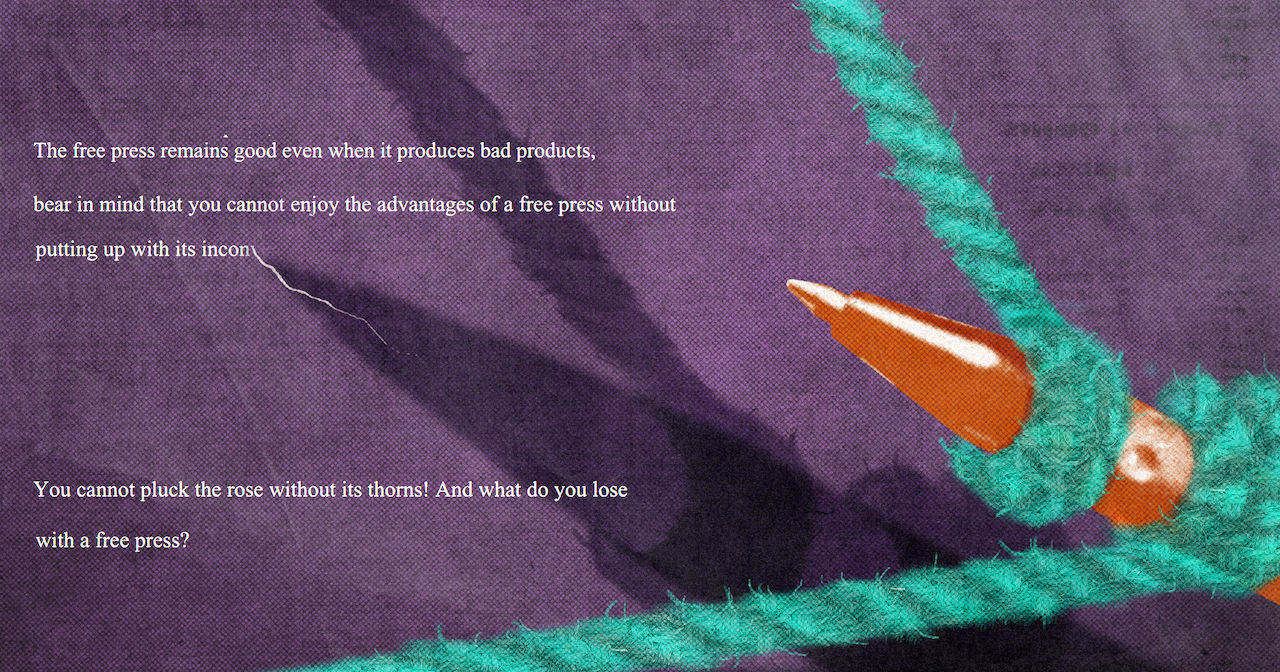
Artwork: Dosain

Artwork: Dosain

24 Aug, 5:33 PM

What exactly happened in parliament last week?

On Tuesday, journalists from the top mainstream outlets along with senior members of the Maldives Journalists Association filled up the parliament gallery in silent protest. In the chamber below, MPs debated a bill that proposes the creation of a new regulator with powers to fine and shut down media organisations.

Wait, didn't this bill come up before?

Thulhaadhoo MP Abdul Hannan Aboobakuru, an independent lawmaker aligned with the ruling People's National Congress, introduced nearly identical legislation last November but withdrew it in the face of massive pushback from the local media fraternity – who dubbed it the "Media Control Bill" – and international press freedom groups.
Journalists were blindsided by its sudden revival. The 52-page bill was submitted on Monday night (August 18), giving MPs less than 24 hours to review it before the speaker fast-tracked the legislative process to begin the preliminary debate the next morning.

Who's really behind this bill?

Technically it's sponsored by an "independent" MP. But the journalists' union and opposition lawmakers weren't buying it. MP Meekail Naseem straight-up accused the the Attorney General's Office of drafting it.
Deputy Speaker Ahmed Nazim admitted he'd done "a lot of work" researching the bill after the first version was withdrawn. The MJA suspected "a deliberate attempt to obscure its origins and true proponents."
Interestingly, on the same day as the protest, President Dr Mohamed Muizzu announced a new media grant policy – fulfilling a campaign promise to allocate 0.1 percent of the budget to provide state funding to registered outlets. Critics might see this as a carrot-and-stick approach: financial support for those who play nice, harsh penalties for those who don't.

What has the president said?

In November last year, he assured the media that the PNC's 75-seat supermajority would reject MP Hannan's bill, which was promptly withdrawn. 
But in his National Day address this morning, President Muizzu declared that no citizen has the right defame or damage a person's reputation, contending that free expression must be exercised within Islamic bounds. 
"None of us has the right to speak whatever comes to our minds, to write whatever comes to our minds," he warned.

What would actually change if this becomes law?

Right now, the Maldives has two separate media regulators: the Media Council – which regulates print and online media with eight of its 15 members elected directly by registered media outlets – and the Broadcasting Commission, whose seven members are appointed by the president with parliamentary approval to regulate television and radio stations. This bill would abolish and merge them into the seven-member Media and Broadcasting Commission where the president appoints three members, including the chair.
The math might seem okay – media elects four, president appoints three – but here's the catch: parliament can remove any of those elected members with a no-confidence vote. So whoever controls parliament effectively controls the commission.

What powers would this new commission have?

Sweeping ones. They could:

Fine individual journalists up to MVR 25,000 ($1,620) for not making corrections quickly enough

Fine media outlets up to MVR 100,000 for ethics violations

Block websites and halt broadcasts while investigating complaints

Cancel newspaper registrations through court orders

Go after anyone spreading "fake news" or inciting "fear or hatred" (terms that aren't clearly defined)

Even investigate complaints from the 12 months before the law takes effect, which might violate the constitutional prohibition on retrospective legislation

How did the debate actually go down?

It got pretty heated. In prepared statements to present the legislation, Hannan quoted multiple passages from the Quran about the right to protect one's good name and reputation, saying Islam believes in "responsible dissemination of information." He argued the current system wastes money on two "powerless" institutions. 
As PNC MPs lambasted the media over "unrestrained defamation" and false reporting, Meekail called it "a dark day" for parliament, while Abdul Ghafoor Moosa said the bill would strip away all media rights and independence. Both opposition lawmakers challenged the ruling party to "own" the bill. 
Deputy Speaker Nazim claimed it meets international standards and cited media laws from Finland, Sweden, the UK, Ireland, and Singapore. Since media elects four members and the chair only votes to break ties, there's always a "4-2 majority for independent media."
In a tweet acknowledging the MJA's concerns about "vaguely defined terms that are ripe for abuse", MP Ahmed Azaan – a former journalist and co-founder of Dhiyares – also stressed that the proposed composition of the commission ensures a majority for the media.
"The bill also establishes a permanent adjudication committee composed of four members elected from the media to handle cases of false information. Another significant change is that media registration, which is now overseen by a government ministry, will be transferred to the new commission. Parliament will listen to the concerns of the media community before passing this bill," he said. 
Nazim also promised consultations during the committee stage and seemed confident a "mutually acceptable solution" could be reached.
But journalists seem skeptical. The MJA noted that the president campaigned on maintaining media self-regulation, and they're calling this bill a betrayal of that promise. The MJA and Media Council want it withdrawn entirely, not tweaked around the edges.

What do journalists say about the government's justification?

MJA Secretary General Naaif Ahmed, a veteran journalist with a stint on the Media Council, says the watchdog would function better if governments actually funded it properly. The Media Council only gets MVR 3.5 million annually – barely enough for salaries and administrative costs.

Has there been an international reaction?

The International Federation of Journalists condemned the bill, saying media regulation needs "genuine industry consultation and engagement." 
The Committee to Protect Journalists urged the president to reject the "regressive" media regulation bill. “Creating a new commission, stacking it with presidential appointees, and then granting it sweeping powers to fine, suspend, and shutter news outlets as it sees fit would destroy independent journalism and erode the Maldives’ fragile democratic space," said CPJ Asia-Pacific Regional Director Beh Lih Yi.

What are journalists afraid will happen?

The MJA says this would create an "environment of fear and intimidation." They're particularly worried about:

Vague terms like "fake news" that could be weaponised

The ability to shut down outlets during investigations (guilty until proven innocent?)

Presidential control over what should be independent regulation

The chilling effect on investigative journalism

What happens next?

The bill is in limbo until parliament returns from recess in October. 
After delivering a letter to the President's Office requesting a direct meeting with Muizzu, the MJA has been mobilising for a lobbying campaign and the Media Council is launching a social media campaign about preserving self-regulation. 
Over the weekend, the MJA and MMC joined forces and formed a working group. 
"In terms of activism, we will start getting signatures for a petition from both the public and journalists. We are trying to begin the petition on Sunday," Naaif from the MJA told the Maldives Independent on Saturday.
The MJA plans to gather signatures to submit a petition to parliament and the President's Office. A separate online petition will be launched to seek public support. 
"We are also going to carry out a public forum on the bill. We are also waiting to meet with the PNC’s parliamentary group, when we requested, they said they will give us a time slot next week," Naaif said.

Discussion

No comments yet. Be the first to share your thoughts!

No comments yet. Be the first to join the conversation!

Join the Conversation

Sign in to share your thoughts under an alias and take part in the discussion. Independent journalism thrives on open, respectful debate — your voice matters.

Support independent journalism