
Showdown looms as Maldives media mobilises against regulatory overhaul
Bill proposes new commission with power to shut down outlets.

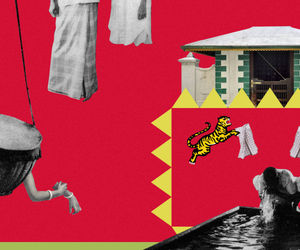
Artwork: Dosain
21 Aug 2025, 14:37
As condemnation mounted and journalists mobilised against the second attempt, the MJA warned that the new bill "represents a grave threat poised to eliminate press freedom and media independence in the Maldives." The opposition Maldivian Democratic Party's chairman called it "another poorly concealed attempt by [President Dr Mohamed Muizzu's] administration to dismantle media freedom" as the Maldives Media Council urged parliament to reject the bill.
The bill proposes merging the Media Council, a 15-member print and online media regulator with eight members elected by media outlets, and the Maldives Broadcasting Commission, a seven-member body of presidential appointees that regulates television and radio stations. The new Media and Broadcasting Commission would have four members elected by the media and three members appointed by the president, who would also designate the chair.
But since the elected members could be dismissed by parliament with no-confidence votes, the MJA contended that the bill was devised to seize regulatory power over print and digital platforms, "effectively placing the media under direct government control and creating an environment of fear and intimidation for journalists."
The union expressed particular alarm with "vaguely defined terms that are ripe for abuse" and "draconian penalties" that "seek to criminalise journalism." Punitive powers include imposing fines of up to MVR 25,000 (US$ 1,620) on journalists who fail to make corrections with specified timeframes, and heftier fines of up to MVR 100,000 on media outlets for non-compliance or violations of ethical standards.
The commission could block websites, halt live broadcasts and revoke registration during investigation of complaints. Individuals or organisations that spread "fake news" or incite fear or hatred could also face punitive action.
In apparent contravention of the constitutional prohibition on retrospective legislation, the commission would be authorised to investigate complaints filed within the 12 months before the law comes into force.
Battle lines drawn
Parliament broke for recess on Tuesday as Speaker Abdul Raheem Abdulla adjourned the sitting without concluding the preliminary debate. It will resume when the next session begins in October.
After the session ended without a vote, the protesting journalists went to the President's Office and submitted a letter formally requesting a meeting to directly share concerns with President Muizzu.
Later on Tuesday, the President's Office announced a new media grant policy to provide financial assistance to registered outlets, allocating 0.1 percent of the budget as the president had pledged before assuming office.
“Regulating the media requires genuine industry consultation and engagement. Bypassing such engagement with journalists and their unions shows a fundamental misunderstanding of the ultimate purpose of such a body, that is to strengthen journalism and safeguard democracy and press freedom,” the IFJ said.
The MJA – the IFJ's local affiliate – suggested that the lack of consultation "calls the bill's true intentions into question" and flagged the "prominent involvement" of Deputy Speaker Ahmed Nazim in formulating a bill sponsored by an Independent MP. The union suspected "a deliberate attempt to obscure its origins and true proponents."
During Tuesday's debate, Nazim acknowledged doing "a lot of work on some of the research for the bill" and speaking to media professionals to reconcile opposing views. The current draft complies with Scandinavian and EU media laws, he declared, citing other sources such as the UK’s Media Act of 2024, Ireland’s Online Safety and Media Regulation Act of 2022 and Singapore’s Protection from Online Falsehoods and Manipulation Act of 2019.
He stressed the majority for the media's representatives as the commission's chair could only cast tie-breaking votes: “So no matter who is presiding over the commission there will be a 4-2 majority for independent media. So what is the concern?”
The deputy speaker assured consultation to address the media's concerns during the committee stage. A better regulatory mechanism is needed to address "unrestrained defamation" by unscrupulous media that has been damaging public interest, the MP for Dhiggaru argued.
But Naaif Ahmed, the MJA's secretary general, suggested that countries like Singapore do not offer the best model for self-regulatory mechanisms.
"State intervention in regulating media is not something we can allow as all of us have a lot of mistrust with the state," he told the Maldives Independent.
"As examples, it's better to look at countries with a more free media landscape."
Naaif argued that having two separate regulatory bodies was not a problem. The broadcasting watchdog could focus on technical aspects such as issuing frequencies and rebroadcasting licenses, whilst the media council could monitor content and ensure compliance with codes of ethics.
"State expenditure on regulating the media with spending on both commissions does not even compare to the rest of the government's expenses. They want to misinform the public saying a lot is spent annually on both commissions," he said.
While the MJA concedes that the current regulatory framework could be improved, Naaif blamed a lack of "political will" on the failure to back the Media Council in fulfilling its mandate. An annual MVR 3.5 million budget was only sufficient to cover staff salaries and administrative costs, he noted.
"The reason the MMC is unable to perform the self-regulatory function is because administrations do not want to give the autonomy to the media," he said.
Discussion
No comments yet. Be the first to share your thoughts!
No comments yet. Be the first to join the conversation!
Join the Conversation
Sign in to share your thoughts under an alias and take part in the discussion. Independent journalism thrives on open, respectful debate — your voice matters.
Support Independent Journalism
Help us keep the news free and fearless
Give once
$
or
Become a memberfrom $5/month