

A journalist fought to keep his prison notes. Here's what was in them.
What Adhadhu's Shahzan recorded inside Maafushi – and nearly couldn't take out.
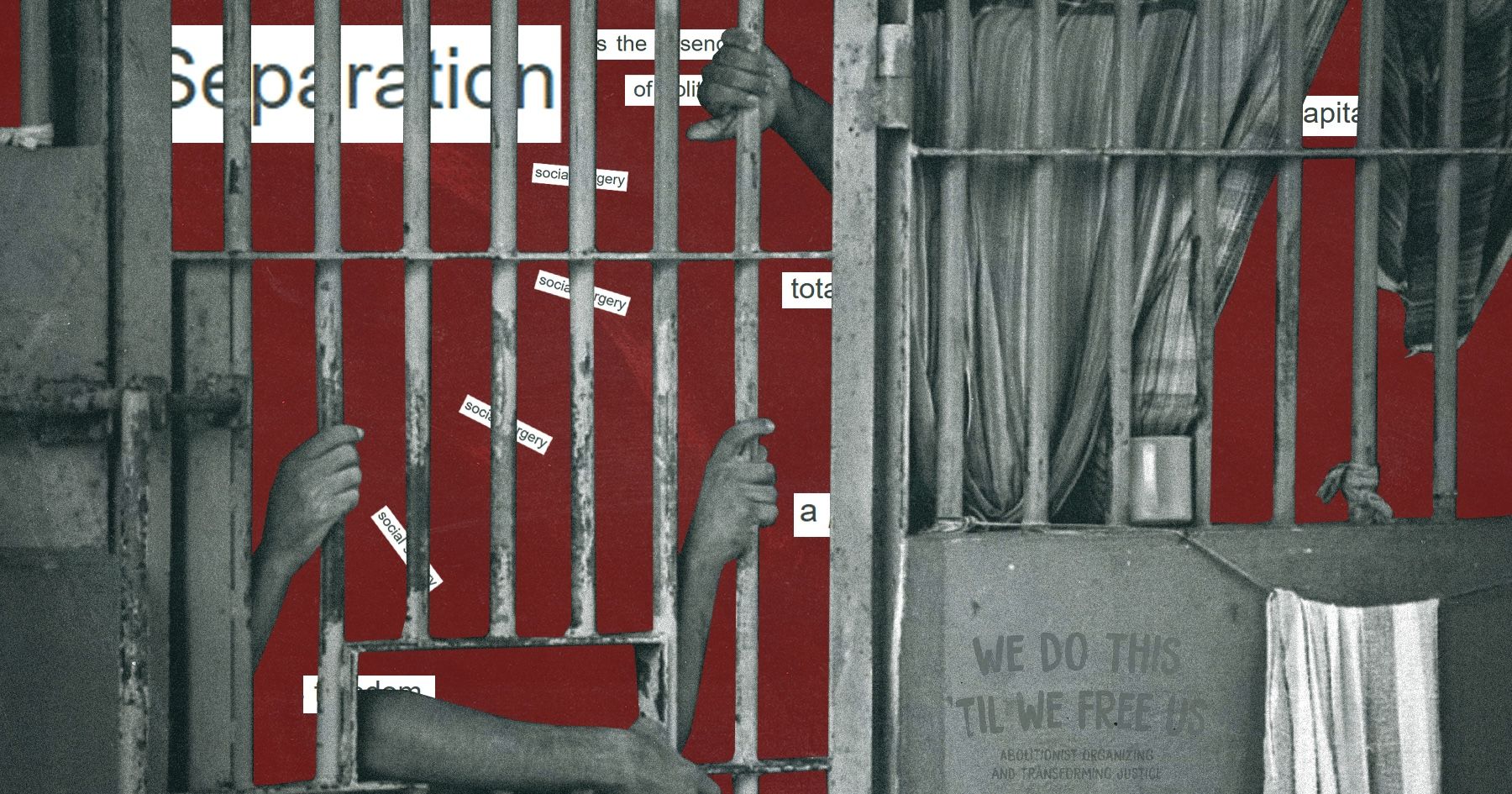
Artwork: Dosain
23 Jun, 17:03
When Adhadhu journalist Mohamed Shahzan reached the gate of Maafushi prison on the day of his release, an officer took the notes he had made during his 15-day sentence and began to read them. Shahzan says he was told the papers were being checked and that he could leave with nothing but the official documents the prison itself had issued.
He refused. What followed was an argument at Maafushi, a transfer to Malé and then Hulhumalé, and a second standoff at the next jail. By his account, it was the clearest sign of how much the prison did not want his record to leave with him.
Shahzan said he made his intentions plain to the officers who searched his cell at night: that imprisonment and intimidation would not stop him writing about what he had seen, and that he would put questions to the president and to those who run the prison.
“No matter what they do, this [work] has to be done…the people who assume power next need to see an example that journalists cannot be silenced,” he told the Maldives Independent.
What was in the notes
Among the prisoners Shahzan described is a man in his wing whom he says is severely mentally ill. He was sentenced over a decade ago in a high-profile murder case. He is now no longer able to reliably recognise people or distinguish reality from delusion. According to Shahzan, the man is held in isolation in conditions that would be difficult for anyone: a broken shower, no fan or light, and food left to rot on a bench because staff are reluctant to enter the cell. He is brought medication but not made to take it. Other prisoners – not officers – are the ones who calm him.
One day when he was let out for exercise, Shahzan went near his cell and peeked inside. The inmate slept on a concrete bench with no pillow, mat, or bedsheet, dressed in a piece of a bin bag. Rotting food with maggots sat on the second bench.
"It was very difficult to see that. He's a human being too, I thought," Shahzan said.
Shahzan left that day. From his cell, he called out to other inmates, asking about the man. The neighbouring inmates sent him a note. It said when the inmate gets upset he breaks items in his cell like the bulb and the fan and bangs the walls. The shower had similarly been broken with no repair and there was no bucket or jug for water. No functioning light or fan remained. The rotting food was left untouched because no one wants to enter or go near the cell – when staff or inmates approached or came inside, he became violent and hurts them. When he’s upset sometimes he even throws some of the rotting food outside. Though medication was brought to him, no one ensured he took it.
He is also a diabetic patient. But he refuses the food from the diabetic menu, so fellow inmates who serve the food provide him with normal food as they found it easier to keep him calm that way. Shahzan said he was not a man who should be in isolated or solitary detention. He is someone in acute need of psychiatric care, receiving none.
When it comes to healthcare, requests for consultation are often met with neglect, Shahzan alleged. One inmate employed for meal distribution had a visibly swollen leg. He told Shahzan it had been swollen for three months, Shahzan heard him repeatedly asking to be taken to a doctor. On three days when the pain was unbearable, he was unable to carry out meal distribution. He was finally seen by a doctor on the 14th day of Shahzan's detention.
Aminath Yusreen Ahmed, media officer and director of communications and public relations of the Maldives Correctional Service, told the Maldives Independent that the Maafushi Medical Centre holds OPD consultations every day, and that the on-duty medical officer checks patients and refers them for specialist consultation if required. She said the service has to request specialist appointments from hospitals in the greater Malé region, such as IGMH and Hulhumalé Hospital, and then escort the person for the consultation once the appointment is received.
"In 2025 alone 12,887 general consultations and 2,160 specialist consultations were carried out," Yusreen said.
She said the service was not at liberty to disclose any medical information of any inmate, except to families, lawyers and relevant authorities, and that it does not disclose the identity of its officers to individuals or media regarding any allegations, though it fully cooperates with oversight bodies and relevant authorities during investigations. She said complaints filed by inmates and remanded persons are investigated by independent oversight bodies — the Inspector of Correctional Service, the Human Rights Commission of the Maldives and the National Integrity Centre — which also monitor the service's operations.
Food and hygiene
Over the 15 days that he spent in Maafushi prison, Shahzan observed a variety of meals that severely lacked quality.
While inmates receive different dishes across meal times – vegetable curry for breakfast, dhal for lunch, short eats for evening tea, and fish curry with roshi for dinner – the variety does little to mask a consistent lack of quality and taste. For example, the dhal is watery and lacking in nutritional value. Fish used in curries appears to have been frozen for extended periods, causing skin irritation upon handling. Spoiled ingredients have made it into the cooking, including a visibly blackened potato that was served in a curry. Inmates had reportedly stopped eating the mashuni served for breakfast altogether after a maggot was discovered in it around two to three months prior. Rice and roshi are the only items considered acceptable.
Curries are transported to cells in uncovered buckets loaded onto a wheelbarrow, leaving the food exposed to the open air. With no lids on the buckets, flies swarm freely over the food during distribution, a problem compounded by a heavy presence of mosquitoes, rats, geckos, and cockroaches throughout the unit. Whether the buckets are cleaned between uses or how they are stored remains unknown to inmates.
Shahzan also said hygiene products provided to inmates fall well below basic standards. The bar of soap issued is of such poor quality that body odour persists even after multiple showers a day. The toothbrush is flimsy enough to snap with two fingers and the twin-blade razor is so blunt it cuts hair unevenly.
Sentenced inmates can theoretically purchase better products through an in-house ordering system. A seven-page list of available items that families can fund through deposits into an inmate's account. But the out-of-stock list runs three to four pages long, and basic necessities such as shampoo, shower gel, and deodorant have been unavailable for six to seven months. What remains consistently in stock, without interruption, is tobacco: Amber Leaf pouches, cigarette packs, and rashu bidi (hand-rolled tobacco) are reliably available week after week. Given that Maafushi is not a remote location, inmates believe the absence of basic hygiene products is not a supply chain issue, but a deliberate one.
“As someone who went there for 15 days, I will know when I think about it that there is no lack of stock of shower gel or deodorant. So it is purposefully not being taken, Maafushi is not that far away," Shahzan said.
Yusreen said basic hygiene products are provided as mandated by the regulations, and that inmates and remanded persons can request to purchase certain items from the shop.
"Usually the shop is stocked well, but there may be few times when certain items are out of stock momentarily, though it is stocked up soon," Yusreen said. She said the service had not received any complaints about the quality of food.
The altered court statement
Shahzan, vice president of the Maldives Journalists Association, was sentenced to 15 days in prison on May 11 for contempt of court, after he questioned President Dr Mohamed Muizzu at a press briefing about allegations raised in the outlet's "Aisha" documentary. His colleague Leevan Ali Nasir was handed a 10-day sentence for reporting on the existence of a gag order in the same case.
After the hearing, Shahzan was taken to a holding cell at the Criminal Court. When the written court statement was brought to him, he noticed it contained claims he had never made – specifically, that he had refused to respond to the contempt charges in court, and that he had admitted the question he posed at the President's Office was directed at the woman featured in the documentary.
Shahzan challenged the administrative staff on the spot, telling them the statement was a blatant lie and refusing to sign it unless the fabricated portions were removed. Staff handed him a pen and told him to cross out the parts he disputed. He did so, but only some of the alterations were reflected in the amended version, like wanting to respond to charges. Shahzan said he still has this statement.
Why two jails tried to keep the notes
On Eid, the day of his release, Shahzan had torn out the pages he had written on and was prepared to leave with them. At the gate, an officer he identified as Adam Shareef intercepted the notes, saying they needed to be checked, and began reading them. Shahzan objected immediately: the pages contained personal letters to his wife and children, and he was a journalist whose notes carried sensitive information. Shareef told him the notes could not leave the facility and that only official documents issued by the prison could be taken out.
Shahzan pushed back, asking which specific law or regulation permitted confiscating the notes. Shareef could not point to one. When the standoff escalated and Shahzan demanded to speak to the head officer – a senior official he knew as Ameen – Shareef initially claimed he was the one in charge. It was only after Shahzan raised his voice and officers gathered at the gate that Shareef stepped out and contacted Ameen, who Shahzan said instructed staff to let Shahzan leave with his notes.
While Shahzan was able to leave with the notes, the ordeal did not end there. He was then handcuffed and transported to Malé by a Correctional Services launch, a procedure Shahzan said was unlawful, as a prisoner completing a sentence is a free person and ferry transport is a courtesy, not a custodial transfer.
From Malé, a Correctional Services vehicle and a police escort vehicle took him to Hulhumalé jail, where staff again attempted to go through his notes. The head of the jail that day was an officer named Shifau, Shahzan said. He insisted he would not leave without the notes. Officers told him they would not let him leave without confiscating the notes and Shahzan told them they were mistaken, that ensuring he is released within the 15-day timeframe of his detention was their responsibility. Shahzan was eventually allowed to leave with the notes.
Yusreen said prison officers may check the contents of documents held by those incarcerated for security reasons. She did not comment on whether any policy prevents inmates from taking items from their cell.
On May 28, Homeland Minister Ali Ihusan characterised Shahzan's earlier account of his treatment as "100% lies," saying the late-night searches followed the discovery of a mobile phone in the cell Shahzan shared with Leevan Ali Nasir. He did not deny that the sleeping platform and parts of the cell walls had been demolished.
Discussion
No comments yet. Be the first to share your thoughts!
No comments yet. Be the first to join the conversation!
Join the Conversation
Sign in to share your thoughts under an alias and take part in the discussion. Independent journalism thrives on open, respectful debate — your voice matters.
Support Independent Journalism
Help us keep the news free and fearless
Give once
$
or
Become a memberfrom $5/month

