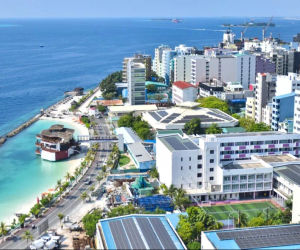

The housing "crisis" is manufactured. The trees are not: a response to Minister Muththalib
Centralisation made the shortage. Felling funavaa won't fix it.
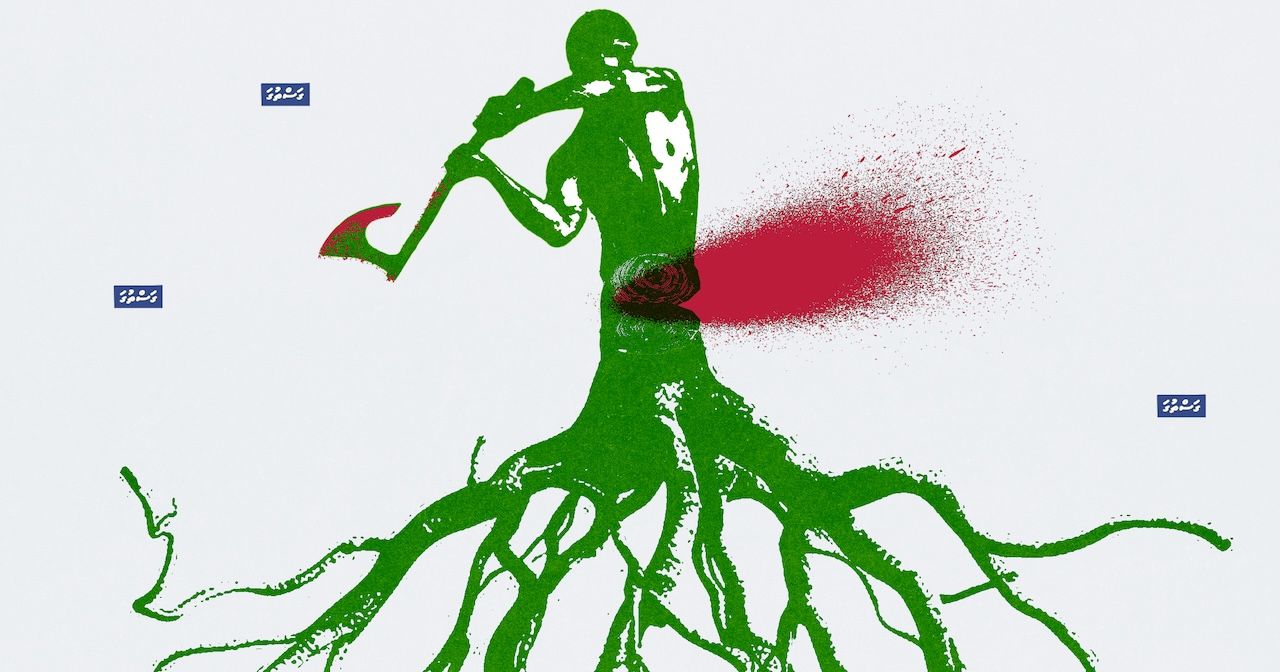
Artwork: Dosain
03 May, 15:42
Hey, Minister Abdulla Muththalib, did you think your sad attempt at manufacturing consent for ecocide would go unchallenged?
Or do we need to write a “class monitor” article for you too? Your “doctor” honorific means nothing to us. It’s just an honorific to indicate training in academic research in a specialist field, not an immunity shield from being an ignorant, money-hungry zealot.
What we’re trying to say is that your (allegedly) AI-slopped “op-ed” contains opinions worth no more or less than Jordan Peterson’s unhinged claims about the climate crisis. Do you see us going, “oh, okay, it’s doctor Jordan Peterson, therefore, he’s right” or something? No, right?
And what makes this even worse is the fact that you didn’t cite anything at all in your miserable excuse for an op-ed.
It is extremely hard to maintain any sense of “civility” or “politeness” when the other participant couldn’t even afford us the dignity of a human response instead of (allegedly!) outsourcing it to an advanced autocomplete clanker.
And listen, we are very well aware that Adam Azim (our resident Mamdani) and team’s efforts – from the MDP cheek of the same two-party system's behind – to “hold dialogue” with us are just petty attempts at a photo-op and an excuse to say, “oh, look, we care about both sides!” before butchering the trees anyway. What’s the point of talking about an obsession with irresponsibly uprooting trees while actively enabling more ecocide?
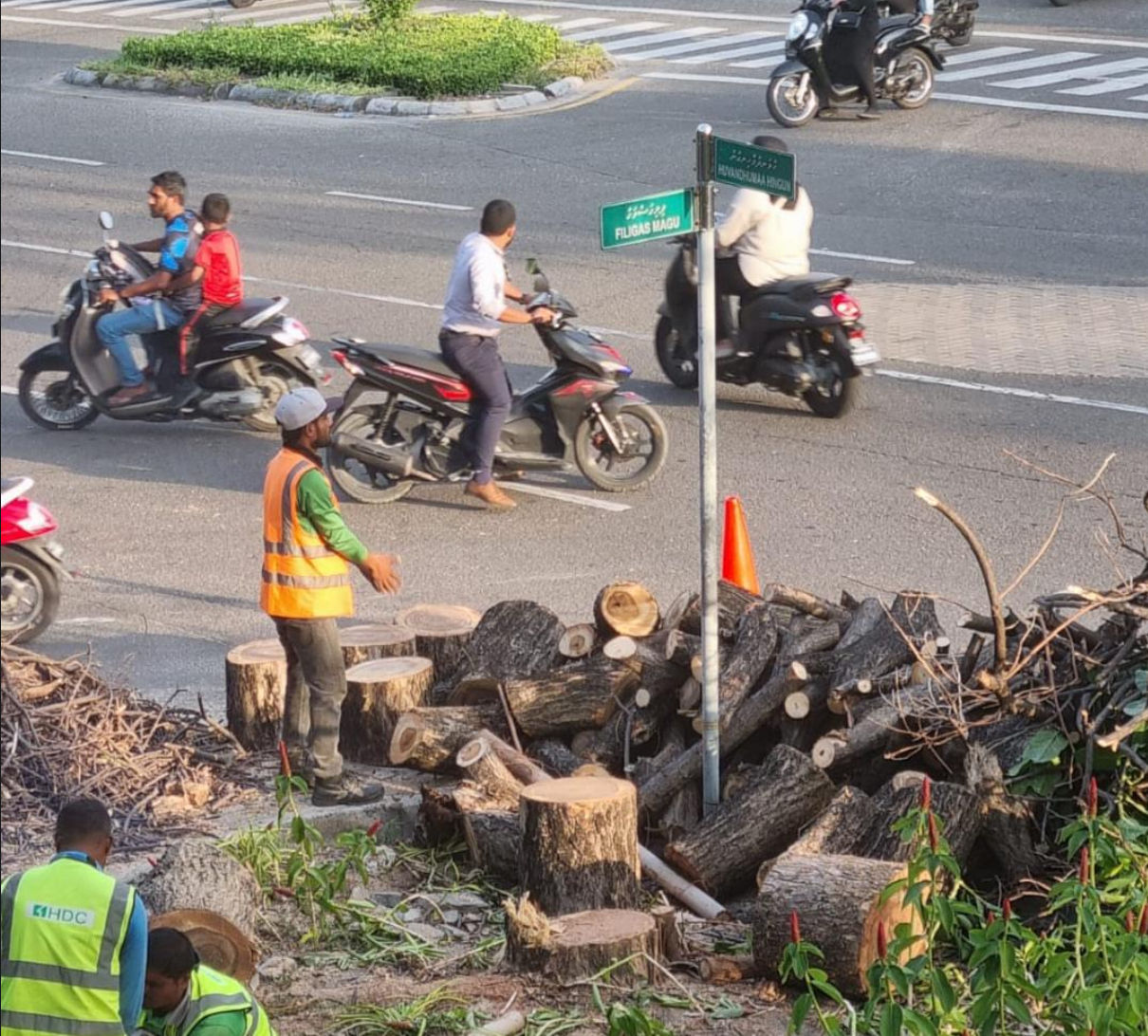
Do you electoral bureaucrat capitalists think we’re all that stupid?
Instead of responding to your (alleged?!) AI slop, minister Muththalib, we will pool our expertise and give you (and the rest of your audience) a more powerful assessment of why committing ecocide will mean devastation for our communities, career suicide for you and all of the other parties’ politicians involved, and why the “housing crisis” is a manufactured condition that does not need more stupid construction projects to line the pockets of RCC, in which Mohamed Nazim and his brother Adam Azim are shareholders via this other company. You cannot escape complicity by abstention.
And unlike you electoral party-politics AI tech-bros, we will cite our sources too.
A big fat angry disclaimer
We want you to read this next sentence very carefully: if they genuinely wanted to “do something” about it, all they have to do is to just stop their stupid project and not cut down the trees.
It’s that easy. They don’t need press conferences with us. They don’t need economics or ecology lectures.
Politicians, their loyalists, their hired footmen, their journalists, and their media outlets know exactly what they’re doing. Every party! Let us say this again. They know what they’re doing. The councillors, the bureaucrats, the entrepreneurs, the marketeers: they know what they’re doing. They know why cutting down green spaces is a terrible thing to do.
They know. They just don’t care.
Now you understand the stakes. Now you understand where this “debate” stands – in very, very, very bad faith. No discussion panel from Azim, MDP (Maldivian Democratic Party), Muththalib, PNC (People’s National Congress), or the controlled opposition’s youth-washing youth-wings or the ruling capitalists’ youth advisory board losers will ever approach any of this in good faith.
Again, they don’t care.
That is the only thing Muththalib’s “op-ed” even goes barely in-depth about. Money, investors, investment, finance, funds, investors, investing, investors, wealth, finance, financing, investors, money….Do you really want us to take this seriously? But no, no. Let’s be serious – and this is just for the audience.
A manufactured housing “crisis”
Maldives’ housing “crisis” is an artificial one. As Vigil describes it, the Maldives’ current situation is embedded in a systematic global pattern of land acquisition in the global south, particularly accelerated by the post-2008 Tory-esque economic Reaganisation of our industries, not just by the anarcho-capitalist elite party MDP, but also the close collaboration with the rest of the other elites who formed new parties like Jumhooree Party (JP), Progressive Party of the Maldives (PPM), et cetera.
This is not necessarily a new phenomenon. The post-2008 Reaganisation simply advanced the already existing dynamics of the national elites into the status of comprador elites: as the anthropologist Elizabeth Colton writes, “the elite, in favour, are rewarded with land for building houses and political appointments. Land is the greatest reward one can receive in Maldives, and it is the one gift the elite… most fear losing. Traditionally, all land was owned (controlled) by the government”. In fact, the MDP’s Tory-backed neo-liberalisation advanced global capitalism here so much that today, only a mere 20 percent of our biggest national industry (i.e., resorts) are fully indigenously owned (Table 3B). If you observe the rate of change in the number of registered resorts from 1999 to 2025 (from these two tourism yearbooks and this database), that rate ballooned after 2008 during the first MDP presidency, and particularly during PPM and MDP’s respective 2013 and 2018 administrations. Not only that, the local ownership in 2004 stood at 79 percent. A rapid and exponentially accelerating change in the ownership structure of our national industry in mere two decades is not normal.
So, the global capitalists’ Tory-backed Reaganisation project – aided by comprador elites like our national resort elites, MDP, and the Gayyooms alike – was a tremendous success for them.
Centralisation of resources and critical infrastructure into the Malé region is why people migrate from islands despite most people actually owning their houses in the islands. Of course there is the so-called “decentralisation act” by the post-2008 neoliberal government, but this was, as Salma Fikry writes, “undermined from the outset… a flawed foundation produces a flawed structure… (newly elected councils) inherited neither financial autonomy nor meaningful resources. From the beginning, they were rendered fiscally dependent on the central government”. We would add a further assessment:
The decentralisation act only encapsulated administrative decentralisation. There was not a single measure – not a single article or clause – that even touched political decentralisation or economic decentralisation. The entirety of this act is a neoliberal farce. The only function it in fact accomplishes is the streamlining of power dynamics by embedding capitalist liberal democracy’s capital-controlled electoral apparatus deeper within all “administrative islands”, so to speak. And, to no one’s surprise, this has resulted in greater centralisation, reliance on the Malé area, and the inevitable butchering of an already powerless “Decentralisation” Act.
And what about all the dredging for “housing” purposes? Barely any of these dredged spaces have been used whatsoever. Why are they not building houses there? What about schools, hospitals, and other critical infrastructure?
You yellow-party, pink-party, turquoise-party sleazebags don’t need a lecture in economics and politics. You know what you’re doing. You just don’t care. And the loyalists around you who put on their disgusting “environmentalist” farce are just enablers of ecocide, on your payroll, fully vested in the continuity of a party and a neoliberal electoral apparatus than they are with the suffering of their people or the destruction and economic capture of their homeland.
The only reason we’re writing this is to document this for the observers and bystanders. We know the only language you understand is consequence.
“Tharaggee” and ecology
“Tharaggee” in the Maldives usually take the form of dredging for land reclamation, dredging for airports, dredging of wetlands for airport development, digging lagoons and reefs to create harbours, and then constructing revetments along the beaches to stop erosion caused by human-meddling along the island’s coast.
Our most immediate crisis is that of the destruction of our environment. When developed countries are experiencing the consequences of ecological destruction, we should take it as a warning instead of inspiration. The fact of the matter is that the Paris Agreement has failed and we are on track to overshoot the 2°C increase in global average temperature in 2050 compared to the pre-industrial level. This means catastrophe for low-lying countries like the Maldives.
And what are we doing to prepare? Nothing. In fact, we’re destroying our ecological defence mechanisms, suffocating our reefs with dredging, and destroying natural anti-erosion ecosystems for “tharaggee”.
None of these new coastal buildings look sustainable, because no one is considering the environment and the threat of global warming in any of this. We are losing vegetation and forestry at unprecedented rates. Deregulated and unfettered construction is wreaking havoc on the groundwater systems, which are already vulnerable in low-lying atolls. The effects of the tsunami overwash events on the island water table have been exacerbated by extraction and dewatering for construction. Malé City Council has been going around pouring cement on trees to mitigate shallow root growth, but where are the roots expected to grow into when the saturated soil beneath them has salinity levels unfavourable for evapotranspiration? The interaction between groundwater and vegetation is complex. Ignoring this dynamic completely and hacking off trees do not make these institutions look particularly informed. Not to mention that road development projects, even in islands where vehicle traffic is considerably low, always end up creating impervious surfaces (surfaces that do not allow water infiltration into the freshwater lens), inhibiting freshwater recharge in addition to the extraction by deregulated dewatering. It is well known that excessive groundwater extraction affects tree vitality. These are simple concepts, but Mister PhD over here ignores them in favour of seeing profit-generating projects rushed to completion.
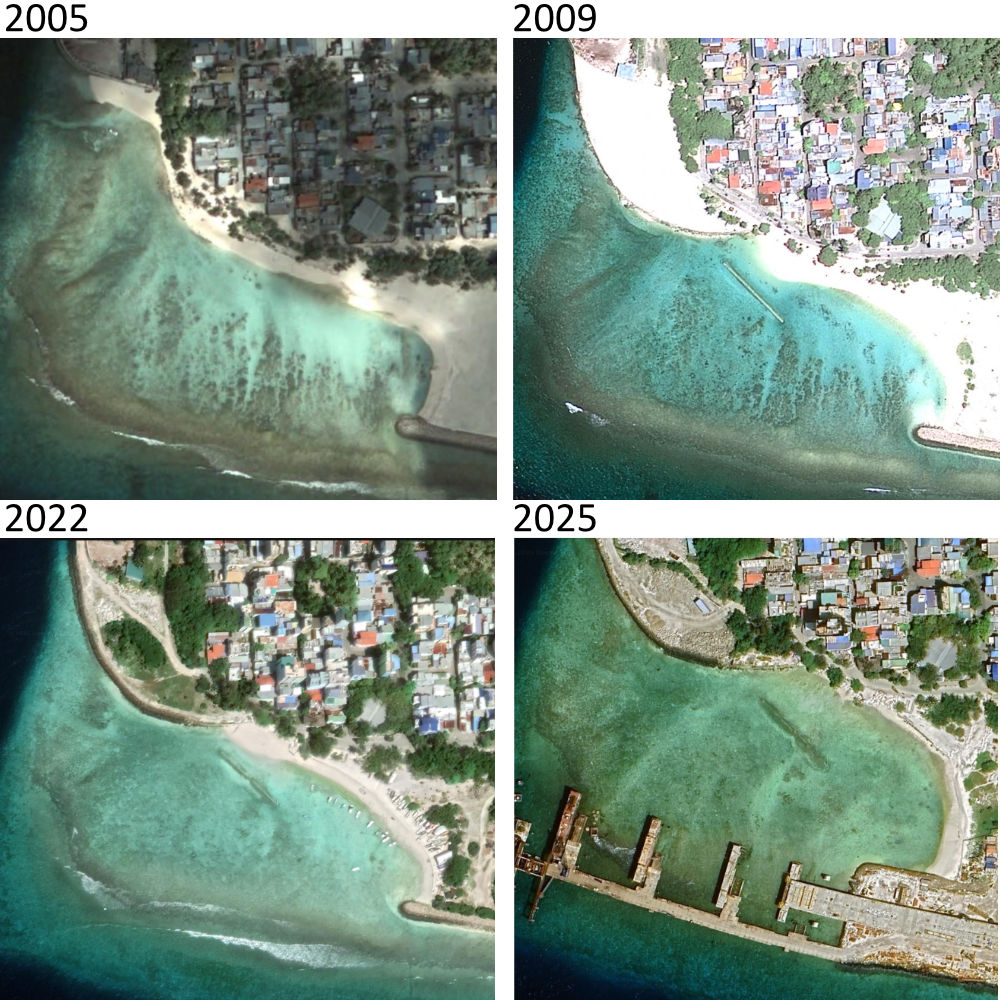
So what of the Kaafu Villingili funavaa? While our immediate concern with the “affordable” housing units was the impending deforestation, it’s only one among several.
The first open letter published by Save Maldives explicitly made the case that 17-storey towers cannot be built inside a pocket forest without damaging the mature trees. The statement by the Association of Maldivian Planners warns that this could change Villingili into a high-density environment à la Malé. Save the Beach also released a statement calling for the relocation of the project to reclaimed land elsewhere. Every organisation that has spoken out against the project has made it clear that what is at risk is not just the ecology.
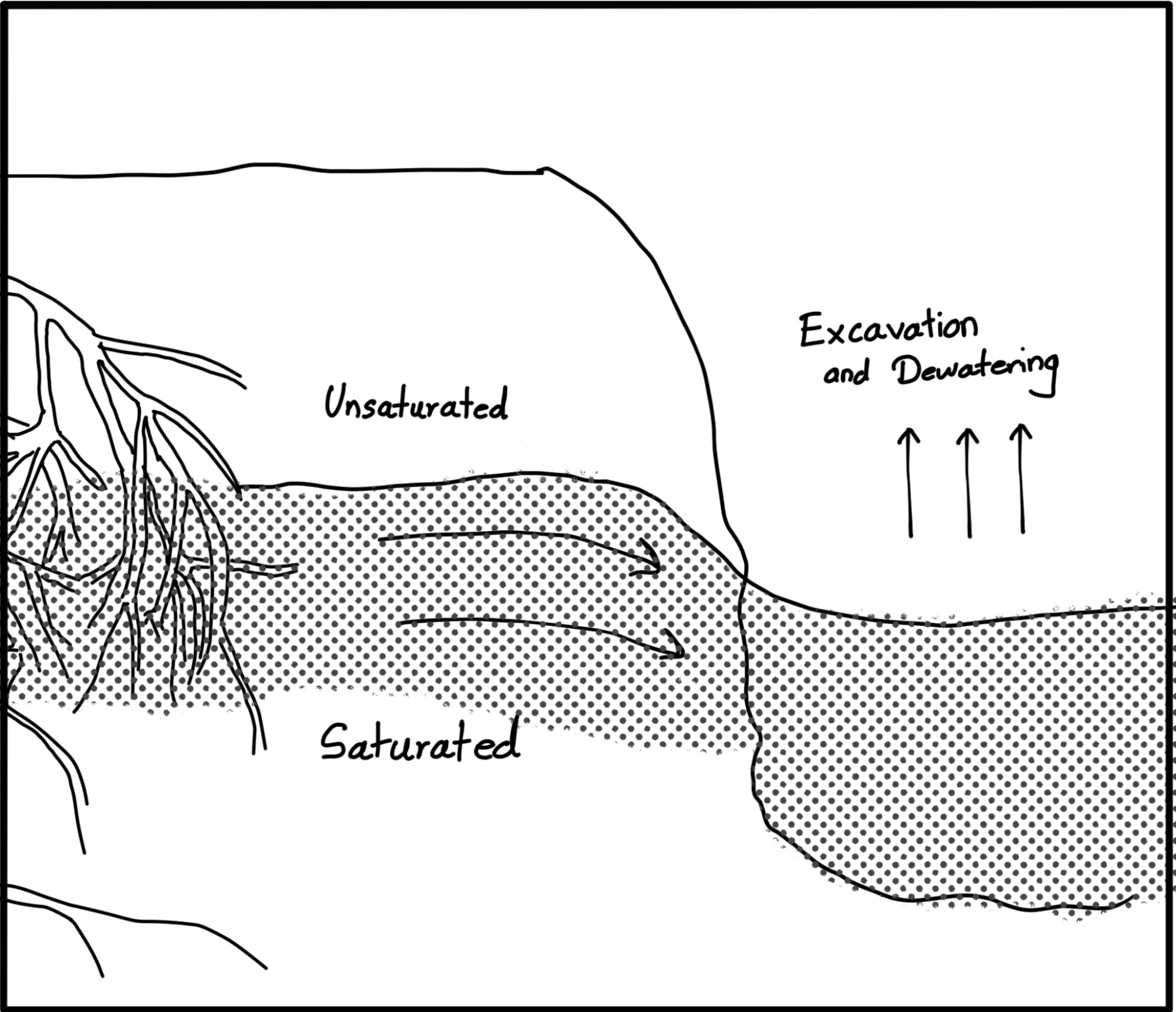
This will irreversibly change the lifestyle of the island, just like the bridge is expected to, with the damage it has already sustained to the island; the southwest beach of the island has eroded considerably since the reef was reclaimed for the bridge, despite the environment management report (EMR) shamelessly claiming that the cause could also be “seasonal”. It is because the dewatering and deep excavation required for these buildings, the large cranes that will be assembled on-site, and the handling of cement and concrete will damage the mature trees in various ways, that we have stated that this is not the concession we wanted.
We want the entire project off the island!
And that includes the hospital expansion, for which more mature trees are to be uprooted and discarded. Why do we need a bigger hospital, when Malé is five minutes away by ambulance? Why won’t you improve the existing services first? Too many to list, you electoral “democracy” jokers.
A warning
You have already done enough damage with your bridge and your felling of street trees. You have sold us “tharaggee” lies while massacring our islands, our way of life, and we are sick of it. We are sick of all of you. We are sick of electoral politics and you capitalists’ so-called “liberal democracy”. You may think the anti-electoral, anti-capitalist population represents only a fringe, but look at our numbers, and look at the scale of our anti-party mobilisation – and then compare that with yours. You are all unpopular. Cognitive dissonance is why it’s not clocking to you.
Whether you’re a yellow flag or a turquoise flag, we suggest you listen well to these next statements.
You cutting down these trees will not end in our capitulation, hopelessness, and despair. From that point on, every single one of us will be ever more dedicated to making your lives hell. We haven’t forgotten about any of the past many grievances – the murders, the disappearances, the rapes, the theft, all of it – you think you may have gotten away with it, but consequence will strike you down. That is a promise. You may run smear campaigns, you may beat us blue, you may even get us imprisoned or killed, but isn’t it funny that for every person you murder, imprison, or smear, two more new faces pop up anyway and continue to give you trouble?
You may think you can escape consequences past death by old age, but the suffering you inflict on people will catch up to you. You aren’t omnipotent.
Let us just quote Marx here, addressed to the one-percent elite and their party-politics bureaucrats: “we have no compassion for you, and we ask no compassion from you. When our turn comes, we shall not make excuses for the terror”.
Affan Ali Najeeb is an engineer and researcher, with interests in water resources, soft engineering, and desalination. He is a mechanical engineering graduate and one of the core members of the Save Funavaa efforts.
Mahal Ibrahim Abdulla is a writer, artist, musician, and an interdisciplinary researcher. He is a co-founder of Moosumi. He is an honours graduate in Politics and Social Policy from the University of Leeds. His current research interest is post-growth economics, and is studying physics to progress into a multi-disciplinary post-graduate pathway in his academic career.
All comment pieces are the sole view of the author and do not reflect the editorial policy of the Maldives Independent. If you would like to write an opinion piece, please send proposals to editorial@maldivesindependent.com.
Discussion
No comments yet. Be the first to share your thoughts!
No comments yet. Be the first to join the conversation!
Join the Conversation
Sign in to share your thoughts under an alias and take part in the discussion. Independent journalism thrives on open, respectful debate — your voice matters.
Support Independent Journalism
Help us keep the news free and fearless
Give once
$
or
Become a memberfrom $5/month