
Through the red filter: the violence women face in Maldivian politics

Online abuse, sidelined careers, captured ethics committees: an exhibition maps the system.
Artwork: Dosain
Artwork: Dosain

1 hour ago
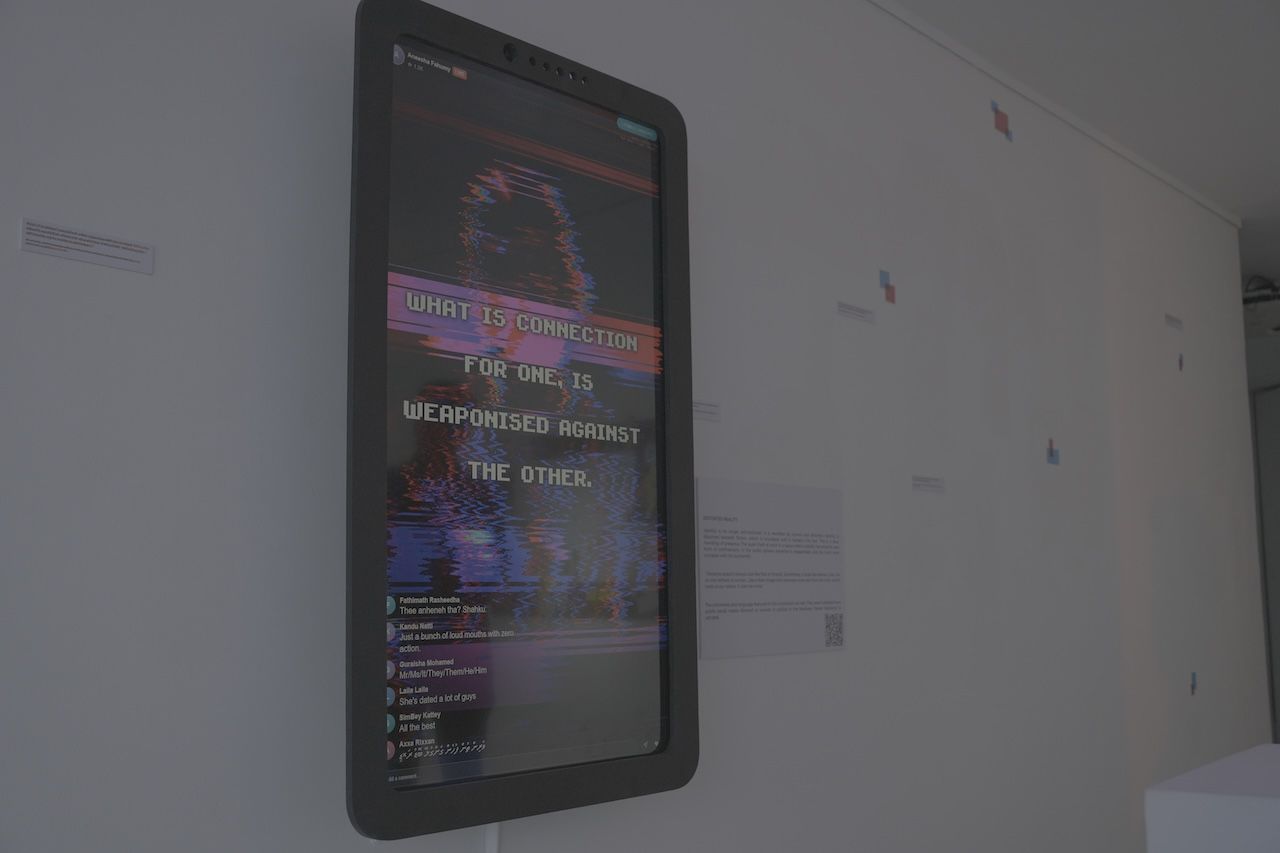
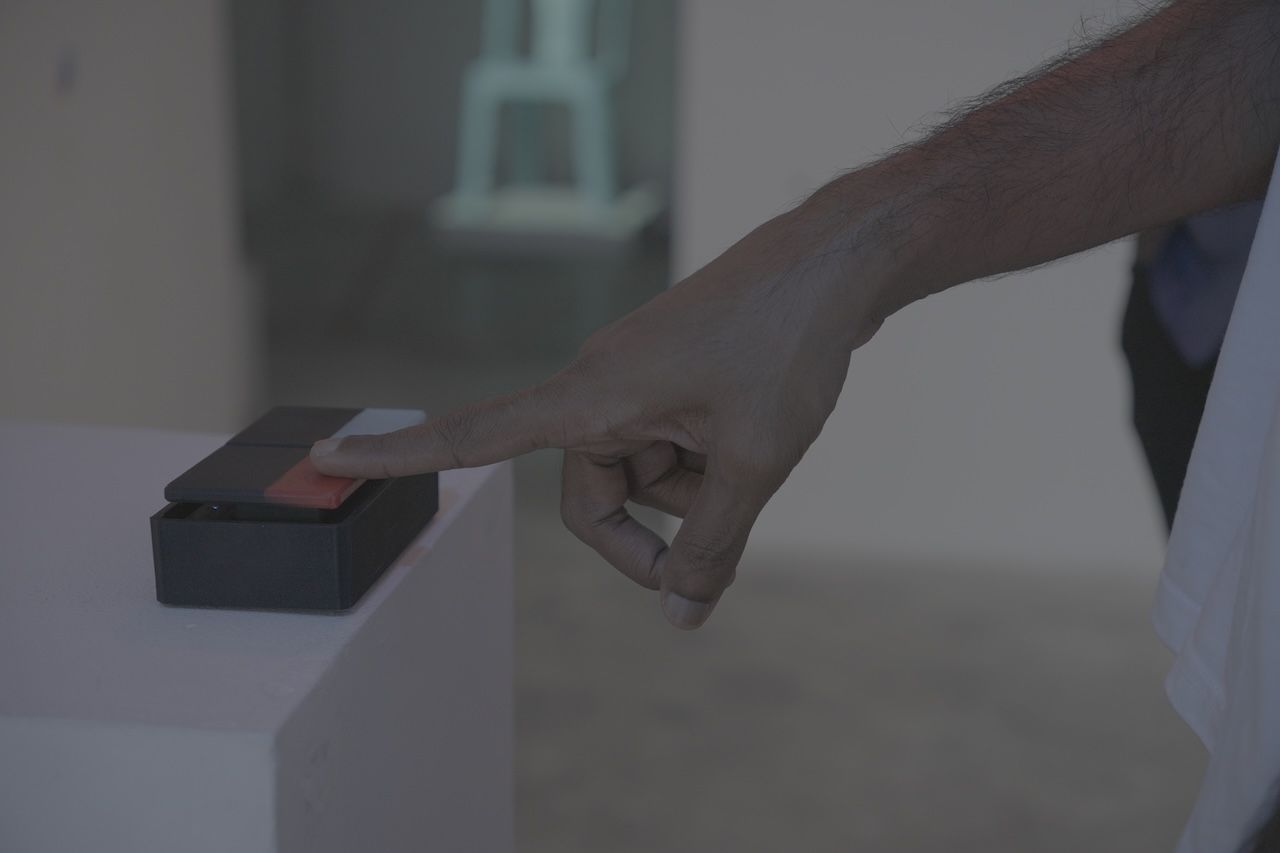
At the Art Gallery Malé on May 17, visitors stood in front of a live camera and pressed one of two buttons: male or female. The choice triggered a feed of real comments scraped from real livestreams of real people in Maldivian political life.
Press male and the screen filled with affirmation. "Finally a candidate worth my time." "Highly respected." "Main character energy."
Press female, and the screen turned: "Okay expert, how about you go make a sandwich now, and put some make up on." "Stop acting like this, and start a family." "I stalk you everywhere haha." "How much for one night?"
Two entirely different feeds on the same platform for the same ambition.
The installation, called The Distorted Reality, was one of six pieces in Unheard , an investigative art exhibition on violence against women in Maldivian politics organised by the Westminster Foundation for Democracy (WFD) and funded by the Australian High Commission. The exhibition ran from May 15 to 17. Each piece dealt with a form of violence that sits in "a layer where it cannot be confronted," as one of its creators put it. Australian High Commissioner to the Maldives David Jessup said the exhibition brought "the gravity of cyber-violence into sharp focus."
The political context is bleak. Women hold three of 93 seats in parliament, placing the Maldives 180th globally for women's representation in legislatures. 
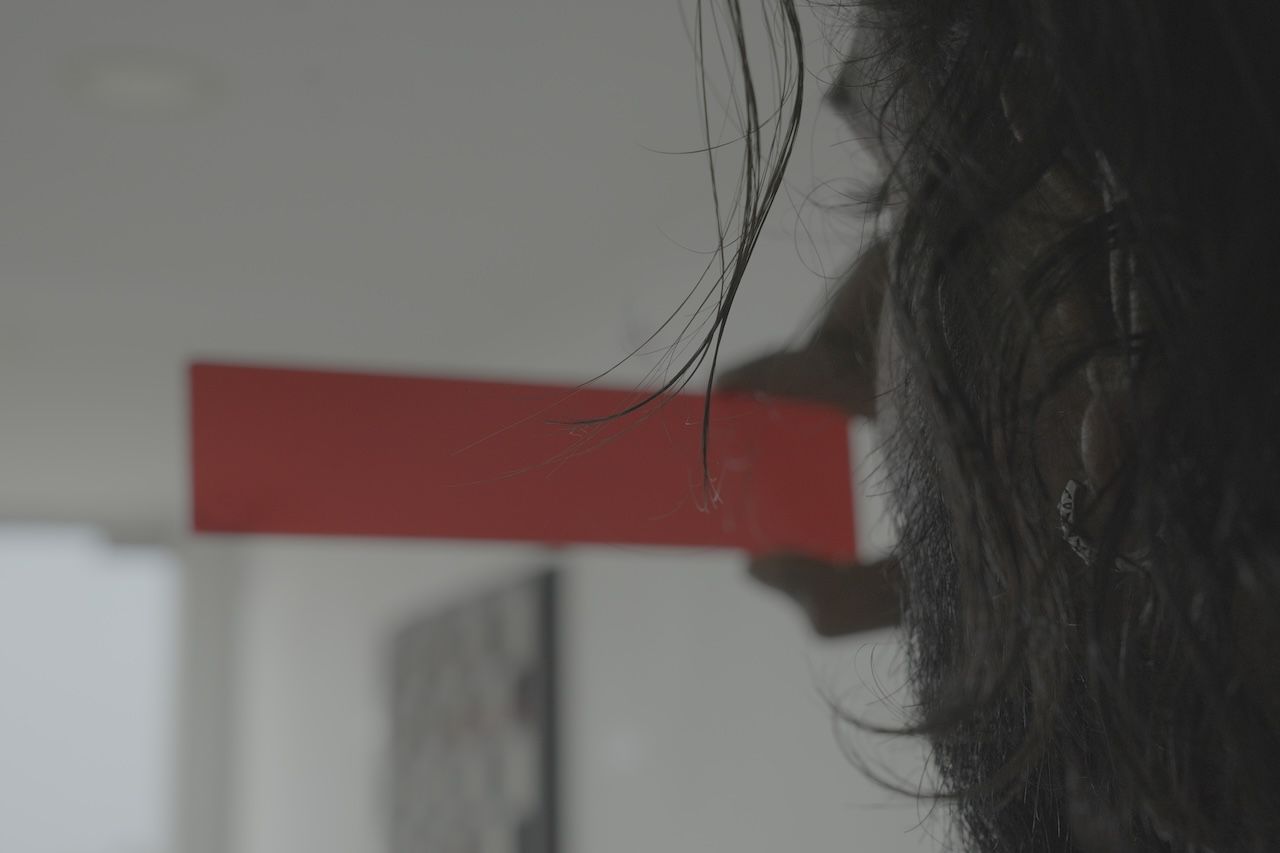
The mechanism that bound the exhibition together was deceptively simple. Visitors were handed a red filter on entry. Held up to each piece, the filter revealed hidden text – comments, memos, statistics – that were otherwise invisible against the background. The exhibition's title carried the same logic: looked at through the filter, the "heard" in Unheard darkens and disappears.

What the pieces showed

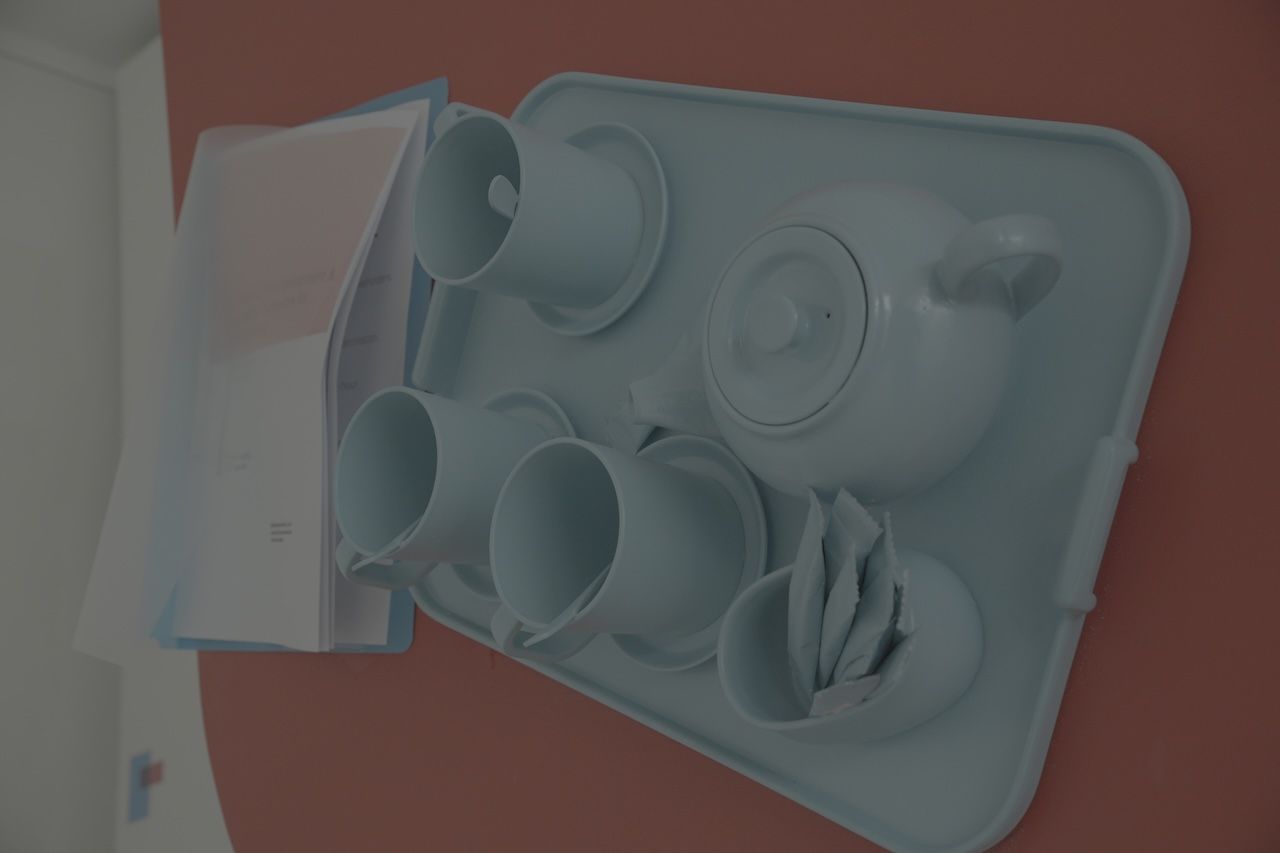
The Tea Set staged a formal meeting. Chairs arranged around a table. In front of one seat, beside a notepad, a tea tray. The chair was pulled slightly back, as though its occupant was about to rise and serve. Through the red filter, the hidden text on the nameplates told the rest: the woman expected to pour the tea held more experience, more qualifications, and a longer service record than every man at the table. Her notepad contained no meeting materials, only a list of birthday parties to plan and social dynamics to manage. A memo in the file beside her reassigned her, "after internal consideration," from the harbour committee she had asked to join to a role in youth outreach and social welfare. An anti-harassment framework she had drafted carried a marginal note: "This is a bit too academic. Let's focus on the island cleanup first."
Three of 15 current cabinet ministers are women. Female councillors are routinely assigned to "soft" portfolios – health, education, community events – while men lead infrastructure and large financial projects.
The Duty Roster was a cork board mapping the parallel lives of a teacher and opposition politician. After she announced her candidacy, school meetings began to coincide consistently with her party gatherings. What she at first dismissed as paranoia she gradually recognised as something deliberate and untraceable. Step back far enough from the board and the colour-coded elements spelled a single word: CTRL. A rejected leave request carried a handwritten note, visible through the filter: "No, this can't be! Why would they reject my leave?? I rarely take any leaves!"
WFD's data tracks what the installation dramatised. Among female councillors who chose not to seek re-election, 27 percent cited the difficulty of managing work and family responsibilities as the primary reason. Within councils themselves, 20.6 percent reported harassment from other council members, and 23.6 percent did not feel respected by their community as councillors.
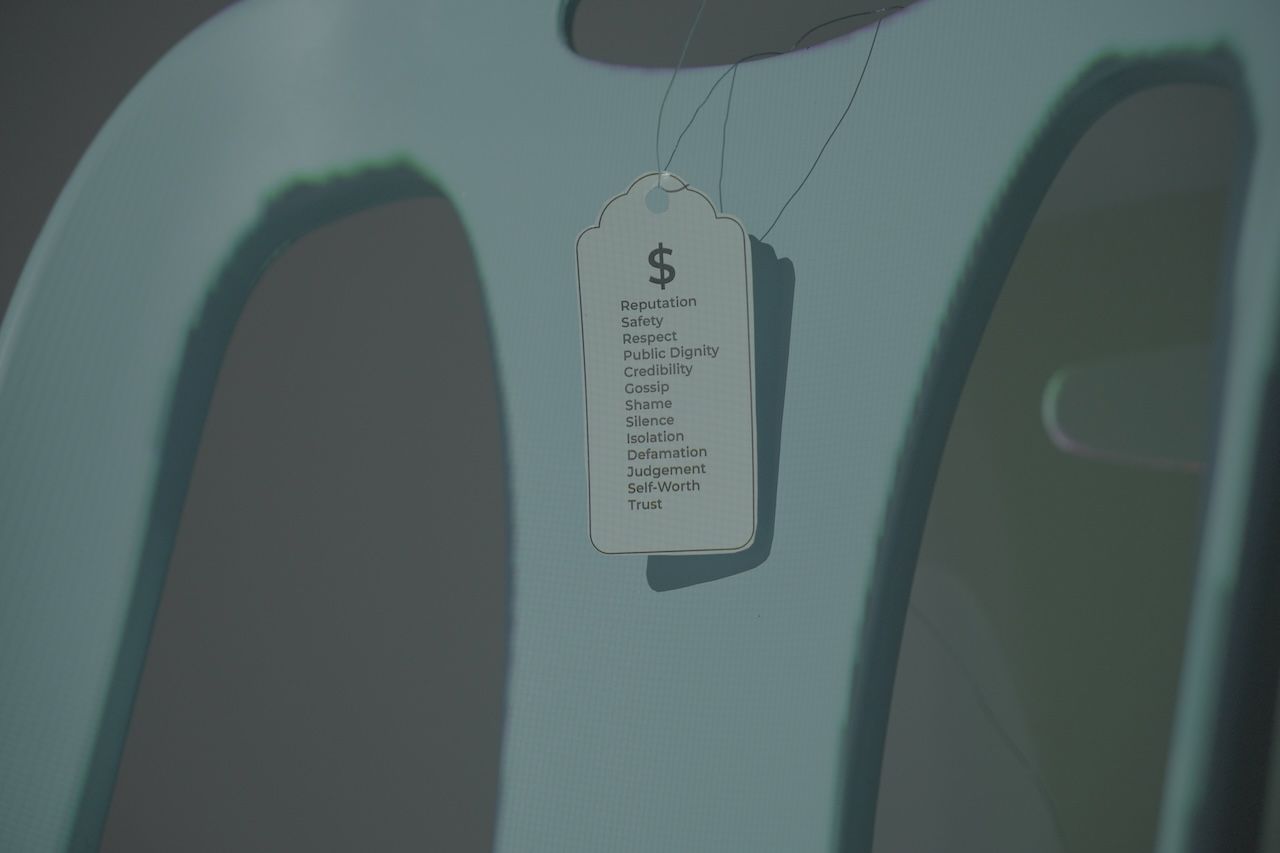
The Chair sat on a shattered tiled floor and carried a price tag. But the cost listed was not monetary. Discrimination. Lack of family support. Societal pressure. Defamation. Online bullying. Statistics on women's access to education and political financing were projected onto the chair itself, turning the installation into something between artwork and evidence file.
Recent estimates put the cost of running an average parliamentary campaign at MVR 2 million (US$ 129,700) to MVR 5 million. Women in the Maldives earn on average half as much as men. Without family financial backing, running for parliament is "difficult, if not impossible," one researcher told WFD.
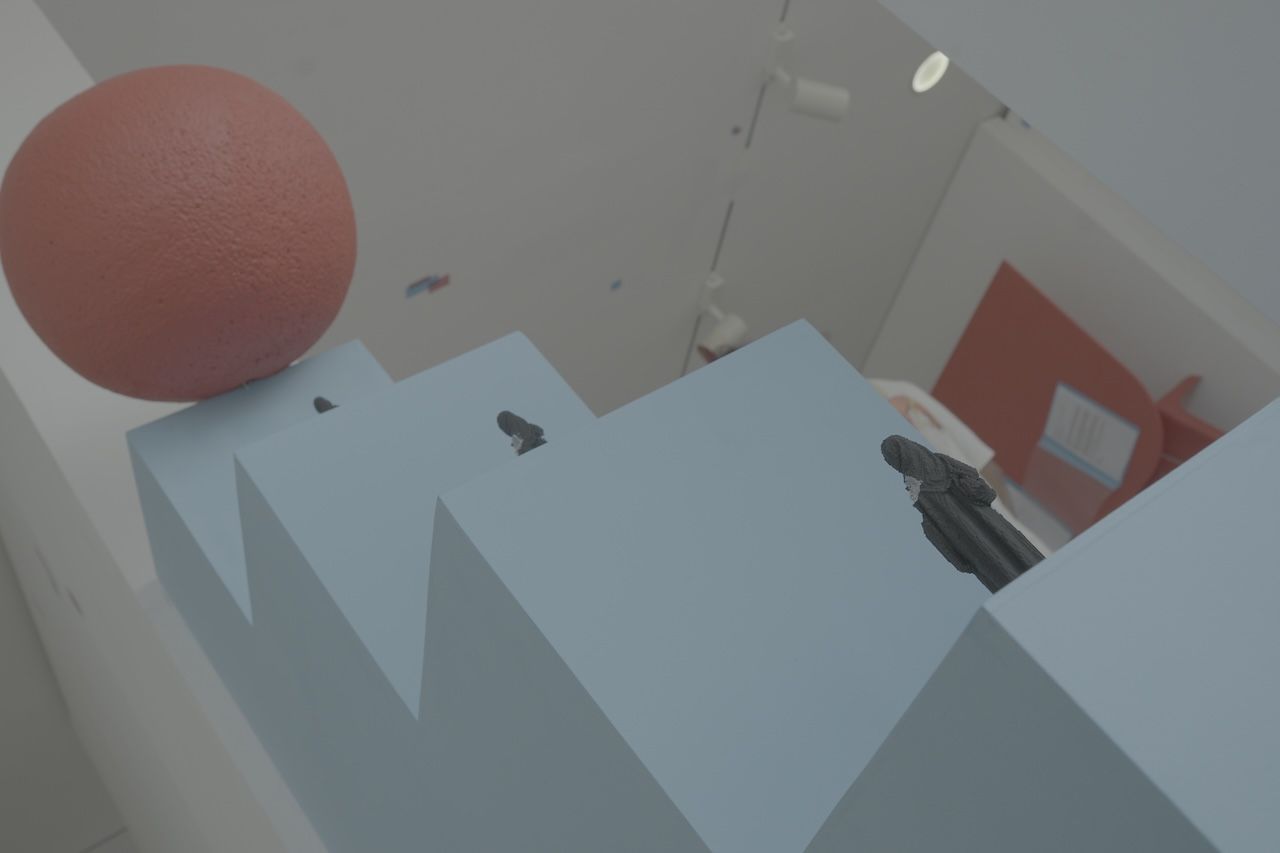
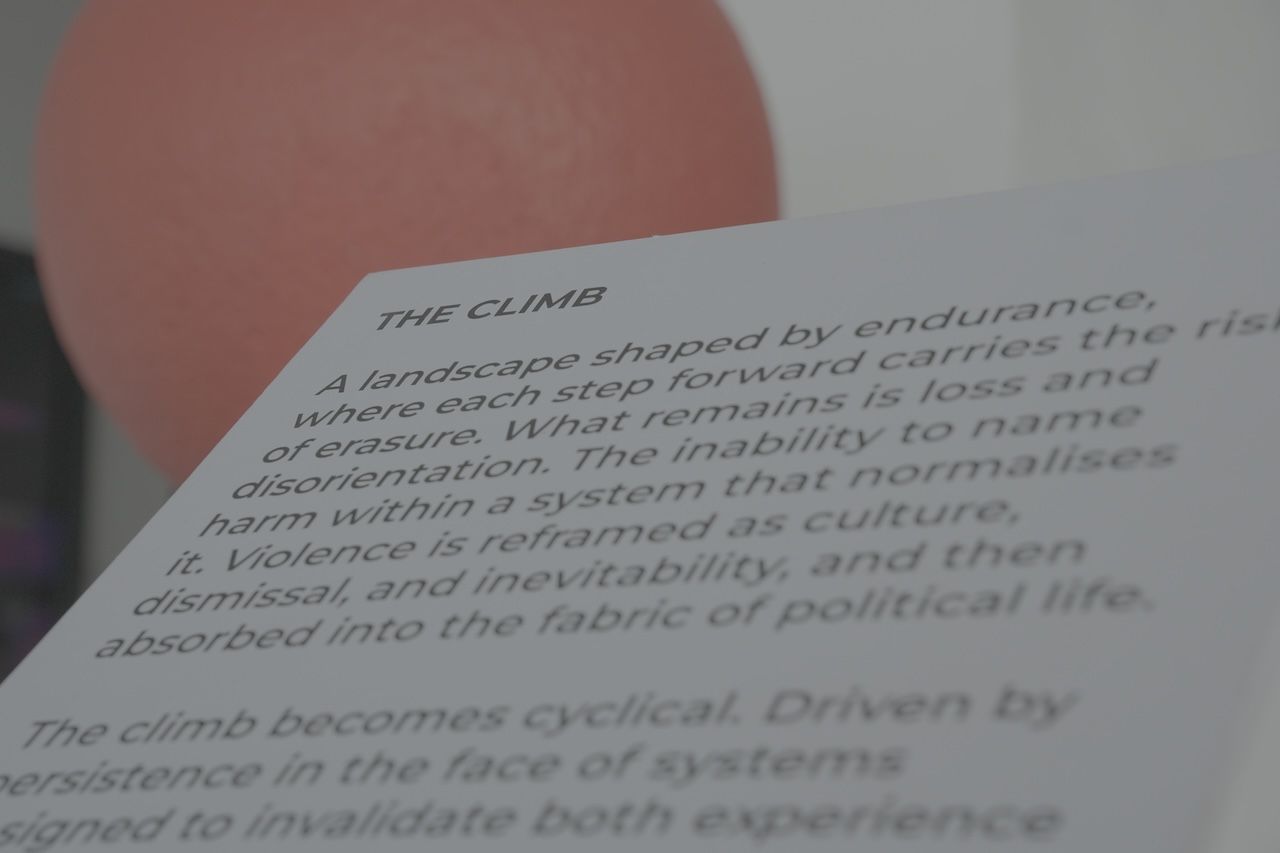
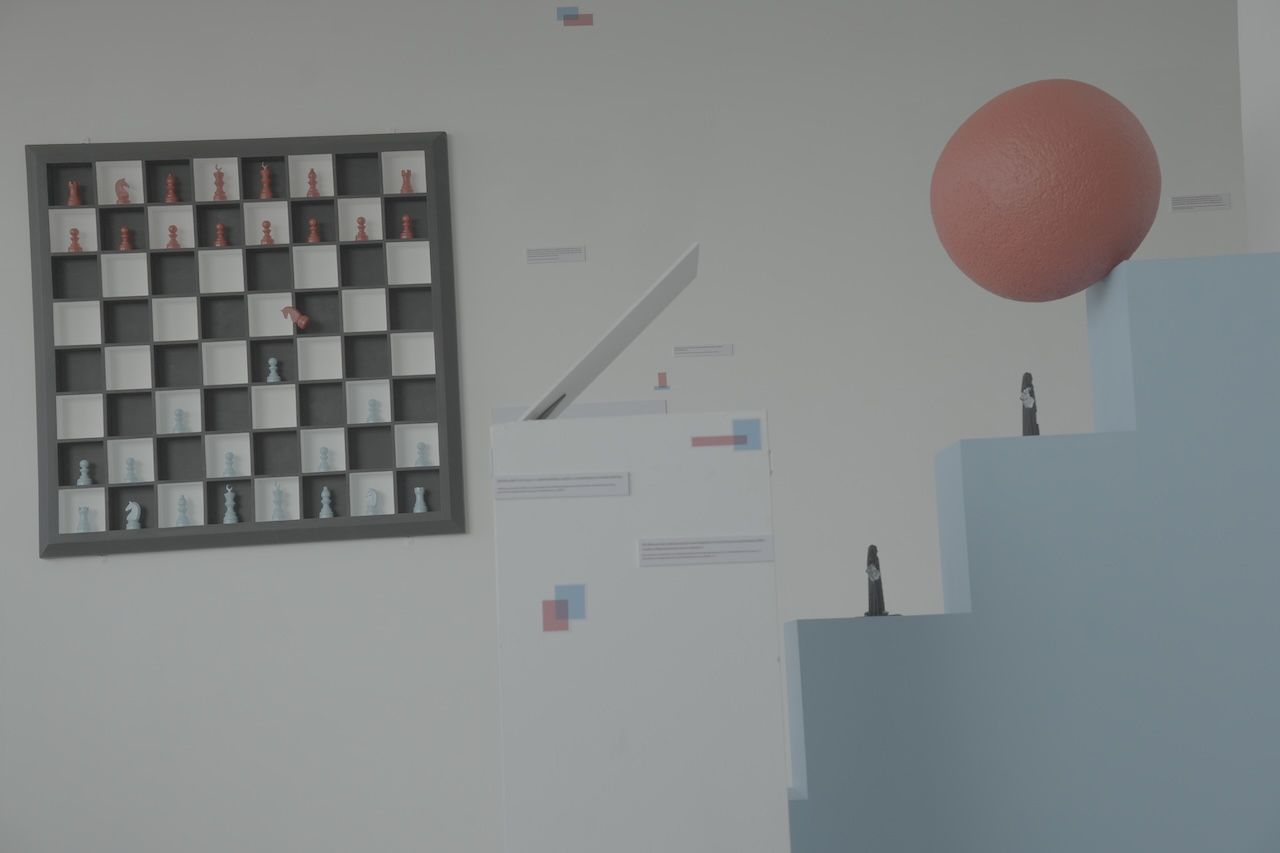
The Climb traced a thirty-year campaign manager's career as a staircase, each step a year. A small black doll climbed upward. At the top, a red ball had come crashing down, destroying everything she had built. The trigger was small: she had declined drinks with the politician she worked for. What followed was a quiet, calculated dismantling of her career. When she filed a complaint with her party's ethics committee, she discovered he controlled it. The investigation was buried. She was told she was being too emotional. "Don't make this into a drama," the installation quoted. "This is just how politics works."
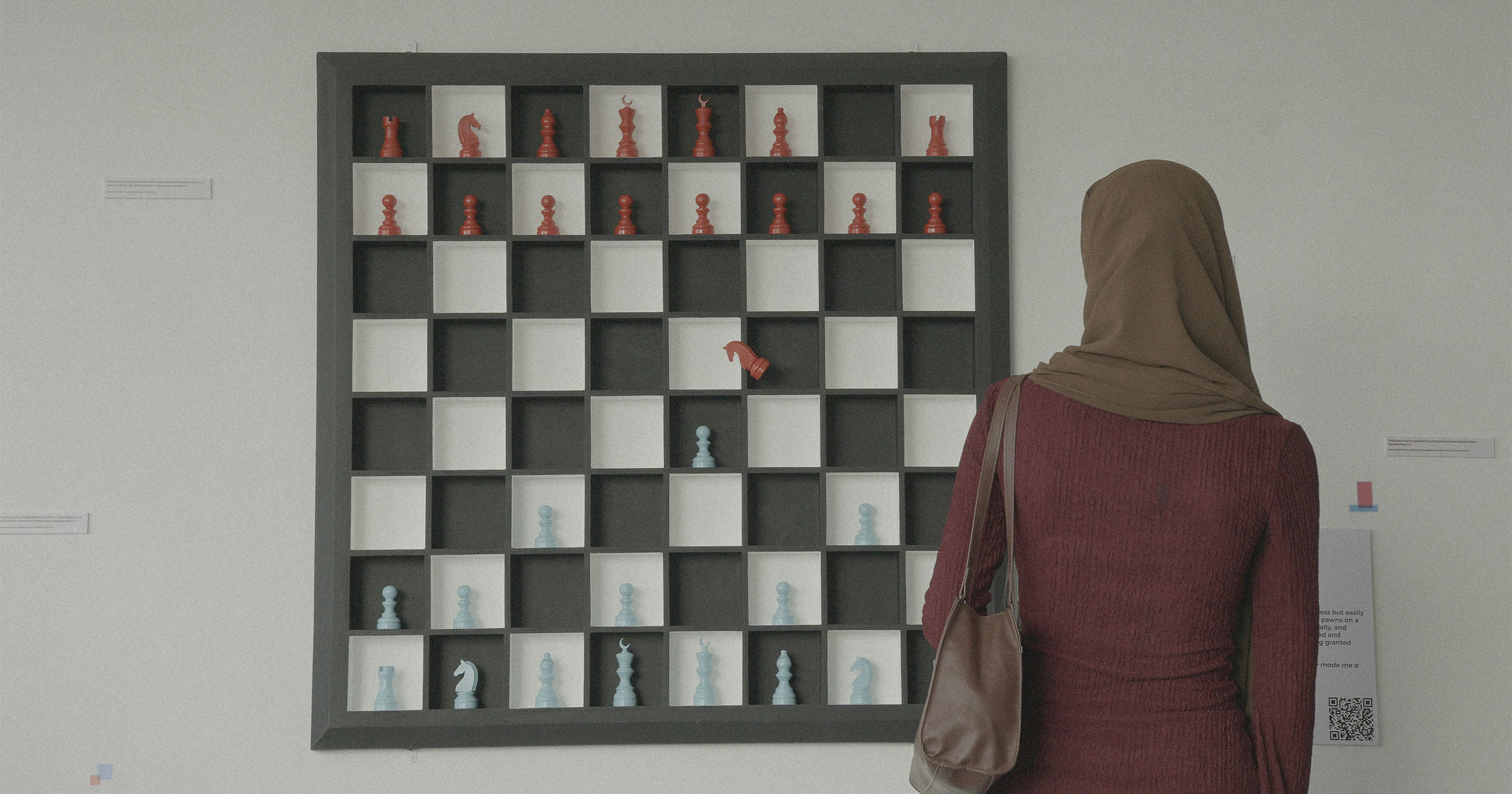
The final piece was a chess set, but something was wrong with it. Visitors could move only the pawns. Every other piece was fixed in place. A solitary pawn stood frozen mid-threat, a knight suspended above it. The Pawn told the story of a woman who had spent years organising at grassroots level. When she was wrongfully arrested, her party circulated her arrest photos without consent, using her image to advance its messaging on oppression. No effort was made to secure her release. She spent six months in jail, funding her own legal defence. On release, she was met with brief condolences and asked when she could return to work. She walked away. The board's final detail was quiet but pointed: the queen had been replaced by another king.

The system, not the individuals

The stories behind each installation were drawn from two years of participatory research conducted by WFD with women members across Maldivian political parties. The methodology, which WFD calls MINA – Methodology for Institutional Action – was built to avoid retraumatising those involved. Rather than asking women to recount their own experiences, WFD used what its country director Aryj Hussein described as "distancing techniques," developing composite narratives that drew on lived realities without requiring any individual to identify herself.
"Political spaces are very unsafe spaces," Aryj said. "They're not created for women either, and they face a lot of consequences for speaking out."
The structural picture WFD's research produced is consistent. For many women, the barriers begin before they ever formally enter politics. Social media – the first venue in which political interest is usually expressed – is also where women are disproportionately targeted. Younger and more educated women face higher rates of online violence, and the chilling effect on them is greater. "Entry into politics, especially if you are showing interest in politics, you are cut down very early on," Aryj said.
The funnel is visible in the numbers. Women make up nearly half of registered members in every major political party in the Maldives. They were 10.76 percent of applicants in the 2024 parliamentary elections (UNDP, 2024). Of the 43 women who ran – the highest number ever – only eight stood on major party tickets. 
For those who make it into party structures, legal protections are inadequate. Sexual harassment law applies to workplaces, but party members are technically not employees, and harassment complaints within parties are routinely handled as disciplinary matters rather than as the serious allegations they are.
Beyond the legal gap is what Aryj called normative culture: the socialised idea of what a politician should look like and what leadership requires. Women who do not fit that image are sidelined whether they run inside parties or as independents.
Finally, there is political capital. "A lot of politics is about relationships still – the family contacts you have, the networks that you have," Aryj said. "These are the support systems you bring in as political capital. And these also protect them. That needs to change structurally so funding and political financing also has to come about in an equitable manner. Parties and systems have to be based more on merit. And those need to be codified better."
The exhibition's central argument was that none of this is the work of a few bad actors. "An entire system is working against women in this space," Aryj said. "So we have to go towards system repair, towards institutional repair."

Why this form

The decision to commission an exhibition rather than publish a report came out of a practical question: how would anyone outside the policy ecosystem actually engage with the findings? WFD shared a separate risk analysis with political parties privately. For the general public, an exhibition seemed the better instrument.
WFD put out a call for proposals with three demands. The work should not be gory. It should reflect the spectrum and nuance of violence rather than depicting it in an obvious way. And it should be interactive enough that visitors did more than look. Engon, a Malé-based design agency in its first year of operation, was commissioned.
Ali Fariu, known as Aikko, led the work. He said the agency had wanted to break from the standard visual register in which violence against women is usually represented. The red filter mechanism – a small physical discovery made early in the concept stage – became the main device of the exhibition.
"A lot of the time it's a very passive oppression," Aikko said. "When you say violence, most of the time you think a very big, very physical thing is happening. But actually in politics it's very subtle, it's passive, it's kind of hidden in a layer where it cannot be confronted. Most of the time it is met with 'you're just being too dramatic,' 'that is not that big of a deal,' 'this is how it works.' But not really. That's not how it should be."
Building The Distorted Reality was the most difficult of the six pieces. He spent days testing the installation while the real comments cycled on screen. "It was really draining for me, and also eye-opening. The people who visited were also very surprised: 'Is this really what's happening?' It's very absurd for me. I can't really fathom that people really do this."
The first evening of the exhibition was reserved for institutional stakeholders. Aryj said the intention had been to give parties, the Elections Commission and government institutions an opportunity to engage directly with the material. WFD remains hopeful that awareness of the exhibition will reach those who did not attend.
The broader aim is to shift pressure onto the institutions that have the power to act on what Unheard documented but at present have little incentive to do so. "Right now, because political parties do not face such pressures, there are not a lot of incentives for political parties to improve these things," Aryj said. 
For Aikko, the work left a residue. "In the future, maybe I'll have a daughter too," he said. "And I don't know. It's very scary that this is how the system works here."

The picture in numbers

Representation

Women hold three of 93 parliamentary seats – 180th globally for women's representation in legislatures (IPU, 2025; Transparency Maldives, 2026)

Three of 15 current cabinet ministers are women

No political party in the Maldives currently has a woman as chairperson

The Maldives ranked 103rd of 146 countries on women's political empowerment in the 2023 Global Gender Gap report

Local government

Before the 33 percent gender quota was introduced in 2019, women held under 10 percent of council seats across three council elections. The quota raised representation to 39.7 percent.

Zero women were elected as island council presidents, city mayors, or atoll council presidents in 2021 (

Only one woman has served as a city mayor in the country's history (Malé City, 2017) and one as an atoll council president (Faafu Atoll, 2024)

Pipeline

Women make up nearly half of registered members in every major political party

10.76 percent of applicants in the 2024 parliamentary elections were women

43 women ran in 2024 – the highest number ever. Eight stood on major party tickets. Three won

Background conditions

Maldivian women earn on average half as much as men

Labour force participation: 45.6 percent for women, 77.1 percent for men, despite women outpacing men in higher education enrolment, retention and completion (Maldives Bureau of Statistics, 2019)

Maldivian women spend around six hours daily on unpaid domestic and care work, compared to three hours for men

92 percent of those not seeking employment for family and household reasons are women

Discussion

No comments yet. Be the first to share your thoughts!

No comments yet. Be the first to join the conversation!

Join the Conversation

Sign in to share your thoughts under an alias and take part in the discussion. Independent journalism thrives on open, respectful debate — your voice matters.

Support Independent Journalism

Help us keep the news free and fearless

Give once
or
Become a memberfrom $5/month

Explore more