
Rebuilding Maldives: the alternatives to the party-system and capitalist politics
Saving Maldives from the game called “elections.”
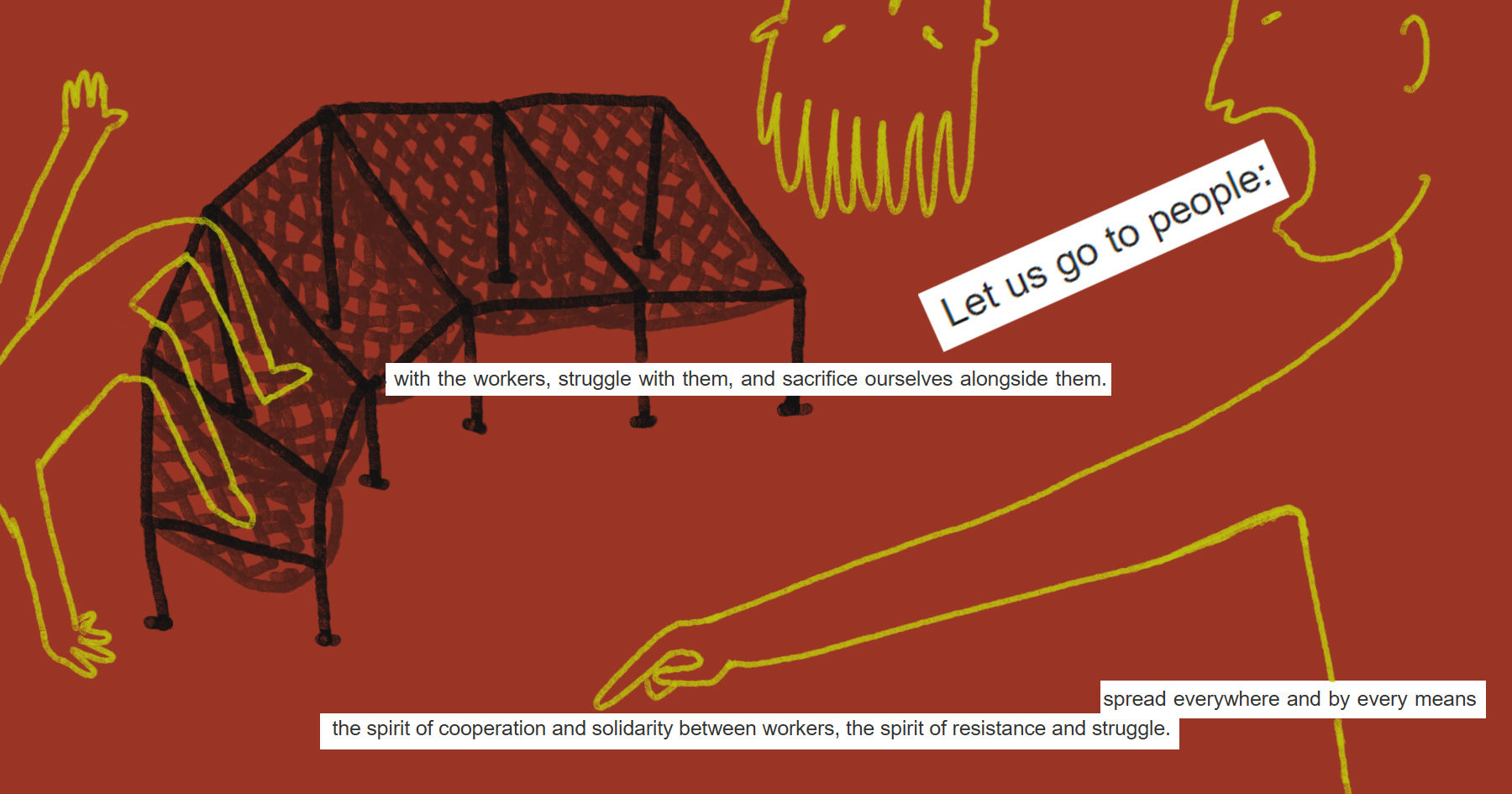
Artwork: Dosain
Building political consciousness across class lines

The material economic reality and class relations: i.e., “Who owns what?” “What does ownership mean in each context?” “Who owns the infrastructure of production like land, labour, and capital?” “What exactly is the nature of land, labour, and capital beyond the garbage we’re fed in the IGCSEs?” “Who works, who profits, and what exactly gives things value?” and so on.
Economic contradictions: capitalist economics is driven by conflicting and irreconcilable class interests. Material/historical dialectics is the scientific tool developed over countless years (still relevant today) to dissect this. Not everyone has to by-heart this; there should just be efforts at spreading awareness of its simplest applications. For example: the capitalist class here – that is, the resort elites, the wealthiest of the wealthiest, next to the landlord elites, bureaucrats, bankers, and state entrepreneurs — want to maximise the landmass for capital accumulation from tourism for their own profits. The working class wants landmass for housing, education, basic infrastructure, and so on. Clearly, these two interests cannot coexist together. One must win, and the other must lose.
The function of the state and international forces: neither the government or international states and organisations (like UN, Amnesty, or Transparency) are “neutral referees”. All of them represent various arms of capital and how they move. Observe how various state and non-state institutions are all deployed to serve capital and its accumulation, and how the national and comprador elites of vassal states like ours serve the imperial elites and their multinational forces.
Change

Discussion
No comments yet. Be the first to share your thoughts!
No comments yet. Be the first to join the conversation!
Join the Conversation
Sign in to share your thoughts under an alias and take part in the discussion. Independent journalism thrives on open, respectful debate — your voice matters.
Support Independent Journalism
Help us keep the news free and fearless
Give once