

The state blames the resorts, the resorts blame the state and the peg cannot hold
Proposed doubling of mandatory conversion prompts rare industry revolt.
Artwork: Dosain
25 Aug, 19:30
The home minister said the quiet part out loud: resorts are a key supplier of the parallel market for US dollars. Operators claim the mandatory conversion of 20 per cent of foreign currency earnings is too high, "but when it comes to putting it in the black market, they have the dollars," Homeland Security Minister Ali Ihusaan said.
He went further. The main players collude to manipulate the market and artificially drive up the rate. Politicians are involved as well, he alleged.
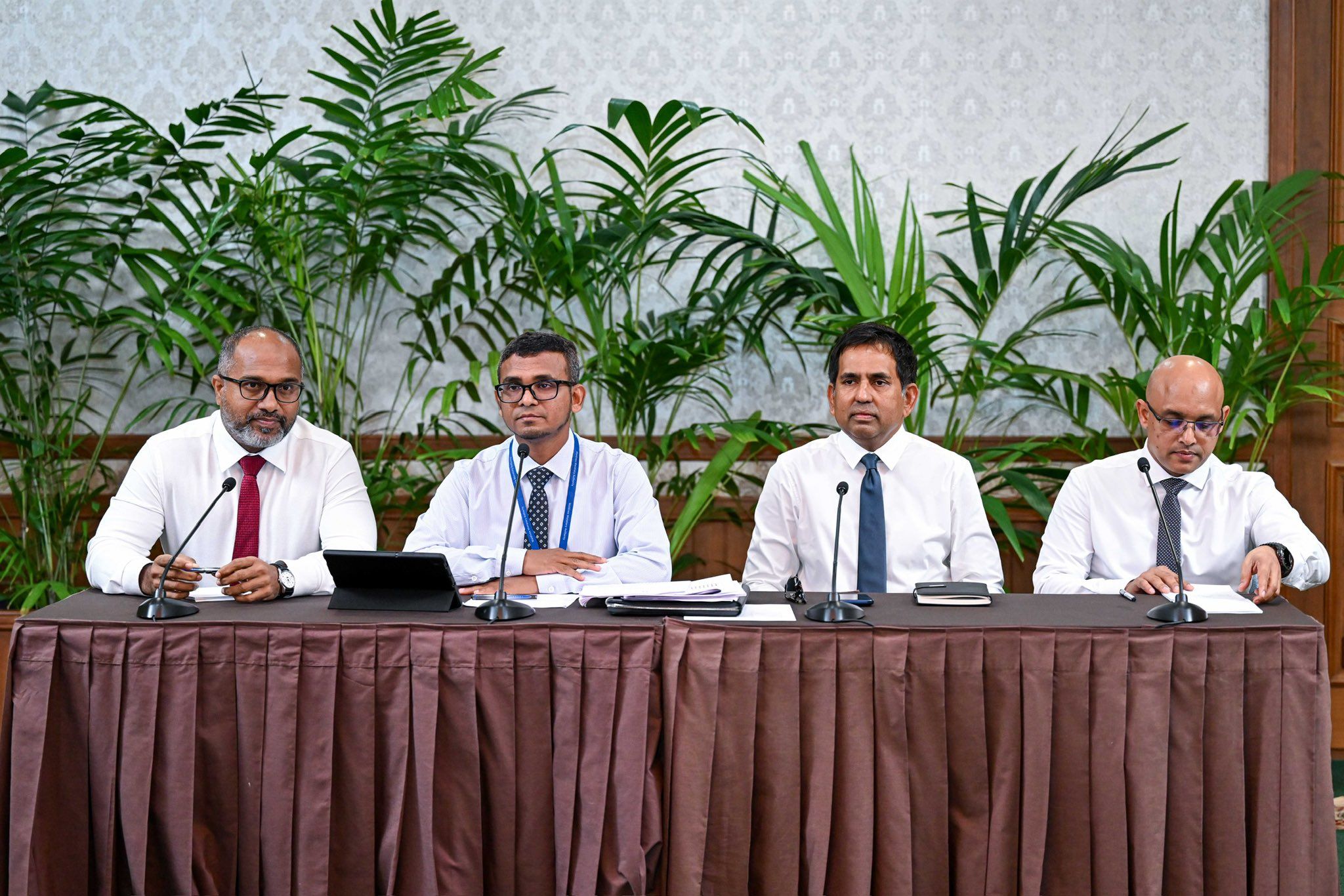
“When the sun comes up in the morning, the biggest money exchangers call each other and say, ‘hey, this is today’s rate,'" Ihusaan said at a President's Office press briefing on Monday with the Maldives Monetary Authority governor and the ministers for economic development, trade, transport, finance and public enterprises.
He acknowledged the "culture" of not enforcing laws prohibiting unauthorised foreign exchange. But the government will now crack down without fear or favour, he declared.
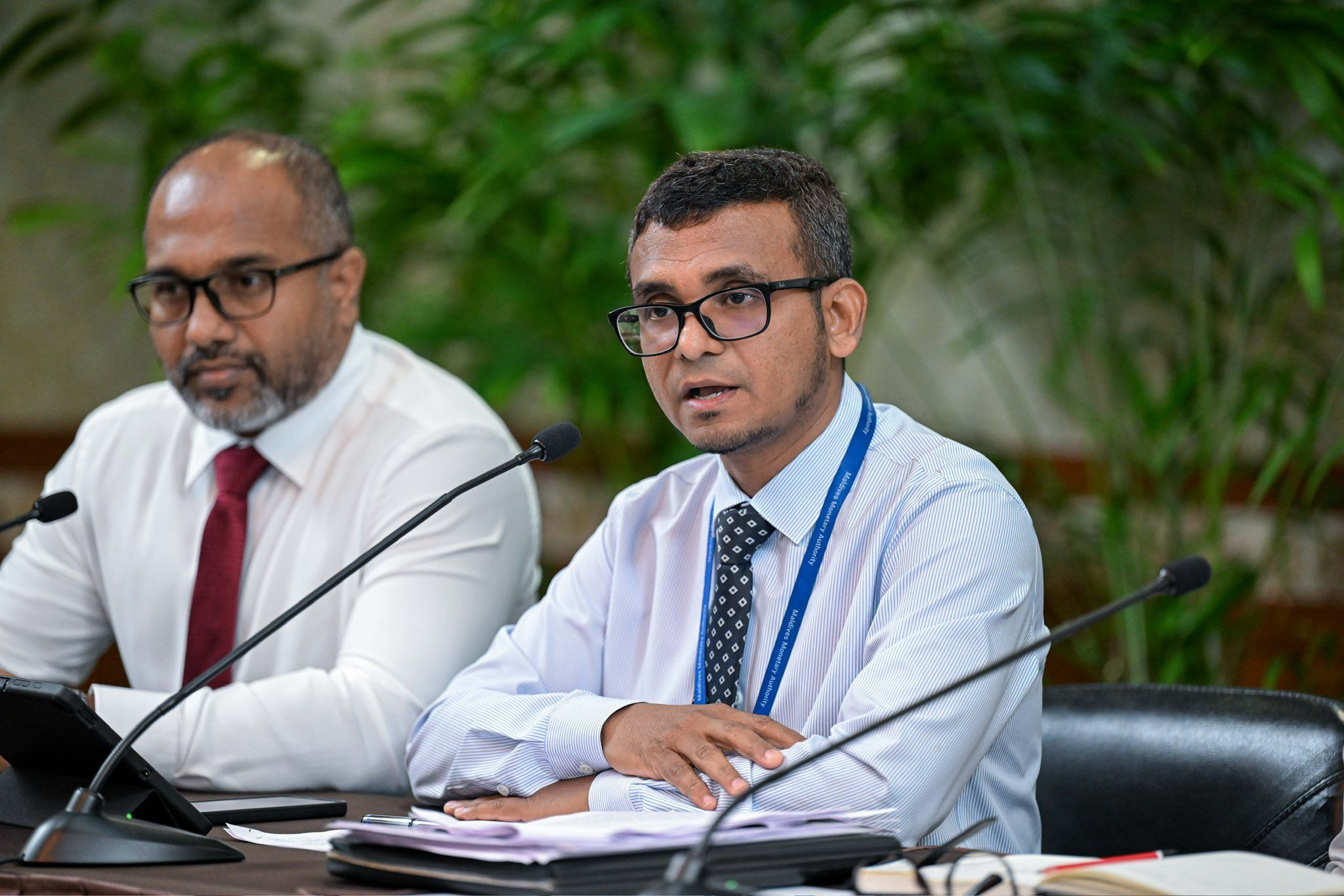
Flanked by ministers, MMA Governor Ahmed Munawar argued the record black market rate – which exceeded MVR 22.80 last week, more than 48 per cent above the official rate of MVR15.42 – was disproportionate to the impact of the Middle East conflict. Tourist arrivals are down four per cent and an elevated fuel import bill has depleted reserves. But tourism revenue is up one per cent. Bank deposits and credit growth are both up 18 percent. "This means foreign currency is entering. There’s no difficulty in getting foreign currency like with the sudden dip during Covid," he said.
The spike in the black market rate coincided with consultations about proposed changes to the foreign currency law. "Because we’ve noted that there’s very much a speculative element in this, we’ve been monitoring especially the operations of money changers," he said, referring to the hoarding of dollars in anticipation of higher returns. A joint investigation with law enforcement agencies found foreign currency earners responsible for "a big percentage of the black market".
The central bank has asked the government to investigate and enforce the law, Munawar said. One licensed money changer was shut down last week.
Ihusaan said police have identified seven exchangers who collectively sold US$76 million over the past nine months. Their suppliers include major resorts. "One of them, a resort chain, exchanged US$4 million in the black market over the past nine months," he said. Construction companies that serve the industry and individuals who earn salary in dollars also supply the black market, he noted. When they use the proceeds for personal benefit, business purposes or investment, "whether knowingly or unknowingly, these parties are currently engaging in money laundering activities."
Munawar announced plans to double the conversion requirement to 40 per cent of revenue and to change the current quarterly exchange to once a month. Other changes will be proposed to enable the MMA to closely monitor US dollar expenditure. "We need to know what they spend their foreign currency income on," he said, citing the need for documentation to ensure that businesses do not feed the parallel market.
The MMA law carries fines of up to MVR1 million for the purchase or sale of foreign currency above the official rate.
Resort revolt
The resort industry recoiled. The Maldives Association of Tourism Industry said its board had been summoned to the President's Office on Sunday, where resort operators were accused of fuelling the black market and deliberately inflating the rate. At the press conference on the following day, the allegation was then "used to justify raising the mandatory currency conversion requirement" to 40 per cent, MATI said in a statement released on Monday evening.
"An allegation currently under investigation, concerning the conduct of some individual resort operators, should not justify a sweeping policy measure applied to an entire industry segment. Nor is it accurate or fair to attribute pressure on the parallel market solely to resort operators," said the group, which counts 146 resorts among its 200 members.
In a rare public rebuke to the government, MATI opposed the MMA's proposal, reiterating its position that the requirement should not exceed 10 per cent of sales. It called the proposed 40 per cent hike "an increase the industry does not consider viable because resorts already make substantial payments in USD for fuel, salaries, service charge, supplies, logistics, guest transfers, TGST, green tax, withholding tax, income tax, tourism land rent, and foreign currency loan obligations."
Critics meanwhile questioned whether "administrative measures" could dislodge the entrenched black market. Ahmed Mohamed, a former economic minister, argued that regulatory or enforcement changes would not address the underlying economic conditions that widen the gap between the official rate and the parallel market rate.
Midhuam Saud, a commentator, diagnosed the structural problem as a public sector wage bill nearly equivalent to government income coupled with printing and circulating "billions of rufiyaa through an oversized state without creating equivalent economic value or USD earnings. That rufiyaa eventually chases the limited USD available."
The opposition piled on. Former President Mohamed Nasheed, chairperson of the Maldivian Democratic Party, warned of "severe economic consequences" if resorts are compelled to convert 40 per cent of foreign currency income. "The majority of resorts carry substantial USD-denominated debt obligations, and most are foreign-owned investments financed largely through bank borrowing," he tweeted. "Foreign investors were attracted to the Maldives precisely because it offers competitive returns. Undermining that incentive threatens both investor confidence and the long-term stability of the tourism sector.
Former economic minister Fayyaz Ismail blamed the government's failure to reduce "wasteful expenditure" such as the Rasmalé reclamation and the purchase of military drones and weapons as well as the "printing" of MVR2.4 billion last month. His rival for the MDP presidential ticket, former foreign minister Abdulla Shahid, accused the government of spending hundreds of millions of dollars on the flagship Rasmalé project. He also warned that uncertainty over policy changes and the "large imposition" of the conversion requirement could cause "unimaginable" damage to the tourism industry.
Reform package
Munawar insisted that increasing the exchange requirement is necessary to provide dollar support for telegraphic transfers. Banks only cover 20 per cent, leaving importers to rely on the parallel market to secure the dollars needed to pay foreign suppliers. But more recently, several licensed money changers have ceased operations, claiming no dollar inflows. "What happens then is that importers aren’t able to get the dollars they need for imports at all," the governor said.
The proposed changes to the foreign currency law – which introduced the mandatory conversion regime with effect from January 2025 – are part of a raft of monetary policy measures devised to alleviate the dollar shortage and bolster the rufiyaa. These include a new system to identify "fake TTs" that exploit the dollar allocation, renewal of a US dollar currency swap facility with India in Indian rupees, raising the Minimum Reserve Requirement of banks with a target of 13 per cent next year, and resuming open market operations to mop up excess rufiyaa liquidity of MVR8 billion. Since the OMO was launched in July last year, the central bank has taken MVR3 billion out of circulation, Munawar said.
Other legal changes include a national payment law ratified on Sunday that requires all POS machines used in the country to be linked to Maldivian banks. A bill to tax offshore booking platforms was passed on Sunday. Munawar said he believed real tourism revenue would exceed the US$5.6 billion earned last year. "A lot of it is parked aboard," he said.
The dollar surrender policy meanwhile boosted reserves and allowed the MMA to increase interventions by 51 per cent this year in order to support importers, travellers and students overseas. But 56 per cent of foreign currency collected as of July this year went towards debt repayment, Munawar revealed.
The current administration has spent US$1.29 billion to repay foreign debt, Finance Minister Hassan Zareer noted, comparing the figure to US$428 million paid down during the first two and a half years of the previous administration.
Munawar said it was not his intention to create a financial burden for resort operators. "We appreciate the assistance they gave in converting the 20 per cent under the foreign exchange law," he said.
Only 10 per cent of foreign currency revenue was exchanged through local banks before the law came into force, he noted.
Munawar said the central bank's long-term vision – one he said was shared by his predecessors Ali Hashim, Ahmed Naseer, Azeema Adam and Fazeel Najeeb – is for rufiyaa to be used for all transactions in the Maldives. Rufiyaa is the legal tender but the law currently allows exemptions for foreign currency use. The current dollar ratio is above 40 per cent, he noted.
"The truth is this change should have been brought 40 years ago," Munawar said. But the change cannot be made "overnight" and business would have time to "absorb the shock". He said the MMA's goal is to de-dollarise by 2030, after which 100 per cent of foreign currency earnings must be converted and tourists must pay for goods and services in rufiyaa.
The shift must be accompanied by the collection of taxes in rufiyaa and the discontinuation of US dollar salaries for resort workers and airline employees, Munawar said.
"That’s really how the demand will grow for Maldivian rufiyaa," he said.
He acknowledged macro-economic "imbalances" – the twin deficits of the budget and current account – that must be addressed to fix the structural problem.
"MMA’s current vision is that the Maldives should have a managed float. That way we can see the impacts in a measurable way," he said. But the central bank's reserve is currently insufficient to intervene properly to defend an exchange rate peg, he conceded.
"Our reserve should have at minimum enough for about three or four months of imports. To achieve this, I would say it can't be done all at once. With the current goal, God willing, we should be able to do it in two or three years. It's when we reach that point that the overall change we're bringing to the rufiyaa will be made."
Discussion
No comments yet. Be the first to share your thoughts!
No comments yet. Be the first to join the conversation!
Join the Conversation
Sign in to share your thoughts under an alias and take part in the discussion. Independent journalism thrives on open, respectful debate — your voice matters.
Support Independent Journalism
Help us keep the news free and fearless
Give once
$
or
Become a memberfrom $5/month

