

'Pause and look a little longer': GMB Akash's Ember in Malé
Thirty years of photography holds up a mirror to the city.
Artwork: Dosain
03 Oct, 13:03
A girl called Moriom, who looks no older than eight, sits before a fire heating a metal bangle with her bare hands. She works in a factory near her home, where labour has taken the place of school.
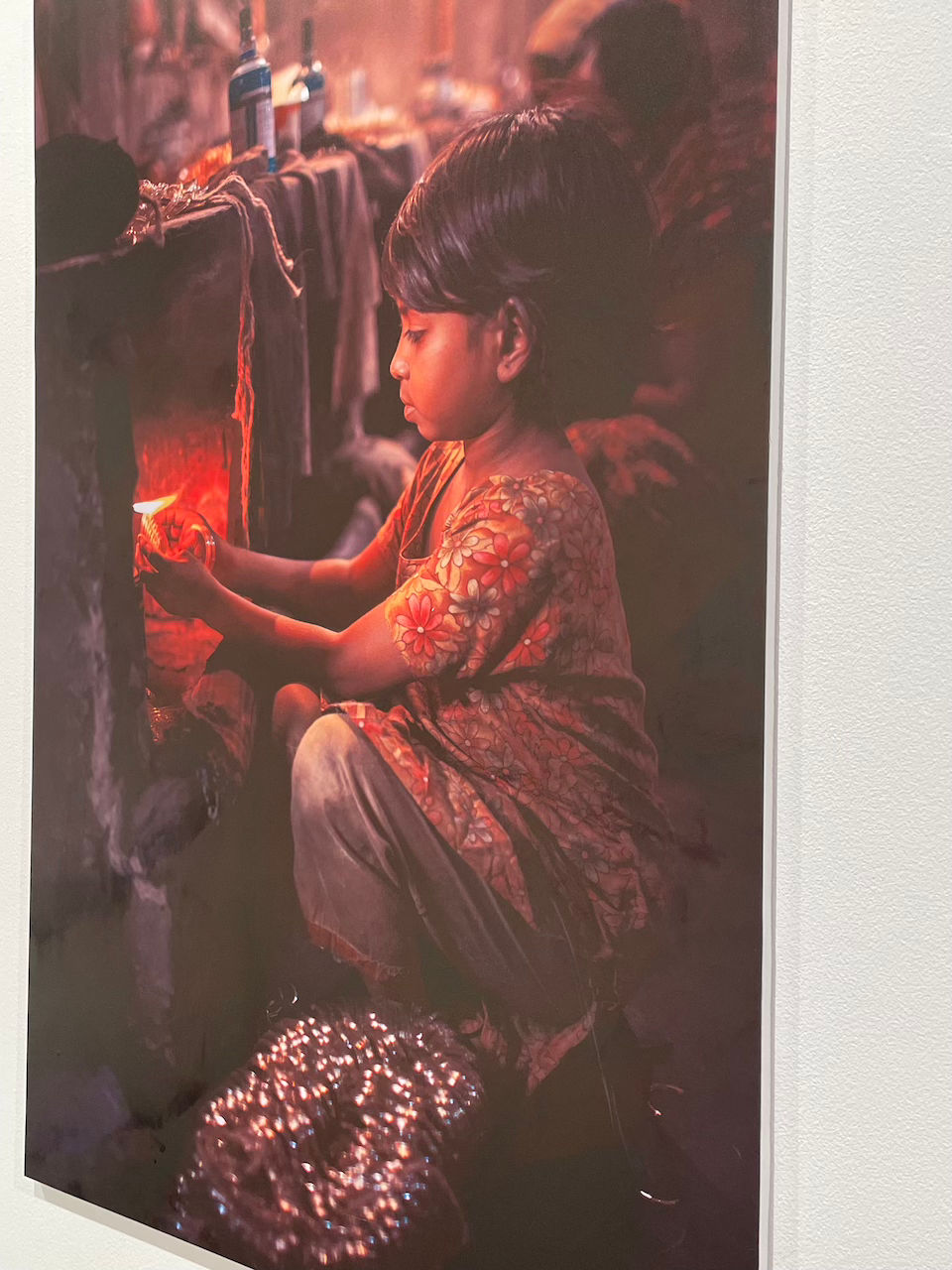
Hers is one of more than a hundred photographs at Gallery 350 in Malé. I entered the gallery somewhat reluctantly, where Bangladeshi photographer GMB Akash’s exhibition Ember is on display until 15 October.
Reluctantly, because there are some things you instinctively know will pull at your heartstrings – experiences for which you must quietly brace yourself. Familiar with Akash’s work, mostly through images encountered online over the years, I had already prepared myself for the emotional journey ahead before even stepping through the gallery doors.
Bangladeshis are the country’s largest migrant community. But few of the workers at the fish market, on building sites, on delivery bikes are likely ever to see these photographs of lives not unlike their own.
Tucked away in one of Malé’s busy, narrow streets, Gallery 350 feels particularly suited to this exhibition. The space is small and tapered, yet it possesses an unexpected quality; that of an escape portal to another world. To step into its cool, clean interior, leaving behind the constant hum, heat and commotion of the city outside, is to allow oneself to become entirely absorbed by the works within its walls.
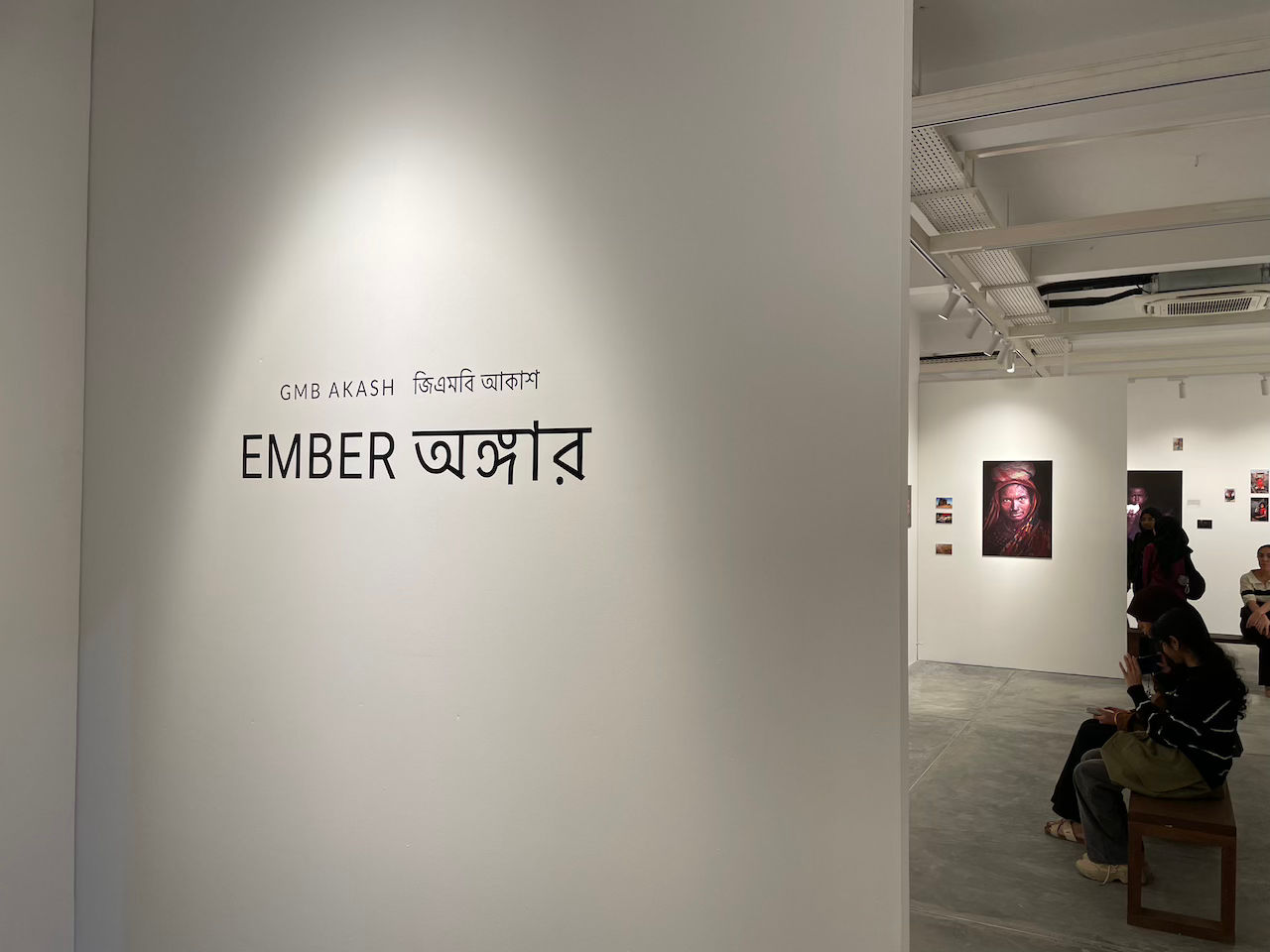
Ember seemed to heighten that feeling even further.
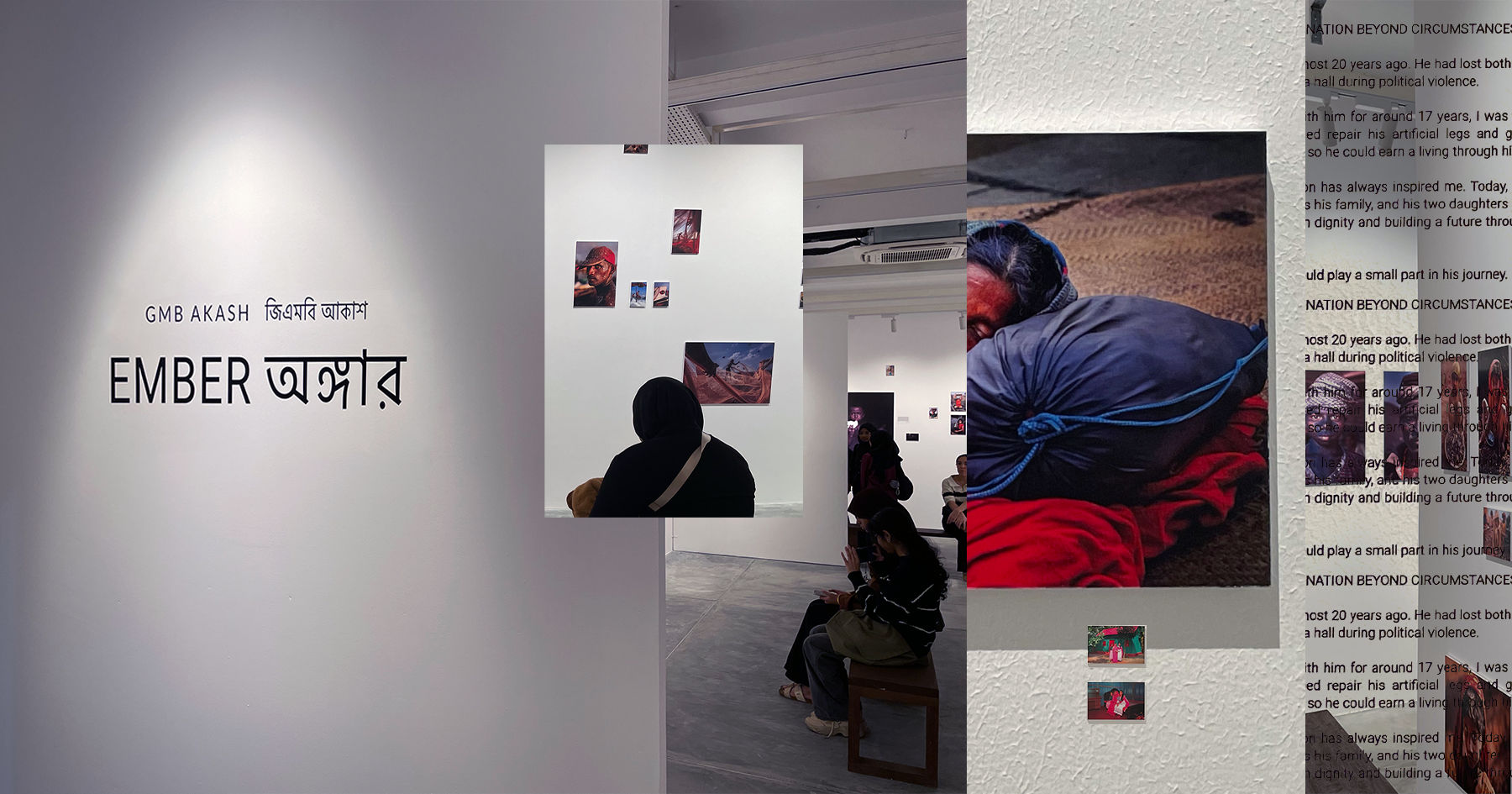
From the moment I entered, there was a solemnity to the space. Unlike previous exhibitions held at the gallery, the atmosphere had transformed into something quieter, heavier and deeply contemplative. Visitors moved slowly from photograph to photograph, their expressions softening into thought as their eyes lingered on the frozen faces before them.
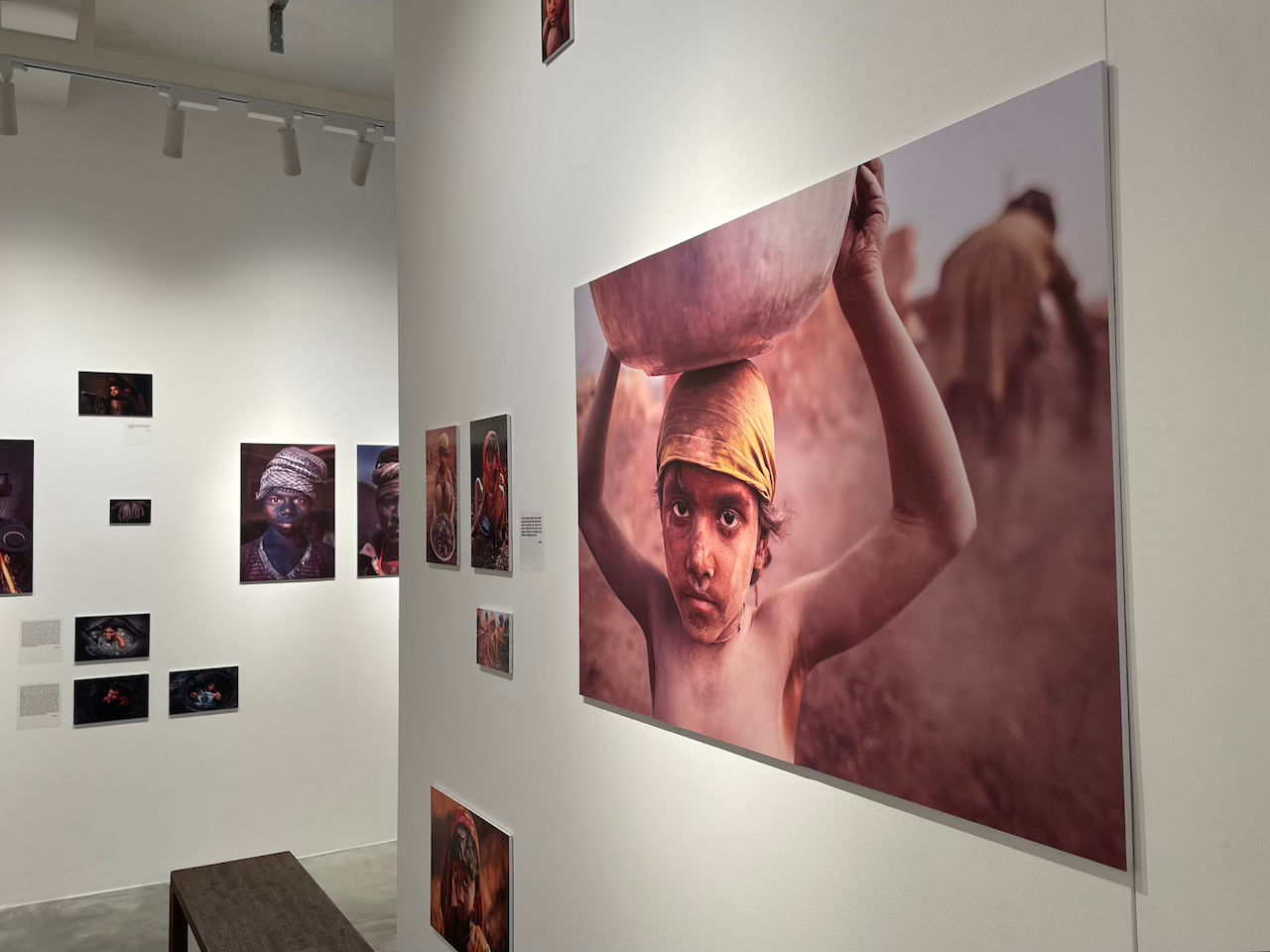
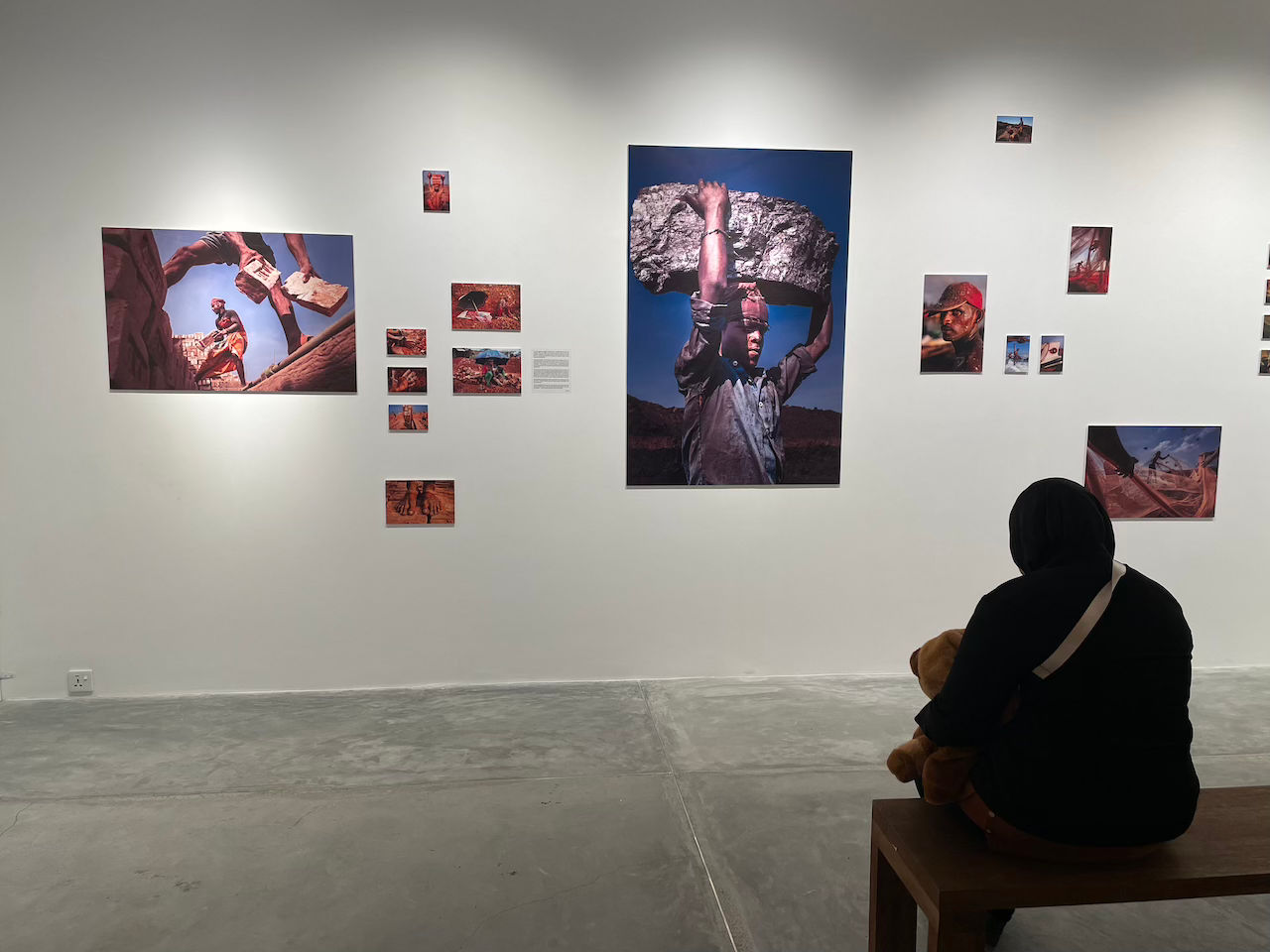
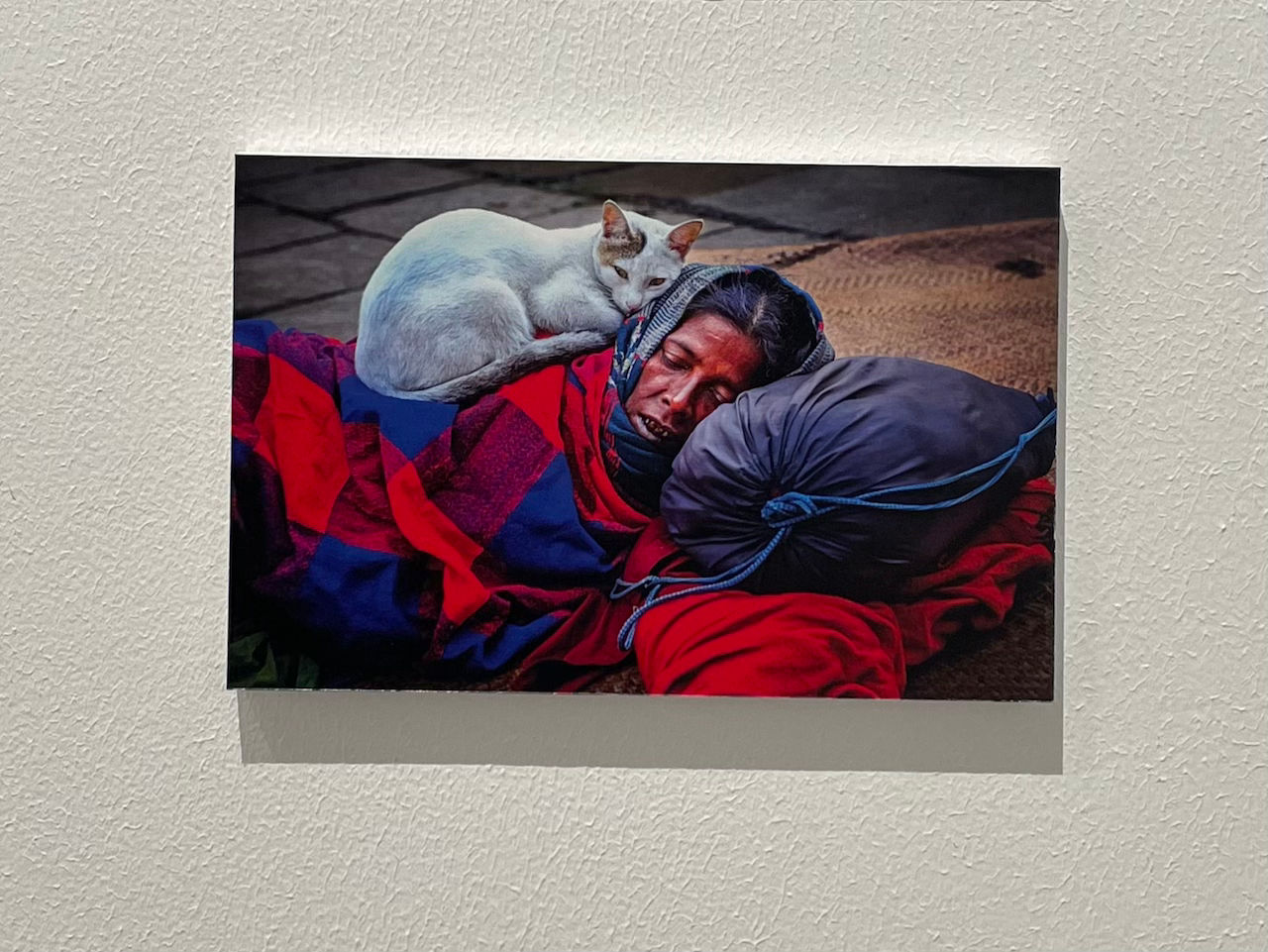
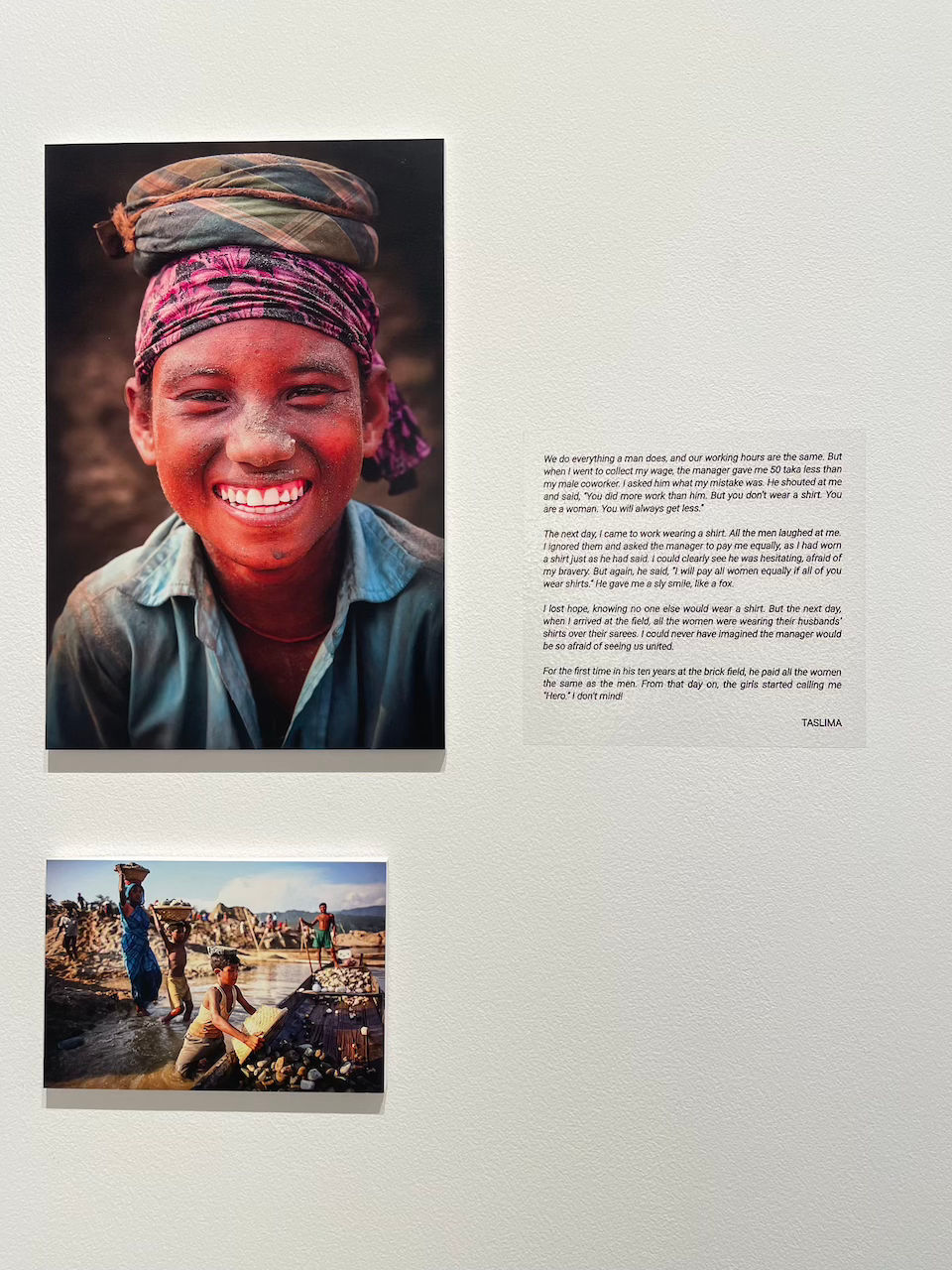
More than 100 photographs lined the walls – photographs taken over the last 30 years, in different places and at different moments throughout Akash’s journey as a photographer. Some are from much earlier in his career, while others are more recent.
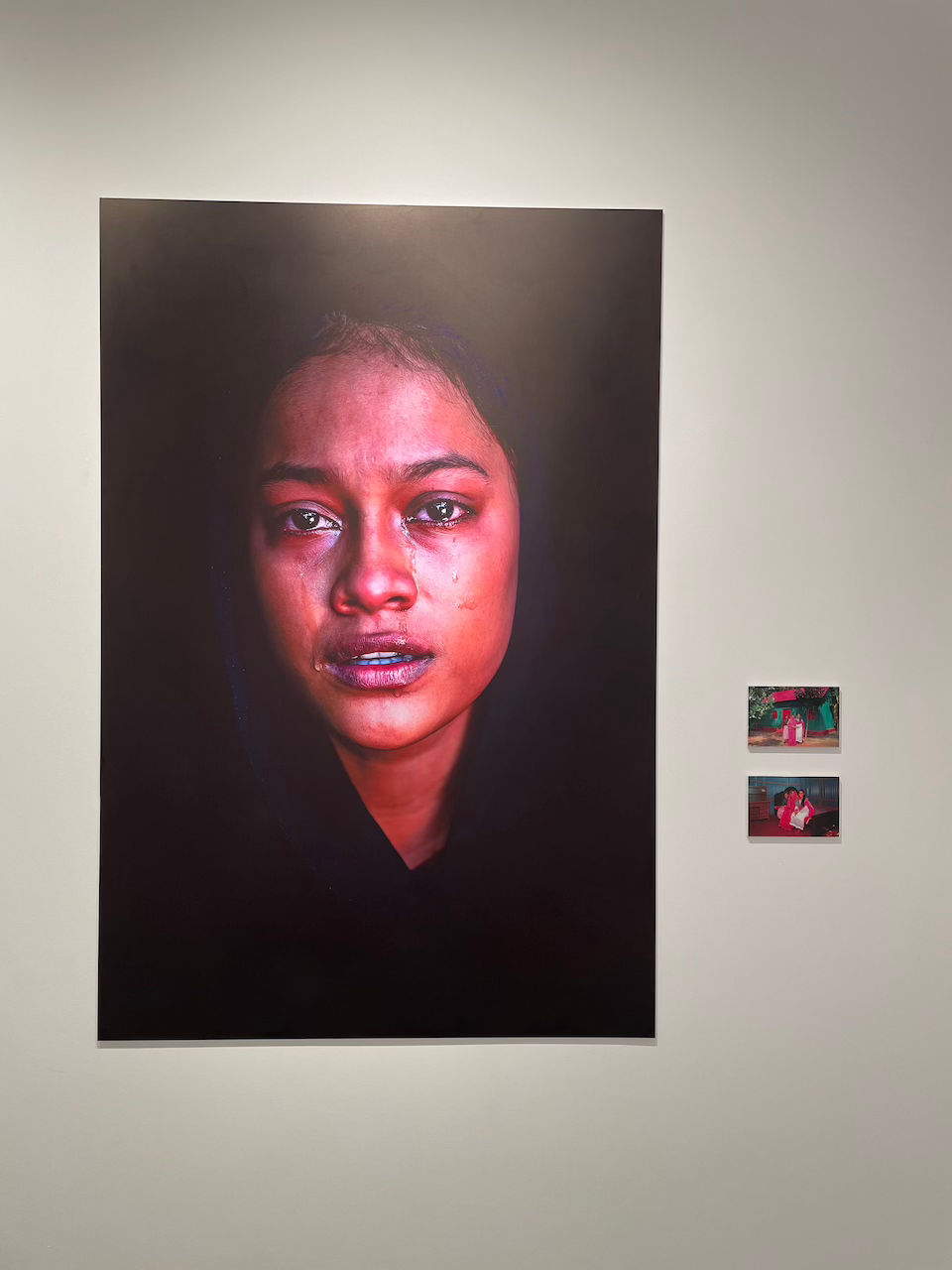
Men, women and children appeared within scenes of hardship that many of us who have grown up in cities, or in homes marked by comfort and security, may struggle to imagine. Yet through Akash’s documentary photography, these distant lives become impossible to ignore. His images reveal difficult truths, bridging vast differences in lived experience and stirring emotions that transcend borders, languages and circumstance.
One image depicts Momena, an elderly woman in a red sari, cradling a baby beside railway tracks. Having stood by her daughter-in-law in the face of community prejudice, the grandchild in her arms becomes a quiet symbol of resilience and hope.
I had entered the exhibition determined to remain composed. But as I moved slowly from one image to another, my eyes gave in and my vision blurred with tears.
I spoke with Yaami, one of the exhibition’s curators, who had taken a brief pause from presenting the exhibition to a group of Maldives National University students to answer a few questions.
The photographs were arranged in a particular sequence. Each grouping carries its own stories and connections.
"The layout of the photographs is arranged in clusters to tell stories project by project," Yaami explained. "We begin with communities living by the railway tracks in Bangladesh, then move to an old people’s home in Nepal, coal mining communities in India and Manila, fishermen from Sri Lanka, and finally a section on child labour."
The photographer behind the photographs
GMB Akash is one of South Asia’s eminent photographers, and many may already be familiar with his work. Born in Dhaka in 1977, he began taking photographs in 1996. His work has appeared in National Geographic, TIME, Newsweek, The Guardian, The Economist, Vogue and Der Spiegel. He is represented by Panos Pictures and is the founder and managing director of the First Light Institute of Photography in Dhaka.
This is not, however, Akash’s first time in the Maldives. In 2019, Fine Art Maldives invited him to exhibit Soulscapes at the National Art Gallery. Ember marks his second exhibition here, again presented by Fine Art Maldives, this time at Gallery 350.
His journey began with an old Yashica FX-3 belonging to his father, a camera that had previously been used mainly for family photographs.
Throughout a career spanning three decades, Akash has documented people and communities living through hardship. Like Ember, much of his work seeks to reveal the quiet strength, dignity and humanity that exist even within the harshest circumstances.
For Akash, the purpose of the photographs is not to dictate how the viewer should feel, but to offer a glimpse into lives they might otherwise never encounter.
"I don’t want to tell people what they should think when they look at my photographs. I would rather give them an opportunity to see lives that they may normally never encounter,” he said. "I hope the photographs make people pause and look a little longer. Perhaps they will think about dignity, inequality, resilience, work, family and the different circumstances people are born into."
What distinguishes much of Akash’s work is the relationship he builds with the people he photographs. His approach extends beyond photographing someone and moving on. He has also undertaken philanthropic work with some of the communities and individuals whose stories he has documented, creating relationships that continue beyond the photograph itself.
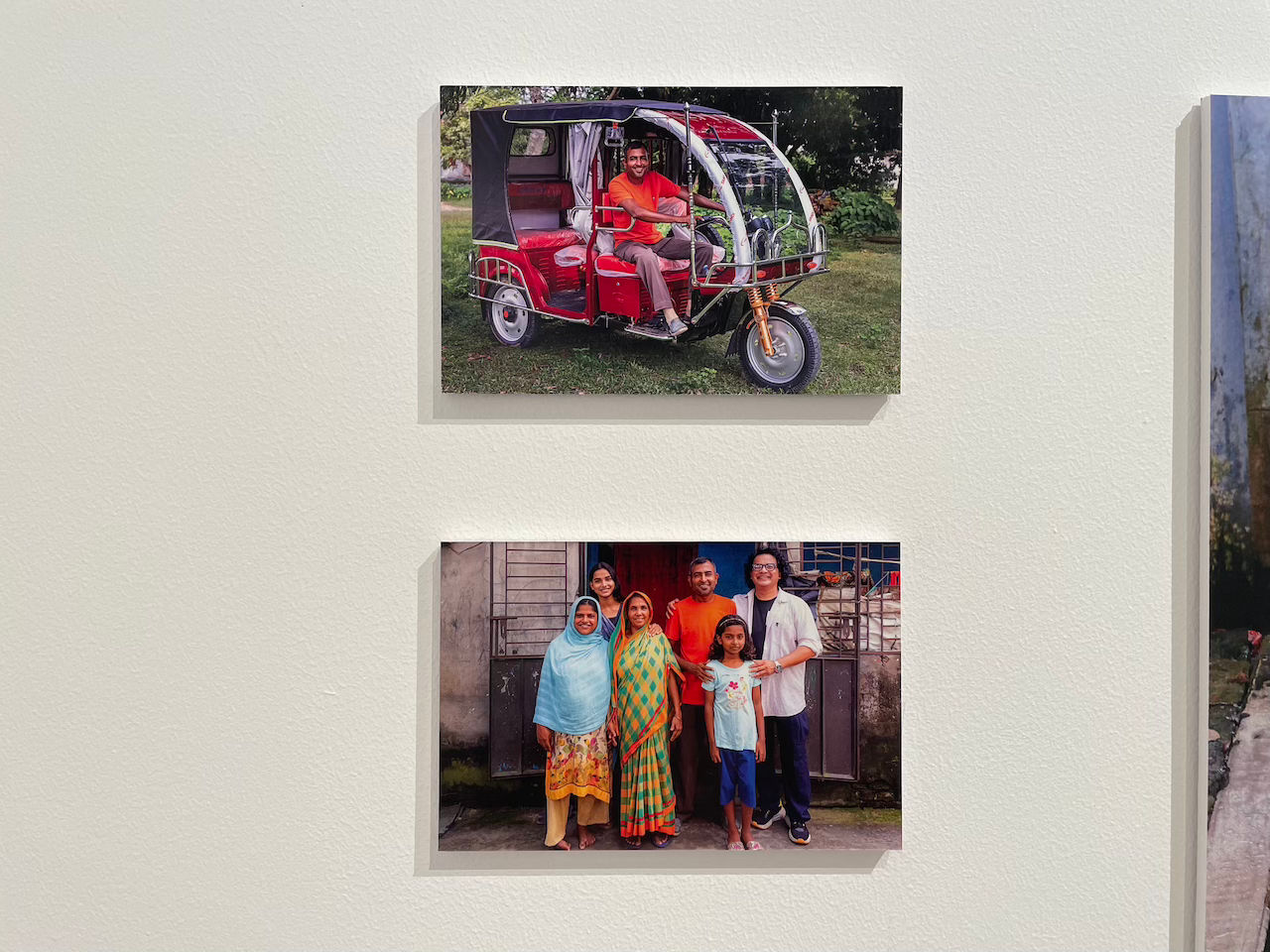
At the exhibition, Akash appears in one of the photographs alongside a family. The caption reads: Shaheen – Determination Beyond Circumstances.
Akash said he met Shaheen almost 20 years ago. Shaheen had lost both his legs in a bomb blast at a cinema hall during a period of political violence. After losing contact with him for around seventeen years, Akash eventually reconnected with him. He helped repair Shaheen’s artificial legs and gave him an auto-rickshaw so that he could earn a living and support his family.
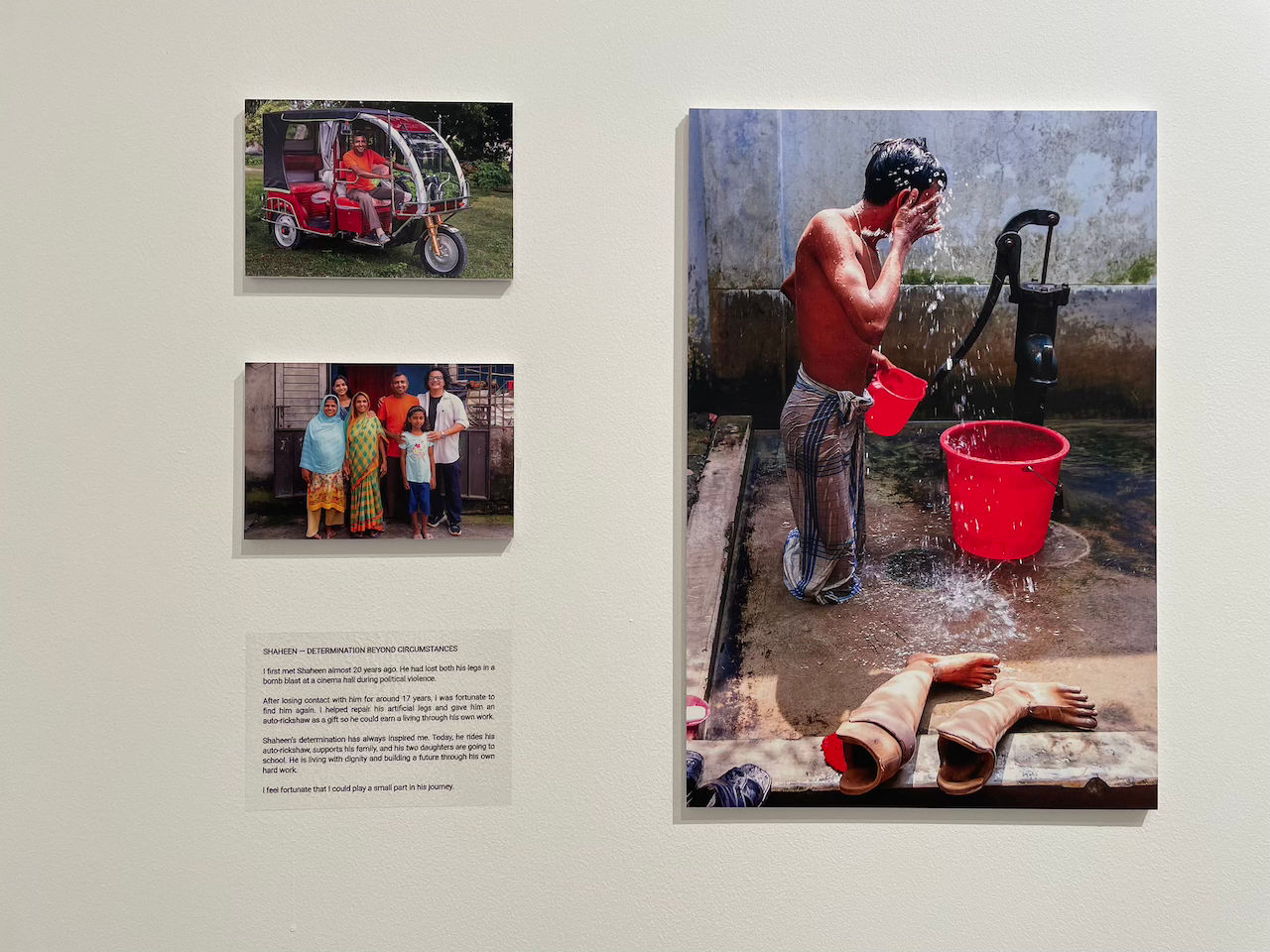
This is particularly significant in the context of documentary photography, a genre that has long been accompanied by questions about ethics, representation and the relationship between photographer and subject. Photographs such as Kevin Carter’s famous image of a vulture and a starving child have prompted enduring debates about the photographer’s role when confronted with human suffering.
Akash’s practice offers another perspective – one in which the relationship with the subject does not necessarily end when the shutter closes.
The privilege of looking
“We have a very large population of expats living here, not just from Bangladesh, but Nepal too. Even Akash noted that he noticed more Nepalese here than his own home country, when he visited before,” Yaami said.
Akash’s presence in the Maldives brings the work into a particularly relevant local context. Much of the country's Bangladeshi migrant population live and work in circumstances that bear similarities to the realities Akash has documented throughout his career. Many of those people, however, are unlikely ever to walk into a gallery to see an exhibition such as this.
And that creates an uncomfortable contradiction.
Those with the privilege to enter the gallery can stand in front of these photographs, contemplate them, perhaps shed a tear or two and then step back outside into the streets of Malé. We may leave thinking about the lives represented on the walls, only to encounter another Bangladeshi worker moments later.
In fact, among around nearly 600,000 people inhabiting the island state, more than 100,000 are Bangladeshis. They are at the fish market, in shops, on construction sites and making deliveries – more often than not taking on the hard, laborious work that locals avoid.
The discrimination and difficulties faced by migrant and expatriate workers in the Maldives remain an uncomfortable reality of life in this small island nation.
"It is sort of odd because I have never been to a country where the expats are so separated from the locals and the way we co-exist with one another," said Yaami. "But we are not mingling or socialising or ever seen in the same social settings, sort of pushed aside, but they are still integrated into our lives, so it is important to start that conversation."
In that sense, Ember is not necessarily a distant collection of stories belonging to somewhere else. Some of the people and circumstances represented in these photographs exist much closer to us than we might like to acknowledge.
Looking closer to home
On opening night, the compact Gallery 350 was crowded with artists, social media personalities and photographers. Many of the local photographers present are already familiar with Akash’s work. More importantly, many are themselves documenting street life, social realities and everyday life in the Maldives through photography.
This, inevitably, left me with another question.
Should the first photography exhibition held at Gallery 350 have featured a Maldivian photographer?
The question is not intended to diminish Akash’s exhibition or his work. Ember is impactful, and its presence here is meaningful. But its arrival also highlights the wealth of photographic talent that already exists in the Maldives – photographers who have spent years developing their own visual languages and documenting the people, places and social realities around them.
There are photographs of everyday Maldivian life, as well as images documenting the lives of migrant workers in the Maldives. Much of this work has existed somewhat independently, created by individuals who have quietly developed their practices over time.
Perhaps this could be an opportunity for Gallery 350 to look closer to home for its next photography exhibition, to feature, fund and curate the work of a Maldivian photographer.
Nashaath, one of the founders of Fine Art Maldives and Gallery 350, explained the thinking behind bringing Akash’s work to the gallery.
"There were a few reasons we chose Akash. While there are many photographers in the Maldives, we feel there are still relatively few whose work aligns with the kind of contemporary and socially engaged work we want to present at Gallery 350. So with this exhibition, we also wanted to give people a better idea of the kind of photography we are interested in showing, not only strong images, but photography that has a story, a purpose and something meaningful to say," he said.
"Akash’s work felt right for that. He has spent decades documenting people and communities whose lives and stories often go unseen. Ember is very much about people, their struggles, resilience, dignity and everyday lives and we felt these stories would connect with a Maldivian audience."
Nashaath also added that another important connection is that Bangladeshis make up a significant part of the expatriate community in the country. And even though locals and Bangladeshis interact with each other every day, we don’t necessarily know much about their lives, communities or stories back home.
Bringing Akash’s work here gives Maldivian audiences an opportunity to see some of those stories through the perspective of a Bangladeshi photographer, while also giving the Bangladeshi community in the Maldives an opportunity to see stories from their own country represented in a gallery here.
"For us, that made Ember a meaningful exhibition to bring to Gallery 350," he added.
The gallery intends to feature photography exhibitions in the future, including work by local photographers, Nashaath said.
What remains after the photograph?
The response from viewers is what matters most to Akash. During his time in the Maldives, Akash said he has been touched by those who came forward to speak to him – some expressing empathy, others sharing their own feelings and some even asking what they could do to help.
"For me, that is meaningful," he said. "If a photograph can make someone curious, make them feel empathy, or simply change the way they look at another person, then something important has happened."
It is an idea that feels particularly fitting as Ember continues its run at Gallery 350. Akash himself had other appointments and was unable to remain in the Maldives for the duration of the exhibition or give a talk in person. Personally, I found myself wishing he could have been there – not simply to speak about the exhibition, but to share more about his work, his process and, perhaps most importantly, the relationships he has built with the people he photographs.
For local photographers, I imagine the opportunity to meet him in person and hear about his experiences could have been equally valuable. A conversation, talk or even a short photography workshop would have offered another dimension to the exhibition – an opportunity to engage not only with the photographs on the walls, but with the person and the practice behind them.
That, however, is more a reflection of what I would have liked to see alongside the exhibition than a criticism of what Ember offers. The photographs themselves remain compelling, and the exhibition has plenty to say without its photographer being physically present.
Perhaps you leave inspired as a photographer. Perhaps you leave with a renewed awareness as an onlooker. Perhaps, even briefly, you find yourself looking at the people around you a little differently.
That, after all, is one of the powers of documentary photography. It is a form of visual communication that can take us beyond what is immediately familiar, bringing attention to people, places and stories that might otherwise remain unseen. It is something many Maldivian photographers are passionate about too. You only have to look at one of the most popular platforms, Instagram, to find numerous fitting portfolios documenting our own lives, communities and surroundings.
Perhaps independent galleries can play a greater role in nurturing that talent – creating space not only to exhibit local photographers, but to curate, support and fund their work.
For now, Ember remains at Gallery 350 for the next two weeks, offering visitors the opportunity to spend time with Akash’s photographs and the stories held within them.
Because photography is not simply about creating a beautiful image. It is about what exists beyond the frame: the story, the person, the circumstance and the questions the image leaves behind.
And perhaps the most meaningful photograph is the one that makes us pause long enough to look, think and, perhaps, act.
Perhaps that is where the real impact of Akash’s work lies. Not necessarily in the moment when you find yourself standing in front of a photograph with tears in your eyes, but in what happens when you eventually walk out of the gallery.
Do you forget what you have seen the moment you return to the noise of Malé? Or does something stay with you?
Discussion
No comments yet. Be the first to share your thoughts!
No comments yet. Be the first to join the conversation!
Join the Conversation
Sign in to share your thoughts under an alias and take part in the discussion. Independent journalism thrives on open, respectful debate — your voice matters.
Support Independent Journalism
Help us keep the news free and fearless
Give once
$
or
Become a memberfrom $5/month

