
For foreign workers, the right to strike ends at the airport
Aima admits firing protest leaders; 21 are in Immigration detention.
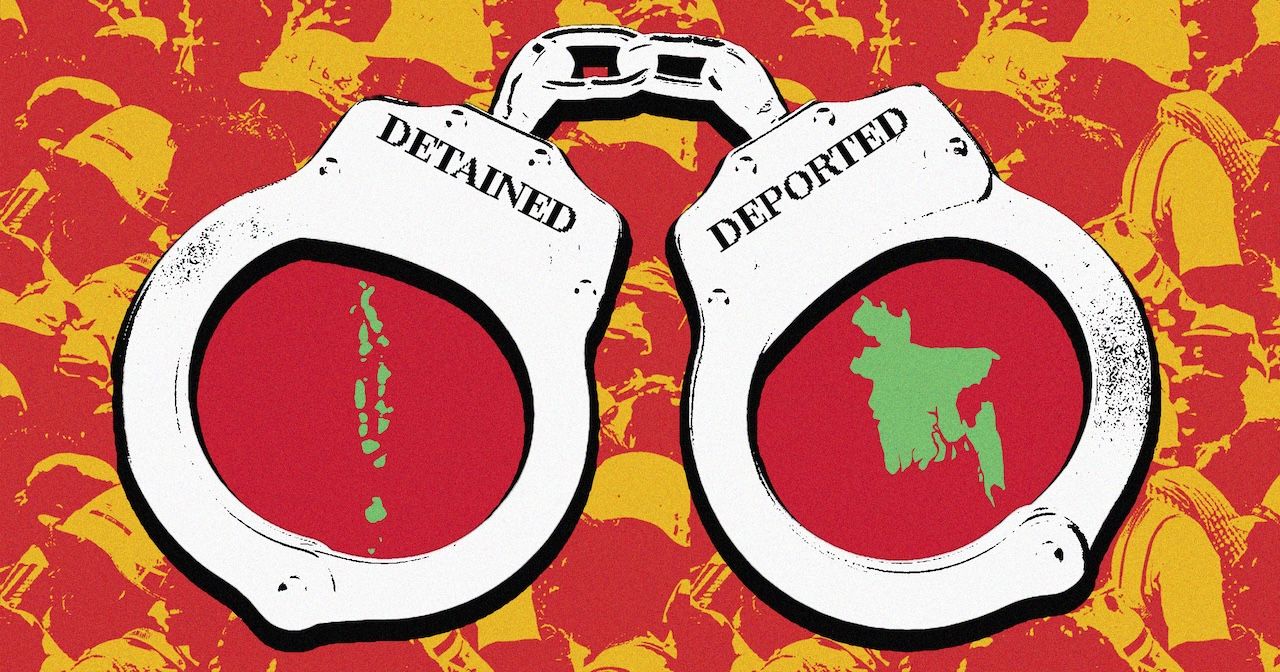
Artwork: Dosain
3 hours ago
Twenty-one foreign workers who went on strike at a Mandarin Oriental resort construction site last week are in Immigration detention. Their employer, Aima Construction, says it fired them for protesting. Police say they then went to the airport voluntarily; Immigration says they were handed over for disobeying police orders.
"Yes, we dismissed them because they protested," Ibrahim Abdul Azeez, Aima’s managing director, told the Maldives Independent. "Because they didn't listen to us and stopped work and threatened others who are willing to work that they will attack with sticks if they start working and they shut the whole place down."
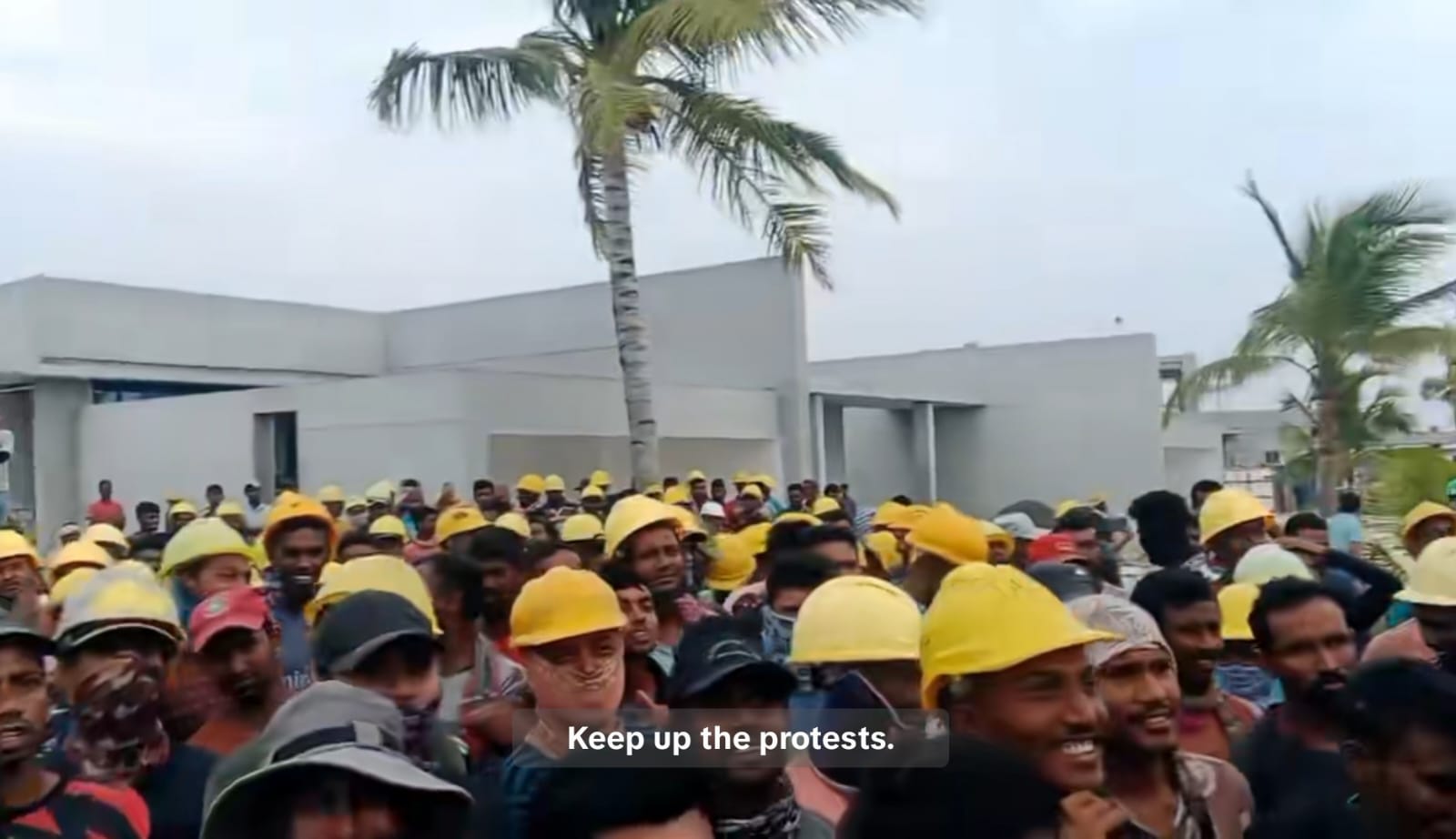
Aima is developing a resort on land reclaimed from the Bolidhuffaru lagoon for Vita Heights, a subsidiary of the Dubai-based DAMAC Properties. Construction workers started protesting on 27 October. The strike lasted three days. Videos posted on TikTok appear to show dozens of workers taking part.
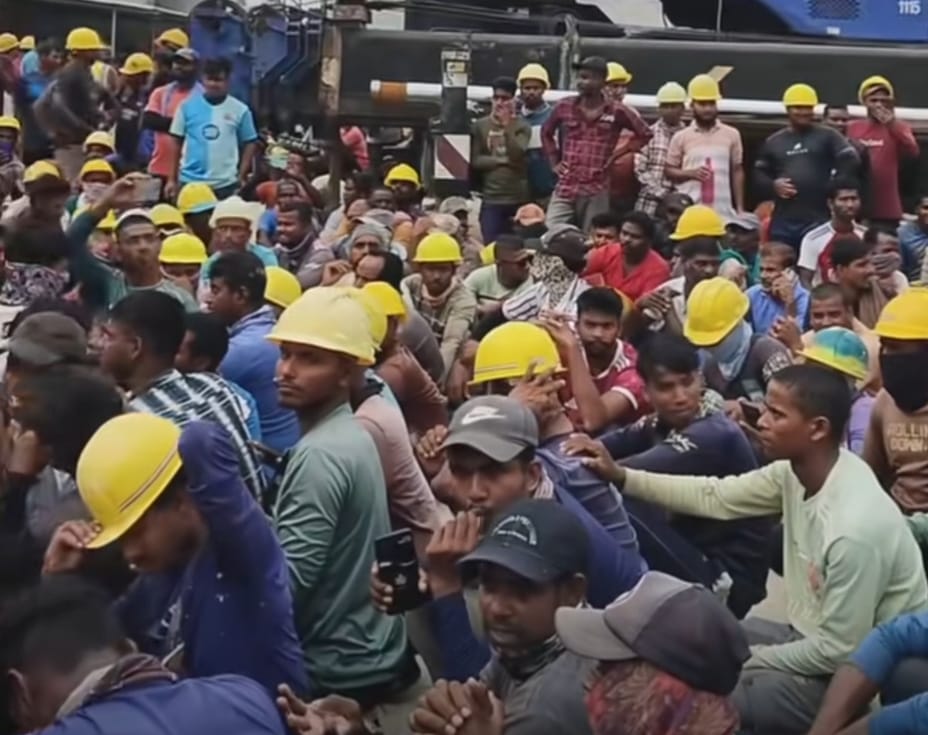
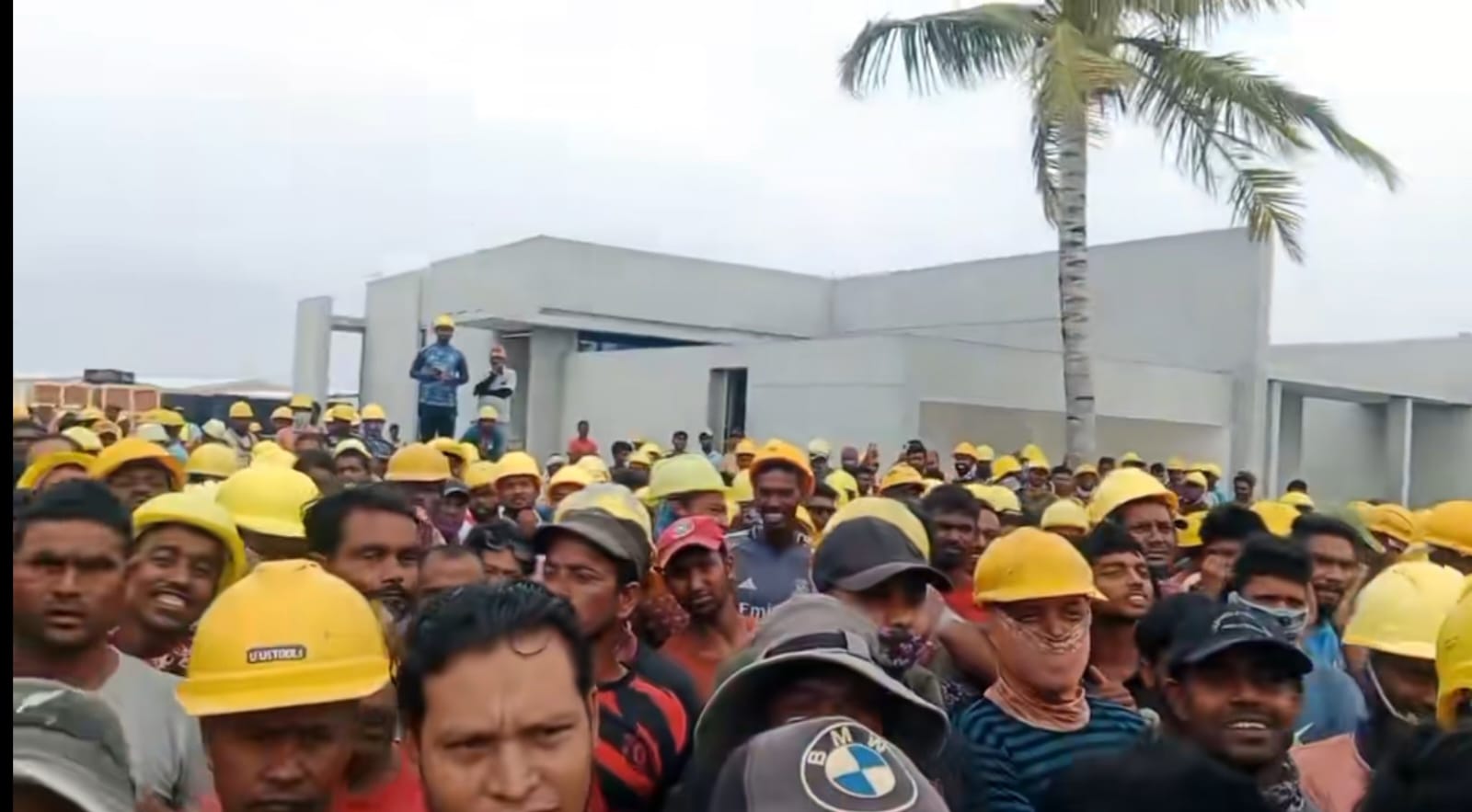
According to Facebook pages advocating for the rights of Bangladesh workers abroad, aside from five or six Indians, the rest of the protesters were Bangladeshi.
Contrary to media reports that the strike had been prompted by non-payment of wages, Ibrahim said their primary grievance concerned US dollar remittances from rufiyaa salaries after the State Bank of India reduced the monthly amount they could send from US$250 to US$150.
"They had been getting dollars from money changers and such, but we never told them we would pay them in dollars. The legal tender in Maldives is rufiyaa," Ibrahim said. "They demanded to be paid in dollars. We told them we cannot do that. We have to exchange a percentage of our dollars with the government."
Aima offered to make arrangements with banks to convert rufiyaa to the Bangladeshi currency for remittances within 31 days. But the striking workers demanded a solution within three days, he said. "So they stopped work for three days. We wrote to the government, to the Labour Relations Authority, Immigration and homeland security to see what is they can do for us legally," Ibrahim said.
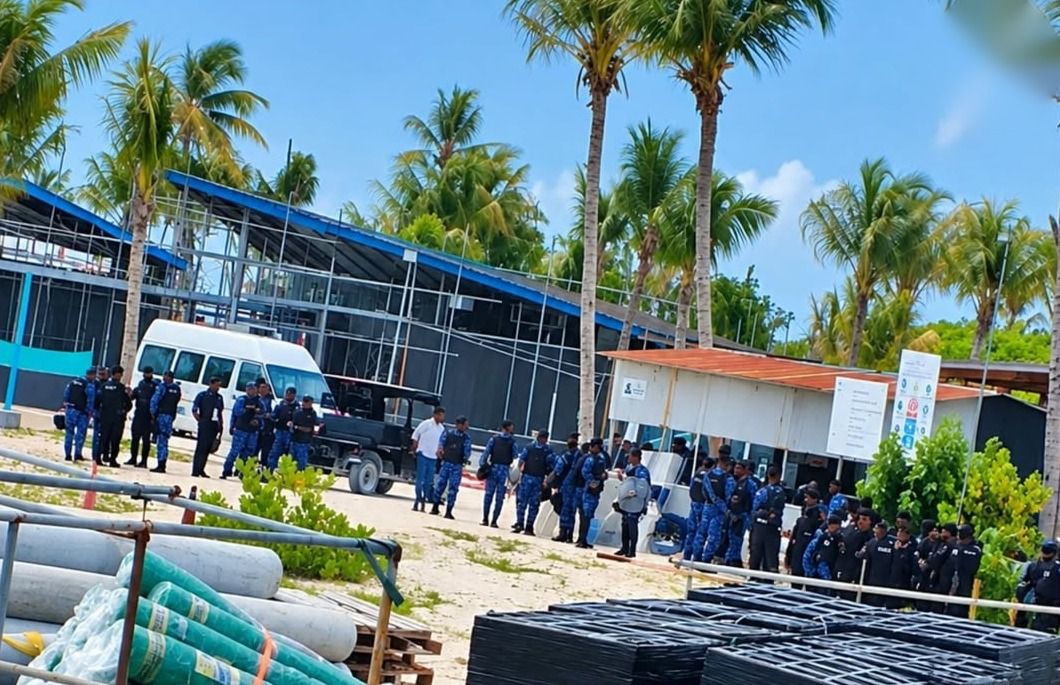
He accused workers of threatening to damage property if their demands weren't met. "If they would go wild and destroy the place, we told them you can't do this. We told police that they must protect the property of foreign investors. So police were stationed there because they might cause damage," he said. "Next we identified the group leaders. We have the discretion to terminate them if they do something like that. So we fired 23 people and announced that these are the group leaders."
Work has since resumed at the site. "They are happily working. Because we are trying to find a way for them to send money back home, we will do that through the banks," he said.
Disobedience
The role of police was to prevent a major disturbance and property damage, said Inspector Ahmed Shiyam, the police spokesman. When Aima fired the protest leaders, police sought to "support both parties, including the expatriate worker to ensure they don't suffer damage or to be able to claim everything," he added.
Ibrahim said Aima purchased flight tickets for the dismissed employees. Police were informed that the paperwork was complete, Shiyam said. But when police "escorted" 22 people to the airport last Thursday (29 October), only one got on the plane and "the remaining 21 declined to depart for various reasons," he said.
"What is to be done to them will now be determined by the company and Immigration," he said.
The Immigration spokesman said on Sunday that police handed over 21 people for refusing to obey orders. “We will proceed to take action against them as per the policy," he said.
At the time of publication, the Maldives Independent was awaiting an update on the status of the detainees and an explanation of the policy on taking action against migrant workers who stage strikes or protest against working conditions.
An Indian worker said his brother, an Aima employee, was among those detained. The family has been unable to contact him since his detention, the Indian national said on the condition of anonymity.
On Monday, the police spokesman denied placing any of the workers under arrest. "Unless there is a criminal charge, police will not hold them detained or arrest them or even to take them in," Shiyam said then.
But he said on Thursday that their refusal to board the plane after the company had terminated them, revoked visas and bought tickets amounted to disobedience.
“When the company fires them and tries to send them away as per a guideline, if they oppose those protocols, it amounts to disobeying," he explained. "If their rights were infringed, it would not go to that stage. Labour Relations Authority and tourism ministry as well as the company got involved. So after that if they refuse to board the plane at the last minute, that is disobeying orders.”
According to Ibrahim from Aima, their respective governments have since taken new tickets and the detainees were due to depart on Wednesday or Thursday.
"They claimed at the airport that they haven't been paid, too, so we sent all the salary slips, all of them," he said.
'The worst people'
The constitution guarantees every person employed in the Maldives the right to strike. But for migrant workers, whose permit is tied to their employer, losing their job entails loss of legal status. Foreign workers – about a third of the population – cannot change employers without their original employer's permission unless they can show evidence of forced labour, the US State Department noted in its latest Trafficking in Persons report.
"In practice, migrant workers cannot effectively exercise their right to stop work and to strike as protest. Arbitrary arrests and detention, termination of work contracts, as well as the forced expulsion or deportation of workers prevent workers from protesting, keeping in place unsafe, and exploitative working conditions," said Sara Naseem from Transparency Maldives.
"Many migrant workers also arrive heavily indebted from high recruitment costs, so the risk and fear of dismissal, detention or deportation is also often enough to prevent workers from organising."
Legal avenues for redress remain "inaccessible in practice," she said.
"Workers dismissed for protesting can be effectively expelled from the country, while the reason for expulsion, nor the reason for the protest has to be addressed in any meaningful way by the companies or relevant state institutions. This raises serious questions with regards to the current sponsorship system, and whether it can meaningfully protect workers rights, dignity and freedom. So, while migrant workers may technically have access to constitutional and labour protections, the employer-tied work permit system can substantially weaken the practical ability to use those protections, including participation in collective industrial action."
Ibrahim acknowledged the right of workers to down tools. "Because they have the right, we listened to what they had to say. But is shutting down the whole place allowed in the constitution and planning to damage the property?"
But Shiyam said the protest proceeded peacefully and "no such thing [violence or property damage] happened there."
Ibrahim argued that the work stoppage and protesters allegedly carrying sticks to stop others from working caused significant damage. "If they stop work in such a big place, we suffer damages of US$1 million every day. We waited. It wasn't one or two days. When it came to the third day, we decided there's no choice but to take action. So we suffered a lot of damage," he said.
Government agencies have inspected food and accommodation conditions at Bolidhuffaru, he added. "No one has gone on strike because we didn't pay salaries. We know that they come here to work and provide for their families so we treat them well," Ibrahim said.
But the 23 protest leaders who were terminated were "the worst kind of people," he said.
"You don't know whether they are good or bad when you bring them, you find out when something happens. So it's not because their rights weren't being met, they just demanded for dollars and did that.
"We looked into them. There are humans who have a criminal mind. There are protests going on right now in Bangladesh, after shutting down 500 factories. Bangladesh people are very practiced in this way of protesting. They are protesting, makes sense they would work for their rights. The electric and water bills there are rising and they get a very small basic income so they want it to be doubled... look at how Sheikh Hasina was brought down recently. The country was liberated by Mujibul Rahman, he was their national hero, but they cut off his head, urinated on his decapitated head and set fire to his home. That is the criminal mindset of them. The majority of the population has this mindset... Maldives cannot be held hostage by foreigners."
Track record
On 21 October, police received a report about the death of a worker by suicide at the Bolidhuffaru site. The death was not made public. Shiyam said police does not disclose suicide cases to the media. Investigators did not hear any concerns about workplace conditions from his roommates or anyone else, he said.
Asked about the death, Ibrahim said he did not know whether the man worked for Aima or for a subcontractor. He would need to check with the HR department, he said, noting that Aima employs about 3,000 people.
In 2020, workers employed by Aima to build resorts in Meemu and Kaafu atolls protested in Thilafushi, leading to the arrest of 133 workers after clashes with specialist operations police officers. All but seven Indian men were later released.
The workers had been taken to the industrial island and allegedly housed in cramped conditions during the peak of the Covid-19 pandemic. Transparency Maldives told a parliamentary committee at the time that both the company and state institutions failed to ensure the duty of care towards the workers.
Ibrahim said the 2020 dispute occurred because banks in the workers' home countries were closed and they were unable to send money.
"Because of the situation in the Maldives at the time, we only had permission to keep them in Thilafushi and we did the best we could to keep them there. Some of them returned after Covid passed. If Aima treated them poorly why would they come back?" he asked. "We have been giving them wages timely, providing food and shelter perfectly since then."
TikTok videos purportedly from last week's protest show workers gathered in large crowds as some spoke on megaphones. In one video, a worker can be heard explaining that their demand was for salaries to be paid in US dollars or for a Bangladeshi bank to set up a branch in the Maldives to allow expats to send money back home without extra charges.
"Expatriates in the Maldives have risen up…Protests are going on everywhere.. We will keep fighting for our rights. When our backs are against the wall, theres nothing else left to do," reads some of the captions.
Videos posted over the past few months by different people show workers, including those employed by Aima or subcontractors, being served meals in a cramped cafeteria. Workers can be seen standing in queue outside, holding plates and waiting to be let in for the mealtime. Crowds struggle to get in first when the doors are opened. Younger workers post videos describing conditions of hard labour abroad and complaints about food.

'The real problem'
DAMAC awarded Aima a US$148 million contract in 2023 for building 120 villas across three artificial islands in Bolidhuffaru. Hong Kong’s Mandarin Oriental Hotel Group is set to become the operator of the luxury resort, which is scheduled to open in late 2026. The new property is listed on the Forbes Travel Guide as an opening to watch.
In a statement to the Maldives Independent, DAMAC said it was aware of the "concerns raised by workers employed by a third-party contractor" at the construction site.
"We are engaging with the contractor to better understand the situation and ensure that the concerns raised are appropriately addressed. DAMAC remains committed to compliance with all applicable laws and regulations in the markets in which it operates," the Dubai developer said.
Over the past months, workers from Bangladesh and other countries across several industries have been raising concerns over difficulty remitting income back to their families due to a dollar shortage.
The unresolved forex crisis was "the real problem," Ibrahim said. "We bring everything from abroad. We can't spare any dollars. How can we? Do we have to pay them dollars?"
Sara from Transparency Maldives said the Bolidhuffaru strike was not an isolated case.
"Across the country, there has been a pattern of migrant workers facing some form of repercussions for engaging in protests, from the companies they work for as well as the state," she said.
"Protections that the law guarantees to every worker must not be withheld from migrants, and this arbitrary, discriminatory treatment must end."
Discussion
No comments yet. Be the first to share your thoughts!
No comments yet. Be the first to join the conversation!
Join the Conversation
Sign in to share your thoughts under an alias and take part in the discussion. Independent journalism thrives on open, respectful debate — your voice matters.
Support Independent Journalism
Help us keep the news free and fearless
Give once
$
or
Become a memberfrom $5/month