
'An undeserving immigrant in their own country'
Pro-government outlet mocks islanders in video celebrating Malé's new road.
30 Jul, 16:20
When Muhammaa stepped off the boat and asked his father whether this was really Malé, the joke was on the capital. The boy came from Huvadhoo for an education. He was put to work sweeping someone else's floors.
A pro-government news outlet borrowed the line four decades later. In a video published on Saturday, a young man in a mundu (traditional sarong) arrives at the jetty, sees the newly widened Boduthakurufaanu Magu and delivers Yoosay's famous line: "Appaa meeboo Malé? Haudhahaavaa reethi magakau mi." (Dad, this is Malé? Such a beautiful road).
Only this time the punchline is not that Malé humiliates the islander. It is that the islander should never go home.
The dialogue in the Huvadhoo dialect comes from an April 1988 episode of the Dhiriulhumakee Meebaa series by actor and comedian Yoosuf Rafeeu. Yoosay – renowned for offering social commentary through a mix of satire and physical comedy – plays a young man named Muhammaa who becomes a gengulhey kujjaa (household servant).
Set in Malé during the 1980s, the episode depicts Muhammaa experiencing culture shock upon arriving in the capital. His father leaves him in the care of a Malé landowner so that he can attend school. Instead he is made to do household chores and subjected to condescending remarks about his rural background. He also faces discrimination. Another young man staying in the house, the son of an atoll chief, enjoys better treatment. When his father later returns to Malé and realises Muhammaa has been made to work instead of study, he takes his son back to the island.
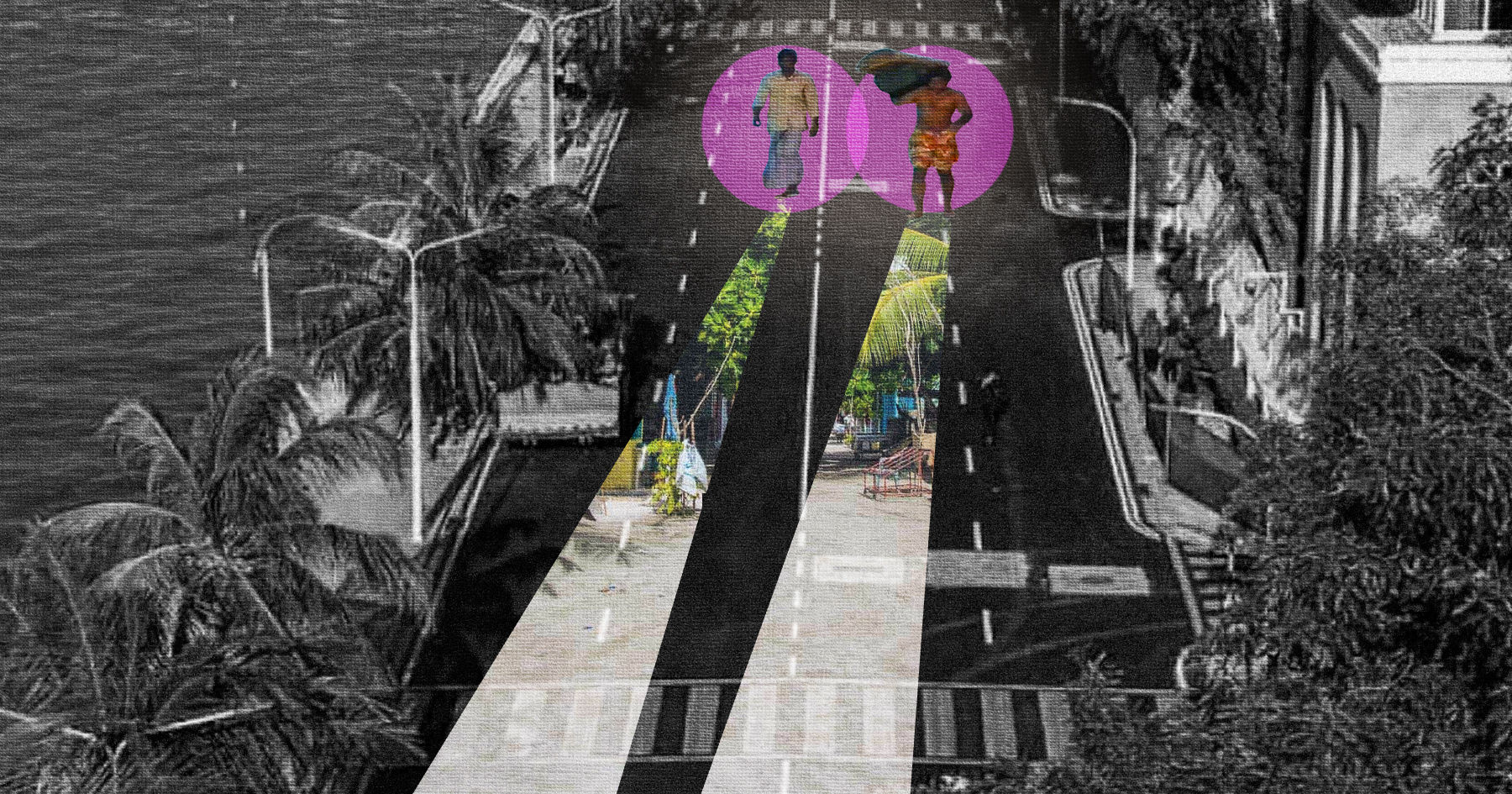
The video posted on social media by Khulaaaaa News on Saturday evening shows a young man stepping off a boat in Malé's northern waterfront. The widened section of the ring road officially opened on Friday ahead of Independence Day celebrations.
He is picked up by a woman on a motorbike, who remarks: "That's old fashioned. Ammaa meeboo Malé. What are you wearing? Take it off." The man removes his mundu, gets on the bike and rides around the city, marvelling at the new four-lane road.
When they stop, the woman asks him: "Do you see how much Malé has developed? When you last came here, the roads had sand, right?" The young man replies: "Sand and pavement blocks. Now it's paved with tar and the road is wider. My Malé has truly bloomed." The woman advises: "You shouldn't go back to the island anymore." He responds: "I won't go back to the island anymore. Let's go." They drive off together.
The video was taken apart on social media over the past week. Khulaasaa faced widespread criticism for perpetuating stereotypes about raajjetherey meehun (people from islands other than Malé). Commenters criticised the use of the the mundu and the dialect of Huvadhoo atoll to portray islanders as backward, calling it insulting, as well as the insinuation that people from islands are awestruck by "development" in Malé.
On X, the video has more than 293,800 views, more than 100 replies and dozens of quote tweets.
"Yet another generation being prepared to mock islanders. Keep mocking after packing everyone into Malé. The low chair will come back again."
Khulaasaa News did not respond to questions from Maldives Independent seeking comment on calls to remove the video and to issue an apology.
The outlet's owners include Lujeinullah Zahir, a senior content creator at the President's Office. Lujeinullah is listed as one of the board members of Khulaasaa MV Pvt Ltd, a company established in 2024. IRESM Pvt Ltd, another company affiliated with Lujein, holds shares in Khulaasaa Media Pvt Ltd.
Lujein is one of several political appointees at the President's Office and state-owned enterprises who operate pro-government media outlets. Eman Mohamed Rasheed, who serves as a senior undersecretary at the President's Office, is the managing director of Mendhuru TV.
Hamza Latheef, a prominent defence lawyer, was among the most vocal critics online, calling on the publication to remove the video and to issue an apology.
Hamza said the video skit convey several bad messages such as portraying the raajjethery meehaa as an "other" lacking real identity, with dialect switching from Huvadhoo to Addu while speaking with a northern lilt, and showing the raajjetherey meehaa as dumb, subservient or lacking in fashion sense.
"What the content producers may not understand is that to this very day, there are several even in the halls of power who assume that the RT Meeha is a monolith (no regional differences, no income differences, no identity) and are of low intellect and skill," Hamza told the Maldives Independent.
"Many also see the RT Meeha as an undeserving immigrant in their own country flocking to Malé chasing its luxuries and causing a strain and burden on its resources."
"This bigoted thinking reaches schools where bullying still takes place," he said. "So much so that several even choose to never speak their dialect or mask their lilt and the way they speak at the risk of being bullied."
Hamza said his calls to remove the video has been met with personal attacks from pro-government accounts.
"So there was an easy solution. Remove it, apologise and move on. The fact that a subsidised media outlet chose to double down and coincidentally anonymous accounts started issuing ad hominem attacks against critics is disappointing," he said.
Khulaasaa's home page has advertising from several state-owned enterprises including the Maldives Transport and Contracting Company, State Trading Organisation and Allied Insurance as well as the Bank of Maldives and Malé Water and Sewerage Company.
Several people pointed out the "pull factors" driving migration to the capital: healthcare, education and employment that are unavailable elsewhere.
"There's no one who comes to Malé because it's beautiful. People come here because they don't get essential services on the islands where they live. They don't even stay because they want to. The day when these needs can be met on the islands is the day that we the people want to see."
Former President Nasheed weighed in on Saturday: "Paving the roads of Malé with tar again does not solve the entire problem facing Malé. It is hardest to walk within the inner roads of Malé. Malé City Council has a new plan to manage Malé traffic. The government must allow the city council to do this."
"A tremendous project was completed," said Hamza. "At a time when MTCC, HDC [Housing Development Corporation] and the president should be getting their flowers this ill-advised content has distracted from a happy occasion."
Although comedic in nature, Yoosay's episode reflected the lived reality of many young people who travelled to Malé for education and ended up working as servants in the homes of Malé families, a practice that continued into the 2000s. While the practice is now almost non-existent, thousands of young people are still forced to migrate to Malé every year to pursue their education, often living in cramped boarding houses or apartments rented at exorbitant rates.
The video remained on Khulaasaa News's account on Thursday.
Discussion
No comments yet. Be the first to share your thoughts!
No comments yet. Be the first to join the conversation!
Join the Conversation
Sign in to share your thoughts under an alias and take part in the discussion. Independent journalism thrives on open, respectful debate — your voice matters.
Support Independent Journalism
Help us keep the news free and fearless
Give once
$
or
Become a memberfrom $5/month