
Back at the top, bound by a bargain: Nasheed and the road to 2028
His landslide settles who runs MDP, not who it runs in 2028.
Artwork: Dosain
15 Jun, 17:02
What happened?
Three years after quitting the Maldivian Democratic Party – which he co-founded in 2005 to spearhead the country’s transition to democracy – former President Mohamed Nasheed returned to a leadership position, sweeping the June 12 chairperson election with 69 percent (21,301 votes) against Meekail Ahmed Naseem's 31 percent (9,462 votes), according to preliminary results.
The MP for Galolhu South ran with the backing of former President Ibrahim Mohamed Solih and the MDP parliamentary group. Nasheed campaigned on a "Bodu Badhalu" (Big Change) platform of sweeping constitutional reform with former chairman Fayyaz Ismail as his pick for head of government.
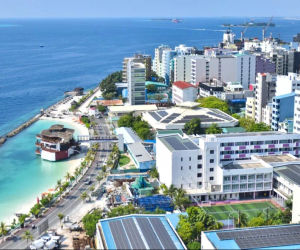
A total of 31,129 ballots were cast, of which 234 were declared invalid. Nasheed’s supporters celebrated the victory with music and confetti at the artificial beach in Malé on Friday night.
What does the chairperson do?
Elected for a term of five years, the chairperson is the most senior figure responsible for planning, organising, running and overseeing the party's internal affairs. Their responsibilities include presiding over the Congress, the Qaumee Majlis or National Council and the National Executive Committee; organising and planning all party elections other than the chairperson election itself; planning and running the party's administrative affairs; working to promote democratic standards and equality among members; submitting the National Council's reports to Congress; and carrying out any other matters assigned by the Charter, Congress, or National Council.
The position effectively restores Nasheed's control over the party after nearly eight years.
How have people reacted?
Shortly after the defeat Meekail said he had called Nasheed to congratulate him, promising to “work with renewed determination to keep MDP united and bring success to this party in 2028”. Meekail said he will remain with the party.
Former President Solih, who had campaigned for Meekail, also congratulated Nasheed, saying the party had a great deal of work to do to hold the current government accountable. The former president said the internal election had shown the maturity of the MDP and called for all sides to move forward together.
Abdulla Shahid, MDP president and former foreign minister under the Solih administration, congratulated Nasheed and thanked party members. “This is the moment to rally MDP's ranks together, to defeat this government as one, and to begin the work of securing an MDP government of the kind the Maldivian people want,” he said.
Former Chairperson Fayyaz said it was a great joy to see the yellow forces mobilised across the entire country during the campaign: “Today you have proven that it is you who set the direction of this party, that you are the heartbeat of this party. Rather than seeking to settle a personal grievance, you gave an important vote by putting this country first."
What were the main campaign issues?
Nasheed and Fayyaz jointly proposed a hybrid system of government that separates the head of state from the head of government, with the latter to be elected directly by the people and the former chosen by parliament and councillors. The package also proposed parliamentary recall votes, public votes to remove both Supreme Court justices and independent commission members, and curbs on executive influence over the judiciary.
The announcement also revealed the terms of their alliance: Nasheed declared he will contest the MDP chairperson election and back Fayyaz for the 2028 presidential ticket.
Meekail's "Ithubaaru" (trust) campaign centred on pledges to run a fair, neutral presidential primary without backing any candidate and to decentralise party administration, giving councillors and Women's Development Committee members a voice in the National Council to address stagnant island-level party activity. He also called for future chairpersons to be barred from standing for president to keep their role focused on running the party.
What does this mean for the Maldives?
Nasheed's campaign, built around constitutional reform, positioned the chairperson contest as effectively the opening salvo of the 2028 presidential race.
Nasheed’s supporters argue that, without him, the party lacked the mindset that secured freedom from 30 years of autocratic rule. His return will likely push the MDP toward a more confrontational posture against President Dr Mohamed Muizzu’s administration.
Writing in Dhauru, veteran editor Moosa Latheef argued the result confirmed that the "spirit" of MDP is absent without Nasheed. A party rooted in the movement against 30 years of authoritarian rule still finds Nasheed's temperament its natural register, and his return generates an excitement Meekail's administrative pitch could not.
Nasheed's victory speech set a combative tone. He gave the government until the following day to reverse disciplinary measures taken against state company employees who had backed his campaign, warning that MDP would otherwise take to "direct action" and occupy the Malé head offices of state-owned companies. Several company staff had been suspended or transferred during the campaign, including three workers at the Kooddoo Fisheries Complex, three in Gaaf Alif Villingili, and the husband of a woman who had sung a welcome song for Nasheed in Gaaf Alif Maamendhoo, who was suspended without pay for 15 days. MDP condemned these as politically motivated reprisals.
In the same speech, Nasheed invited his political rivals – former presidents Solih and Abdulla Yameen among them – to join the work of holding the Muizzu government to account and ultimately replacing it.
The government answered in kind. Two days after Nasheed's win, Muizzu travelled to Dhaalu Meedhoo to mark PNC's capture of the island council presidency, a seat secured only on a rerun after a tied vote. He used the rally to cast MDP as a "destructive" force and PNC as the "constructive" alternative, a dichotomy that dates to former President Maumoon Abdul Gayoom, who first deployed it against MDP, and Nasheed in particular, painting him as secular and irreligious. Muizzu leaned on the same religious and nationalist themes, accusing MDP of dismantling Arabic and Islamic education across its two terms, of normalising drugs and vaping, and of bending Maldivian foreign policy to a particular country – an apparent reference to India, with which Muizzu now maintains close ties of his own. MDP had sought to normalise relations with Israel, whereas his government had barred Israeli passport holders, the president said.
How was the comeback sealed?
After Nasheed was left unable to contest the 2018 presidential election following imprisonment and political exile, the MDP's power shifted to Solih, his closest political ally at the time. But years of ensuing tensions during Solih’s presidency, concerning corruption allegations and factional power struggles, culminated in a bitter 2023 presidential primary. Solih won with 61 percent of the vote, but Nasheed – then-speaker of parliament – refused to concede, alleging fraud and disenfranchisement.
The acrimonious split resulted in Nasheed’s splinter party, The Democrats, fielding its own presidential candidate, whose seven percent vote share was considered by many to have caused Solih’s defeat to Muizzu in the 2023 presidential election. Following the vote, Nasheed announced that he would step back from politics and move to Ghana as secretary general of the Climate Vulnerable Forum (CVF).
The Democrats failed to win any subsequent council or Majlis elections, with several key leaders soon rejoining the MDP, including the party’s president Hassan Latheef, vice president Mohamed Shifaz, former lawmaker Ali Azim and vice presidential candidate Hussain Amr.
In April last year, Nasheed said unity would be “best at the moment” for both parties and the country as well, prompting MDP members to share a viral video of Nasheed declaring that he would "dismantle" his former party. In June 2025, The Democrats’ national assembly adopted a resolution for its members to join the MDP, whose National Council agreed to welcome them back.
After Nasheed’s CVF term ended in April this year, he announced his decision to support Fayyaz in the presidential primary and confirmed his intention to contest for chairmanship.
Will this re-unite the MDP?
Nasheed has pledged he will not leave MDP again, describing the party as "my entire life" while acknowledging members’ grievances over his 2023 departure. The wide margin with which Nasheed won could mean the party can better mobilise as an effective opposition, but the underlying fault lines haven't disappeared.
The Solih-aligned bloc, which controls a significant share of MDP's parliamentary representation, now sits opposite a chairman who has just consolidated control over the party's internal machinery. The election itself was marred by irregularities on some islands: a ballot box in Gaaf Dhaal Fiyoaree was broken into amid voter list disputes and its results invalidated, voting in Faafu Feeali was suspended after a ballot box was removed and Meekail alleged supporters' names had been struck from voter lists on multiple islands as his campaign observers were denied accreditation. Disputes of that kind tend to harden grievances rather than resolve them.
But the scale of Nasheed's victory gives him a strong mandate and removes ambiguity about who currently commands MDP's grassroots. This likely strengthens the party's hand against the government in the near term. But genuine reunification depends on what Nasheed does with the chairperson's structural powers (voter rolls, council composition, primary administration) over the next two years. If those levers are used to consolidate his own and Fayyaz's path to 2028 at the expense of the Solih camp, the "unity" rhetoric from the election night may not survive contact with the primary season. If instead Nasheed follows through on integrating Meekail's faction and growing the membership base broadly, as he's pledged, the win could mark a genuine reset rather than just a changing of the guard.
Will the Nasheed–Fayyaz pact hold?
The widespread expectation, aired across social media in the days after the vote, is that the two men will eventually diverge and that Nasheed – not Fayyaz – will seek the 2028 nomination.
Nasheed has contested every MDP presidential primary since 2007. He has not before stepped aside for another candidate while eligible to run. The field is also more crowded than previous cycles: party president Abdulla Shahid has been floated as a contender and Hulhumalé South MP Dr Ahmed Shamheed has reportedly expressed interest in running.
The countervailing case is that Nasheed has bound his political comeback to the reform agenda itself and that abandoning Fayyaz would forfeit the "big change" platform on which members just elected him. The tension was captured by Hassan Kurusee, an anonymous X account with a following in the tens of thousands that has become the country's loudest informal whistleblower channel. If a supermajority of members wanted Nasheed to run, he would have to consider it seriously, Kurusee posted on Sunday, adding however that the Nasheed–Fayyaz relationship should not be allowed to break down and any decision should be reached by mutual agreement.
Whether that mutual agreement survives the gap between the reform timetable and the election calendar is the central uncertainty hanging over MDP's path to 2028.
Discussion
No comments yet. Be the first to share your thoughts!
No comments yet. Be the first to join the conversation!
Join the Conversation
Sign in to share your thoughts under an alias and take part in the discussion. Independent journalism thrives on open, respectful debate — your voice matters.
Support Independent Journalism
Help us keep the news free and fearless
Give once
$
or
Become a memberfrom $5/month