
The moving goalposts of the Maldives' single-use plastics phase-out
Plastic straws are back and the ban on bottles keeps getting pushed back.
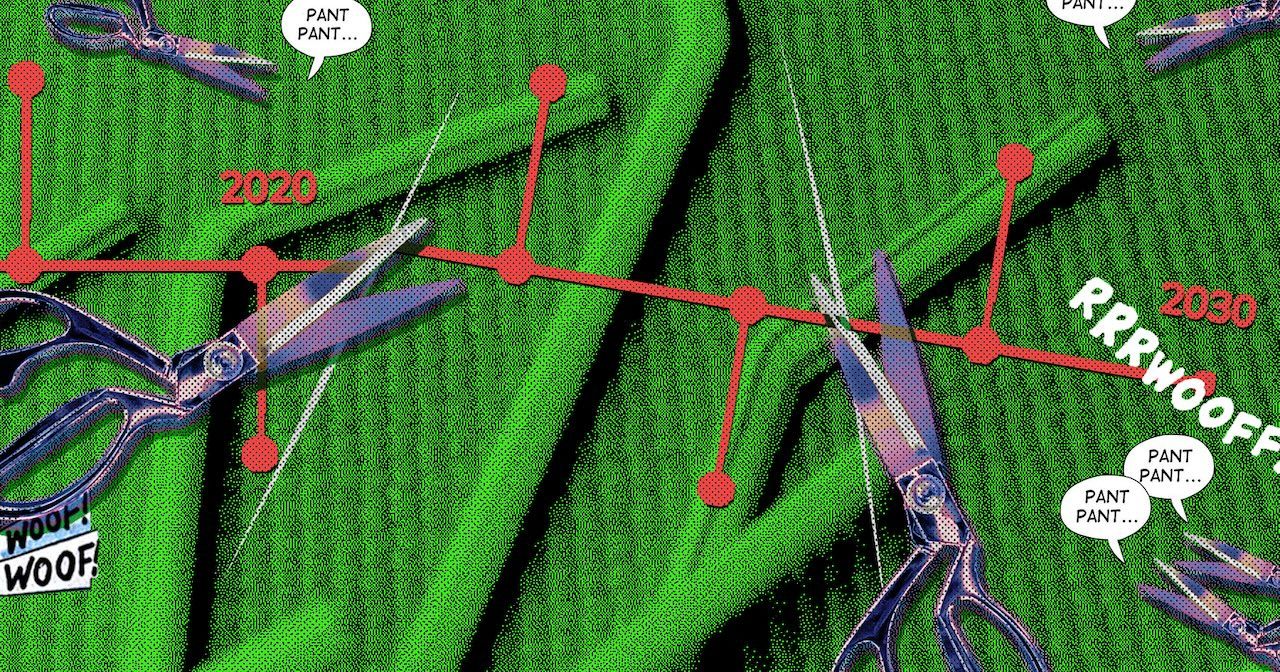
Artwork: Dosain
05 Oct, 17:55
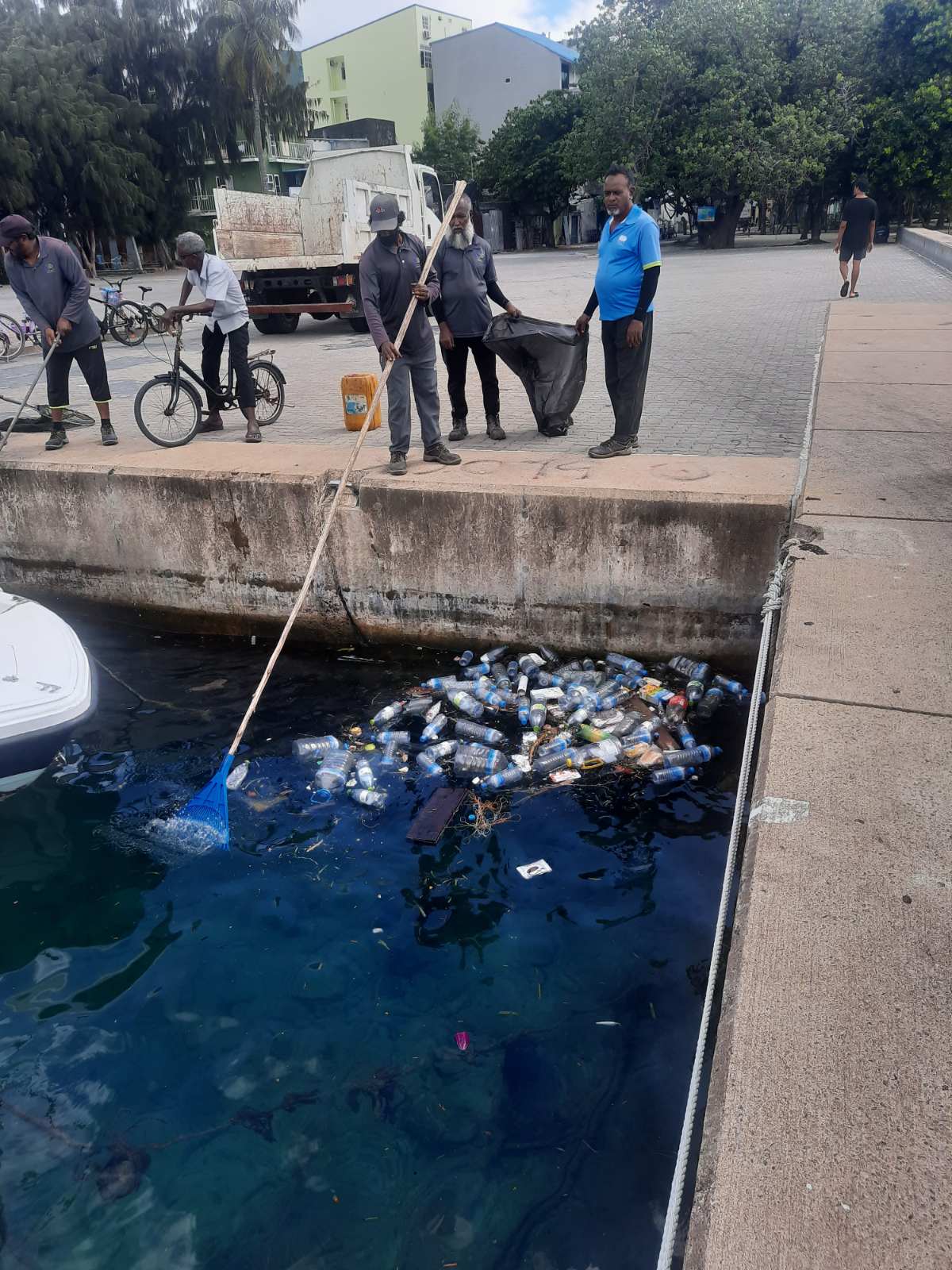
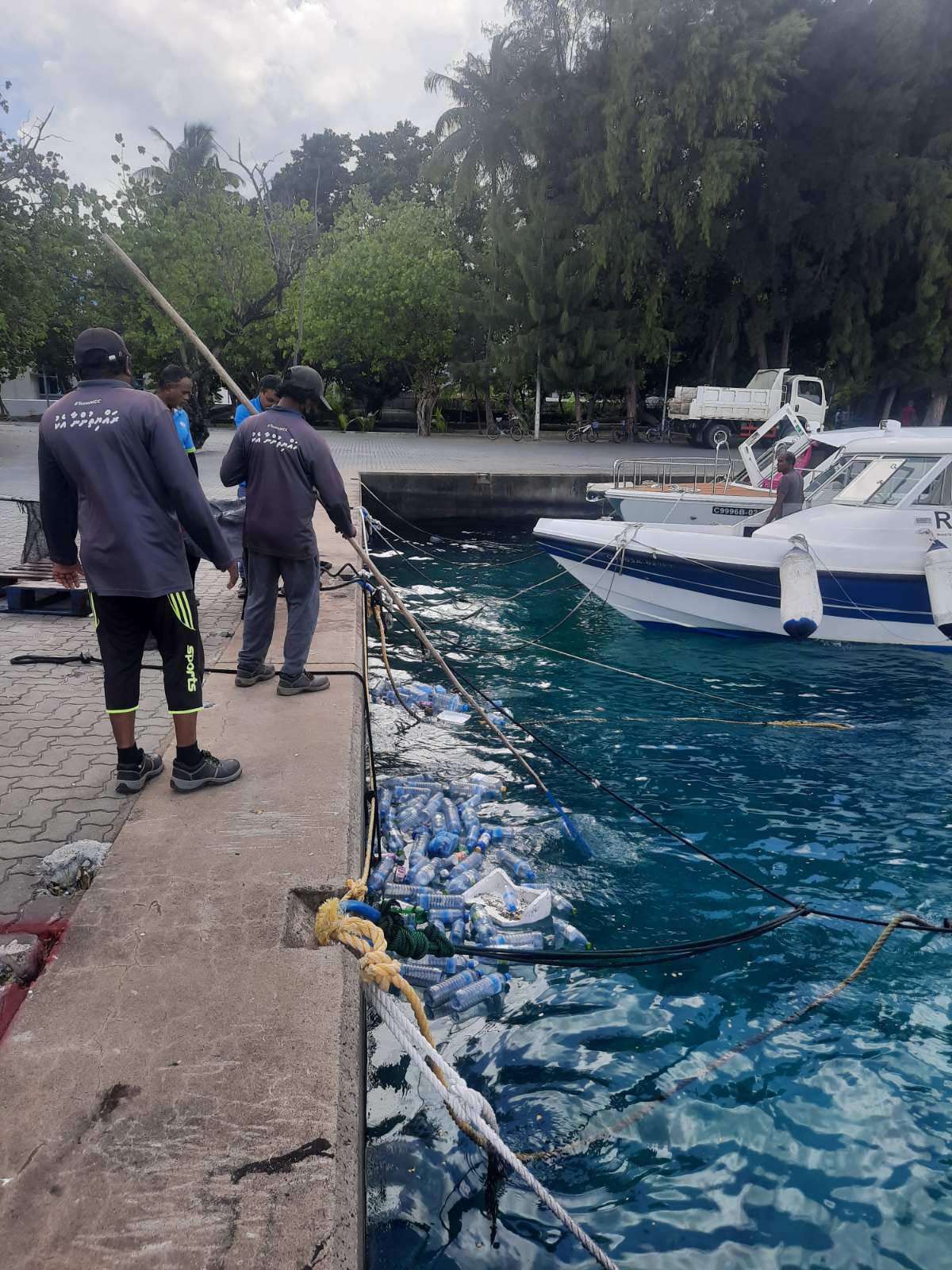
A raft of plastic water bottles drifts between boats moored at the Villimalé harbour as city council workers walk the edge of the wall, skimming rubbish off the water with long-handled nets.
They fill about seven bags every morning. The same scene plays out in harbours and lagoons across the country.
Floating bottles are the most visible face of plastic pollution in the Maldives. A single-use plastics phase-out plan launched six years ago left water bottles of 500ml to 1 litre for last.
On 19 September, President Dr Mohamed Muizzu pushed back the water bottle ban for the fourth time since taking office in November 2023. The import ban and sale prohibition were delayed respectively to December 2029 and June 2030.
In the same decree, he lifted a five-year-old ban on plastic straws until 2031.
Soggy straws
The decree set the date for the ban of importing plastic straws for 1 June 2031 with a ban on production and sale of plastic straws to come into effect on 19 December 2031.
Briefing the press five days later, Environment Ali Shareef cited "several complaints" regarding paper straws, saying he did not believe an appropriate alternative had been shown when the ban on plastic straws was imposed in June 2021.
"It was outright banned. I don't believe that a solution has been found by banning it," he said.
"I am not saying I support this entirely. Even paper straws can be high quality. A lot of people asked me, 'why are you opening it for an item that was already banned, isn’t this a step backwards?' My argument is that banning plastic straws without showing an alternative product is a step backward.
"There were a lot of complaints about this. You can't even break the plastic seal on top of the beverage cup with paper straws. Straws get broken off when you stab the plastic seal. That’s the quality of the straws."
He acknowledged that some paper straws were of high quality. But mandating those would see the extra cost passed on to customers, he said.
"We believe that we are yet to find a good alternative option. We thought there might be better options than this. And also there has been assessments and research relating to issues of food safety in the manufacture of these paper straws, scientific studies which show certain carcinogenic chemicals in them," he said.
The Maldivian Democratic Party, whose administration rolled out the single-use plastic phase-out plan, called the reversal and delays "a setback for a key environmental initiative, taking place after the public and businesses had already implemented and adapted to it over several years".
The MDP credited the policy with what it called a significant reduction in plastic waste visible on beaches and public spaces. Reversal without reasonable justification or sound rationale undermines certainty in regulations and policies, the main opposition party argued.
"The excuses offered by the government for this action are inadequate. The government has failed to publish any studies or present sound reasons to justify why such a change was necessary, why this issue could not be addressed within existing regulations, or why the deadline needed to be extended until 2031," it added.
The plan
In July 2019, parliament passed a resolution to ban single-use plastic by 2025. It followed a proposal from students from 17 institutions. Two months later, President Ibrahim Mohamed Solih announced a plan to do so by 2023 in the "most far reaching and ambitious plastic phase out plan of any nation on earth".
A year later, in November 2020, a 'Single-Use Plastic Phase-Out Plan' was endorsed by the cabinet and approved by the president.
The plan set out six policies: phased bans on the import, production and sale of items with affordable alternatives; market based measures such as a 400 per cent tariff on plastic and PET bottles; better import data to set reduction targets; producer responsibility schemes such as direct refunds; refill stations to replace small bottled water; and public awareness campaigns.
The enabling legislation came in December 2020 in an amendment to the import export law. It banned the import of products classed as single-use plastics in a list compiled and published by the president.
A total of 12 items were included in the first list on 29 December 2020. The first batch of eight items to be banned after June 2021 included plastic straws, plates, cutlery and stirrers, styrofoam lunch boxes, 30x30cm plastic bags, betel nuts in plastic wrappers, cups below 250ml, cotton wool buds, toiletry bottles that are 50ml and smaller and plastic beverage bottles that are below 500ml. The ban of plastic bags below 50-micron thickness, 50-200ml toiletry bottles and one litre plastic beverage bottles were to come into effect two years later in December 2022.
The list only included bans on import and sale of plastic items that were not manufactured in the country. All imported plastic bottles below 500ml (including water) were to be banned from 1 June 2021 and all imported plastic water bottles one litre or below were to be banned from 1 December 2023.
In December 2022, a new Waste Management Act introduced an MVR2 bag fee on plastic bags. The bag fee was highly contentious. Customers were asked to pay the fee at the counter. Critics dubbed it the "plastic tax".
The ban on single-use plastic items was moved under the Act, extending to items produced in the country. Following ratification, a fresh list of single-use plastic items selected for phase-out was published that month.
The moving goalposts
The new list published in December 2022 stated that the production of bottled water below one litre would be banned from December 2023 and its sale prohibited from March 2024.
After President Muizzu took office in November 2023, he pushed back the dates with a decree. The ban on import and production of bottled water below one litre would come into force on 1 August 2024 and sale would be prohibited on 1 November 2024.
Then on 31 July 2024, with one day left, the dates were shifted again. The import and production ban would come into force on 1 December 2025 and ban on sale would come into force 1 March 2026.
On 2 December 2025, the dates were changed for the third time with the ban on import and production to come into force on 1 December 2027 and sale to be banned 1 June 2028.
The sticking point
For the majority of Maldivians, bottled water is drinking water. Only 29 per cent of the public trust the safety of tap water, according to a 2021 report by NIG Capital for the Maldives Ocean Plastics Alliance (MOPA), an industry-backed recycling group.
Water supply is patchy outside the capital. A 2025 Human Rights Watch report found that piped water and desalination plants on remote islands were often run-down or missing, and that bottled water was too costly for many families. A US$28.2 million climate-funded project meant to give 32,000 people on 49 islands safe water had fallen short of expectations.
The NIG-MOPA study estimated that about 143 million plastic bottles are produced and used in the Maldives each year. That amounts to about 390,000 a day. It found that 57 per cent of households drank bottled water daily, spending an average of MVR600 a month. Maldivians drank 226 litres of bottled water a head each year. The figure was about 187 litres in Europe.
Bottled water is produced in the Maldives by several public and private companies.
Taza – sold in 500ml, 1.5 litre and 5 litre bottles – is produced by Island Beverages, a subsidiary of the Malé Water and Sewerage Company. MWSC holds a 51 per cent stake and the remaining 49 per cent is owned by Champa Brothers. The company has bottling plants in Malé and Kulhudhuffushi.
The Male Aerated Water Company, which works in partnership with Coca Cola, produces Bon Aqua water. The company sells plastic water bottles in 500ml, 1.5litre, 5litre and reusable 20litre bottles. The company, which is owned by local tourism giant Universal Enterprises, says it operates "six production lines with a combined capacity of producing 300 bottles per minute".
Life water bottles – which are also sold in 500ml, one litre and five litre bottles – are produced and sold by Happy Market, a large food and beverages wholesaler.
Discussion
No comments yet. Be the first to share your thoughts!
No comments yet. Be the first to join the conversation!
Join the Conversation
Sign in to share your thoughts under an alias and take part in the discussion. Independent journalism thrives on open, respectful debate — your voice matters.
Support Independent Journalism
Help us keep the news free and fearless
Give once
$
or
Become a memberfrom $5/month

