

“Killing without touching”: the fight over Villimalé’s grove
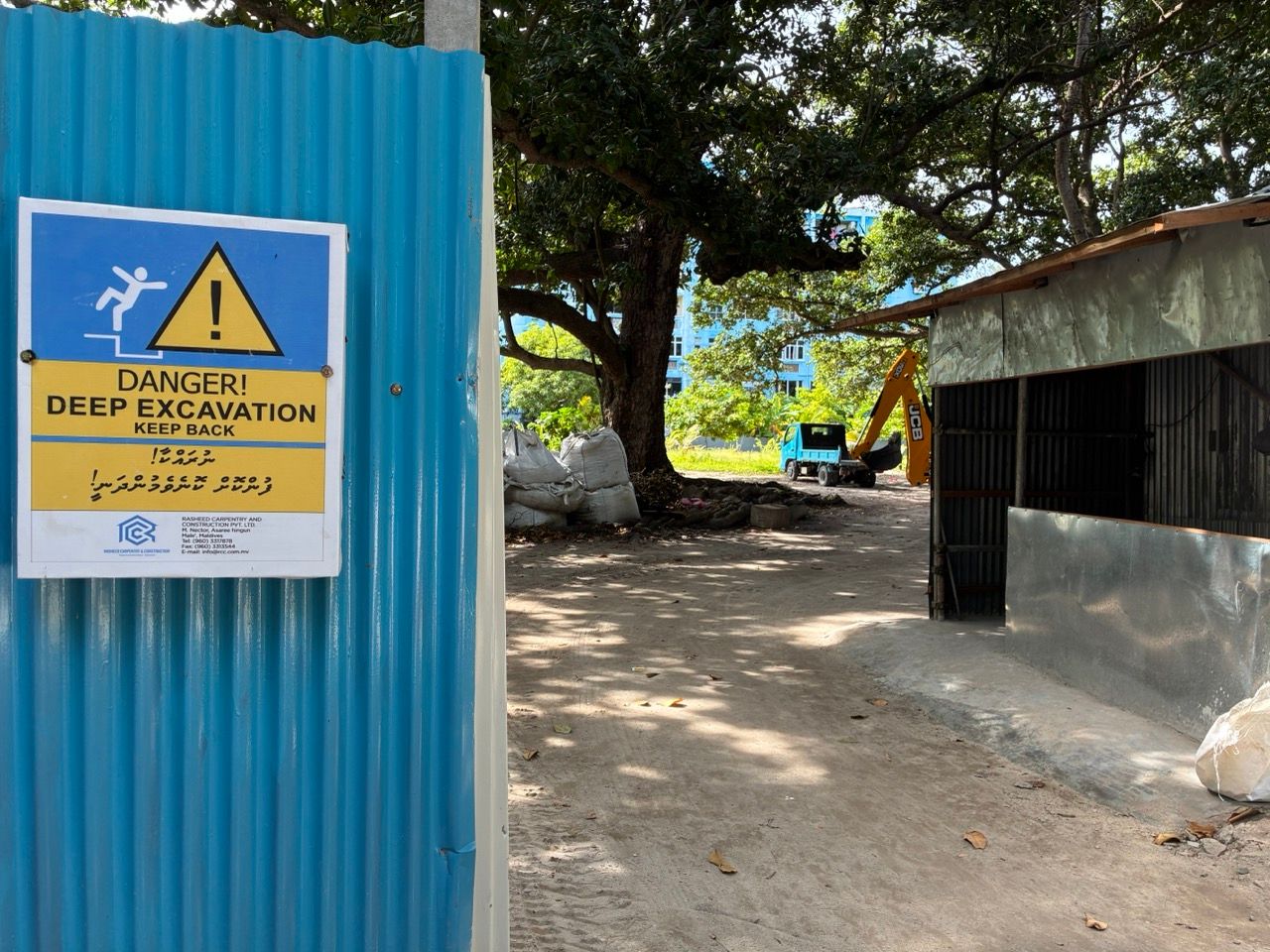
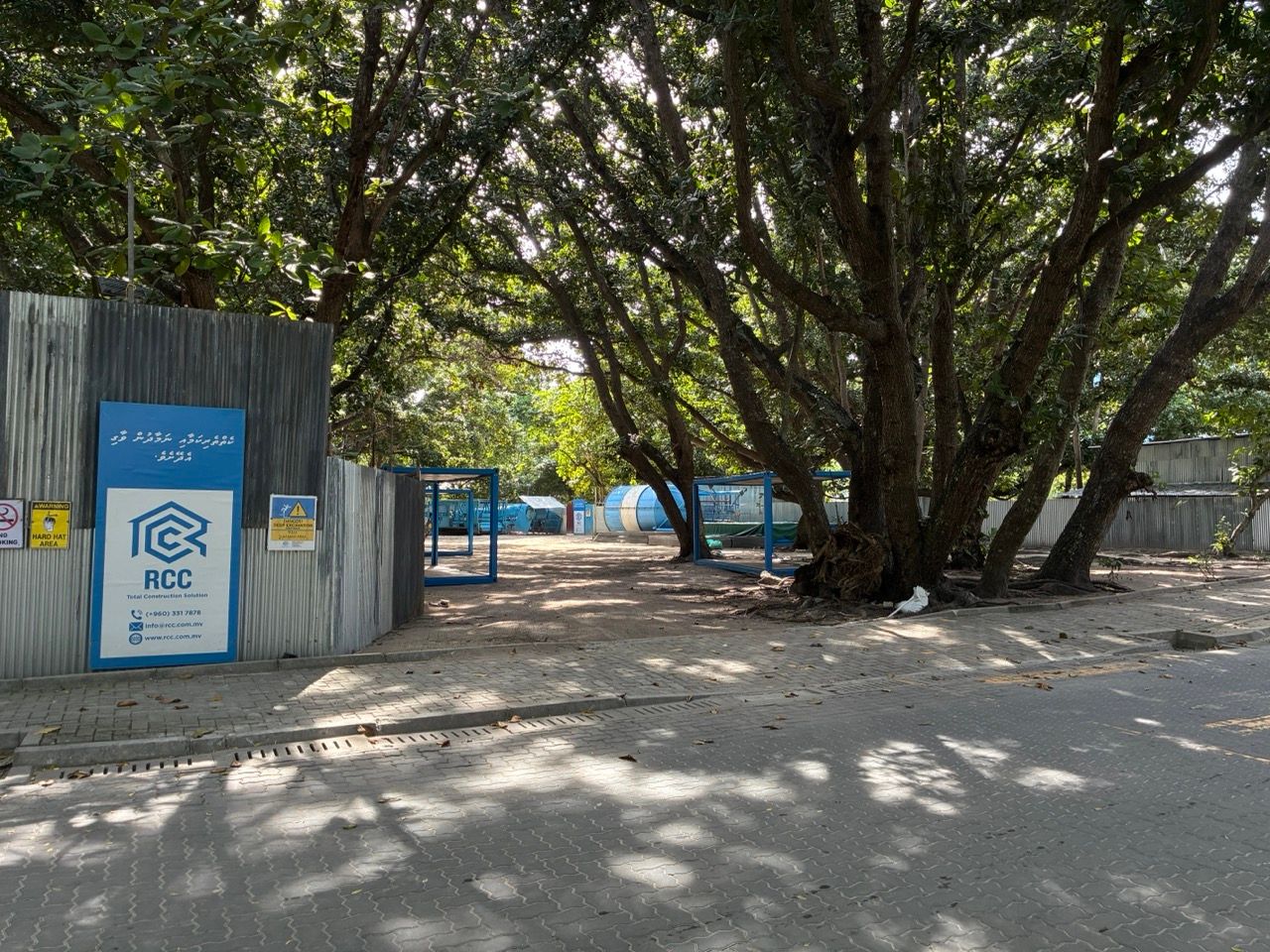
The mayor said no trees would be felled. RCC’s sign warns of deep excavation.
Artwork: Dosain
13 Jul, 17:45
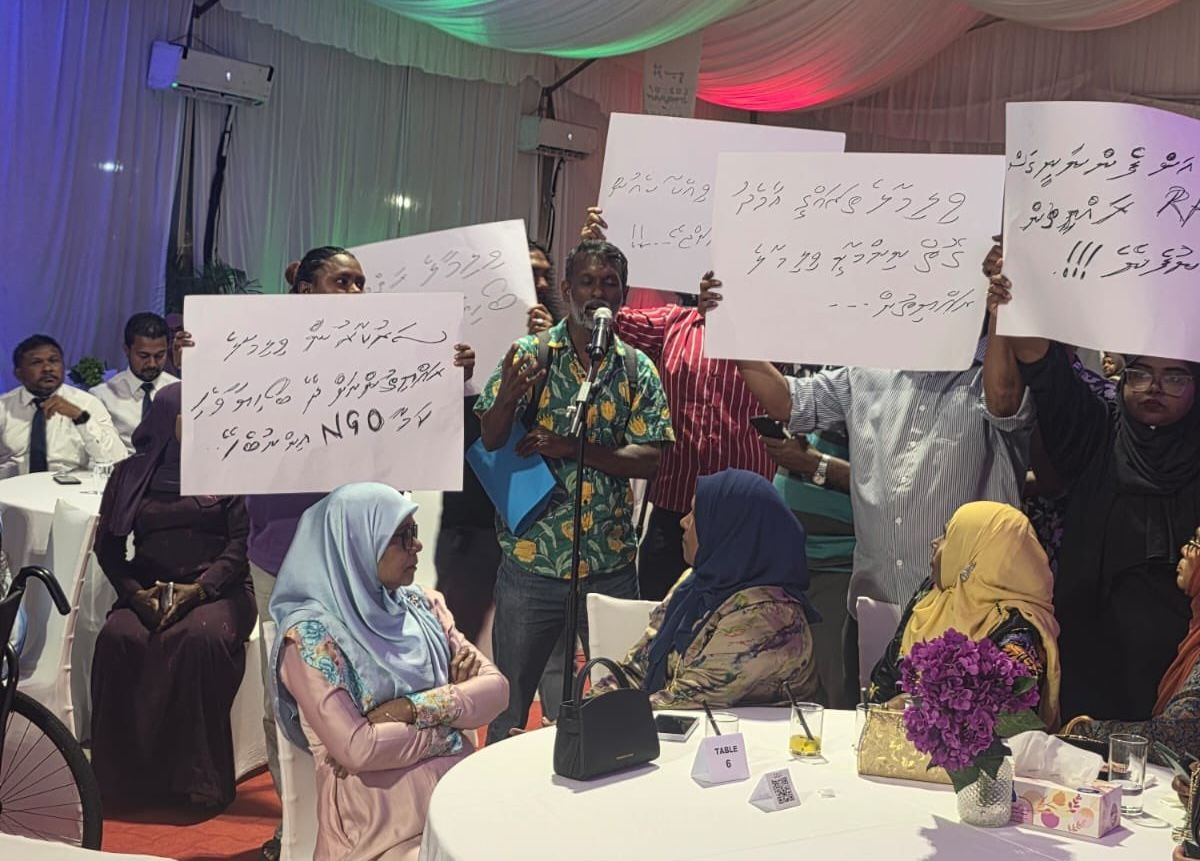
When Ahmed Mohamed rose to speak at the Malé City Council's town hall on Thursday night, five people surrounded him at the microphone, holding placards that read: "Villimalé people will decide Villimalé development."
The environmental activist, known as Forme, is part of the #SaveFunavaa group campaigning against construction over Villimalé's laurel-wood grove. He was heckled through both of his turns at the microphone, as protesters accused NGOs of exploiting the tranquil suburban island and disregarding the needs of residents. Mayor Adam Azim appealed from the chair for a third time: "Everyone should have the patience to listen to different views. I urge you strongly to sit quietly."
The fight over the funavaa grove, waged since April through protests and counter-protests, arrived at the council's citizens' meeting. What played out was a contest over who speaks for Villimalé.
Forme insisted the campaigners were not against housing. "We're not saying at all not to provide shelter," he said. But 300 flats on three 17-storey towers would overwhelm the 32-hectare island, he argued. It would "disrupt the existing electricity grid, disrupt the water network, disrupt the sewage system" and fill the school and the mosques. Housing could instead be provided on artificial islands recently reclaimed near Malé, he said: "But we cannot restore 50-year-old trees. We cannot get the clean air they give us from flats."
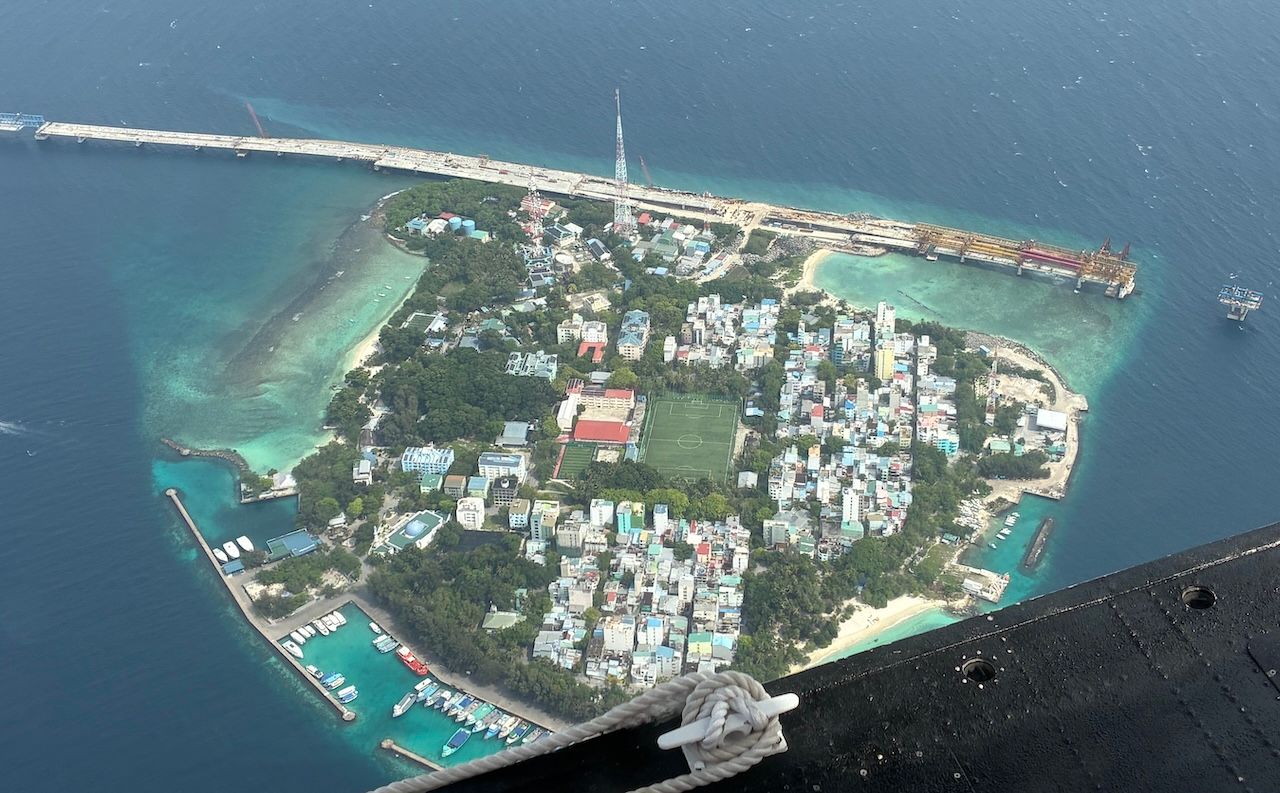
Villimalé was developed in the 1990s as a green sanctuary for residents of the congested capital. "I have lived 50 years in Malé," Forme said. "I don't want what happened to Malé to happen to Villigili."
He said he had been threatened over the campaign: "Even now they're threatening, saying you can't even get on Villingili. These people are saying here that they'll kill me... We can't object to anything." The protesters had been "brainwashed politically," he said, advising them to "read a book."
Returning to the microphone to object to plans for a Chinese-funded 112-bed hospital on the island, Forme noted that the most recent health masterplan identifies congestion as a driver of contagious disease. When he said Malé is an eight-minute ferry ride away, he was interrupted again, and left saying there was no environment for expressing views.
He also faulted the council's own process, saying the plot for the flats was handed over after a one-minute discussion: "That's not how democracy should function." Azim responded: "I have always given the opportunity for all councillors to speak on the council floor."
A group of irate Villimalé residents at the meeting were unpersuaded. A woman who identified herself as Hawwa Shaama said nothing residents wanted had ever happened "because of NGOs getting on Villimalé all the time. What these people do is, some make a bikini beach, others trying to smoke some weed. They don't do anything else in Villimalé... I have guarantee that most Villimalé residents will accept building flats there."
A man who said he moved to Villimalé in 1994, when the powerhouse was a single generator and water was carried home from a pump by the two mosques, described a population grown from under 1,000 to more than 25,000. The 2022 census counted a resident population of 6,631 people in Villimalé, two percent fewer than the 2014 census. He listed a history of opposition: a pre-school blocked, a school expansion blocked, now flats and a hospital. "No one is trying to cut trees. Branches were trimmed," he said, offering "100 per cent assurance" that 98 percent of residents would support the project. The NGOs remained silent over sunken speedboats and fibreglass work in the Villimalé, he claimed. "There is not even one Villimalé person in these NGOs."
On the hospital: "Even for a broken finger you have to go to Malé. Would any of you have the patience if your child breaks their arm or leg and the hospital tells you to go to Malé on the ferry?" On housing: "I also want to live in a separate flat with my four children. You too will know how difficult it is to live in a single room with four children."
Sharing a photo of the placard-holders surrounding Forme, MP Mohamed Ismail from the ruling People's National Congress, who represents the Villimalé constituency, wrote on X that the government would deliver development projects "while maintaining a green, environment-friendly ward" and that most of those "expressing views against development do not belong to Villimalé."
At a council meeting on June 24, Villimalé councillor Ibrahim Samah echoed his Majlis counterpart. Samah said residents did not oppose the project and that the protesting NGO was not from Vilimalé. Samah and council member Ahmed Saneeh Haneef, both from the ruling PNC, proposed asking the youth ministry to make NGOs “more responsible,” arguing projects should not be halted over protests by a few people. Maafannu North member Hussain Furushan, who had tabled the discussion, challenged their claims, saying Vilimalé belonged to everyone in the Greater Malé area and proposed asking the housing ministry to ensure construction does not damage the trees. The proposal was later passed by the opposition-majority council.
Meanwhile, at Thursday's town hall, a different attendee read out an extensive list of questions: had the council received and reviewed environmental impact assessments, ecological surveys and inventories of the grove's trees; would it disclose them to the public; how many old laurel-wood trees stand on the work site and how many would be felled; what powers do the council hold under the tree-cutting regulation, even over a government project; and does it consider sacrificing the ancient grove an appropriate trade-off.
"In our consultation with them [the developer] so far, they have decided to carry out the project without cutting down any trees," Azim replied.
But Humaida Abdul Ghafoor, an environmental advocate, said the developer has poured concrete over the soil where the grove stands. "This means the trees will die. That is killing without touching. The outcome will be the same." Trees older than 50 years are protected by law, which was binding "whether it's the council, housing ministry, or BML [Bank of Maldives]," she said, noting that the council has not created the registry of protected trees the law requires. "I don't believe you could build a 17-storey building there in a way that doesn't damage trees. That can't be done. You can say it but it won't be true."
Azim responded to other points she raised concerning trees in Malé, but did not address the Villimalé grove.
Former President Mohamed Nasheed – chairman of the Maldivian Democratic Party, on whose ticket Azim and all but two of the city council's two members were elected – weighed in on Friday.
When the Maldives Independent visited the site on Monday afternoon, it was fenced off on both sides with a path down the middle. At the entrance on one side, a sign warned “Danger: deep excavation." Inside stood an excavator and a tipper truck.
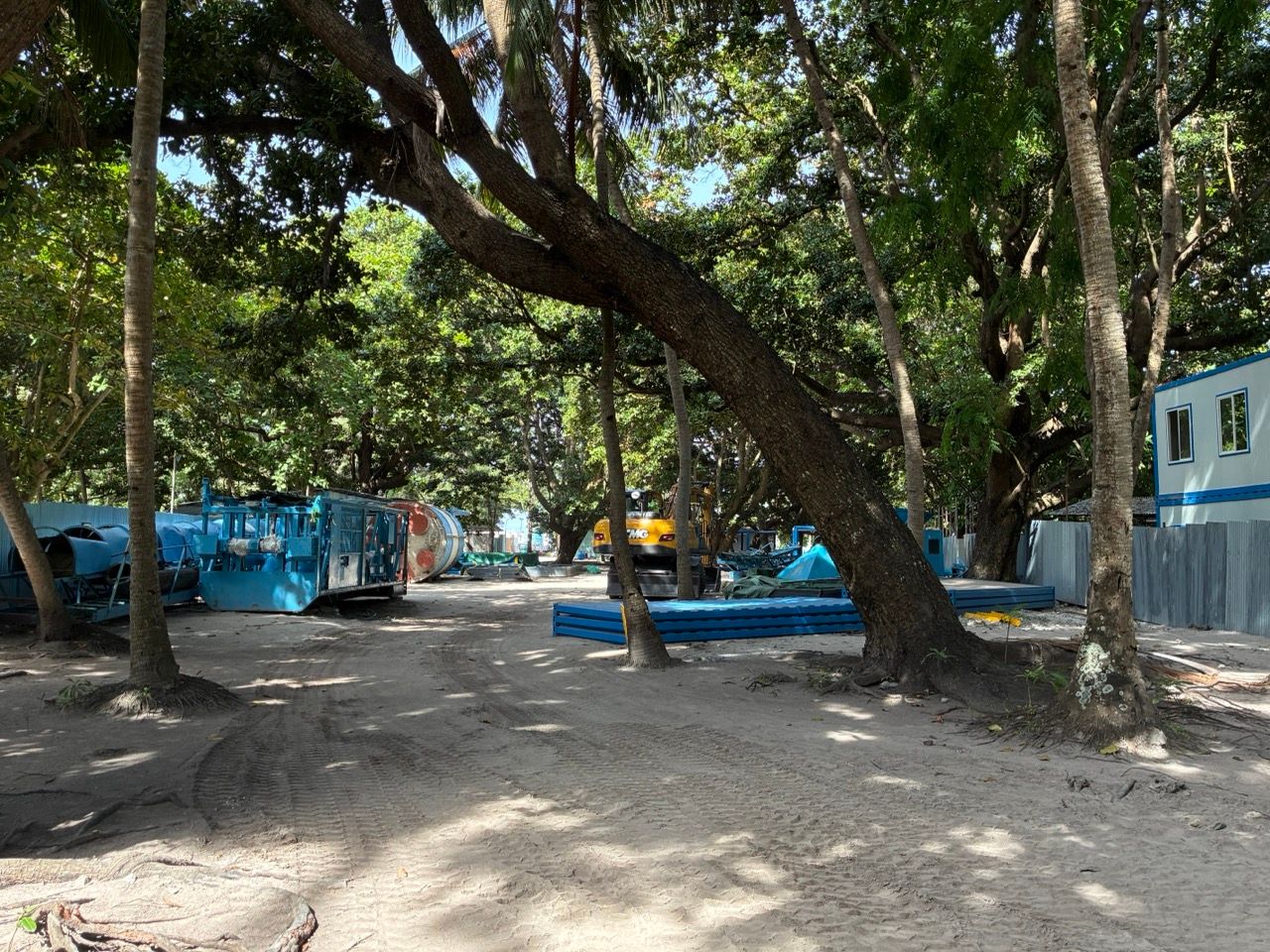
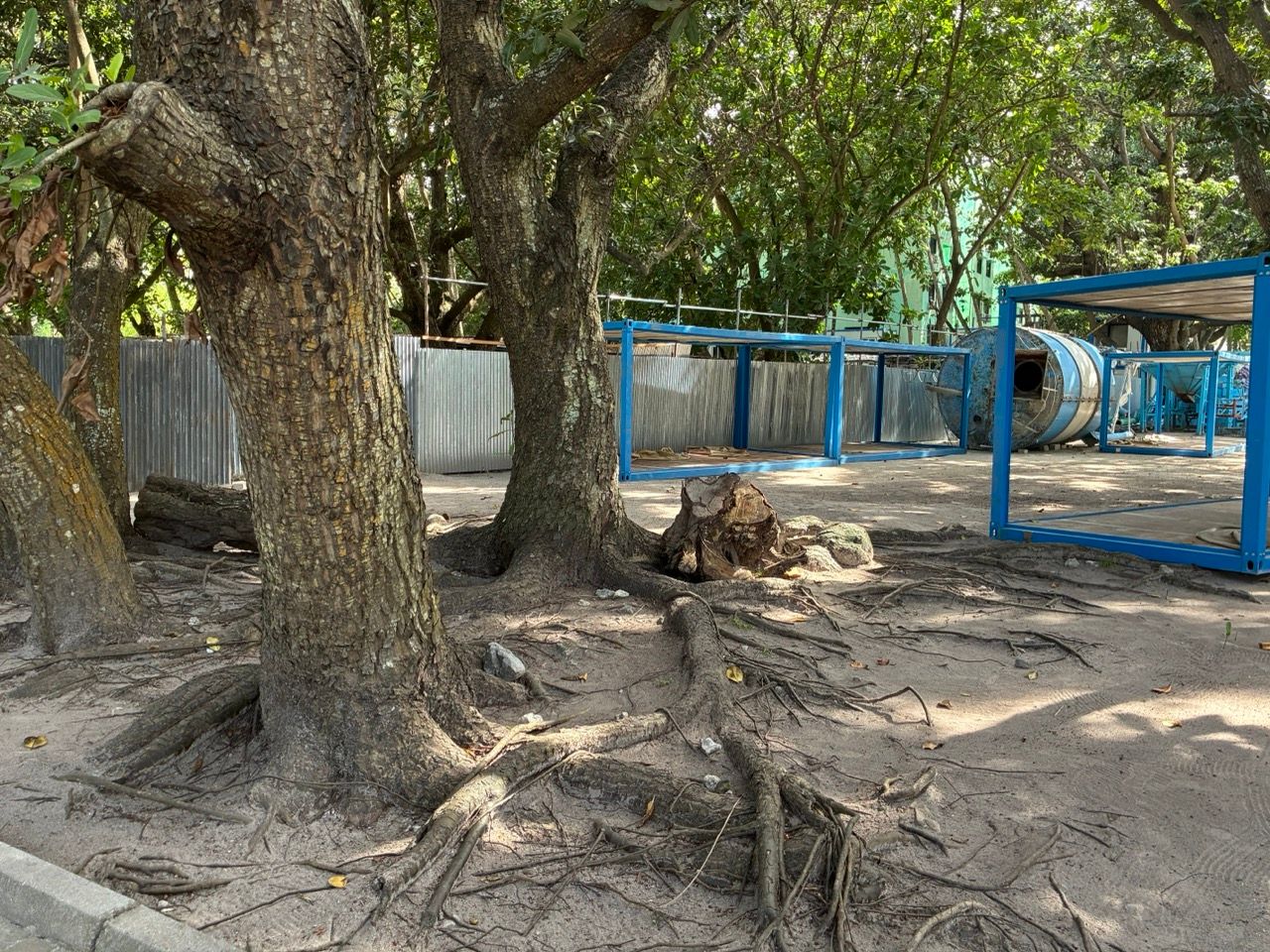
A hard grey surface had been laid over the open ground on the other side. The laurel-wood trees were still standing within the compound.
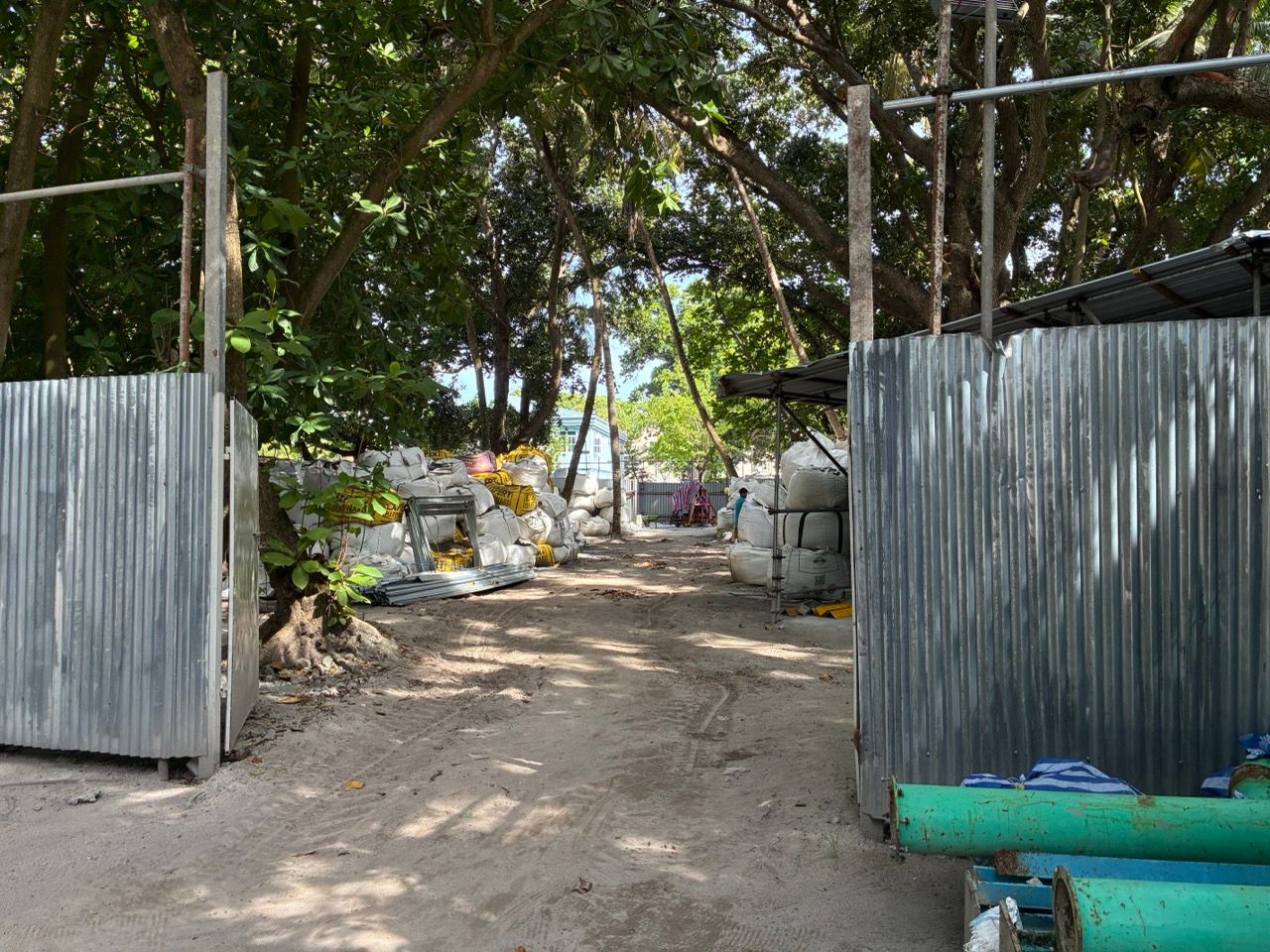
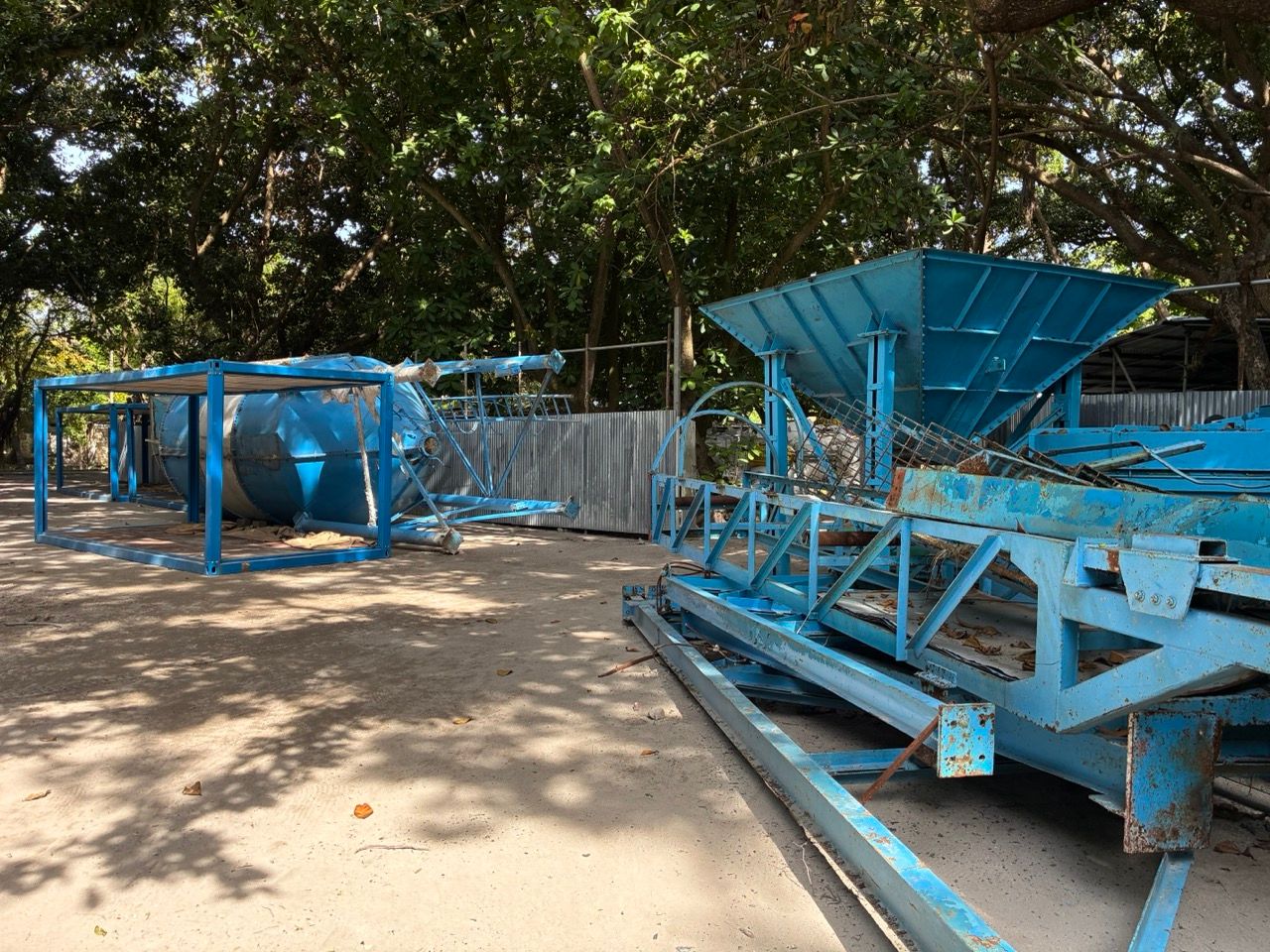
A video posted by the #SaveMaldives Campaign on June 9 showed concrete being poured and worked across the ground at night.
The towers rising behind the dispute are a Bank of Maldives project: its subsidiary, BML Affordable Home Leasing, contracted the construction to RCC, whose chairman, MP Mohamed Nazim, is the Mayor Adam Azim's brother. Ground was broken on the 300 flats a week before the April 4 council elections, as President Dr Mohamed Muizzu attended nightly ceremonies for housing projects across Greater Malé. At the launch, Nazim pledged that no mature funa trees would be felled and that the three 17-storey towers, due by June 2028, would be built around them.
Several of the grove's laurel-wood trees are on the Environmental Regulatory Authority's protected list.
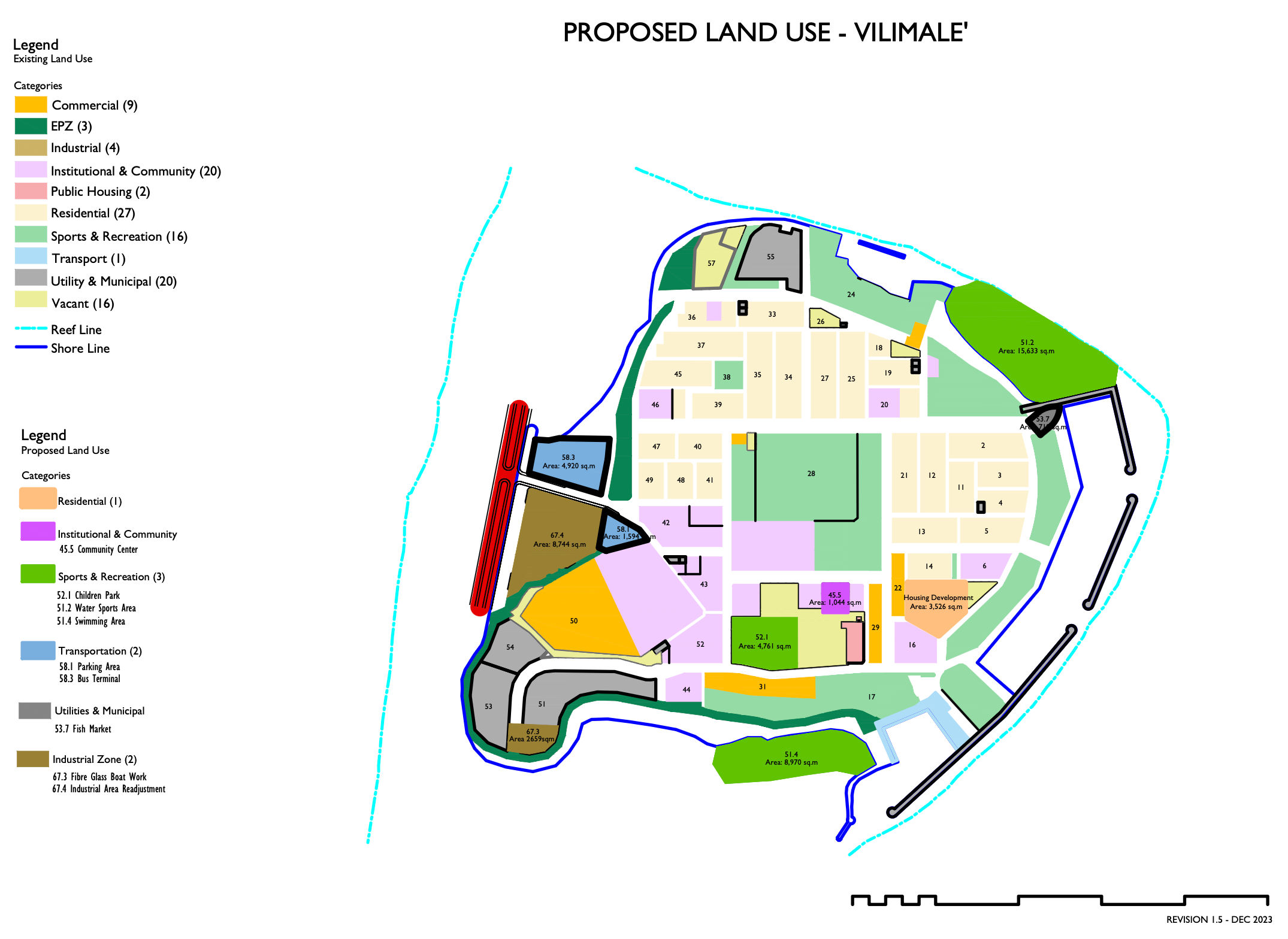
In the days since the council meeting, the debate has continued online with the recurring counter that Villimalé's green spaces belong to all residents of the capital region. Greater Malé holds 40 percent of the country's population. A World Health Organisation brief on urban green space says city residents should be able to reach a public green space of at least half a hectare within 300 metres of home. The council's land use plan counts 995 people on each of Malé's 201 hectares, compared to 106 on Villimalé's 32. But on the island's zoned residential area, density rises to 665 per hectare.
The funavaa clash unfolded at the same meeting where the council unveiled a vision of a "liveable, comfortable island city" carried by at least MVR 1.5 billion in privately financed projects: parking buildings, housing, berthing terminals, parks, maizaan and what the strategy calls "third spaces" for public gathering.
The council was promising new public spaces in the room where residents fought over the last existing one.
Discussion
No comments yet. Be the first to share your thoughts!
No comments yet. Be the first to join the conversation!
Join the Conversation
Sign in to share your thoughts under an alias and take part in the discussion. Independent journalism thrives on open, respectful debate — your voice matters.
Support Independent Journalism
Help us keep the news free and fearless
Give once
$
or
Become a memberfrom $5/month

