

Housing for whom? The towers rising over Villimalé's last grove
Ancient trees, a fenced-off footpath and a fractured community.
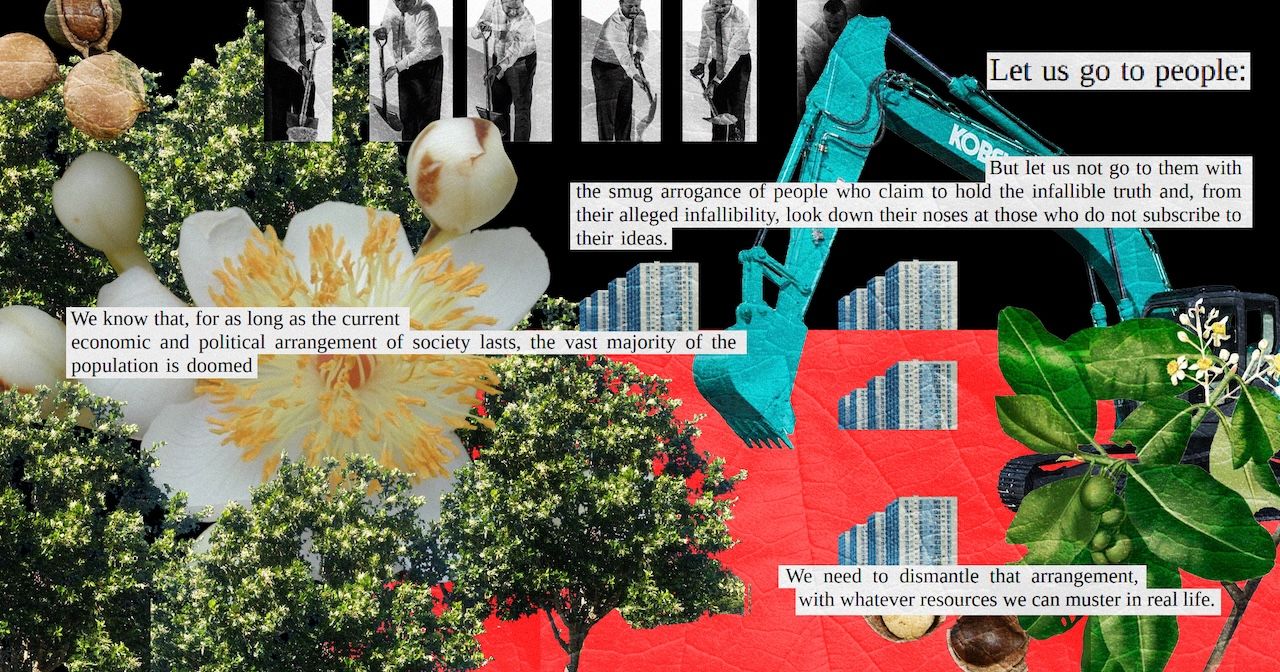
Artwork: Dosain
16 Apr, 19:00
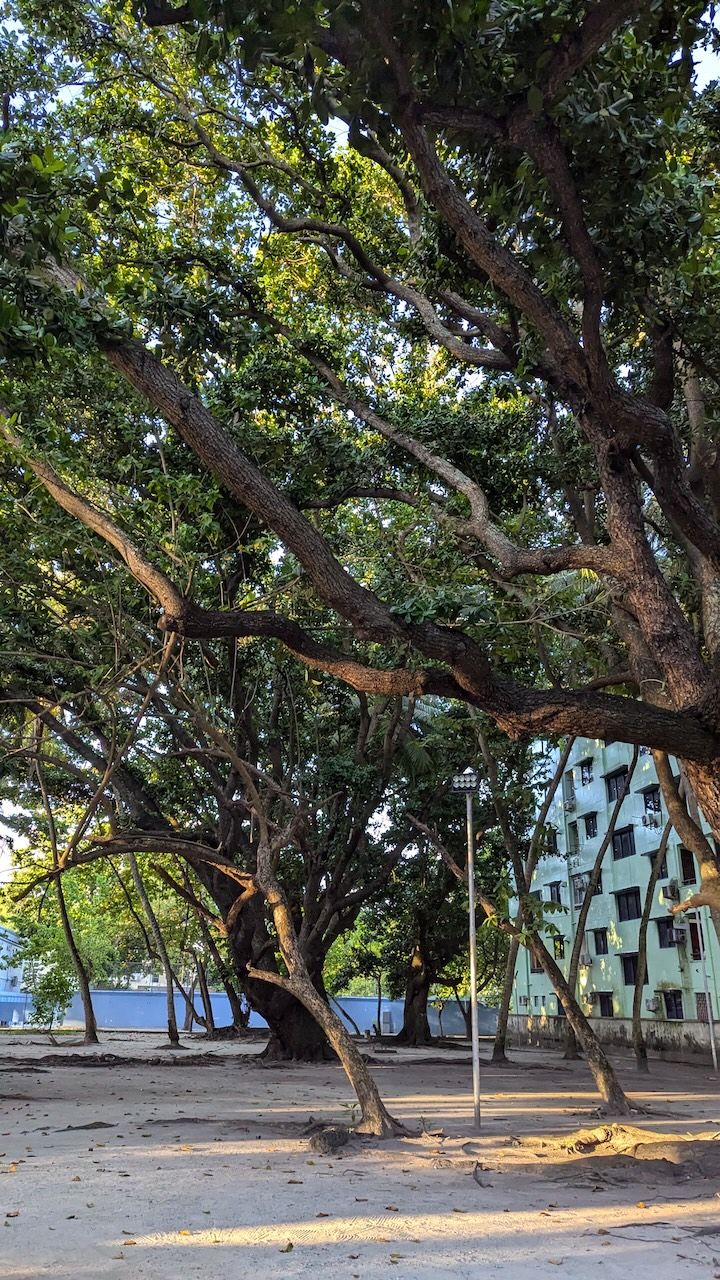
Every morning, Aishath Raudha* walks her daughter to school through a grove of laurel-wood trees in Villimalé. Last week, the four-year-old threw a tantrum on the road and refused to go. The funa gas path was closed off.
Three 17-storey towers are going up on the site under a Bank of Maldives housing project launched a week before the April 4 local council elections.
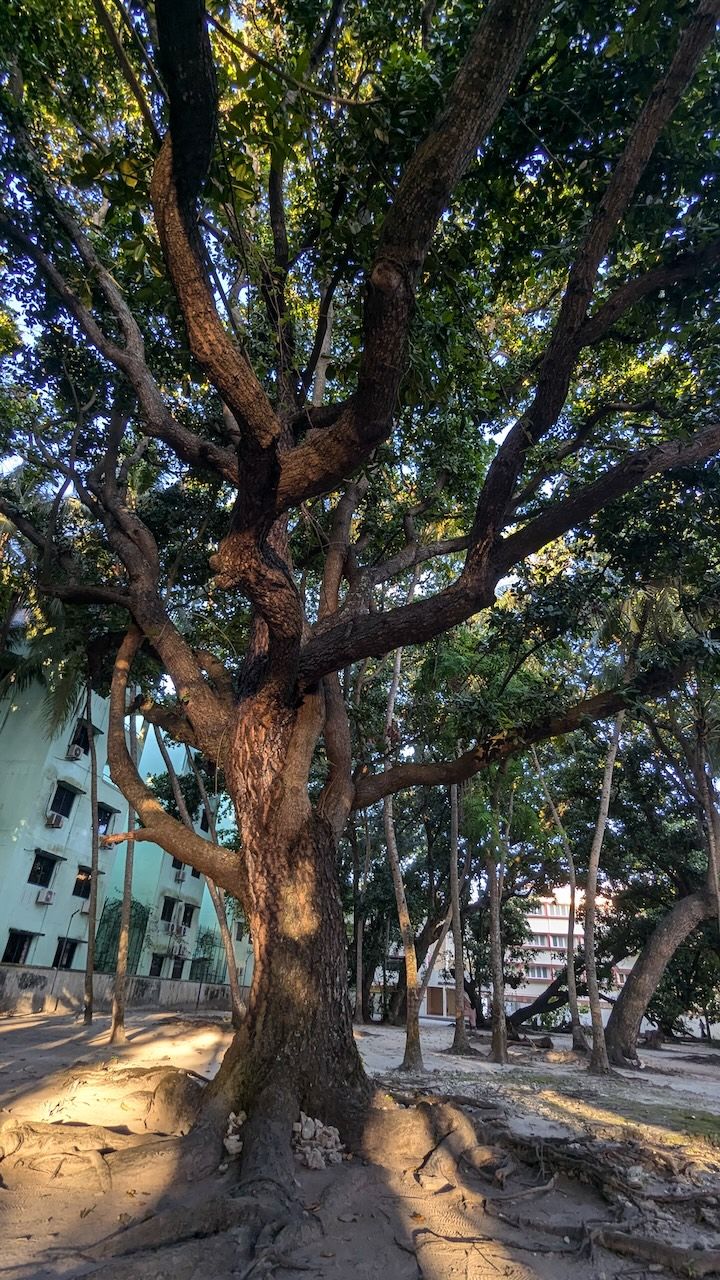
After she moved to the capital's sleepy suburb as a child, Raudha herself had walked to the ferry past the laurel-wood trees, several of which are on the Environmental Regulatory Authority’s protected list. Thirty years later, taking her daughter along the same footpath, she would stop with her to pick flowers and look at plants and insects.
"People always talk about how beneficial it is for kids to learn based on their surroundings and I have first-hand seen these benefits. Not just the physical aspect of it but also mental and educational as well," she said. "Like she would count the insect she sees, she would learn both Dhivehi and English names of things and it has built her curiosity."
Her daughter's tantrum was a child's version of a reaction many adults share.
"I really don't want these spaces to be gone," said Raudha. "Because the alternative is what? You trap your children indoors because it's too hot outside and lock them inside four walls only to complain about how next generation of children has lost touch with their heritage, roots and their declining mental and physical health. I don't want my child or any child to grow up like that."
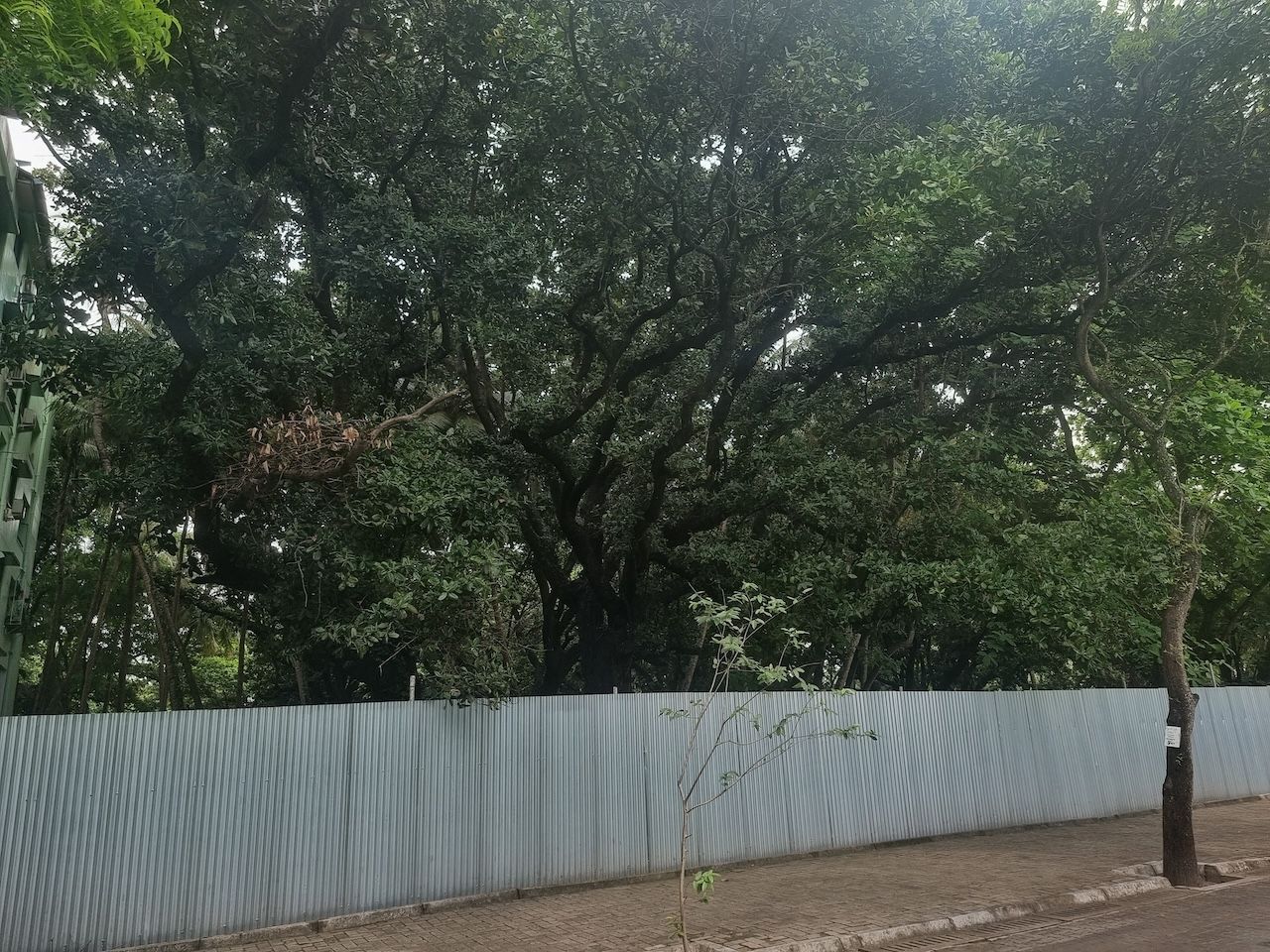
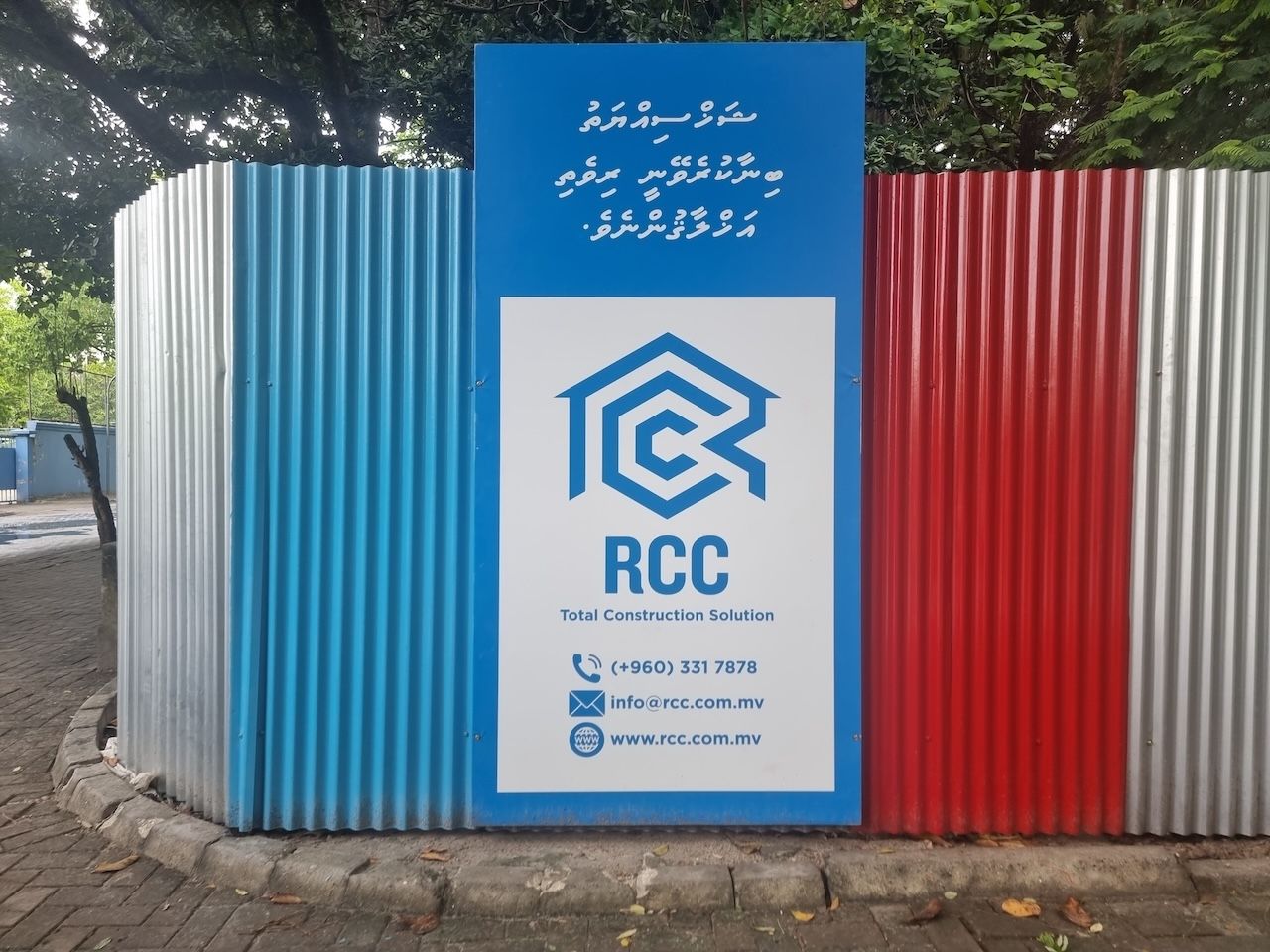
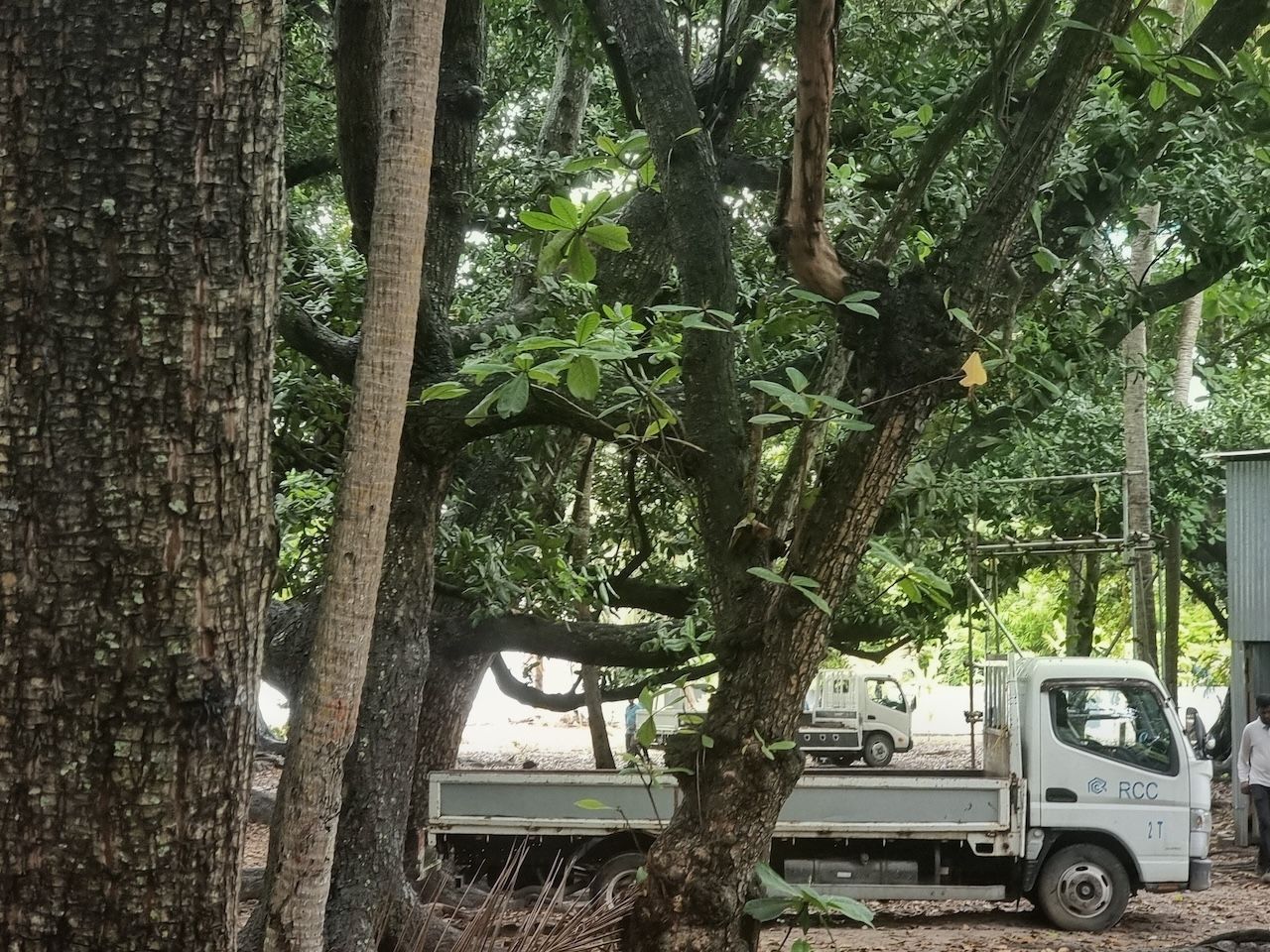
The groundbreaking for the 300 flats came in the week leading up to the council elections as President Dr Mohamed Muizzu attended nightly ceremonies for housing projects across Greater Malé. The Bank of Maldives subsidiary, BML Affordable Home Leasing Pvt Ltd, contracted the Villimalé towers to local construction company Rasheed Carpentry and Construction, whose chairman MP Mohamed Nazim pledged in remarks at the launch ceremony that no mature funa trees would be felled during construction. The three towers would be built around them, he assured. The project will run 24-hour shifts with around 400 workers and complete by June 2028, he said.
But the choice of location provoked an immediate backlash from many who see Villimalé as a tranquil refuge from Malé's crowding and clamour.
The pushback
"The addition of 1,500 more people to Villimalé due to this project will result in more congestion and put even more strain on the existing empty spaces," the Association of Maldivian Planners warned, calling on the government to reconsider.
Without appropriate measures, the storage of construction material and the use of heavy-duty vehicles would threaten the surrounding vegetation, the Planners added. The need for new infrastructure to support the population growth, including parking spaces, more shops and other public amenities, would meanwhile put even more pressure on Villimalé's remaining green spaces, their statement noted.
The group also raised questions about the legal basis for constructing 17-floor towers, considering the height limit for buildings under current planning regulations.
Environmental groups Save Maldives and Villimalé-based Save the Beach Maldives echoed the concerns. Both groups questioned the choice of the Villimalé site despite empty tracts of reclaimed land in Hulhumalé and Gulhifalhu.
"These areas, along with reclaimed land in 58 other islands across the Maldives, were developed by various governments under the guise of ensuring housing. These lands were reclaimed by permanently destroying living reefs and lagoons at a massive cost to the public debt," reads an open letter by Save Maldives published on 1 April.
"However, while these spaces remain unused, attempting to construct such buildings by destroying the dwindling population of ancient trees leaves no room to believe that this is being done with the sincere intention of providing housing for the people.",
Save the Beach, an NGO with longstanding ties to the Villimalé community, described the grove of trees as a "living classroom" used by students for practical lessons. The construction of 17-storey towers would permanently alter the island's landscape and strain the existing infrastructure, the group added.
The Maldives Independent has sent questions to the Bank of Maldives and the President's Office regarding site selection and the Planners' concerns about the height limit. A response had not been received at the time of publication.
Shouted down
When the project launching was announced for the night of March 26, a small group of young people went to the ceremony carrying placards to declare their opposition. They were met with a hostile reception. One of them told Maldives Independent that they were standing several metres away from the ceremony when ruling party members attending the ceremony started shouting at them.
"Police officers then came to us and told us that it would be best for us to leave. They then forcibly removed us from the area," the protester recounted.
Tensions escalated on the following day when the protest resumed near Villimalé's ferry terminal. A group of irate Villimalé residents confronted the protesters. They came prepared with microphones and speakers set up on a small pickup truck, one of the few motorised cargo vehicles authorised to drive in Villimalé. A video posted online shows the counter-protesters using foul language and accusing them of obstructing long-overdue development.
"We want housing, we want development. Villimalé belongs to the people of Villimalé. It doesn't belong to the NGOs that come from outside. You are not from here. You are people from other islands and you make NGOs and try to get money by selling Villimalé," one of them could be heard saying, noting the absence of members from Save the Beach. "There is no point in protesting without Villimalé people. Villimalé people are thirsty for the development of Villimalé."
When the protesters walked away, the Villimalé residents followed on their electric motorbikes and sound pickup, berating them and demanding that they leave the island.
"It was a bizarre encounter. Some of them were so hostile, they were like, 'these people don't care about Villimalé people,' and that all we cared about was trees and corals. They were trying to paint it as if we were all outsiders and they represented what people really wanted," one of the protesters told the Maldives Independent.
"They said we get money from foreign organisations by advocating for the environment and you should leave this island. But it was so funny to me, because first of all I live here too and what do you mean we were getting money? We are not the ones who were in it for financial gain. We can see they are PNC [ruling People's National Congress] supporters, several of whom are in political positions, so it's the exact opposite. They were the ones who are getting a financial benefit from supporting the project."
Housing for whom?
Ahmed Ikram, a 44-year-old who has lived in Villimalé since the late 1990s – when the formerly uninhabited prison and resort island was resettled after plots were awarded to civil servants and residents of Malé – acknowledged the need for new housing from families whose homes no longer have the space to accommodate second and third generations.
"Some families in Villimalé have a lot of children, like 12 kids in a space of around 1,400 square feet. So when the house is divided when their parents die, each gets a very small area. So there has been a need for housing, like for everyone in the Malé area," he explained.
But Ikram was skeptical about the RCC towers, questioning whether it was social housing or a BML real estate project. Many Villimalé residents applied under the previous administration's housing schemes and the recipients of flats moved to Hulhumalé, he noted.
"But suddenly they saw the funavaa plot and wanted to build towers with BML in the middle. It is very fishy. I have huge questions about whether this is even a social housing scheme," he said, characterising it as a "land grab" by the bank and the contractor, and casting doubt on who could afford "nice penthouse with a view of Malé," referring to the planned high-rise structure that would tower over Villimalé buildings.
"BML and RCC are involved in this. This is not a social scheme if its going to be selective. This is a corporate land grab. On top of that there are so many places reclaimed in the Maldives and around Malé in the name of giving housing."
RCC chairman Mohamed Nazim is the brother of Malé Mayor Adam Azim, who recently won re-election on the opposition Maldivian Democratic Party ticket. The brothers are also related to Attorney General Ahmed Usham, who served as the Villimalé constituency's MP during the previous parliament and whose brother Mohamed Visham runs the Vinorva guesthouse in Villimalé's beachfront.
Ikram went on to criticise the "PNC supporters" who disrupted the protest.
"It was political. The people who went there include people who claimed they sleep in the kitchen. But I know for a fact that this is a person who has three people in their family and only that person lives here in Villimalé. So that is simply not true. The way they talked you would think they are homeless, but that's not the case," he said.
"I think Villimalé residents, even the older people, love this environment and value it. But there has always been a small group of people in the council or municipal office who have very outdated views about public places. They have these ideas that green spaces should be 'clean and open' so they clear up the ground and cut down trees to let the light in."
Long-term residents of Villimalé "value and love this environment that we have here," he said. "That is why it has been preserved for this long."
The laurel-wood grove is cherished by both residents and visitors who value one of the few public green spaces in the Greater Malé Region, home to 40 percent of the country's population. School students and scouts use it for camping trips. On weekends, migrant workers gather to play cricket there.
Abdulla Hussain Rasheed, a young man grew up in Villimalé, echoed Ikram's sentiments.
"I think there are several groups of people here. There are families like us, registered people who have lived here a long time. There are also people who are not registered residents of Villimalé, but have been living here for decades, usually for rent. Then there are people who live here for rent for relatively short periods of time for various reasons. This may include the recent phenomenon of people who are moving to Villimalé because of how peaceful it is, while at the same time being in close proximity to the services available from Male'. But I think the majority of the registered population of Villimalé don't live here anymore." he explained.
Abdulla's family supports government assistance to provide housing for those in need.
"Families have grown in size over the years but the homes in Villimalé are small. And the housing construction financing is not accessible for the majority of people. At the same time, even among natives and long term-residents, I think there are people who really value Villimalé for what it is and do not want it to become another Hulhumalé, or worse, Malé."
Abdulla, who used to work as an engineer for the government, saw the project as another example of top-down implementation of projects.
There is some housing need but the government has not done any kind of research or needs assessment before launching this project. It's the same as any government project, it comes from a top down approach," he said.
Abdulla challenged the claim that the "real natives" of Villimalé support the project. Like Ikram, he suspected that the project would ultimately enrich a select and privileged group of people.
"I think a group of influential people here stands to benefit from this."
*Name changed to protect privacy.
Discussion
No comments yet. Be the first to share your thoughts!
No comments yet. Be the first to join the conversation!
Join the Conversation
Sign in to share your thoughts under an alias and take part in the discussion. Independent journalism thrives on open, respectful debate — your voice matters.
Support Independent Journalism
Help us keep the news free and fearless
Give once
$
or
Become a memberfrom $5/month