
Maldives chairs tuna commission, watches EU walk away with larger quota
EU distant fleets land lion's share of Indian Ocean yellowfin quota.
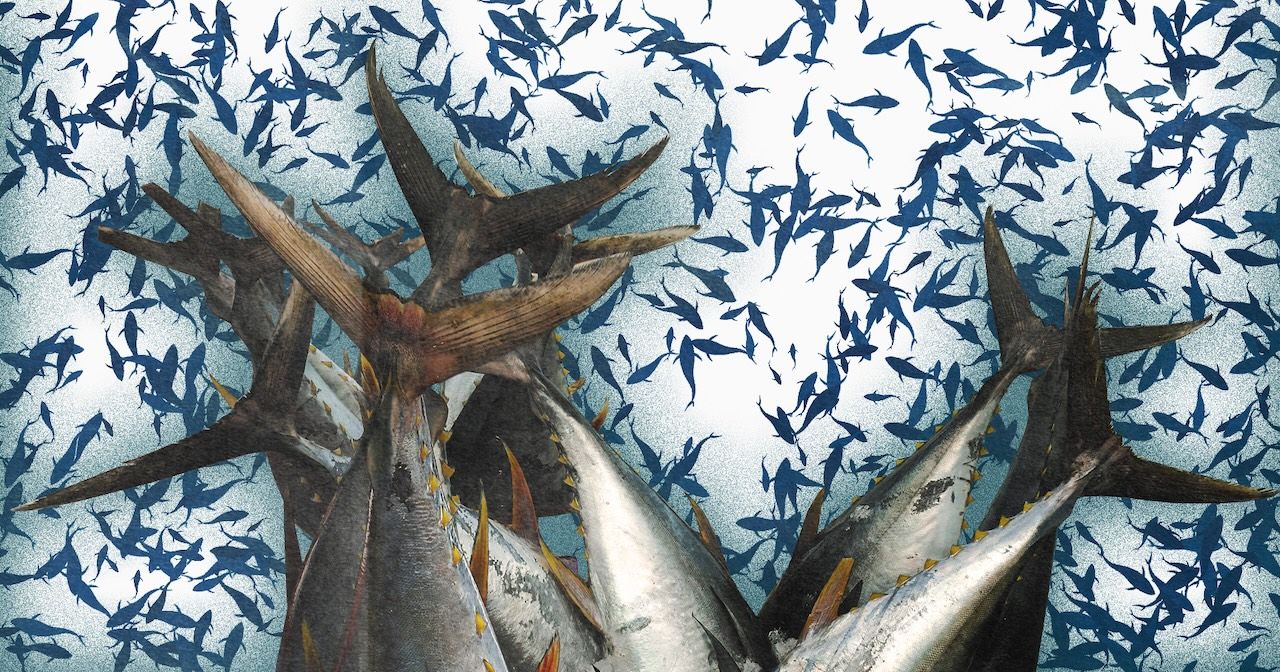
Artwork: Dosain
26 May, 17:24
The Maldives hosted the Indian Ocean Tuna Commission for the first time this month, chairing the intergovernmental body that regulates fishing in the region, and watched the European Union walk away with a yellowfin tuna quota larger than its own.
Under interim catch limits adopted at the conference, the EU’s distant-water fleet secured 73,078 tonnes, more than a third larger than the 47,195 tonnes allocated to the Maldives and dwarfing the quotas of other Indian Ocean coastal states.
The overall cap of 436,867 tonnes a year agreed in Malé was 15,000 tonnes above the level the UN-affiliated commission’s own scientists say the stock can sustain.
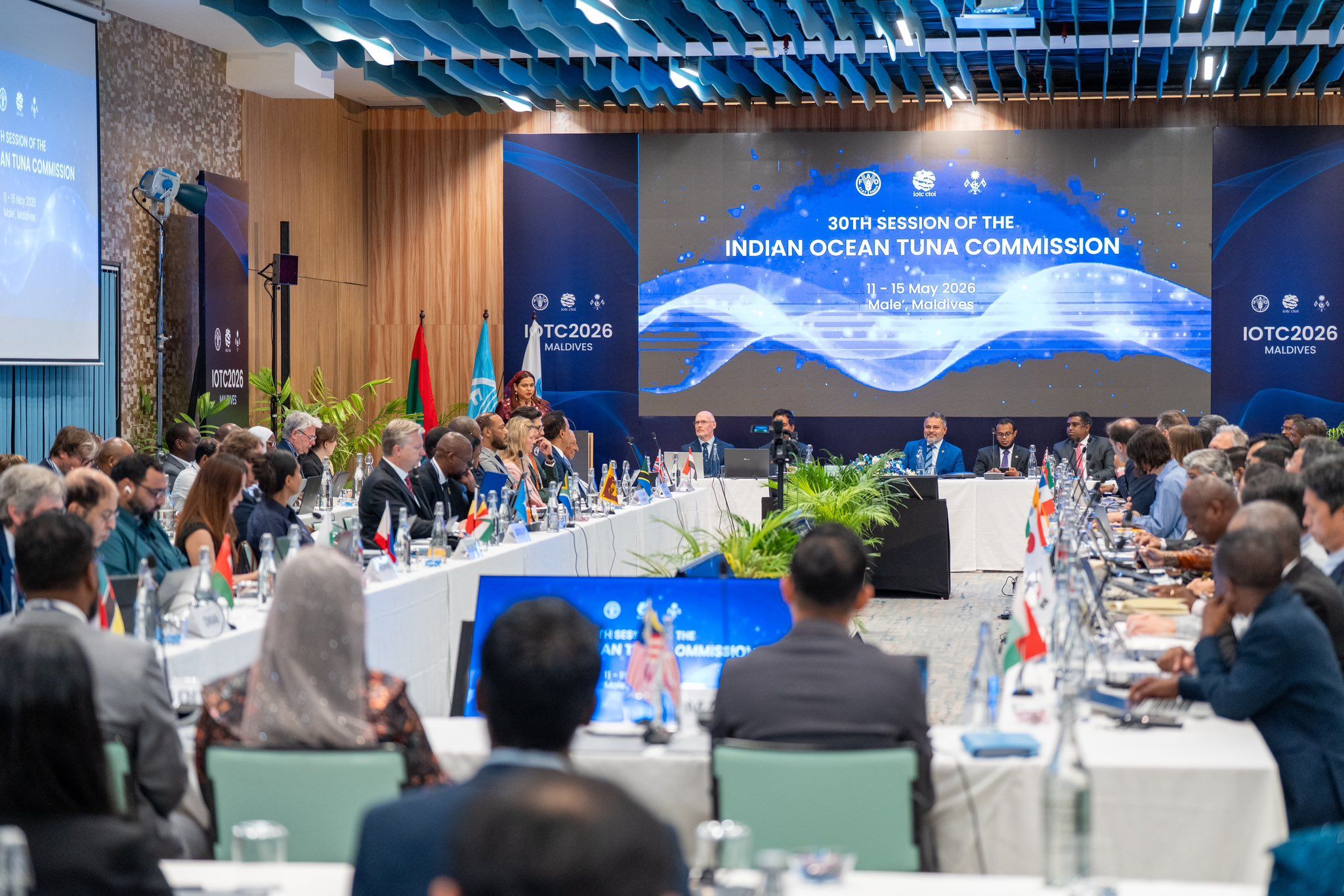
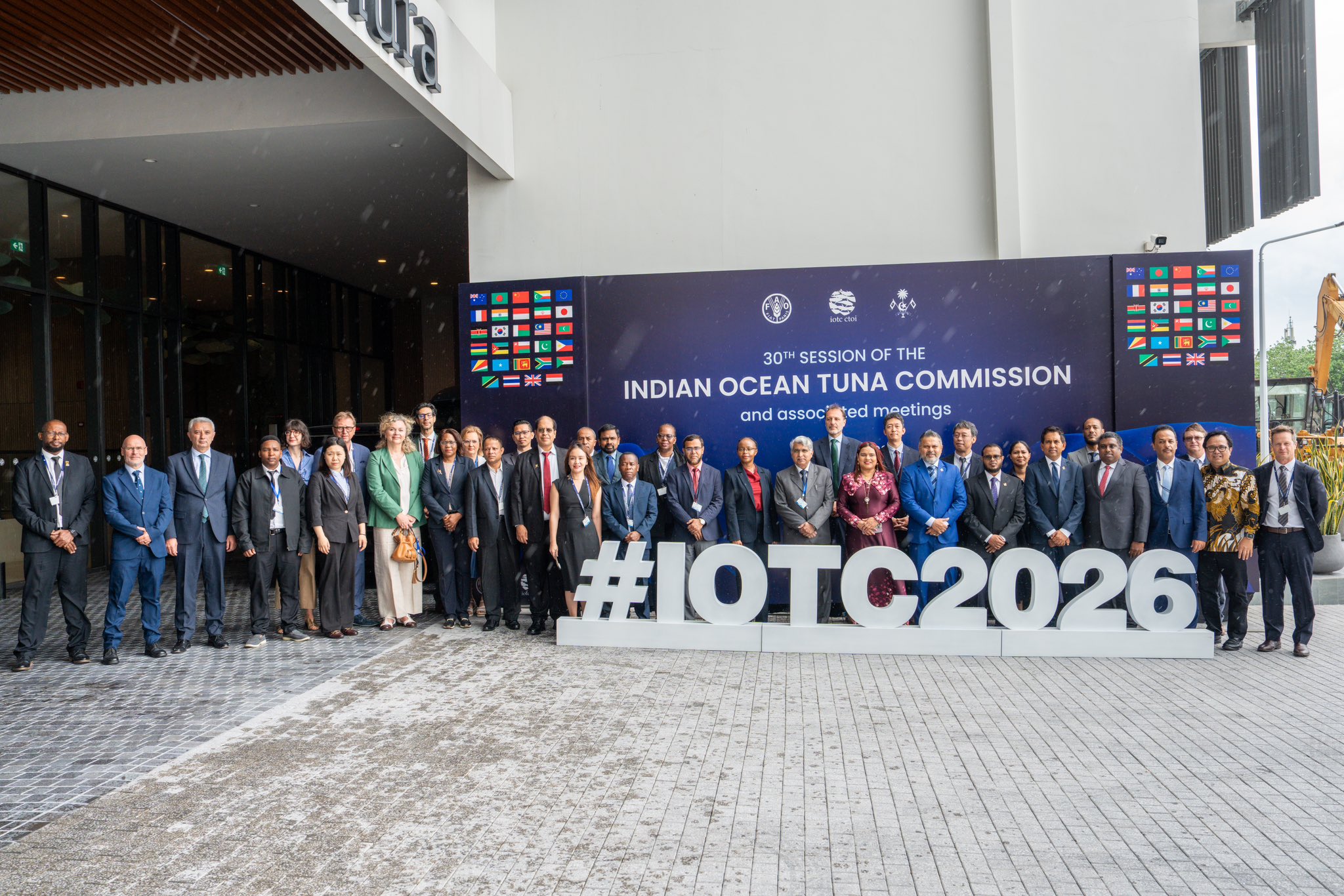
From May 11 to 15, over 200 delegates from Indian Ocean coastal states, distant fishing countries, and NGOs gathered for the 29-member group 30th session at the Barcelos Nasandhura Hotel on the capital's eastern waterfront.
The Maldives has been among a group of coastal states pushing for stricter management of Indian Ocean tuna stocks in recent years. Past efforts to regulate the use of drifting fish aggregation devices (FADs) – one of the most destructive practices for yellowfin overfishing – have been hindered by objections from the EU. Countries like Spain and France are among the largest fishers of Indian Ocean Tuna. No party tabled a fresh proposal to restrict drifting FADs at this year's meeting. An EU objection to a 2023 closure remains tied up in European courts.
“Like many Maldivians, I come from a fishing family. I come as the grandson of a fisherman and the son of a skipper. I grew up hearing stories from fishermen about patience, responsibility and respect for the ocean," Fisheries Minister Ahmed Shiyam said in his remarks at the opening ceremony. "The tradition of taking no more than the sea can offer was handed down to me and I strongly believe that it is my duty as a Maldivian and as a minister to faithfully pass it on to those who will inherit these waters after us.”
“In the Maldives, sustainability has never been an abstract concept. Long before the term became common in international policy discussions, our communities understood that the health of the ocean determines the well-being of future generations.”
The Maldives has stuck to conservation measures taken since 2016 to manage yellowfin tuna stocks, he added, noting in particular the 2019 suspension of longline fisheries.
“For small island developing states, conservation actions often carry very real social and economic consequences for fishing communities. Yet we accept these responsibilities because we recognise the importance of ensuring the long-term sustainability of the resources. We therefore hope that the efforts and sacrifices made by responsible states are fully recognised within the work of this commission,” he urged.
Despite three decades of learning how to manage shared resources, “progress at times feels slow,” observed Adam Ziyad, who chaired the proceedings in Malé. After addressing simpler issues and picking the “low-hanging fruit” in the past, the commission was now starting to discuss management procedures, interim catch limits, monitoring and enforcement, he noted.
“At the very top of this tree sits the most demanding fruit to pick: the allocation of fisheries resources. Allocation is at the heart of the commission, it tests our unity, our sense of equity and our willingness to look beyond the short term," Ziyad said.
Over the following five days, the commission held meetings into late evening to reach a consensus on a total 17 proposals tabled for discussion, of which eight were passed. These include setting interim catch limits for yellowfin tuna and swordfish as well as introducing conservation measures for mobulid rays, banning the intentional catch, retention transhipment or landing of rays.
Other resolutions include mandating the commission to maintain a record of all vessels 24 metres or longer that operate in the region, restricting at-sea transshipment solely to long-line vessels, and requiring a regional observer on board to monitor the process.
Distant fleets
Driven by fears over the collapse of Indian Ocean yellowfin tuna stocks, management of yellowfin tuna has been at the heart of IOTC negotiations in recent years.
A 2024 stock assessment concluded that Indian Ocean yellowfin is no longer overfished despite years of being in the “red.” But these findings have been challenged at the European Parliament as well as by observer groups. A new stock assessment of yellowfin tuna is due next year.
The interim catch limits for yellowfin tuna under resolution 26/01 – which established an annual Total Allowable Catch (TAC) of 436,867 tonnes for 2027 and 2028, well above the maximum sustainable yield at 421,000 tonnes recommended by the IOTC’s scientific committee – categorised members into two categories. Category A is subject to binding catch limits with a quota for each country. Exceeding the allocation would result in the deduction from future quotas (100 percent for one year of overage and 125 percent if exceeded for two consecutive years).
The Maldives quota of 47,195 tonnes per year was followed by 33,245 tonnes for Sri Lanka, 25,000 tonnes for India, 39,577 tonnes for Seychelles, 42,000 tonnes for Iran, 45,426 tonnes for Indonesia, and 25,000 tonnes for Oman.
The much higher 73,078 tonne allocation to EU fleets reflects “historical catch criteria” that reward the EU with the largest baseline share. The maths used to calculate the interim allocations favour countries that have historically caught the most tuna. French and Spanish purse seine fleets have heavily fished from the Indian Ocean for decades.
EU-owned purse seine vessels have caught over a third of all tropical tuna from the Indian Ocean in the past decade, a new report released by Blue Marine Foundation ahead of this year’s meeting showed. Highlighting the problem of “Flags of Convenience," the report pointed to European vessels flagged to Indian Ocean coastal states. There are now more Spanish-owned purse seine vessels flying Seychelles flags than the Spanish flag, the report found. Although the EU fleet is registered to more than 20 different companies, 90 percent of these vessels were beneficially owned by just seven European companies.

Drifting devices
The EU has also opposed stricter regulation of drifting FADs, a method used generously by European purse seine fleets to float aggregating devices with a satellite tracker and scoop up fish.
The EU and France objected to a landmark resolution in 2023 to introduce a 72-day seasonal closure on the use of drifting FADs in the Indian Ocean. The EU has also been accused of using diplomatic pressure to convince other countries to object to the resolution. The FAD closure resolution was annulled before it came into force when the threshold of 11 objections was passed.
Non-profits Bloom Association and Blue Marine Foundation have taken the EU and France to court over their objections. In 2025, the general court of the European Union judged the request as legitimate and asked both EU and France to reconsider. However, the European Commission has appealed the decision.
In an update to the IOTC, Bloom and Blue Marine Foundation noted that a proposal on drifting FADs had been tabled for discussion in all meetings since 2012 except the last two.
“This absence is not coincidental. It reflects a reluctance among IOTC members – including those that have consistently opposed d-FADs – to initiate new negotiations in light of the outcome of Resolution 23/02," the update stated, promising that resolution 23/02 was "not dead” until an outcome in the legal dispute.
A 2024 resolution reached a compromise with less ambitious targets for managing drifting FADs, introducing a cap of 260 buoys a single vessel can track and manage along with a separate 400 cap on the number of new buoys a vessel can acquire in a calendar year. However, the 24/02 resolution lacked a seasonal closure on the use of d-FADs, the measure that advocacy groups say is the most important measure to manage overfishing.
Closer to home
Fisheries is the Maldives' largest employer outside tourism and its second-biggest source of foreign exchange, but the government has had a tough run with the sector in recent years. After a dramatic drop in skipjack catch and exports in 2024, caused in part due to the closure of a canning factory by Ensis in late 2023 and delayed payments of fishermen protests and strikes through early 2024, fish exports recovered in 2025.
In the same year, the government considered lifting the 2019 suspension of longline fishery but relented to lobbying from environmental groups and the hand-line fisher union. However, the desire to reopen long-lining remains high in the northern atolls. Last year, the government reached a compromise by lifting a 15-year moratorium on shark fishing by legalising the fishing of gulper sharks.
In late 2025, yellowfin tuna fishers who use the hand-line method went on strike over unfulfilled pledges, demanding that the state-owned fisheries company start purchasing yellowfin tuna at higher minimum rates than private buyers as well as the provision of fuel subsidies similar to those given to skipjack tuna fishermen.
But across the board, the longstanding concern among both skipjack and yellowfin tuna fishers has been the low prices their catch could fetch. The low rates has been blamed on fluctuating global prices. But high tariffs imposed on Maldivian tuna in European markets is a key reason.
Speaking to the Maldives Independent after the IOTC opening ceremony, Fisheries Minister Shiyam characterised negotiations with the EU over the tariffs as a “big ongoing battle."
“The Maldives uses the most sustainable method. We fish in the most sustainable way, catching fish one by one, whether that is skipjack tuna or yellowfin tuna," he said.
“Outside our EEZ [exclusive economic zone], in the Indian ocean, European Union countries fish using the license given by some other states. Some of these countries are practicing a way of fishing that is unfriendly to us. It is unfriendly to our marine environment as well. Some countries use [purse seine] nets and other types of fishing [gear]. The scale or their catch is much higher for sure. But we are the world's biggest contributor of sustainable fishing, especially in pole and line fishing we contribute the most.”
“There is a huge difficulty in exporting to Europe and that is the tariff or the duty applied on the Maldives is very high. Even though we have remained with sustainable fishing, these tariffs applied on us are not something that we can accept; it is very unfairly done and continued," Shiyam said.
“If you look at our tuna fishery, none of our boats belong to a corporation. It belongs to a family or an individual, it is a very community-based activity...Our fishery is organised in a way that the rewards are distributed to families and communities. The problem is that this is still not recognised as much as it should be. We are a small nation, with a small population that depends on fisheries a lot. So I believe that our demands should be treated with a lot more priority and demands should be catered to in the international fora.”
Days after the IOTC meeting closed, Britain suspended its 20 percent tariff on Maldivian tuna, an announcement President Dr Mohamed Muizzu welcomed as a long-sought win for Maldivian diplomacy.
But the suspension was global. Pressed on social media about whether the move covered all tuna imports rather than Maldivian product alone, British High Commissioner Nick Low confirmed it did, saying a unilateral lift on Maldivian tuna would have breached WTO rules. The suspension was part of a wider tariff-relief package announced by UK Chancellor Rachel Reeves to ease pressure on British food prices caused by the Middle East conflict, and applies on a most-favoured-nation basis until the end of 2028.
Low argued the Maldives was nonetheless the "biggest beneficiary", because the 20 percent WTO rate that applied to it as an upper-middle-income country had hit its tuna exports particularly hard.
The European Union's tariffs on Maldivian tuna remain in place.
Discussion
No comments yet. Be the first to share your thoughts!
No comments yet. Be the first to join the conversation!
Join the Conversation
Sign in to share your thoughts under an alias and take part in the discussion. Independent journalism thrives on open, respectful debate — your voice matters.
Support Independent Journalism
Help us keep the news free and fearless
Give once
$
or
Become a memberfrom $5/month