

They offered to sterilise Malé's stray cats. The government never met them
A US non-profit gave up after trying for seven months to fund a sterilisation pilot.
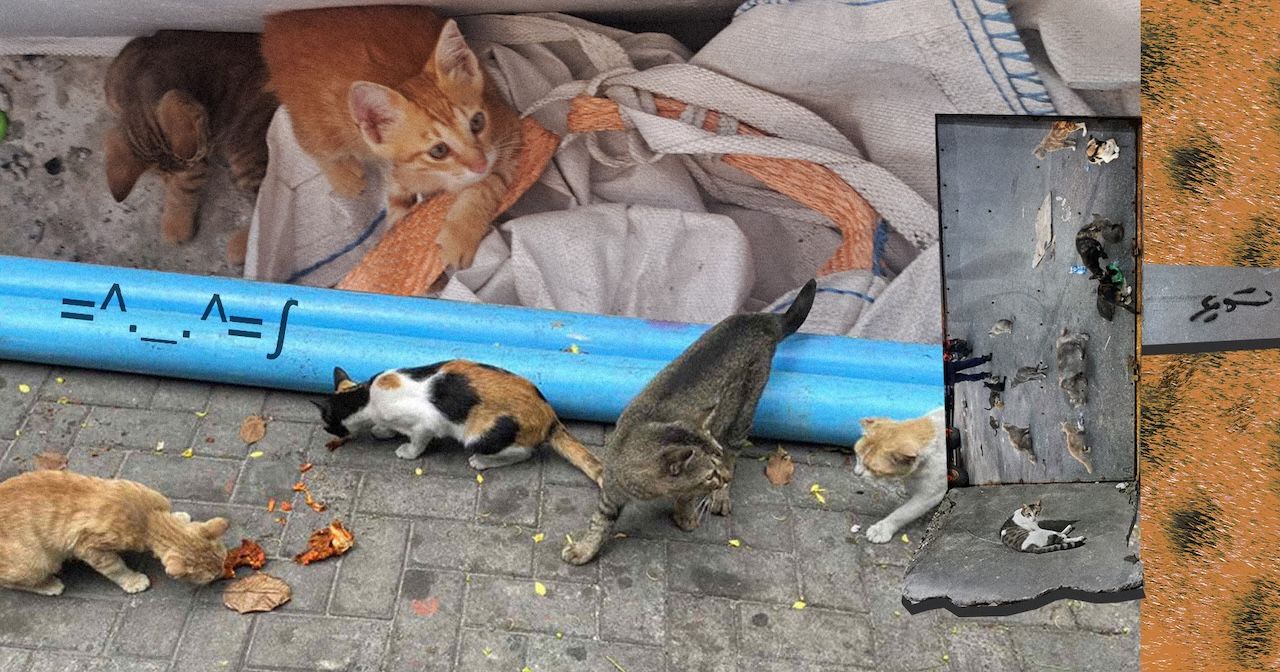
Artwork: Dosain
03 Sep, 19:22
In December, an American non-profit offered to fund a cat sterilisation initiative in the Maldives. They held one meeting with the government, received one text message and got one apology for months of silence. The required approvals were never granted. The NGO has now taken the money elsewhere.
Spay, Neuter, Protect, Teach (SNPT), a US-based animal welfare organisation, started communicating with the animal welfare ministry on 1 December 2025, offering to plan a fully-funded pilot programme for the overpopulation of cats, the organisation’s founder Jessica Cafaro told the Maldives Independent.
"We weren't asking for funding. We were offering to bring it," she said.
On 21 January, SNPT organised a video call with the ministry representatives. Cafaro said she followed the call with a written summary and informed the ministry that she would arrange travel to the Maldives. "From the moment our flights were booked, communication from the ministry stopped," she said.
Cafaro was in the Maldives from 2 to 14 March. No meeting with the ministry took place during the visit. Following discussions with vets and local animal welfare groups, SNPT conducted an assessment, identified Villimalé as the ideal location and prepared a proposal for a pilot project.
"There was only one obstacle we couldn't solve ourselves – veterinary medicine approvals," Cafaro said.
After months of silence from the authorities, SNPT cancelled its plans.
Contacted for comment, the ministry conceded "there was a lapse in communication from the ministry's side, and we acknowledge that this could have been handled better."
The government-run Olhu Hiyaa cat shelter in Hulhumalé started taking cats off the street last year. But vets and advocacy groups say what’s really needed to control the exploding cat population is a targeted trap, neuter and release (TNR) programme aimed at sterilisation, the kind that SNPT proposed.
At a press briefing on Tuesday, Fisheries and Agriculture Minister Ahmed Shiyam said the government is evaluating a proposal to develop a dedicated "cat island" to address cat overpopulation in the Greater Malé Region. Shiyam, who took over the cats mandate after the former agriculture and animal welfare ministry was dissolved in April, said Olhu Hiyaa's capacity is being increased to 500 and that the cat island would be a long-term solution.
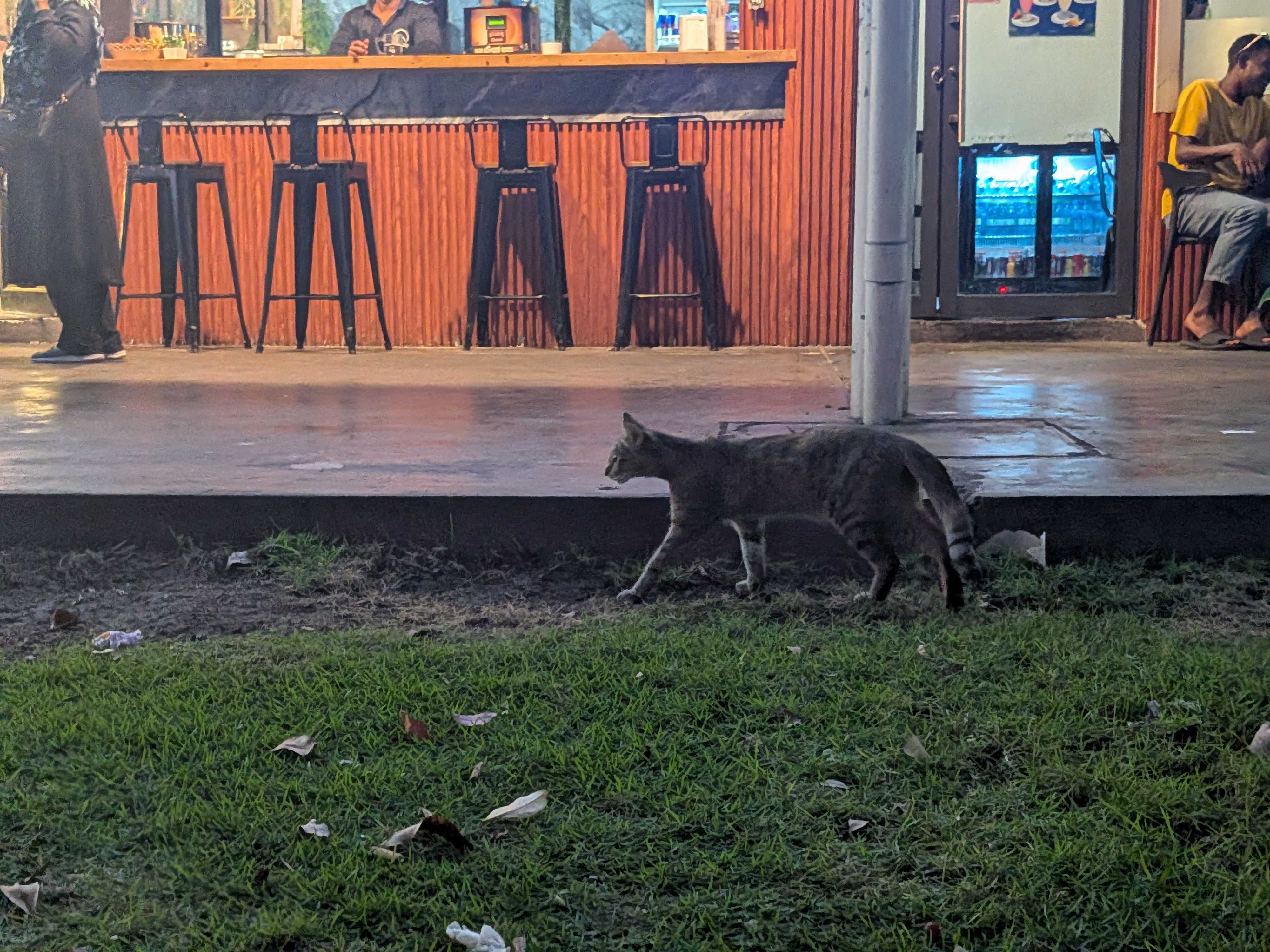
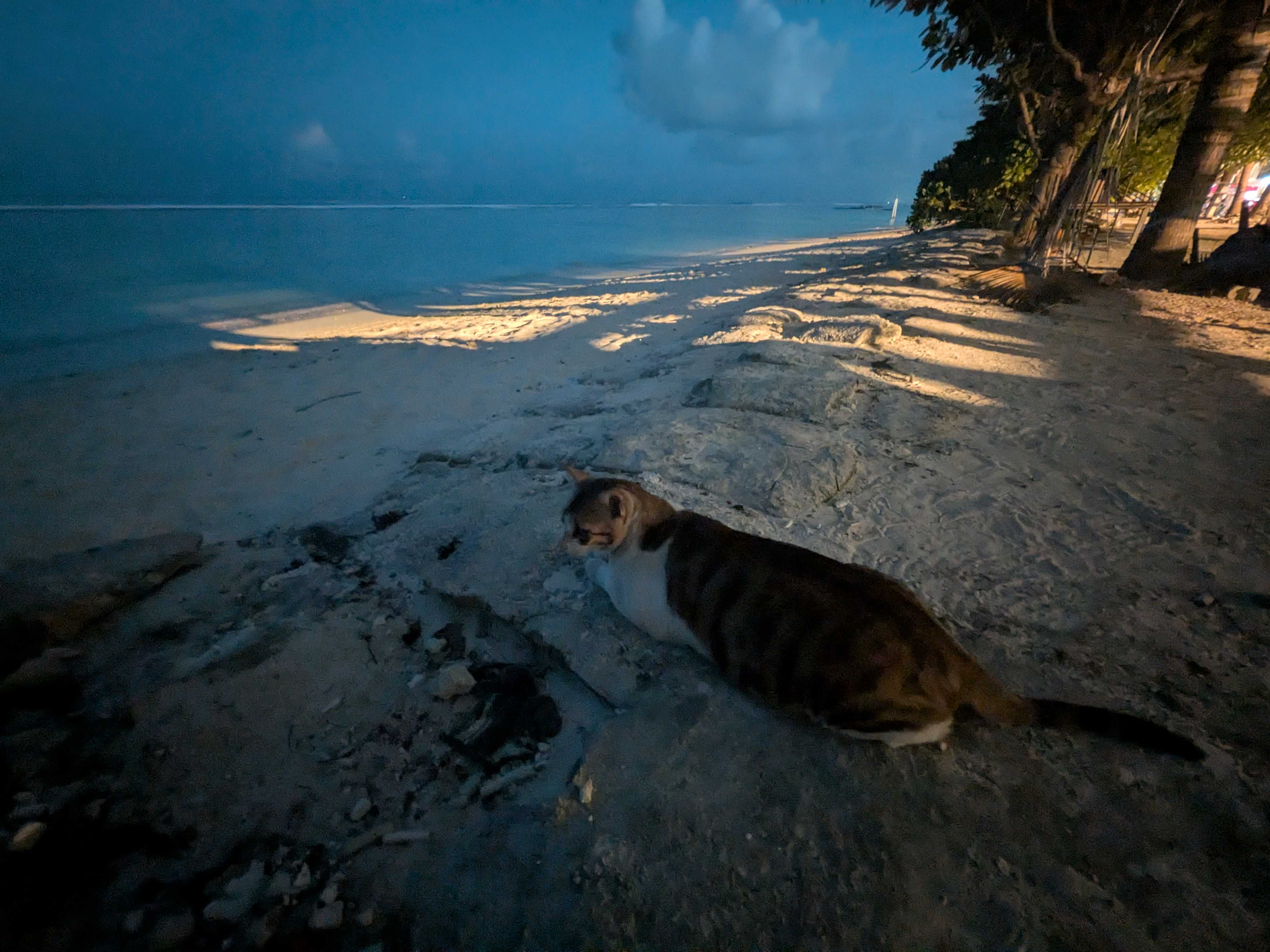
The subject of stray cats is a contentious one. A dedicated group of volunteers and feline advocacy groups carry out daily feeding operations across Malé. But a sizeable segment of the public sees street cats as a nuisance and health hazard.
Failure to communicate
SNPT's Zoom call in January was with Dr Hussain Misfah Saamee, a veterinary consultant with the then-animal welfare ministry.
"He spoke candidly about the challenges facing animal welfare in the Maldives and encouraged us to come sooner rather than later so we could continue the discussions in person," Cafaro said.
During the conversation, Cafaro said Misfah described the Maldives as a "lost cause".
“I told him I didn't believe that. I explained that with the right team, the right planning, and the right resources, I believed meaningful progress was possible. By the end of the call, we felt confident enough to move forward and book our flights," she said.
Despite repeated attempts to arrange the meetings discussed over the call, "we never met with anyone from the ministry," she said. In the Maldives, the group visited several islands and met with vets and local organisations.
"Those conversations also helped us identify the practical challenges of implementing a pilot," Cafaro said. "There were certainly many hurdles, but every one of them had a solution. Housing for volunteers. Travel logistics. Veterinary staffing. Equipment. Community outreach. Data collection. SNPT was prepared to fund and coordinate all of it."
When SNPT sought the government's help with veterinary medicine approvals and regulatory support, they received no response. "Everything else, including funding, experienced veterinarians, volunteers, surgical equipment, medicines once approved, travel, accommodations, and operational costs, would be provided by SNPT," she said.
During the visit, Dr Misfah contacted Cafaro once but remained unresponsive to subsequent messages and calls, she said.
Dr Misfah told the Maldives Independent he was not in a position to comment. His contract has since expired and he is on leave from the ministry, he said.
SNPT said it also submitted a detailed proposal to the Malé City Council and that a request to facilitate a meeting went unanswered.
In early August, SNPT decided to abandon the project. On 12 August, after that decision had been taken, Cafaro received an email from the ministry apologising for the lack of communication and for missing the chance to meet her while she was in the country.
"What makes this important isn’t that one non-profit couldn't launch a project. It's that local veterinarians wanted to expand sterilisation, outside funding was available, experienced veterinary teams were ready to travel, and a fully-funded proposal was on the table. Yet nothing happened," she said.
In a detailed response to questions from the Maldives Independent, Fathimath Thauba Hanif, a senior veterinary assistant at the ministry, acknowledged that "communication was subsequently missed after an initial period of engagement."
She did not attribute the lapse to either a decision to reject the proposal or the merger with the fisheries ministry in April.
"The ministry did not intentionally stop communication with SNPT Global. Bilateral communication deferred due to the ministry's involvement in relocation of cats from Villimalé to animal care facility in Hulhumalé Phase 2. The ministry wasn’t aware of their visit and desire of organising a meeting with the ministry at that time.
"As soon as the ministry came to know about the matter an apology mail was sent to them for the unintentional oversight made by the ministry. However, it was too late. The ministry was not informed that SNPT Global had decided to cancel conducting the programme in Maldives."
The problem
The Olhu Hiyaa facility was built by the Malé City Council following years of complaints from both cat lovers and less sympathetic members of the public. Uncontrolled overpopulation of stray cats has been a long-standing issue.
Discussions to build a shelter took place as early as 2023. It opened in late 2024. Concerns over particular cat colonies such as those near the industrial village and the Salman mosque in Malé had been growing for years by then. There were also reports of cat disappearances in 2023 and frequent calls to stop abusing cats. Even after the cat shelter was established and handed over to the ministry last year, there were reports of unexplained cat disappearances.
Minister Shiyam said on Tuesday that the shelter is currently housing 281 cats. Only 35 cats were brought in August. Sterilisation efforts seem equally limited with 12 last month.
The estimated cat populations are many times larger. The most recent count available to SNPT put the free roaming population of Malé at 2,000 in 2024. The number in Villimalé was 600.
Cat populations can grow extremely quickly in the absence of sterilisation, Cafaro explained. A sustained net population growth of 10 per cent in Villimalé would result in 1,560 cats in 10 years. A net 20 per cent growth would result in 3,715. An administrative ward of the capital, Villimalé is a small island of about 0.2 square miles.
"Sheltering alone cannot stop an unmanaged population from continuing to grow. With sterilisation among free-roaming cats appearing to be extremely limited, we saw an opportunity to explore a solution that could address the problem further upstream: preventing new litters through high-volume spay/neuter," she said.
Cafaro described the population figures as illustrative projections rather than forecasts, noting that actual growth would depend on kitten and adult mortality, food availability, carrying capacity, abandonment, migration, disease and any sterilisation carried out in the meantime.
Hussain Hisham, the vice president of Welfare for Island Cats, backed sterilisation as the path forward.
"We have also believed that TNR [trap-neuter-release] programmes along with awareness activities is the best way to tackle the problem of cat overpopulation, if you look at the bigger picture. Almost every other country tackles this issue this way," he told the Maldives Independent.
But unlike other countries, investing in animal welfare is less popular, he suggested.
"The biggest problem whenever we talk about these kinds of programmes is the problem of allocating a budget for animals. It becomes unpopular and people complain that it is a wasteful expense to be spending on cats. But this was a project, a first of its kind, that could have been completely funded externally,” Hisham said.
When SNPT visited in March, Welfare for Island Cats met the group along with members of Zoophilist Maldives and Nine Lives Raajje, he confirmed.
"They brought supplies like cat food and food bowls to donate to Olhu Hiyaa, but they were not able to meet with the ministry. They ended up donating it to us,” he said.
The project
During their visit, SNPT conducted visual field assessments on multiple islands and identified recurring concerns around uncontrolled animal populations. They evaluated logistical feasibility for the pilot project and explored long-term opportunities for sustainable population management.
"Villingili emerged as the strongest candidate for a pilot project," Cafaro said, referring to Villimalé, the capital's pedestrian-friendly suburb, eight minutes by ferry from Malé.
SNPT's proposal to the city council, which also manages Villimalé's municipal affairs, outlined plans to establish an animal population baseline, improve access to veterinary care and medication, and to conduct humane sterilisation.
The pilot project in Villimalé was planned in three phases: Phase 1 for an initial assessment, population count and provision of basic veterinary care; Phase 2 to coordinate medication import approvals, secure supplies and prepare for sterilisation; Phase 3 to implement high-volume spay and neuter procedures, followed by monitoring for post-op recovery and evaluation of project effectiveness.
The project envisioned caring for stray cats in need of treatment from diseases, including deworming medication, flea and parasite prevention and treatment, and basic supportive veterinary care.
"Villingili was intended to serve as a measurable pilot that could generate the data needed to build a repeatable model for other islands across the Maldives," Cafaro noted.
Rather than relying solely on isolated or small-scale sterilisation efforts, the information collected during the pilot project could then have provided the Maldivian government and local animal welfare organisations with a data-driven framework that could be adapted and replicated.
"In other words, Villingili was intended to answer a larger question: What does it actually take, in surgeries, time, people, infrastructure, and cost, to bring an island's free-roaming cat population under control?" she said.
The project proposal noted one of the primary logistical considerations would be "obtaining approval and access for required veterinary medications and supplies necessary to conduct sterilization procedures safely and effectively."
For approvals and access as well as for compliance with regulatory requirements, identification of suitable facilities and operational logistics, the group needed the support of government agencies.
"SNPT had not formally allocated funds to the Maldives project, as an allocation of that size would have required approval by our Board of Directors after the necessary pathway for the medications required for the pilot had been established," Cafaro said.
The group estimated that the three-phase programme would have cost around US$50,000–80,000.
"The project was intended to be fully funded by SNPT and its supporters, rather than the Maldivian government," she noted.
According to the SNPT website, it previously raised US$10,000 for Isla Animals, a Mexican animal welfare non-profit, to carry out 340 sterilisation surgeries. SNPT’s five-member board includes a doctor of veterinary medicine and a registered veterinary technician.
Regulatory roadblocks, not rejection
After acknowledging the lapses in communication in its response to the Maldives Independent, the ministry pointed to regulatory hurdles surrounding veterinary drugs as the primary obstacle.
"In particular, ketamine, which may be used as an anaesthetic for cats during sterilisation procedures, is a controlled drug regulated by the Maldives Food and Drug Authority (MFDA),” Thauba, the ministry's senior veterinary assistant, said.
She explained that existing regulations prohibit ketamine use outside registered facilities, "particularly in an uncontrolled environment such as a TNR programme." MFDA places strict restrictions on using large amounts of ketamine for mass neutering even inside an approved establishment, she said.
But MFDA may potentially allow flexibility for a TNR programme inside a registered facility, she said.
"This was particularly significant because the proposed programme involved a large-scale operation in a community setting. It therefore required coordination not only with the ministry but also with the relevant regulatory authorities to establish how the programme could legally and safely be implemented," she said.
Despite the regulatory hurdles, the ministry did not intend to reject the proposal, she stressed. "This was not due to a decision to reject the proposed programme," she said.
While acknowledging the value of sterilisation and TNR as a population control approach, she emphasised that community-based operations introduce "additional regulatory, veterinary and operational considerations, particularly where controlled medicines are involved."
The initiative proposed by SNPT was "significantly broader than a small pilot intervention and would have required extensive coordination with multiple government authorities and stakeholders."
In the meantime, the ministry is continuing its "long-term approach" by bringing cats from Villimalé to the Olhu Hiyaa shelter in Hulhumalé for veterinary care and sterilisation, she said. This was being done for the broader objective of "gradually reducing uncontrolled reproduction and establishing a more systematic approach" to managing populations, she said.
Any future large-scale program, she said, would require formal frameworks governing medicine handling, veterinary oversight, treatment protocols, waste management, and emergency care and would require "substantial consultation and coordination with policymakers and relevant authorities".
Since SNPT withdrew, sterilisation work of the kind it proposed has begun elsewhere in the country. Erika Veterinary Clinic, whose veterinary team met Cafaro during her March visit, has started conducting TNR in Addu City, she said.
Although it has decided to move away from its plans, SNPT said "the door is not permanently closed" for the Maldives.
“In our published report, we specifically outlined what would need to be in place for SNPT to consider returning in the future," Cafaro said.
"The requirements are relatively straightforward considering the scale of what SNPT was prepared to provide, and we stated in the report that if those basic conditions are established in the future, the Maldives is welcome to approach SNPT for reconsideration."
Discussion
No comments yet. Be the first to share your thoughts!
No comments yet. Be the first to join the conversation!
Join the Conversation
Sign in to share your thoughts under an alias and take part in the discussion. Independent journalism thrives on open, respectful debate — your voice matters.
Support Independent Journalism
Help us keep the news free and fearless
Give once
$
or
Become a memberfrom $5/month

