

Measles cases rise sixfold in three weeks as Maldives outbreak accelerates
It is spreading among adults who never completed a second dose.
Artwork: Dosain
09 Jul, 17:15
Confirmed measles cases in the Maldives reached 121 on Tuesday, a sixfold rise in three weeks, after the Health Protection Agency reported 55 new infections in a single week and urged anyone who has not completed two doses of the vaccine to attend a vaccination centre. The total for the year stood at 20 on June 16.
Beginning in early May, it is the largest outbreak recorded since the World Health Organisation certified the Maldives and Bhutan in June 2017 as the first countries in the South-East Asia region to have eliminated measles, three years ahead of a regional target. The Maldives had reported no indigenous case since 2009.
Of the confirmed cases, only four were children, one of them a five-month-old too young for any dose. Childhood coverage remains high and the disease has largely spared the young. The outbreak is instead concentrated among adults, exposing a gap that predates the first case by more than a decade.
The immunity gap
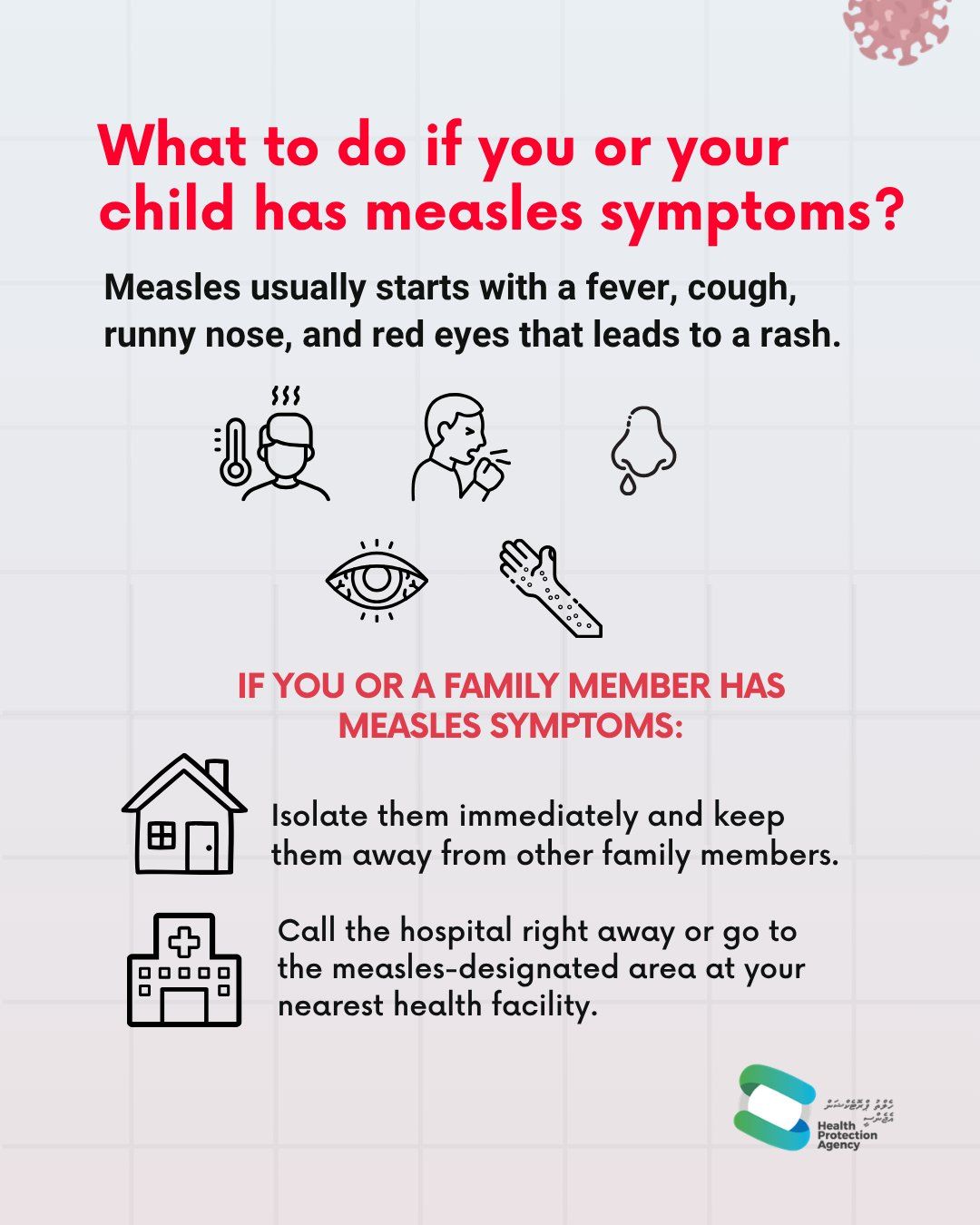
Measles is among the most contagious diseases. The virus spreads through the air when an infected person coughs or breathes. It causes fever, cough, red eyes and a body-wide rash, and can lead to pneumonia, blindness and swelling of the brain. Administered in early childhood, two doses of the measles-rubella vaccine confer protection for life.
The Maldives introduced the second dose of the measles vaccine into its routine schedule around 2007 or 2008. The first dose is given at nine months and the second at 18 months. Children who received both under the routine schedule are now about 19 or younger.
Older adults were reached instead through vaccination campaigns, which achieved coverage of around 80 percent, said Dr Ahmed Faisal, a paediatrician at Indira Gandhi Memorial Hospital. That left about a fifth of the population without a second dose. Neither a catch-up drive for people under 25 in 2017 nor a mass campaign in 2020 reached everyone. People missed it for various reasons such as domestic or overseas travel.
"That is what we call an immunity gap," Dr Faisal explained. Interrupting measles transmission requires coverage of 95 percent or above. Below that threshold, a population is not protected. When the virus is imported – from Bangladesh or India, where it is spreading rapidly – it finds the unprotected 20 percent.
The difficulty in achieving herd immunity is compounded by misconceptions among adults, he suggested. "Sometimes when it's given to adults, they don't see it as too important, or might feel it's not necessary," he said. "What's most important here is getting the vaccine to cover the immunity gap in order to stop the spread."
On the vaccination status of the infected, Dr Faisal deferred to the Health Protection Agency, which has not responded to questions shared by the Maldives Independent via phone call and email on Wednesday afternoon.
Appearing in parliament earlier on Wednesday, Health Minister Geela Ali downplayed the outbreak. Asked by opposition MP Dr Ahmed Shamheed whether the government had failed to control measles, she acknowledged the spread and said cases had been concentrated in the Malé region. "Because measles is contagious within a short period, the recovery period will also be very short. So this isn't a disease that is spreading extraordinarily or something that we are not able to control," she said, adding that efforts to contain it were under way.
The minister declined to answer a questions about an alleged shortage of testing kits, saying she had not come prepared to answer.
The response
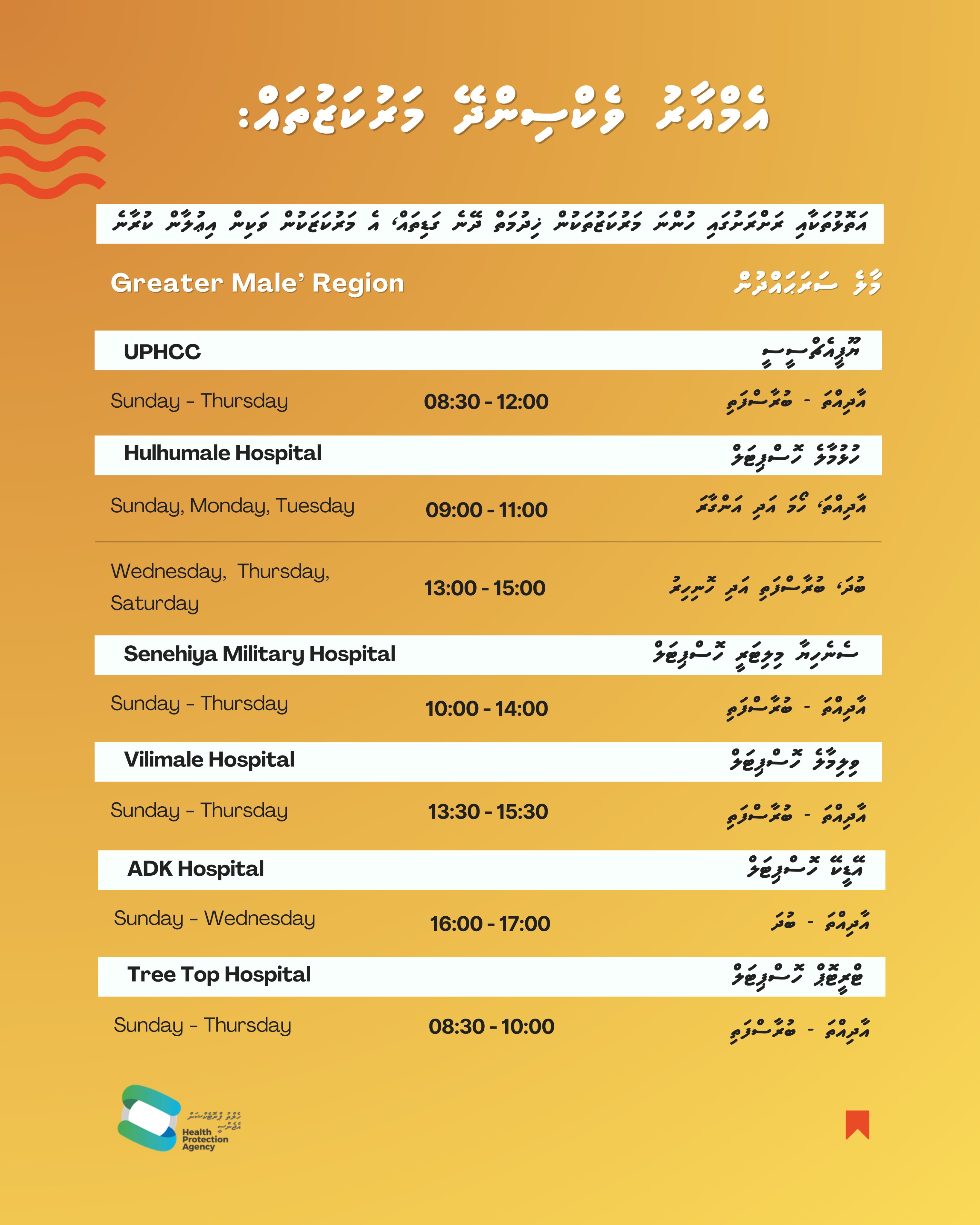
The HPA launched a measles-rubella vaccination drive at the end of June. By last Tuesday, 5,495 people were vaccinated. India dispatched 20,000 doses of measles-rubella vaccine and around three tonnes of medical supplies in mid-June, when the confirmed total stood at 15. On Wednesday, UNICEF donated 28,000 doses to support the outbreak-response immunisation drive.
Alongside the drive, the HPA is contact-tracing infected people, testing, and sending samples to IGMH and abroad for genotyping, which would establish whether the virus circulating in Malé is the same lineage spreading in Bangladesh, and whether individual cases are linked.
The drive, which began by targeting people under 30 and healthcare workers, has widened as the outbreak has grown. A third phase, running from July 7 to 30, opened the vaccine to everyone under 49 at designated centres nationwide. The expanded range now covers the 15-to-35 group Dr Faisal had urged to complete both doses.
On Sunday, the Maldives National University launched its own outbreak response immunisation programme for a campus community of more than 8,000 students and around 700 staff, a population that sits squarely within the adult age group the outbreak has hit.
What is at stake
The hard-won measles-free status is not permanent. Dr Faisal pointed to Sri Lanka, where the virus spread for more than a year before the country's status was withdrawn.
To hold the line, transmission must stop. Two incubation periods of at least six weeks each must pass with no new case. "If it goes beyond 12 months, we will lose elimination status," Dr Faisal warned.
The margin is narrow because measles is extraordinarily contagious. Its basic reproduction number is between 16 and 18, meaning a single case can infect that many unprotected people. The virus lingers in the air of a room for up to two hours after an infected person has left it.
For those over 50, there is a measure of natural protection. Most will have caught measles in childhood, before elimination, and cannot catch it again. "A lot of people when you ask will say, 'I caught it as a child,'" Dr Faisal said. "For example, when you ask your grandmother."
Not a mild disease
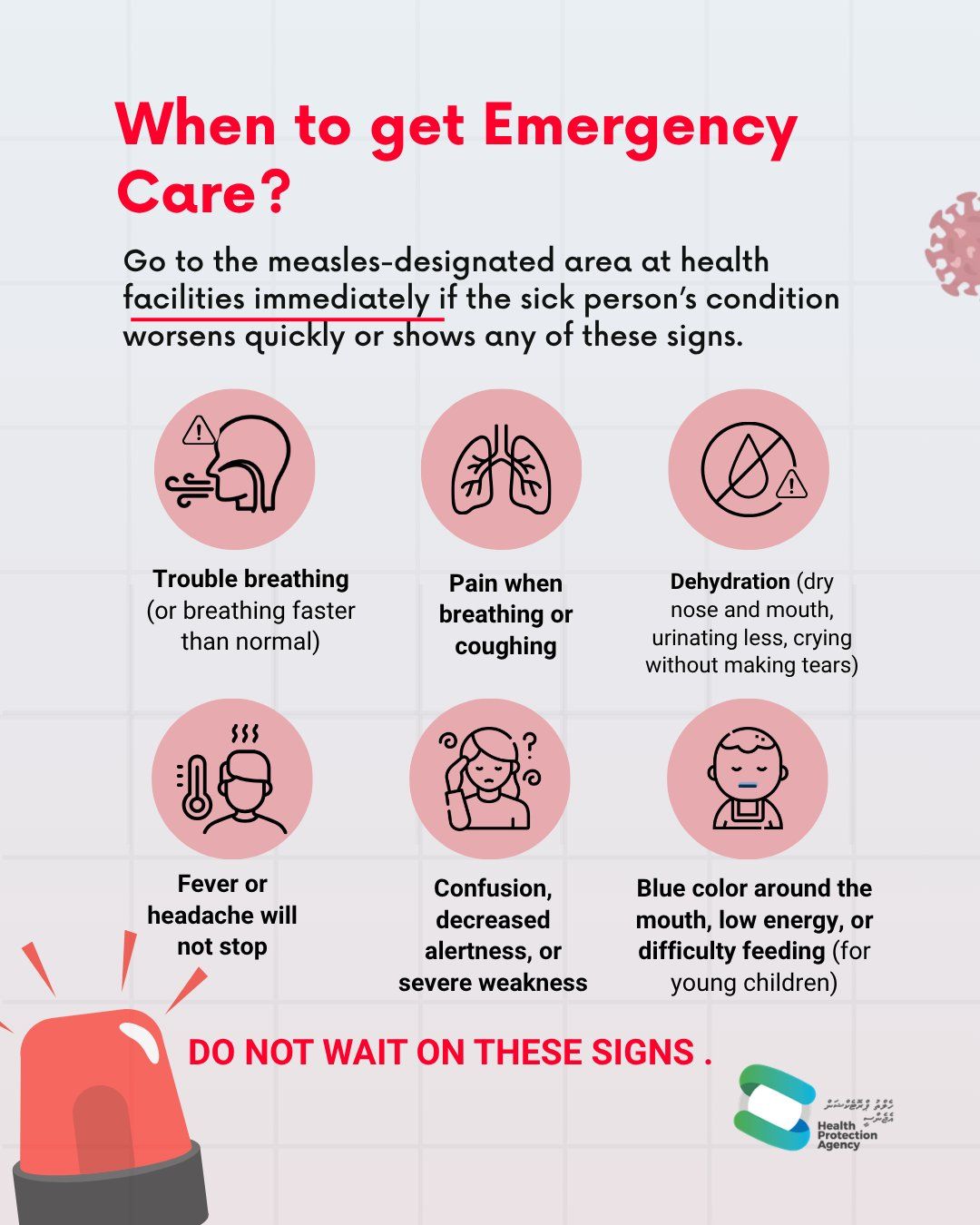
Three children have been admitted to IGMH with fever, vomiting and fatigue. Dr Faisal was cautious about calling measles mild.
"If a person doesn't die, some people might not see it as that serious. But I feel it is still big," he said. Infected children miss school; parents miss work; patients must be isolated and treated with personal protective equipment. In some cases, hospitalised children are put on a drip. Some complications appear only later. Cognitive impairment has been documented as long as a year after recovery. More severe outcomes include pneumonia, blindness and encephalitis, rarer conditions that become more likely as case numbers climb. Complications are also more likely among people with underlying conditions such as diabetes or kidney disease.
The Maldives has so far been spared the worst. In Bangladesh, Dr Faisal said, the disease has killed around 500 children, most of them infants, in a country with weaker health infrastructure. "But God willing, we are not seeing the deaths they're seeing in other places."
The import question
Because the Maldives has no endemic measles, every outbreak begins with an imported case: an infected traveller arriving or a Maldivian catching the disease abroad. Onward transmission is then a function of the domestic immunity gap, but the spark comes from outside.
That has led Dr Faisal to argue for checking measles vaccination status as a condition of work visas, and for monitoring symptoms in visitors. He casts it as a standard travel-health measure rather than a novel imposition, noting the yellow-fever requirements many African countries apply and the vaccination conditions attached to UK student visas. "This is something we have been talking about for the last 10 years," he said.
Pressed on whether such a policy would unfairly place responsibility on migrant workers, most of whom come from Bangladesh, he referred to mandatory medical checks already in place and stressed that measles is not a Bangladeshi problem. There is a large outbreak in the United States while several European countries, the United Kingdom and Canada have lost their own elimination status, he said.
"It's just a policy decision that needs to be made," he said.
Measles cases have climbed across the region and beyond, a rise attributed in part to immunisation coverage lost during and after the Covid-19 pandemic.
The Maldives has its own strand of vaccine scepticism: a small but persistent online movement that treats the sudden deaths of young people as evidence against the Covid-19 vaccines, a claim official mortality data did not support. Health officials have warned that such scepticism could erode the coverage that had eliminated polio and measles.
Reaching elimination in 2017 took years of effort, including vaccinating older generations, Dr Faisal said.
"It was a big achievement, so we need to work to maintain that. If we don't, it will be very easy to be lost, because measles is the most contagious virus," he said.
He returned to the current total of 121: "It is a lot in proportion to the population."
Discussion
No comments yet. Be the first to share your thoughts!
No comments yet. Be the first to join the conversation!
Join the Conversation
Sign in to share your thoughts under an alias and take part in the discussion. Independent journalism thrives on open, respectful debate — your voice matters.
Support Independent Journalism
Help us keep the news free and fearless
Give once
$
or
Become a memberfrom $5/month

