
Born abroad, shut out at home: a Thoddoo family's 20-year wait for land
Former council president denies scrapping their registry to cost them plots.
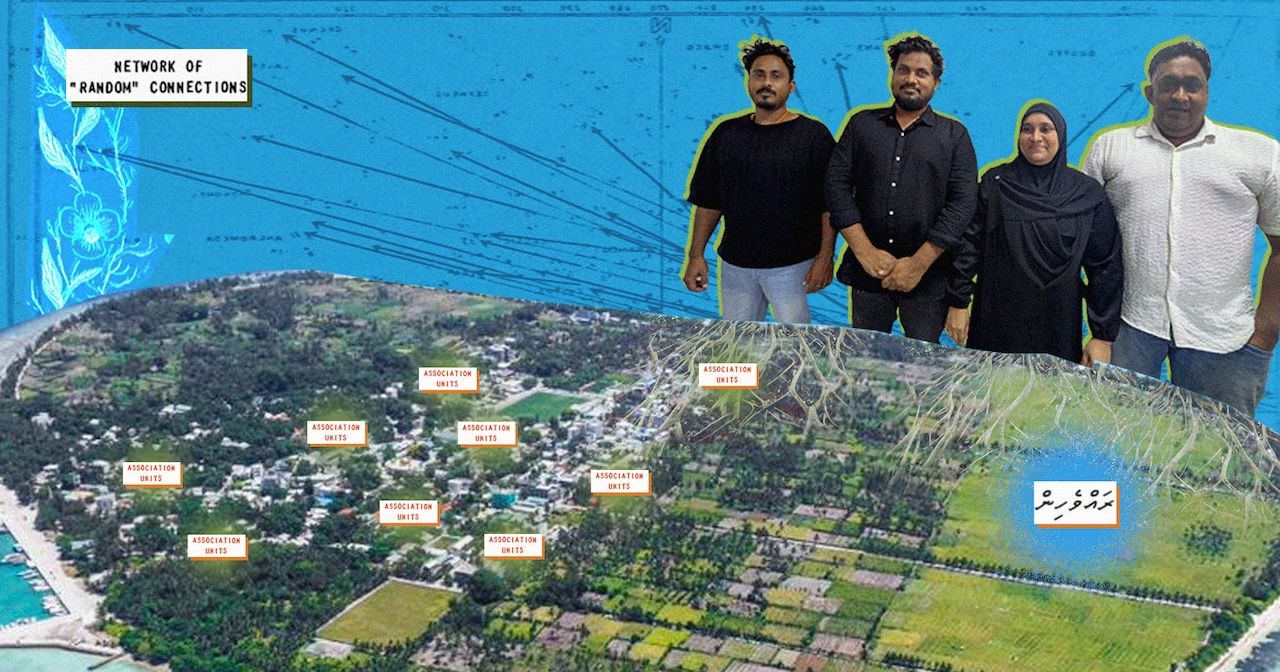
Artwork: Dosain
24 Sep, 19:23
At 9am on 31 August 2013, a Thoddoo council official showed Jaffer Sodiq a plot of land and told him to mark a boundary. By 11am, residents of the island started gathering to protest in front of the council office. The council took the land back later that same day.
Eleven years later, the Thoddoo council abolished a special registry created for Jaffer's family. The council president who led the move told the Maldives Independent this week that it was done after Jaffer had been awarded a plot in 2017. But his siblings, all of whom are Maldivian citizens who moved to Alif Alif Thoddoo from India with their father, still have no registered address despite living on the island for 20 years.
Jaffer and his siblings were in Malé this week, sharing their story with the media and pressing the authorities to intervene. Their case raises questions about how island councils consider birthplace when allocating scarce land. Jaffer alleges the special registry was abolished to exclude his siblings from Thoddoo's land allocation schemes, which award 50 points to those born on the island. Ahmed Karam, the former council president, denies this. The family says it is now considering legal action.
Jaffer, a leading teacher at Thoddoo school who teaches Arabic and Islamic studies, is one of eight children born to Ali Waheed Mohamed, known as Dhon Alibe, a Maldivian man from Thoddoo who moved to India in the 1960s.
Alibe returned to Thoddoo with his family in 2006. His children were put on a dhaftharu (temporary municipal registry) after the Department of National Registration instructed the then-island office to create a registry specifically for identification purposes of the family.
After several years of trying, Jaffer received a plot of land in 2017. But his siblings remained on the registry. The council passed a resolution to dissolve the registry in 2024. Jaffer alleges the decision was “personal” and orchestrated by then-council president Karam to cost his siblings points.
"Every time there has been a land scheme, the usoolu [guideline] is deliberately made in such a way that our family in particular would score less," Jaffer told the Maldives Independent. "At first the guidelines stated that someone born in Thoddoo would get an additional 20 points, in the latest schemes it’s raised even higher to 50 points. So we started asking that we get points for the period we have been on the dhaftharu registry, and the council decided to dissolve the registry.”
Jaffer said the family faces discrimination from the community and its institutions when applying for jobs or seeking promotions. They are often described as "ekkala India meehun" (those Indian people), he said.
Home
In a Heyyambo interview on TVM during the early 2000s, Dhon Alibe recounted how he travelled to India on a boat around 1965 to pursue higher education. He settled in India and lived there for 42 years. He worked as a teacher and an Imam. He married an Indian woman and had eight children.
Jaffer said his father left behind a plot of land registered to his name under the care of his uncle.
"During that time, our uncle wrote to dad saying that the government was trying to take the land because no one was living. So dad wrote back telling uncle to build a small house in the corner of that plot for the uncle’s child so that this land would not be taken away and that when he returned he would take the rest of the plot and leave that corner for our cousin," Jaffer said.
"So when we came back, dad thought that plot would still be there. But when we came back the entire plot was registered under the name of the uncle’s children, and it was all done. So it was all actually an atrocity done within the family," he alleged.
"Our extended family is big in Thoddoo so while dad was away, they had spread the word that he had gone to India and become 'lost.' But that was not true, he regularly wrote to our uncle, he sent news after he married our mother and after he had children. He would go to the studio, take pictures of all of us when we were born and send them to our uncle. When we moved back we found an album with all the same pictures that we had.
"He even wrote to President's Office, atolls ministry and government ministries when he heard they were trying to take the land plot away, informing that he was living abroad and he had children who were studying and that he would come back."
According to Jaffer, his father tried unsuccessfully to negotiate with the family to get the land back. Alibe was over 80 years old at the time.
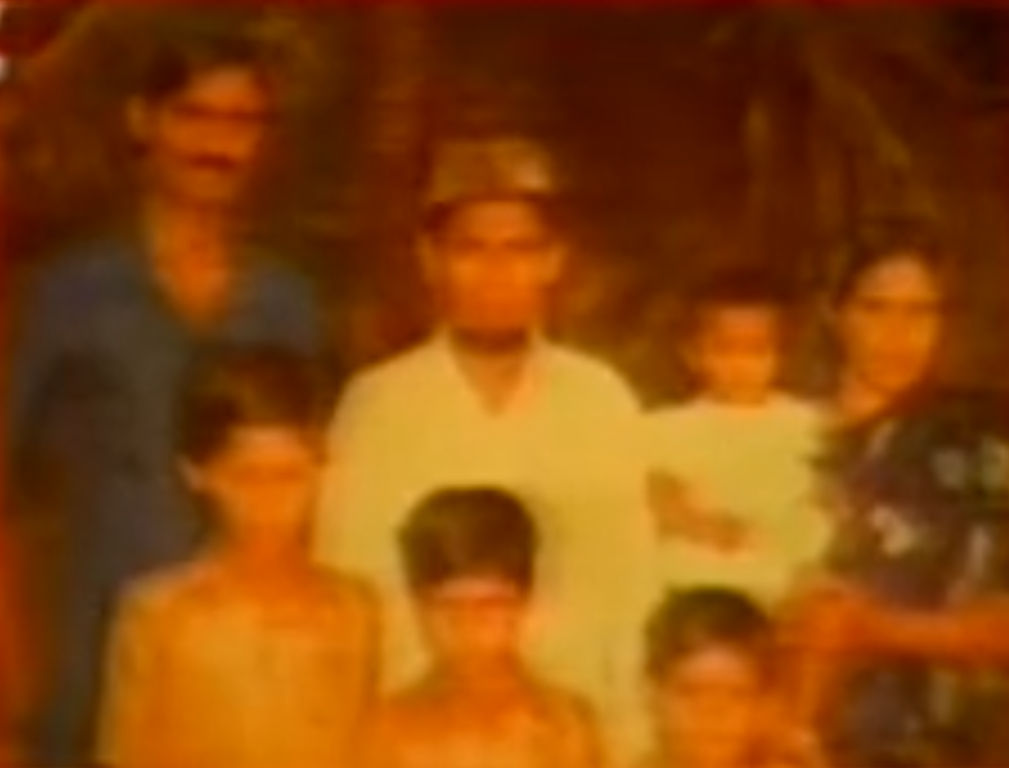
"When we moved back, the land was registered under other people's names and we had nowhere to live. So he got very depressed. He passed away less than a year after we moved back. He had a heart attack...That period is hard to forget, the difficult time we had to go through," Jaffer recalled.
"We were all young...We had lived our whole life in another country, and moved to a different country. At first, it was so difficult, the culture was not the same."
Jaffer said the family moved between homes of different family members.
"We got registered in four different houses of family members while dad was still alive. But every time, something happens with the family and we would be cut from the registry. After dad passed away, no one would agree to take us on their registry. We were alienated and lonely. We were all young, and only us who felt it could understand how much of a psychological toll something like that would take," he said.
"After we came of age, learned the local context, laws and regulations, we went to the island office, came to Malé and met DNR and HRCM [Human Rights Commission], and finally came to an agreement to make a specific registry in Thoddoo island office specifically for our registration."
The family also asked the government to provide compensation for the land that was registered to the uncle’s children. The central government asked the Island Development Committee to make a decision on allocating land for the family.
"The committee went to a vote and only two members voted to give us land, the rest voted against. So we lost that opportunity too," Jaffer said.
"Because we couldn't get our father’s plot of land, we tried to get a piece of land for us to settle. What we found later was that land had not been given out in Thoddoo for 21 years because the people of Thoddoo wanted plots that were 4,000 square feet, so that they could do farming in part of the land, but the government had a policy that only 2,000 square feet of land would be issued. So because of this difference, land had not been given in over 20 years."
On 31 August 2013, the HRCM instructed the island council to allocate land for Jaffer's family.
"So that day at 9am council sent someone and showed me an area and told me to clear that area to set the boundary. So we marked that boundary and was told to clear that area," he said.
“But by 11am, the island residents gathered in front of council office to protest, saying that they are trying to give land to those Indian people while its been 21 years since land was last issued in Thoddoo. So the people closed down the council office. The people demanded that they wouldn't stop protesting until they take back the land. I also agree that people should be given land, but our situation was completely different. You have to understand we had migrated to Thoddoo and found our father's land had been taken away, and we had no place to register and was basically homeless."
The council "decided that it was against island people's interests" and gave the family a document rescinding the land award.
Jaffer said he continued taking up the issue with the housing ministry and advocated for land to be awarded in Thoddoo. When it finally happened in 2016, Jaffer was among the recipients of 100 plots handed out under the scheme.
"All of this no longer applies to me. I now have a land for my wife and five children. I’m now advocating for my siblings," he noted.
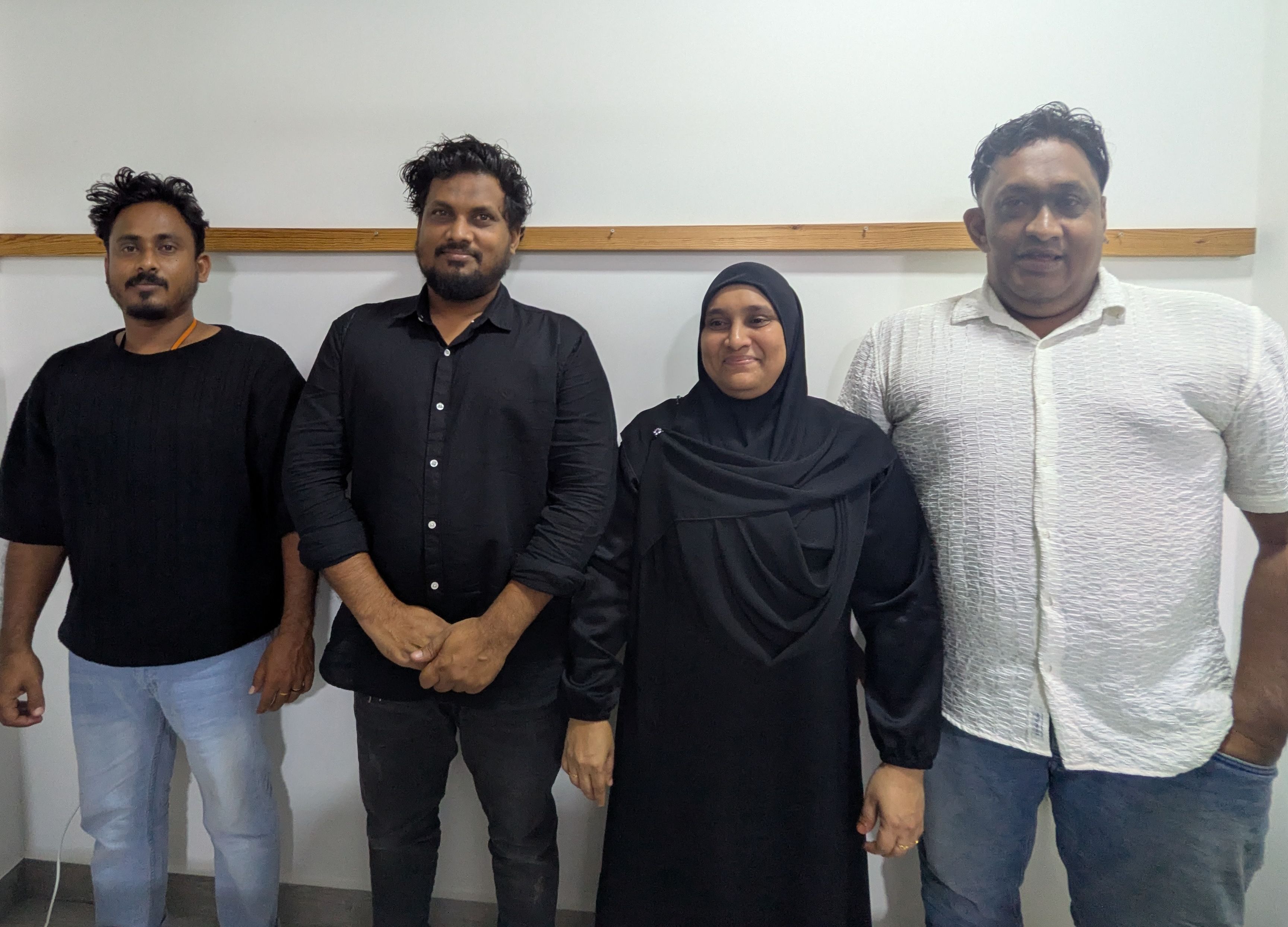
Jaffer said his siblings have worked and moved back and forth between jobs in Thoddoo and India since then.
"Two of our siblings are now in India with our mother. The rest live in different places. In Thoddoo they live on rent. They have worked at resorts and different places," he said.
His siblings failed to score enough points in multiple land schemes since then.
"Each time the guideline is set up that way. There was 20 points awarded if you are born in Thoddoo. The last time Abdul Sattar did not get it by three points. He had lost 20 points because of this rule. And now the points is 50," Jaffer said.
"The guideline is set by a council committee. So they think about the people eligible and how much points they would get. They always remember us, so the people not born in the island would not get those points," he alleged.
“So I started telling the council that even in schemes in Malé, people in dhaftharu are given points for the duration of their registry. Because of this, the last council – Ahmed Karam, the council president, led an effort and passed a resolution to abolish the registry. Because I was asking for points for the registry, they thought 'how can we avoid giving points for the registry, by abolishing the registry,' that's why it's done."
Birthrights
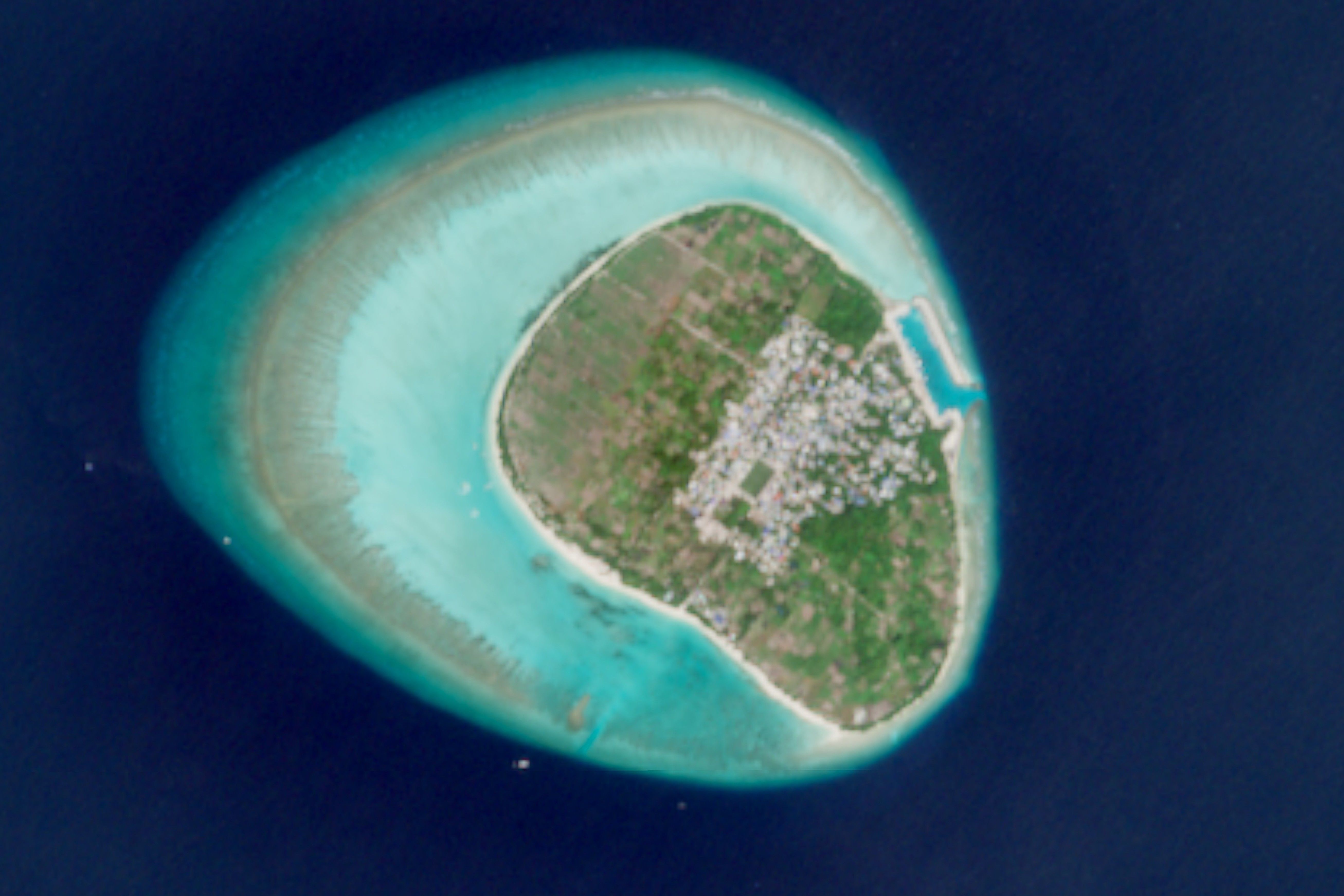
Thoddoo has a registered population of 2,303 people. The 2022 census counted a resident population of 1,924 people.
It is a relatively large island by Maldivian standards with a land area of 162.85 hectares and a population density of 11.8 people per hectare, the least densely populated in Alif Alif Atoll. Like neighbouring islands, Thoddoo has seen a boom in local tourism over the past decade.
However, land allocation has remained a contentious issue.
In 2017, Thoddoo council was ordered to change its land allocation committee and revise the points assigned to applicants following allegations of wrongdoing in the original evaluation. In 2023, the island's magistrate court halted another round of land allocation after unsuccessful applicants lodged a complaint. Later that year residents alleged that members of the council and senior officials in the island’s institutions were being given land in a “scam.”
Thoddoo Council was not responding to calls at the time of publication. But council president Adam Naveen told Mihaaru this week that Jaffer's family was eligible for land schemes even if the registry was abolished.
“We don't know why, but the rest of the siblings haven't been registered on the land that Jaffer got. A newborn in the family is registered in the home of the former council president," Naveen was quoted as saying.
Ahmed Karam, the council’s former president, backed his successor. He denied that the registry was dissolved to target Jaffer’s family in land schemes.
Karam said the real reason was because more people outside the island would be able to become eligible for Thoddoo land by getting on the same registry.
“After that family, another person from Shaviyani atoll had also got on the registry. He was also on the registry for over five years and he was also eligible for land," Karam told the Maldives Independent.
"We saw that the demand for land was high and there was a lot of competition. We saw the experience of Malé with the dhaftharu registry and we believed the consequences were not that good.”
Jaffer, however, disputed this reasoning. The Shaviyani man was registered to engineer a situation to justify the abolition of the registry, he alleged.
However, according to Karam, the man was registered under a previous council before he assumed office.
“He was a businessman so he knew how the rules were and people like them would do research and find that loophole. He had a registry in another island. I don't know how he got on that registry, it was during the previous council. So anyway, we discussed it within the council and decided to dissolve the registry," he said.
"We felt that the circumstances for making the registry no longer existed because Jaffer had already gotten land."
Karam denied that the family faced discrimination because of their origins, saying that Jaffer was the island school's Islam teacher and that civil service jobs were offered on merit.
"I think this family believes they deserve special accommodations, special arrangements. They believe they are like refugees," he said. "But it was not worth it for the council to let that registry destroy the community, a registry that was made for a family who was living far away in secret."
Discussion
No comments yet. Be the first to share your thoughts!
No comments yet. Be the first to join the conversation!
Join the Conversation
Sign in to share your thoughts under an alias and take part in the discussion. Independent journalism thrives on open, respectful debate — your voice matters.
Support Independent Journalism
Help us keep the news free and fearless
Give once
$
or
Become a memberfrom $5/month