

Foreign money, not foreign neighbours: Rasmalé and the politics of land
When does a 99-year lease become a sale?
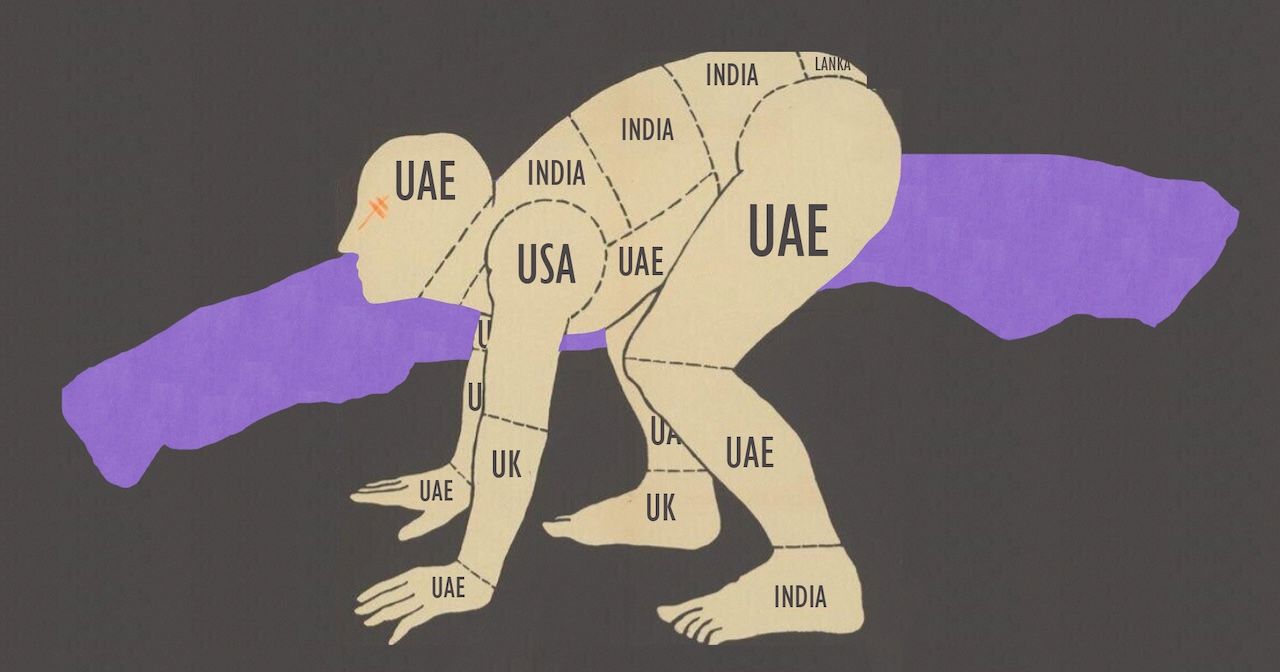
Artwork: Dosain
01 Oct, 18:28
The government elected three years ago this week on a promise to defend Maldivian sovereignty has spent the past 10 days fending off accusations of selling half of Rasmalé – the centrepiece of President Dr Mohamed Muizzu's pledge to resolve Malé's housing crisis – for wealthy foreigners to reside in perpetuity.
The purportedly multi-billion dollar project has consumed Maldivian politics since the government signed the Maldives Waterfront and Marina deal with Abu Dhabi developer Eagle Hills, whose sales site invites buyers to "Make Maldives your new home" and pitches a renewable residency visa.
At the centre of the controversy is whether a 99-year lease that resets upon transfer or inheritance is effectively a sale.
The backlash was ignited by Eagle Hills' announcement, according to which "a new leasehold term of up to 99 years will commence" upon each sale or inheritance, "providing lasting continuity for owners across generations." That passage was missing from the infrastructure ministry's version of the same statement.
Critics say "infinite resets" circumvent the constitutional ban on foreign ownership of Maldivian territory. Those who object to the terms say the government has forgone an acquisition fee, rent and equity in handing over 500 hectares without a tender or published agreement. Much of the anger online has focused on Eagle Hills chairman Mohamed Alabbar's dealings with Israel. Opposition politicians say the project's hidden agenda is to sell Maldivian land to rich Israelis.
The government insists that "not an inch" has been sold. Ministers say the 99-year leases do not confer ownership and that every sale, resale or inheritance of property would be subject to government approval with foreign currency proceeds held in escrow in Maldivian banks. As an "advance payment" on the government's revenue share, Eagle Hills will also build 5,000 three-bedroom apartments in Hulhumalé at a cost of about US$500 million.
Finance Minister Hassan Zareer says the state will collect more than US$11 billion as revenue in a decade without offering any tax concessions, loans or sovereign guarantees. The annual average of US$1.1 billion would exceed total annual revenue from all existing tourist establishments combined, he claimed. The US$20 billion project envisages "homes, hotels, resorts, a marina, shops, offices, and education and healthcare facilities" to be delivered in phases over 10 years, at the end of which it would "attract over 1 million visitors annually and generate around US$2 billion a year in tourism revenue."
Infrastructure Minister Dr Abdulla Muththalib – who signed the "commercial terms agreement" with Eagle Hills on 21 September – says the state will take 10 per cent of the developer's revenue from first sales along with an additional four per cent fee on property transfers. The government chose revenue sharing over an upfront payment because lump sums "are not where the money is," he argued.
There is "no pathway – and there will never be a pathway" from long-term leases to permanent residency or citizenship, Muththalib assured. On Sunday, Muththalib wrote on X that although buyers of Rasmalé property would own the building, the land underneath would remain under state ownership. Buyers and their families would not be "automatically" entitled to visas and the government must approve resales or inheritances, he said.
Eagle Hills meanwhile revised the statement on its website, which now says that properties are "transferable and inheritable, with every transfer subject to Government approval and registration".
From resort villas to townships
Both the ruling People's National Congress and main opposition Maldivian Democratic Party have pushed residency-by-investment schemes. Last year, the PNC government added "sustainable townships" under the Special Economic Zones framework, aimed at "attracting high-net-worth individuals and families to reside in the Maldives."
Muththalib hailed the Rasmalé project as the beginning of "a structured, world-class real estate sector for the Maldives – a new pillar of our economy standing alongside tourism" and "a decisive step on our path to becoming a high-income country by 2040".
Every administration elected since 2008 has sought to turn the country's scarcest resource into foreign capital. And every opposition has cast each major deal with foreign investors as treason or a betrayal of sovereignty.
Every government has progressively widened what foreigners can hold in the Maldives. In 2010, President Mohamed Nasheed's administration extended resort leases to 50 years and authorised the long-term lease of resort villas. In 2014, President Abdulla Yameen ratified the SEZ law. In April 2015, his government extended resort leases to 99 years and offered residency to foreigners who invest US$1 million into approved real estate. In 2015, the Yameen administration pushed through a constitutional amendment to allow foreign freeholds for large projects on reclaimed land. That provision was repealed in 2019.
President Ibrahim Mohamed Solih's government inserted strata leasing into the Tourism Act and reduced the corporate residency visa threshold to US$250,000. The second MDP government also leased massive lagoons in Noonu and Vaavu atolls to foreign developers. In June 2023, the Solih administration proposed a four per cent tax on resort villa sales. The bill was withdrawn after the change of government five months later.
Guests, not neighbours
The Maldives is not short of foreigners. One in three residents is now foreign, predominantly workers from Bangladesh and other Asian countries that staff the resorts, crew the boats and pack the shopping bags.
Before guesthouses opened in 2010, the tourism industry developed on the "one island, one resort" concept, segregating tourists from the local population. For legal purposes, resort islands are considered "uninhabited" as a loophole from the prohibition on the sale of alcohol.
Also in 2010, the grant of rights regulation formalised long-term leases of resort villas to foreign buyers. Owners were required to sign a management agreement letting the resort rent it to tourists. The purchase does not confer a residency visa.
The 2023 regulation enacted by the second MDP government defined the arrangement as "selling" the right to use a villa for a long period without owning the land or the building. The leases can be sold or inherited. Every transfer must be registered with the tourism ministry. But none can outlast the resort's lease. When it ends, the state must compensate the resort leaseholder for the depreciated value of what was built.
A resort lease could be passed with the length of time remaining on its term. In contrast, a new lease on a Rasmalé home would reset the 99-year period.
Midhuam Saud, a commentator and analyst, drew the distinction on X. The former are "private investments in individual villas primarily used for tourism" whereas the property on Rasmalé would be "residential units where people are to live and raise families".
There are no schools on resorts where a villa owner could send their children. Eagle Hills on the other hand promises "education, healthcare, community infrastructure" alongside "residential life".
"In other words, Rasmale will function like any other Maldivian island where people live, with homes, families, schools, healthcare, shops and an actual resident community. Only difference is, it will be an island of foreigners," he wrote.
Countering critics, Muththalib stressed that Rasmalé property cannot change hands without government approval.
"Every sale, resale or gift is submitted to the Government, which vets the person receiving it and can approve or refuse; a gift is treated exactly as a sale. Furthermore, buying a property gives no right to enter or stay in the Maldives," he wrote.
"A visa is a separate decision, made by the Government after its own vetting, and it can be refused or withdrawn at any time. The developer has no say in who gets a visa. It builds and sells; the State decides who owns and who enters."
Land for flats
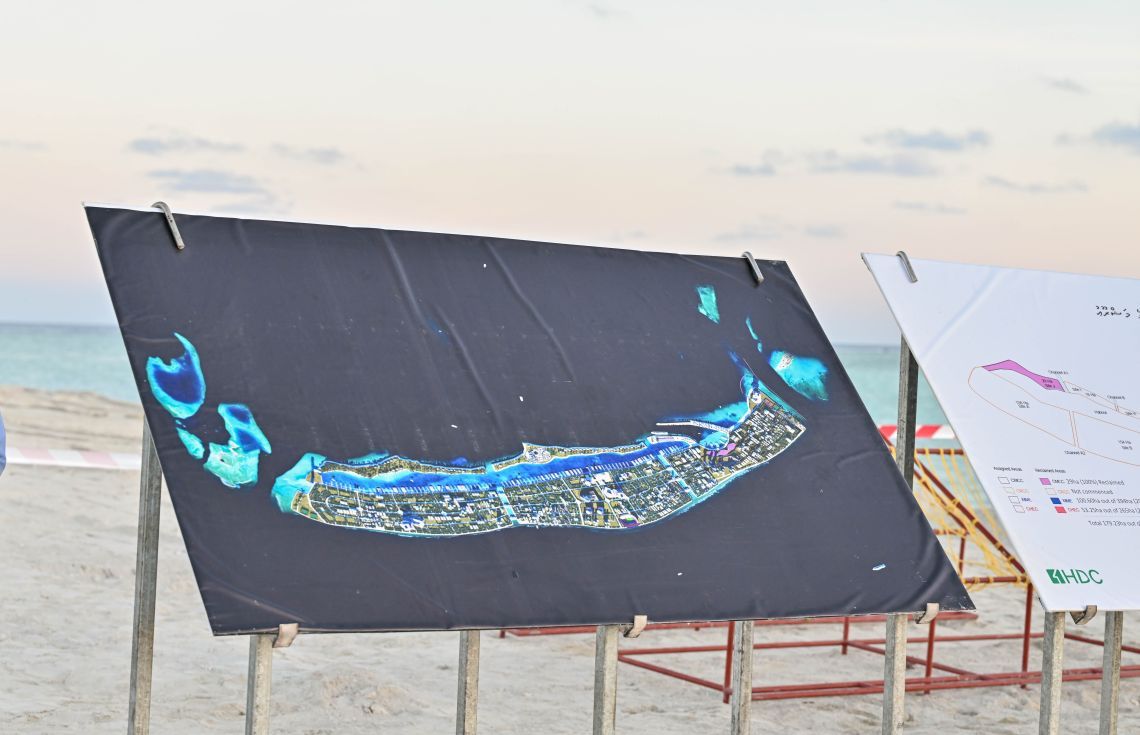
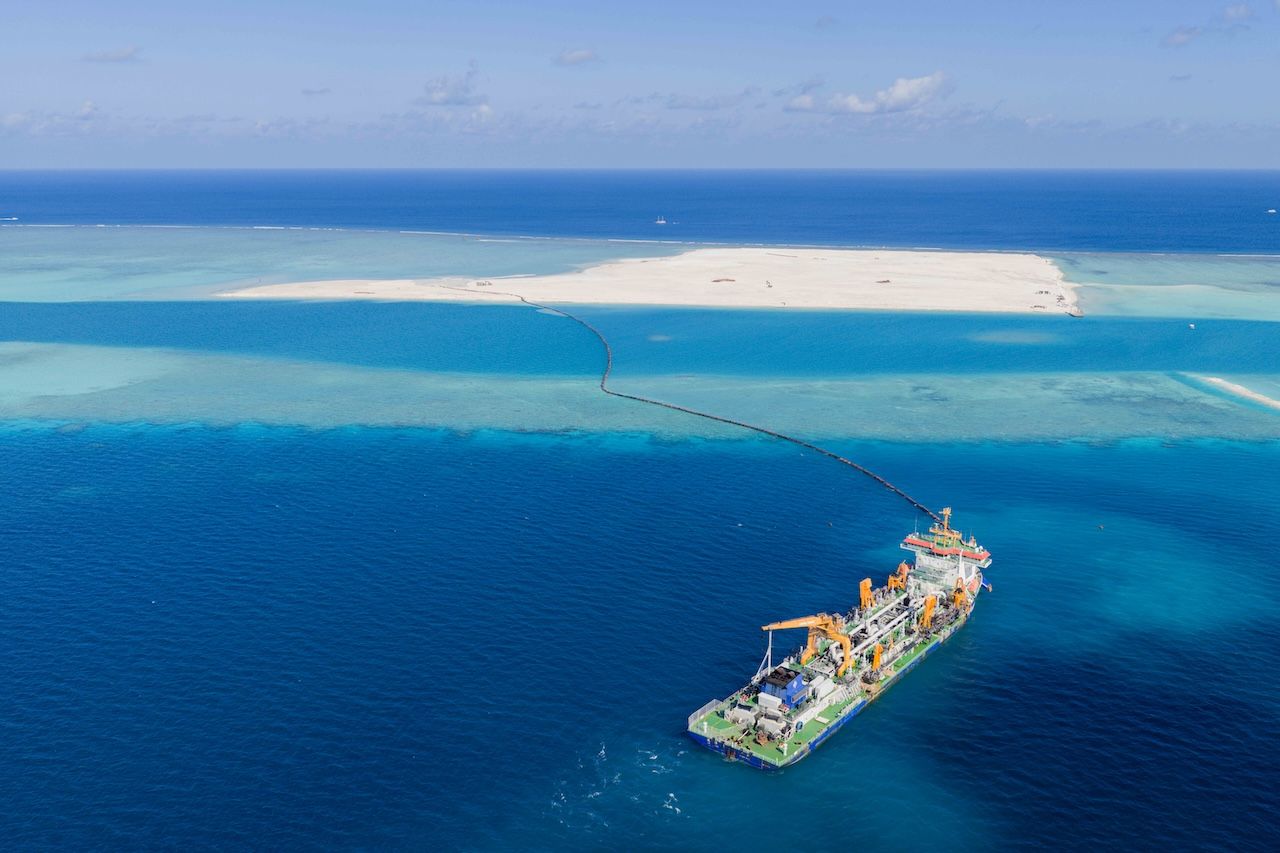
Only 0.3 per cent of the Maldives' 90,000 square kilometre surface area is dry land. For three decades, successive governments have pumped sand from the seabed onto shallow lagoons to create manmade islands, most notably Hulhumalé, which was developed to house the overflow from Malé, now home to more than 40 per cent of the population.
President Muizzu touted Rasmalé – his flagship "eco-city" emerging out of the Fushi Dhiggaru lagoon south of Malé – as a lasting solution to the capital's housing crisis. More than 22,000 people have since applied for 15,000 plots to be awarded from the reclaimed land.
Speaking on PSM’s Nation Chat last week, Muizzu said Rasmalé's other 600 hectares remain allocated for public housing plots and that reclamation – currently 70 percent complete – will finish by the end of the year.
Midhuam argued that the Rasmalé deal is an expensive way to solve the housing problem. In a long essay on his blog, he recounted how previous administrations paid for 15,000 flats in Hulhumalé with concessional and commercial loans taken by the state-owned Housing Development Corporation, each of which was repaid "without giving a single grain of sand to a foreign party".
He called the Rasmalé deal – under which the cost of 5,000 flats would be deducted from the state's revenue share after the reclaimed land is handed over as well – the most expensive, least viable and most loss-making ever struck to finance housing in Hulhumalé.
The 500 hectares of Rasmalé land would be worth US$7 billion, he calculated on an assumption of MVR2,000 per square foot. MDP MP Dr Ahmed Shamheed estimated a value of US$10 to US$17 billion. Veteran editor Moosa Latheef wrote in Dhauru that, whatever the figures, the 500 hectares are being given away for free.
If the Rasmalé land were to be leased for resort development instead, the state would earn US$40 million a year, enough to cover the cost of the flats in 15 years, Midhuam argued, citing a standard annual resort land rent of US$8 per square metre.
While Solih's government only secured financing for 4,000 flats over five years, Muizzu has yet to secure funds for any of the 20,000 he has pledged, Midhuam noted.
Former economic development minister Fayyaz Ismail, who is seeking the MDP's ticket to contest the 2028 presidential election, questioned why the government has not taken any stake in the Rasmalé development unlike Eagle Hills' projects in Georgia, Serbia and Albania, where the state holds about a third of the respective ventures.
Given the estimated US$1.4 billion cost of dredging Rasmalé, the decision to take no acquisition payment "stands out as being particularly problematic". The reclamation was "chief among the reasons" for the dollar shortage, Fayyaz said, noting that the first US$400–500 million of state revenue would go towards repaying the Hulhumalé flats.
"At a time of acute dollar shortage, with harsh expenditure restrictions on citizens, there is little justification for not seeking terms that secure immediate foreign currency inflow to the Maldives," he wrote.
To the charge that the land was "given away for free", Muththalib compared three lagoon deals. Emboodhoo lagoon was leased in 2015 for US$40 million for 50 years. Fottheyo lagoon was handed over in 2023 "for no payment at all", in return for a private airport for the developer's resort guests. Rasmalé brings 5,000 flats worth "twelve times what Emboodhoo paid" and a 10 per cent share expected to exceed US$3 billion over 10 years.
On equity, Muththalib pointed to Shangri-La Villingili in Addu, where the state held a minority stake in a resort that ran at a loss for years. The stake was disposed of in 2023 "for a sum that essentially reflected the losses absorbed".
"Equity pays only when there is profit," he wrote. "Revenue share pays on every sale, whether the developer makes a profit or not."
To critics who say the government should have built in Hulhumalé instead, he replied that it is "doing both". The cost of the flats comes out of the state's share as revenue is collected, "not from the budget, and not from borrowing". Reclaiming land is the cheap part, he argued. "The real waste" is reclaimed land left idle "because there is no economy to pay for what goes on top of it".
In an interview with Mihaaru, Muththalib said Eagle Hills would develop more than 8,800 properties in Rasmalé. Despite the deduction for the 5,000 flats from the government's 10 per cent revenue share, assessments show the government would earn more than US$3 billion over the 10-year development period, he said. This is excluding receipts from T-GST and the economic benefits from the creation of 15,000 jobs, he added.
Price, not principle
The Solih government's four per cent tax on villa sales was meant to build what Fayyaz called a "tourism real estate market".
In lieu of scrapping the Rasmalé deal, Fayyaz demanded disclosure, an independent valuation of the land and no enabling law until both are done. "What the Maldivian people are asking for is not less investment, but transparency about what is being given away, on what terms, for how long, and what the country receives in return," he wrote.
For former President Mohamed Nasheed, the MDP's chairman, the flaws with the Rasmalé deal are the absence of both a public tender and any money up front as well as the choice of a site near Malé. "On principle, opening up the Maldives to a residency programme is a good thing," he tweeted on Tuesday, advising the government to share the agreement with parliament and enact enabling legislation.
"Opposition to the MDP has always presented itself as nationalistic and Islamic, while accusing the MDP of being un-Islamic and un-nationalistic," he wrote on Monday. "Yet when in government, the MDP opposition cannot deliver the prosperity that the people of the Maldives deserve and need without resorting to the exact policies they branded as un-Islamic and un-nationalistic."
On Monday, former MP Ali Hussain petitioned the Supreme Court to declare the Rasmalé agreement void, citing the absence of a legal framework authorising the state to lease property to a foreign party by way of a single leasehold of 99 years. Provisions that grant Eagle Hills the right to create successive third party rights over the land are against the constitution's 99-year lease limit, he argued, seeking an interim order to suspend implementation.
On the following day, Ali Hussain joined 'Marz' Ahmed Saleem, a member of the MDP's national council, to file a complaint with the Anti-Corruption Commission.
"Settling foreigners in the Maldives should not be made into a business," the former lawmaker tweeted, questioning whether the government was under compulsion to do so.
The nationalist case
On social media, anonymous accounts have been campaigning under #EagleHillsOut against the Rasmalé deal, calling for it to be cancelled rather than renegotiated. They have turned Muizzu's own words against him, posting clips of the president promising that no foreigner would get Rasmalé land "for even a single day, not for rent and not even for free". On Independence Day in 2024, Muizzu said the earlier reclamation contract had been cancelled so that land would not be given to any party, "whether for a short or long period".
On X, Sheikh Fazloon bin Mohamed argued that the deal must be opposed "before the nation's independence is lost". Citing Eagle Hills' website, he described the leases as "an endless cycle" in which every new owner of a property gets another 99 years.
Fazloon, Zaid and Dr Mohamed Iyaz are among a handful of scholars who have spoken out. The spokesman for NGO Salaf said the group would be "meeting with government officials and clarifying information through other means". The Adhaalath Party spokesman said the party is also meeting with relevant government institutions to clarify information about the residency visa scheme, township programme and the Rasmalé project.
Former Adhaalath Party president Sheikh Imran Abdulla said on X that "looking at the murky developments unfolding now, the time has come once again for Maldivians to set aside political ideologies and stand up" and warned President Muizzu against"betraying the religion and the nation".
The campaign's loudest offline voice has been Yameen and his People's National Front party.
The former president was barred from running in 2023. Muizzu took his place as the opposition candidate. The pair fell out before the swearing-in ceremony.
At a PNF rally on 27 September, Yameen promised to halt the Rasmalé deal once Muizzu leaves office, hold those involved accountable and put such decisions to a referendum. Referring to the Eagle Hills chairman's alleged ties to Israel, he claimed that "Jews" would be brought to live in Rasmalé, which would pose a threat to national security. He accused Muizzu of weeping for Palestine while selling land to Jews.
Former Vice President Mohamed Jameel Ahmed said the deal had paved the way "for Jews to enter indirectly". MDP's Marz Saleem also warned against a settlement near Malé akin to those on Palestinian land.
The allegations draw on Alabbar's record. In 2005, as chairman of Emaar, he met Israeli leaders in Tel Aviv to discuss buying structures in Gaza settlements ahead of Israel's withdrawal. After the UAE normalised relations with Israel in 2020, he called for closer ties between Emiratis and Israelis. In 2021, an Israeli business daily named him among the donors to an Israeli food-aid programme.
Israeli passport holders are barred from entering the Maldives.
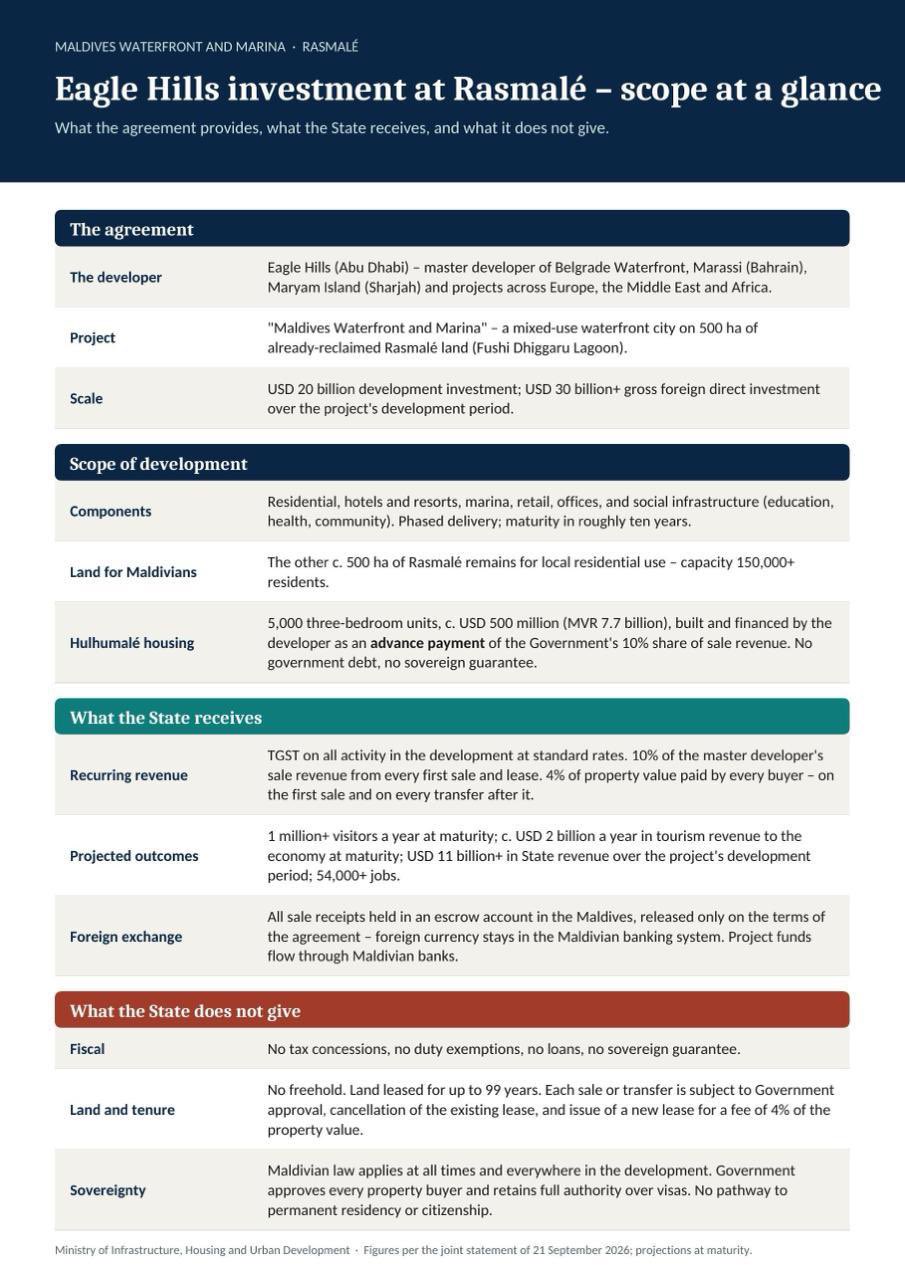
In the face of the onslaught, the Muizzu administration has been on the offensive over the past week. On Wednesday, ministers, political appointees and PNC MPs flooded social media with an infographic celebrating the "transformative" Rasmalé project.
Pro-government media joined the offensive with articles and videos defending the deal. MMTV amplified a post by Aishath Azima Shakoor, a former attorney general, who argued that rejecting foreign investment "for political reasons" harms not just the government's opponents but every Maldivian. A 99-year lease is not ownership as long as the investment remains under Maldivian law, she contended, pointing to the cancelled GMR airport deal as the cost of politics getting in the way.
Government supporters also resurfaced videos of Yameen defending the 2015 freehold amendment. The attorney general reminded him that resort leases were extended to 99 years under Yameen's administration. "President Yameen may have forgotten today," Usham wrote.
"This is a safe place for investments," Yameen told foreign investors in 2015. "This is safer than the safest place elsewhere on the earth."
Discussion
No comments yet. Be the first to share your thoughts!
No comments yet. Be the first to join the conversation!
Join the Conversation
Sign in to share your thoughts under an alias and take part in the discussion. Independent journalism thrives on open, respectful debate — your voice matters.
Support Independent Journalism
Help us keep the news free and fearless
Give once
$
or
Become a memberfrom $5/month

