

A revolt from Europe to Moscow as Maldives taxes the world's travel agents
An Italian operator has dropped the Maldives in protest.
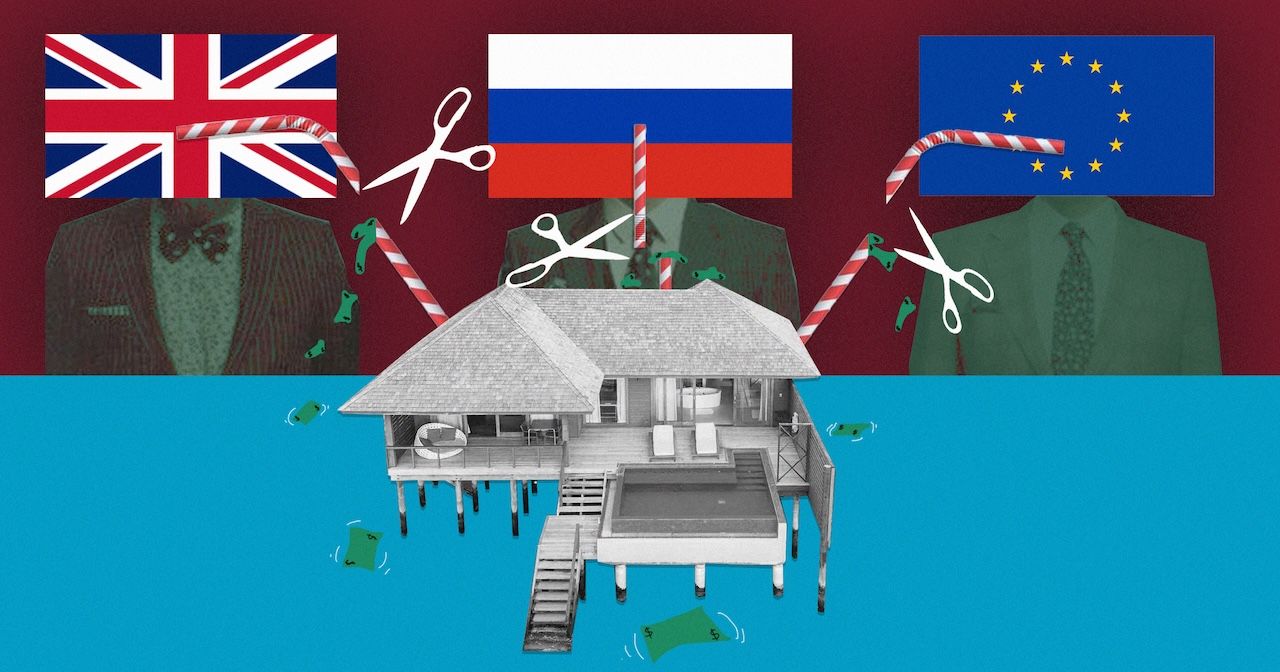
Artwork: Dosain
30 Sep, 15:58
With effect on Thursday, a travel agent in Milan, Moscow or Mumbai that sells a Maldivian holiday will be expected to have registered with the Maldives Inland Revenue Authority in order to start paying a 17 per cent tourism goods and services tax on their profit margin.
In the four weeks since the law was passed, associations representing companies in Russia and India as well as the UK, Germany, France, Italy, Spain and Switzerland, along with their European umbrella group, have asked the government to delay implementation or exempt their members. One Italian tour operator has dropped its resort allotments for the winter peak season and stopped promoting the Maldives.
The European Travel Agents’ and Tour Operators’ Associations (ECTAA) said it recognises the right of the Maldives to determine its tax policies but flagged the "very short implementation period".
"Allowing only one month between the adoption of the rules and their entry into force does not provide international travel companies with sufficient time to adapt their business processes, review and adjust pricing, update IT systems, communicate changes to customers and business partners, and put the necessary tax compliance procedures in place," ECTAA Secretary General Eric Dresin told the Maldives Independent.
Der Deutscher Reiseverband (DRV), the German travel industry's umbrella organisation, echoed the sentiment. "The concern is not about the principle of taxation. It is about ensuring that the rules are practical and workable for international businesses of different sizes," said Kerstin Heinen, DRV's head of media relations.
"The Maldives’ sudden and unilateral decision to introduce this tax is now accelerating the decline in demand for the destination," said Guillaume Beurdeley of Les Entreprises du Voyage, which represents most of France's travel agencies. "It has created significant legal uncertainty for French tour operators, undermined confidence, and made the Maldives more expensive compared with competing destinations."
"The gross margin earned by a European tour operator covers local operational overheads, staff salaries, advisory services, marketing investments, legal liabilities, and mandatory consumer protections under the strict EU Package Travel Directive. By claiming the right to tax this overseas margin, MIRA effectively asserts that no value is added in Europe to curate, market, guarantee, and sell the Maldives," said Irene Faraon, managing director of Kia Ora Viaggi, the Italian agency that dropped the Maldives in protest.
"For the Russian market, clarity on the rules is particularly important because of the existing payment and settlement restrictions. We therefore believe that a practical mechanism needs to be developed before the new tax requirements can be fully applied to Russian tourism businesses," said Dmitry Aryutnov, co-chair of the Russian Union of Travel Industry's committee on outbound tourism.
None of the associations disputed the country's right to tax. They objected to the complexity of the rules and the short notice for preparation. The regulation that governs implementation was published on 21 September. With a day left before the tax comes into force, the government does not appear to be changing course.
The tourism ministry, finance ministry, foreign ministry and MIRA did not respond to questions sent on Monday (28 September).
What starts tomorrow
Under the eighth amendment to the GST Act, ratified on 31 August, "accommodation, meals, transport and any other tourist activity" in the Maldives will be treated as supplied in the country, regardless of where the service is sold. Foreign tour operators, travel agents, online booking platforms, bed banks, wholesalers, destination management companies and charter operators that do not have a fixed place of business in the Maldives must register with MIRA and pay the tax on what they earn.
The GST regime previously ran on the origin principle. When holiday packages in the Maldives are sold by offshore booking platforms, despite the goods and services being delivered in the Maldives, MIRA could not legally access information about the transaction between the tourist and the foreign platform. Both are outside the country when it takes place. A resort selling a villa to a European wholesaler would pay T-GST on the net rate. Since the latter is not physically in the country, what the wholesaler adds on top before selling to the guest could not be taxed domestically.
"The policy rationale for this change is founded on the destination principle, under which the jurisdiction in which goods or services are consumed has the right to impose GST on that consumption, regardless of the location of the supplier," MIRA explained.
The non-resident operator will now be charged on their margin. That is calculated as the difference from what they paid a GST-registered Maldivian supplier subtracted from what the traveller paid. According to the example MIRA worked out in its guide, a UK-based operator that purchases a six-nights package from a resort for US$2,457 and resells it for US$3,194.10 will have to pay US$107.10.

For travel agents that charge a booking fee, the tax will be levied on their fee. A company with an office in Malé that sells from its head office abroad will be considered a foreign supplier.
There is no registration threshold. Large global platforms and small specialist agencies that sell a handful of honeymoons must both register and pay through MIRA's online portal. Depending on volume, returns must be filed monthly or quarterly. Payments must be made in US dollars.
The government has projected new tax revenue of MVR1.6 billion (US$103.7 million) a year from foreign tour operators and agents. Neither MIRA nor the finance ministry responded to questions about the methodology used to reach that figure.
As of August, MIRA collected US$519 million as T-GST receipts this year, representing nearly a third of all revenue.
The exemption
New provisions to the GST regulations, which the law required MIRA to enact within 30 days of ratification, were added last week. Section 99(e) exempts any booking "if a tax invoice or invoice or receipt is issued in respect of that transaction prior to 1 October 2026, or full or partial payment in respect of that transaction is made prior to 1 October 2026." Holiday packages sold to date for stays after 1 October will therefore fall outside the tax.
But the exemption "addresses only part of the issue," Artur Muradyan, a board member of the Russian Union of Travel Industry (RST), told the Maldives Independent.
"The Russian market is already looking ahead to the upcoming school holidays at the end of October, while new bookings will continue to be made in October and beyond," he said.
"Our concern is that the GST may be difficult to apply to transactions involving Russian tour operators because, due to sanctions and existing payment restrictions, payments for tourism services are generally not made directly from Russia to the Maldives. Transactions are often routed through third countries. This creates practical difficulties in determining how the tax should be collected and paid by Russian tour operators."
The European Travel Agents’ and tour Operators’ Associations (ECTAA) said the exemption fails to the problem of packages priced and marketed before the new rules were announced, but which would be paid after the 1 October cutoff date.
"Organising and selling package holidays involves long lead times, including negotiating with local suppliers, setting prices, and publishing packages in brochures and other marketing materials. Once prices have been advertised through agency networks or directly to consumers, they often cannot simply be changed," Secretary General Dresin explained.
"As a result, even bookings made after 1 October may be based on prices that were established and marketed before the new tax rules took effect and therefore do not include the tax. In such cases, the travel company may have no practical possibility of passing the additional cost on to the customer and may ultimately have to absorb it."
Germany's DRV said the exemption fails to resolve challenges in meeting future requirements. "The challenge for our members is now implementation. They are being asked to comply with complex new tax obligations with only a few weeks' notice. This requires changes to contracts, pricing, accounting and IT systems, as well as internal processes and reporting," the media official told the Maldives Independent.
For the Italian operator Kia Ora Viaggi, the relief ensures that current clients are protected but it "fails to address the fundamental offence of this regulation," managing director Irene Faraon told the Maldives Independent.
"We are deeply insulted by the underlying premise of this law, which denigrates the complex work of tour operators to mere accounting and pass-through intermediation," she said.
Other aspects of the new rules that remain unclear include how to carve out the Maldives portion of packages that combine a stay in the country with flights or a stopover elsewhere. MIRA's guide says the non-Maldives portion must be excluded but does not specify the method for calculating it.
Who objected
The trade bodies that objected come from markets that account for 45 per cent of tourist arrivals.
ABTA, the association that represents UK travel companies, wrote to Tourism Minister Mohamed Ameen on 27 August asking for a pause and consultation. ECTAA, which represents travel agents and tour operators across Europe, wrote to the Maldives ambassador in Brussels and to the tourism and finance ministries. The embassy acknowledged receipt "but we have not received a substantive response," Dresin said.
ECTAA asked for a postponement of at least six months, an exemption for from registration for disclosed overseas travel agents, a "workable approach to taxing Maldivian holidays," a minimum threshold "to avoid disproportionate administrative and compliance burdens, particularly for SMEs," and clearer rules to "prevent cascading taxation across the international travel distribution chain."
Germany's DRV wrote to the government on 7 September asking for postponement, transitional rules for packages sold and a registration threshold for smaller firms. "The embassy in Berlin Maldivian Embassy in Berlin has been very supportive, and we greatly appreciate its engagement. The Maldivian government has also responded to enquiries from across Europe and has provided further information through webinars and guidance documents," Kerstin Heinen, DRV's head of media relations, told the Maldives Independent.
However, the information could not "fully compensate for the extremely short implementation period," she added. "There is still uncertainty about important practical aspects of the new requirements, and companies need time not only to understand the rules, but also to implement them in their systems and processes."
While it was too early to measure the effect on sales, DRV said "the direction of travel is clear: additional complexity makes the Maldives more difficult to sell, especially for smaller travel companies."
Italy's ASTOI, Spain's UNAV-Fetave and Switzerland's SRV have raised similar concerns.
France's Les Entreprises du Voyage and the union of tour operators SETO did not get a reply from Commissioner General of Taxation Fathmath Ameeza. "A lot of issues remain as the the calculation methods remain unclear and poorly explained, despite the last-minute webinars organised by the local authorities," Guillaume Beurdeley, deputy secretary general of Les Entreprises du Voyage, told the Maldives Independent.
"Travel by French nationals to the Maldives had already begun to slow as a result of the crisis in the Middle East. The Maldives’ sudden and unilateral decision to introduce this tax is now accelerating the decline in demand for the destination. It has created significant legal uncertainty for French tour operators, undermined confidence, and made the Maldives more expensive compared with competing destinations."
Beyond Europe, the Outbound Tour Operators Association of India urged the government to reconsider the tax. OTOAI president Himanshu Patil warned "the move could pressure contracts and consumer pricing."
Moscow's letters
After a letter to the Maldivian ambassador on 23 September received no reply, the Russian Union of Travel Industry (RST) wrote to Tourism Minister Ameen on Monday. Copies of both letters were provided to the Maldives Independent.
They recognised the Maldives government's "right to tax services and economic activities within its jurisdiction" but argued that the margin of Russian operators falls outside of it.
"For the Russian market, this effectively means potential taxation by the Republic of Maldives of margins earned by Russian tour operators and remuneration earned by Russian travel agents from business activities conducted in the Russian Federation," the letters read. "RST considers the application of such a mechanism to Russian companies to be legally and practically unworkable."
A Russian operator buys from Maldivian suppliers "at prices already incorporating applicable Maldivian taxes and charges", then packages and sells the holiday in Russia, through Russian agents, under Russian law. Those sales are logged in a national electronic voucher system and determine what the operator pays into a statutory liability fund. A foreign tax charged on the margin after the fact "directly affects the financial result of transactions already recorded within the Russian regulatory, accounting and tax systems".
MIRA would need to check the price each traveller paid as well as supplier settlements, currency conversions, discounts, refunds, cancellations and the contracts between Russian companies (where agents are involved). "There is no practical mechanism for such foreign tax control over domestic business operations in Russia," the letters noted. "Registration of a Russian legal entity with MIRA does not, in itself, provide a foreign tax authority with powers to exercise tax control within the territory of the Russian Federation."
RST also objected to what it called "taxation at successive levels of the same distribution chain: at the level of the Maldivian supplier, the Russian tour operator and subsequently participants in the Russian distribution system". As the winter season has already been priced, it warned that the tax "creates a new cost after the final selling price has already been established and may result in direct financial losses for Russian companies".
The trade body asked for Russian operators and agents to be excluded, or for the rules to be suspended for them "until an agreed and legally workable solution is developed". Given "the strategic importance of the Russian market" as the second largest for the Maldives, the matter should be resolved "before the new rules are practically applied to Russian companies".
Artur Muradyan, an RST member and CEO of the operator Space Travel, said neither the ambassador nor the government has replied. Russia's economic development ministry is considering the association's concerns. "We expect the Russian authorities to support our request for the Maldivian side to postpone the implementation or introduce additional procedures that would take into account the specific circumstances of the Russian market," he told the Maldives Independent.
"Due to sanctions and existing payment restrictions, payments for tourism services are generally not made directly from Russia to the Maldives. Transactions are often routed through third countries. This creates practical difficulties in determining how the tax should be collected and paid by Russian tour operators."
While there has not been a decline in demand for the Maldives, Muradyan warned that operators might have to cut sales: "If the new rules create additional tax or compliance risks for them, some travel agents may also decide to postpone or limit sales until there is greater clarity."
Dmitry Aryutnov, co-chair of RST's outbound tourism committee, said his company has scaled back. "At this stage, we are not suspending sales. However, we have slowed down planned promotional and advertising activity for the Maldives," he said. "It is difficult for a tour operator to invest in marketing and actively increase sales if it remains unclear how the additional 17 per cent tax burden will affect the economics of those sales."
He raised concern with the requirement to account for the tax from within the margins of both tour operators and travel agents: "For businesses operating on relatively low margins, this could have a significant impact on the economics of selling the Maldives."
Under section 104(a) of the regulation, an agent selling a foreign operator's packages owes tax on its commission. Under section 105-4, the operator cannot deduct that commission when calculating its own margin.
Aryutnov said he had also written to Tourism Minister Ameen after a former Maldivian tourism minister passed on the new minister's contact details. He said he had discussed the tax with leading tour operators from several European markets at industry events in Dubai. Their view was that "the new mechanism does not appear to sufficiently take into account the way international tourism sales and distribution actually work today".
Both Muradyan and Aryutnov said they wanted a way through. "Our position is that we would like to continue working with the Maldivian authorities to find a practical solution that would allow the Russian market to continue operating without disruption," Muradyan said.
Dropping out
Kia Ora Viaggi, a specialist long-haul agency near Venice, announced on 23 September that it would stop selling the Maldives from 1 October in protest.
"To demonstrate our resolve, we have already released all our uncommitted group flights and resort allotments for the upcoming peak winter season," Faraon, the agency's managing director, told the Maldives Independent. "Because our business model is agile, we have already successfully diverted our marketing investments and client flows for the upcoming winter 2026/2027 season toward competing high-end long-haul destinations – such as French Polynesia, the Cook Islands, Fiji, Seychelles, and Mauritius."
The Maldives had been a significant destination for the agency's honeymoon, diving and high-end clients, she said.
But accepting that "a foreign tax authority can reduce our professional expertise, legal coverage, and business organisation to a 'taxable margin' at Malé" would set an "unacceptable and dangerous precedent", she argued, adding that requiring small and medium-sized European companies to file tax returns in a foreign jurisdiction for every future booking "remains an unsustainable administrative burden".
The agency will resume full promotion "only when the Maldives adopts a similar, traditional model: routing tax collection exclusively through locally registered inbound suppliers, freeing overseas organisers from direct offshore tax compliance".
She urged the tourism ministry, MIRA and local trade bodies to "look at established international models like Fiji and replace this extraterritorial scheme with a sustainable, locally-collected tax structure."
At home
The government's main engagement has been webinars organised by MIRA jointly with the tourism and finance ministries. About 800 people attended an online meeting on 15 September where the live chat ran for about 45 minutes and none of the participants supported the tax, Dhauru reported.
"With this additional tax, you will sink the Maldives before the rising sea levels do. Our tour operator will remove the Maldives from the lineup we have offered for 30 years, taking clients to other destinations that are less complicated and less expensive," reads a message posted by an account called Mary Maldives Vacation. Other messages stressed that operators are taxed on their margin in their countries. One listed what MIRA's guide did not cover: "discounts, rebates, retrospective hotel overrides, free nights, volume bonuses, cancellation fees, chargebacks, commissions paid to sub-agents and foreign-exchange movements".
"Seychelles, Saudi Arabia, including the Red Sea, and Fiji do not impose this type of requirement," another participant wrote.
According to Dhauru, Tourism Minister Ameen, Finance Minister Hassan Zareer and Commissioner General Ameeza did not take part. The tourism ministry was represented by a legal officer, a personal secretary and one other official.
Two days later, MP Mohamed Ibrahim from the opposition Maldivian Democratic Party wrote to the speaker asking for implementation to be suspended pending feasibility studies involving foreign stakeholders and a review by parliament's public accounts committee.
The Galolhu North MP cited Destination Future's estimate that the tax could reduce tourist arrivals by three per cent, which would be enough to cancel out the projected revenue. The local hospitality NGO called on the authorities to "reconsider the current implementation timeline, engage in more open and meaningful dialogue with industry stakeholders, and ensure that the final framework is shaped by proper consultation with those who understand how the Maldives is sold and represented globally."
In its October 2024 development update, the World Bank observed that "a significant share of the value of tourism-related goods and services delivered and rendered in the Maldives escapes taxation in the country". But it concluded that neither a digital services tax nor a permanent-establishment claim would reach the foreign sellers. The practical concern was how MIRA would access overseas contracts.
The World Bank recommended taxing the Maldivian end of the chain instead: making sure resorts and local suppliers charge foreign partners a fair market price with a transfer-pricing unit at MIRA to enforce it. Until that unit could be set up, it proposed a temporary levy of about three per cent on the gap between a resort's rate and the price the same room sells for online, "paid by the Maldivian companies, not by the tourists", which could be scrapped once MIRA could audit properly.
As the bill with the route the World Bank considered the hardest went through the Majlis in late August, the Maldives Association of Travel Agents and Tour Operators, whose members are the local partners of the foreign firms now being taxed, objected to what it called the lack of meaningful consultation. MATATO said local agents "cannot be expected to become responsible for identifying, educating, monitoring or effectively policing hundreds or thousands of overseas business partners" for Maldivian tax compliance.
If the Maldives became hard to sell, foreign partners might "reduce Maldives inventory, consolidate through larger global platforms, contract directly with hotel groups or divert business to competing destinations" and "local SMEs may be among the first businesses affected".
MATATO asked for a transition period for existing contracts, registration thresholds for overseas operators, a clear distinction between business-to-business and business-to-consumer sales, simpler compliance for non-residents and protection for the commercial data local agents might be asked to hand over. "Local travel agents should not become collateral damage in an attempt to increase government revenue," it said.
"Introducing a major change to the taxation of those transactions after commercial agreements have already been concluded risks forcing either the foreign operator, the Maldivian supplier or ultimately the traveller to absorb additional costs," it warned.
Discussion
No comments yet. Be the first to share your thoughts!
No comments yet. Be the first to join the conversation!
Join the Conversation
Sign in to share your thoughts under an alias and take part in the discussion. Independent journalism thrives on open, respectful debate — your voice matters.
Support Independent Journalism
Help us keep the news free and fearless
Give once
$
or
Become a memberfrom $5/month

