
Election primer: three ballots, one voting day, and a war-time spending spree
Everything you need to know before April 4.
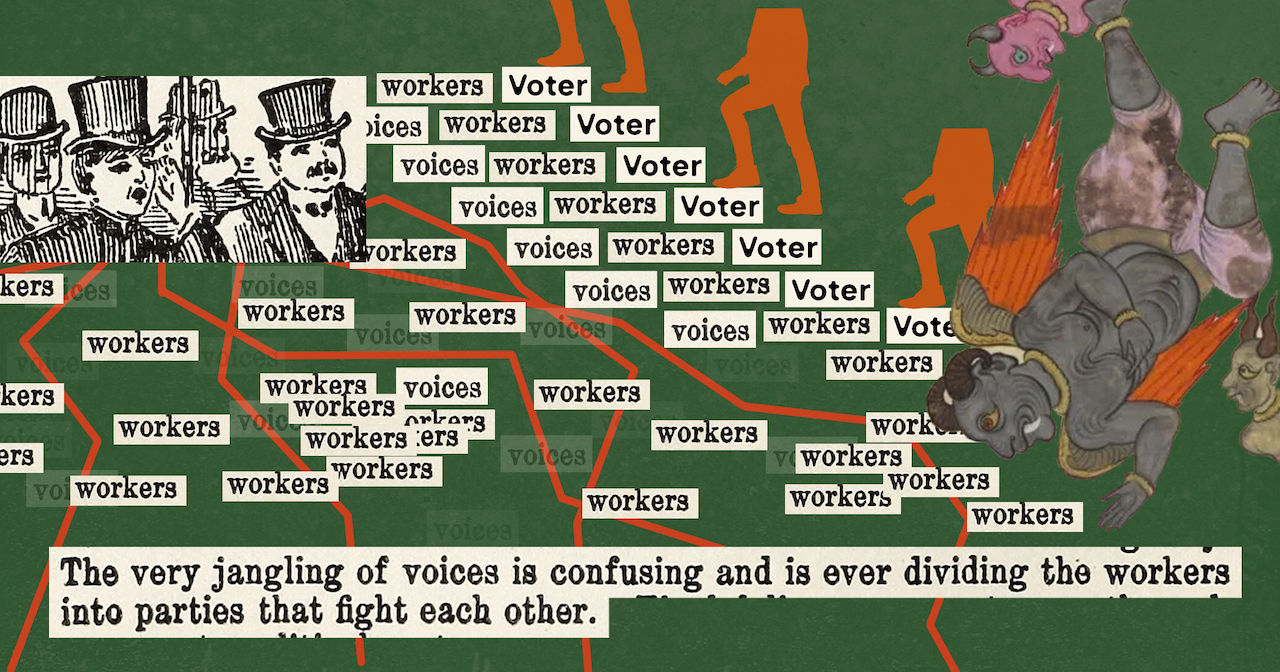
Artwork: Dosain
03 Apr, 17:00
On Saturday, voters across the Maldives will cast up to three ballots in the most complex election day since the introduction of multiparty democracy in 2008. They will choose who governs their municipal affairs for the next five years, directly elect Women's Development Committee presidents for the first time, and vote on a constitutional amendment that could permanently reshape how the country holds national elections.
Here is what you need to know.
What is on the ballot?
Local council elections. Island and city council members for a five-year term. Council sizes depend on population: three members for islands with fewer than 2,000 registered residents, five for larger islands. This year's councils will be the first to operate without elected atoll councils above them. Last year, the ruling party's supermajority in parliament amended the Decentralisation Act to abolish atoll councils effective May 27. Island councils will answer directly to the Local Government Authority.
Women's Development Committee elections. WDC presidents were previously chosen from among committee members. For the first time, all island residents – men and women – will directly elect WDC presidents, who will serve in a full-time, paid capacity. Island councils must allocate at least five percent of their block grant to the WDC.
Constitutional referendum. A single yes-or-no question on the eighth amendment to the constitution. If approved, presidential and parliamentary elections would be held concurrently from 2028, and the current parliament's term would end on December 1, 2028 – about five months earlier than its scheduled dissolution in May 2029. If rejected, the amendment is void.
A voter on a small island will cast seven individual votes across the three ballot papers. A voter on a larger island will cast 11. A city ward voter will cast five.
The 33 percent gender quota reserves a third of all elected council seats for women. Every councillor elected on Saturday will also be subject to the Anti-Defection Law and a parallel provision in the Decentralisation Act. Voluntarily leaving the party under whose ticket they were elected will trigger automatic loss of their seat and a by-election.
How to vote
Polling hours: 8am to 4pm. If you join the queue before it close at 4pm, you can vote.
What to bring: National identity card, passport, passport card or driver's license card. Digital or print versions will not be accepted.
What makes a vote invalid: Anything other than a tick or checkmark inside the box. A cross symbol will not count. On the council and WDC ballots, marking more candidates than the number of seats available. On the referendum ballot, marking anything other than a single clear choice. Mark one box only: yes or no. Marking fewer choices than available on the council and WDC ballots counts as a partial abstention, not a spoiled vote.
The council elections
Uncontested seats: 82 seats were confirmed ahead of the polls when only a single candidate stood. The ruling People's National Congress secured 85 percent of uncontested seats (33 council seats and 49 WDC seats).
Pre-election project launches, state company hiring, and leveraging of incumbency have become a feature of Maldivian elections over successive administrations. In small island communities where the council controls land and jobs often depend on state-owned enterprises, the social and professional costs of standing against the incumbent can be prohibitive. In its pre-election legal review, Transparency Maldives observed that uncontested seats can reflect genuine consensus, effective mobilisation, or a chilling effect. The monitoring framework cannot easily distinguish between them.
Mayoral contests. The opposition Maldivian Democratic Party currently holds the mayor's seats in all five cities: Malé, Addu, Fuvahmulah, Kulhudhuffushi and Thinadhoo. The capital's mayoralty is the most closely watched competitive race. Incumbent Mayor Adam Azim is facing off against PNC candidate Moosa Ali Jaleel, a retired general, along with Ismail Zariyand, backed by former President Abdulla Yameen's People's National Front, Abdulla Mahzoom Majid from the Maldives Development Alliance, and Ahmed Aiham, a 27-year-old running as an independent.
Pre-election spending spree. The government has been spending at a pace that is difficult to reconcile with the fiscal reality described by the ministerial crisis committee. Oil prices spiked from US$ 67 to US$ 119 a barrel in the first 12 days of the conflict. Nearly 500 flights have been cancelled. March tourist arrivals fell 20 percent. Finance Minister Moosa Zameer disclosed an estimated revenue loss of US$ 85 million. But in the two weeks before polling day, the government launched or broke ground on more than two dozen projects.
Hiring: MTCC advertised 600 positions in two weeks. RDC sought 174 employees. HDC reportedly hired more than 400 new employees and approved at least 1,000 promotions. Customs sought nearly 50 officers. The Anti-Corruption Commission's own staff received a pay rise two days before polling day. The MDP claimed 15,000 jobs had been created across state entities in the three months before the election.
Housing groundbreaking: 1,224 affordable units in Hulhumalé Phase 3, 1,190 in Phase 2, 300 in Vilimalé, 182 in Phase 1, 364 additional affordable units, 2,000 in Kulhudhuffushi, 50 each in Thinadhoo, Vaikaradhoo, and Madaveli.
Infrastructure: the Addu Central Power Station, road projects in at least five islands, the Rathafandhoo harbour, health facilities on five islands, the Dharavandhoo airport terminal, a 1,100-space parking building in Hulhumalé, and the Faresmaathodaa reclamation and harbour. President Muizzu announced Giraavarfalhu plot distribution would begin within three weeks.
New services: the Malé Taxi line (free until April 9), non-emergency ambulance coverage under Aasandha, RTL ferry services in Laamu atoll (free until election day), the Hulhumeedhoo fish processing facility, lab and dialysis services across half a dozen islands, and BML branch expansions.
Policy changes: The Housing Development Corporation waived two years of rent on Hiya flats five days before polling day, applying an MVR 200,000 (US$ 12,970) discount per flat with no payments due until May 2028. Binveriya plot holders were offered the option to swap their land for flats. A police pay rise was announced.
Education and welfare: Presidential scholarship opened to any field, stipend plus allowance for local study, unlimited loans for technical fields, 250 therapy training scholarships, an Aasandha office opened in Addu.
Vice President's tour of Gaaf Dhaal atoll: Madaveli land reclamation and shore protection started, Faresmaathodaa road, reclamation, and harbour started.
Health facilities opened or started: Kulhudhuffushi Hospital isolation facility, new ER and dialysis centre, lab services in Maarandhoo, Vashafaru, Utheemu, X-ray in Milandhoo, dialysis in Komandoo, labs in Vaadoo and Maakurathu, Thurakunu health centre extension.
At his weekly press briefing last Monday, President Dr Mohamed Muizzu was asked whether the timing was deliberate. He said it was all coincidence. The projects were already in the pipeline and the new staff were needed for implementation. The new policies were all promised in the 2023 manifesto.
Transparency Maldives recommended that the executive "ensure that state resources are not used in an unequal or biased manner during referendum campaigns." There is no campaign finance framework for the referendum, including spending limits, disclosure obligations, or prohibition on foreign or anonymous donations.
The referendum: what you need to know
The arguments for and against:
The government says concurrent elections would save an estimated MVR 70 million to MVR 150 million, boost voter turnout, reduce disruptions from back-to-back campaigns, and free budget resources for public welfare. In the campaign's final days, Muizzu introduced a new argument: holding both elections simultaneously would end the supermajority phenomenon, because voters would choose MPs without knowing who won the presidency.
Critics countered that as the incumbent seeking re-election, Muizzu would still be at the top of the ticket in 2028, poised to benefit from the change. The coattail effect would be amplified, not eliminated, when the full weight of state resources is deployed across both contests simultaneously. Political science research on concurrent elections finds that while turnout increases, voter knowledge of lower-order candidates decreases and spoiled ballots rise. Voters pay attention to the presidency and sleepwalk through the parliamentary vote.
Critics also pointed out that the current staggered system already produces supermajorities, and warned that formalising the pattern would close off the structural possibility of an independent parliament: "The Maldives does not need fewer elections. It needs stronger institutions between them," Ahmed Saruvash Adam wrote, echoing a common refrain from opponents of the proposal.
At a public forum days before the vote, Aiman Rasheed argued the supermajority problem is a product of the first-past-the-post voting system, not election timing. The PNC won its 2024 supermajority with just 47.5 percent of the vote. Former Supreme Court Justice Husnu Al Suood asked who had demanded this change: "Constitutional amendments should come from the bottom up. This didn't."
Veteran editor Moosa Latheef objected to how the amendment was rammed and the referendum was called without public debate. Former minister Ahmed Mohamed questioned the cost rationale: two national elections cost roughly 0.15 percent of the five-year state budget, he calculated. Former presidents Ibrahim Mohamed Solih, Abdulla Yameen, and Mohamed Nasheed have all publicly opposed the amendment.
How we got here. The amendment was not a campaign pledge. It was not on the government's legislative agenda. The bill was introduced during the Majlis recess, with less than 24 hours' notice to MPs. The committee sent the bill back to the floor after five minutes of consideration. It was then passed after two hours of floor debate. No substantive public consultation took place.
The ballot uses the phrase "stipulating the method of counting the term of the People's Majlis" but does not make clear that the current parliament's term would end early. The amendment also does not specify whether parliamentary elections align with the first or second round of a presidential contest. Runoffs occur when no single candidate secures above 50 percent of the vote. Nor does it address what happens to the synchronised schedule if a government falls mid-term.
The information deficit. The official information paper sent to voters presents five arguments in favour of the amendment and none against. This is not an oversight. The law, in the presidential decree pathway used for the referendum, requires only pro arguments. The Elections Commission acknowledged to the MDP that it was unable to create the required public awareness.
The legal challenges. Lawyers Aik Ahmed Easa and Ibrahim Shiyam from the MDP legal team filed a constitutional case arguing the referendum question is unconstitutional. The Supreme Court ruled last week that there are no legal grounds to halt the referendum. A separate case by former MP Ali Hussain was rejected by the Supreme Court Registrar without reaching the bench. The MDP's Civil Court petition was rejected on the fifth submission after being sent back for revision four times on different procedural grounds. The merits were never heard.
Two days before the vote, the Raajje Coalition for Good Governance – Transparency Maldives, the Association for Democracy in the Maldives, and Save Maldives – said the referendum was being held "without due process" and created "a dangerous precedent for systemic failure." The coalition noted that the composition of the Supreme Court was changed significantly in 2025 "under dubious and highly challenged circumstances" and that since then, court processes have become less transparent.
No turnout threshold. A simple majority of valid votes cast is enough. There is no minimum level of participation required for the result to be binding. The first test of the Public Referendum Act – the Addu City referendum in October 2025 – produced binding governance changes in Hulhudhoo on just 37 percent turnout: 723 yes votes, representing 25 percent of registered voters, were enough to permanently restructure local governance.
Overseas voters locked out. The Elections Commission raised the overseas ballot box threshold from 150 voters per country (the standard used in every previous election cycle) to 2,000 – a 1,233 percent increase. Neither Malaysia (499 registrations) nor Sri Lanka (186) qualified. No overseas ballot box will be placed. Maldivians abroad have no voting facility for the first nationwide constitutional referendum since 2007. The EU's observation mission in 2023 had already flagged the previous 150-voter threshold as disproportionate.
What watchdogs flagged
Ballot secrecy at risk for 6,176 voters. The Elections Commission identified voters across 234 ballot boxes whose ballot secrecy is compromised. Their vote may be identifiable due to the small number of voters assigned to their box. A re-registration window of less than 48 hours was provided. The EC has not publicly confirmed how many of those voters successfully re-registered or what arrangements are in place for those who remain at risk.
No campaign finance accountability. For the council elections, the law explicitly removes the requirements for election agents, campaign bank accounts, and financial disclosure. Spending limits exist on paper but are unenforceable without disclosure. For the referendum, the legal framework contains no campaign finance provisions at all.
Disability accessibility gaps. An estimated 4.5 percent of the electorate – about 8,150 blind or visually impaired voters and 3,813 deaf voters – face significant accessibility barriers. The EC published two sign language videos nine days before polling day. Blind voters must pre-register for ballot templates under a regulatory change made without consultation. The commission declined to ensure templates are available at all polling stations, citing cost.
The Hirimaradhoo precedent. A presidential decree issued nine days after the EC's statutory constituency delimitation abolished the Hirimaradhoo constituency and reassigned 588 voters to Hanimaadhoo – to vote for a council that will govern a different island, seven kilometres away. The decree's stated condition – completion of the resettlement – has not been met. The housing project is court-suspended. In contrast, the island of Raiymandhoo, which is at a comparable stage of resettlement, was left on the ballot with its own council.
Discussion
No comments yet. Be the first to share your thoughts!
No comments yet. Be the first to join the conversation!
Join the Conversation
Sign in to share your thoughts under an alias and take part in the discussion. Independent journalism thrives on open, respectful debate — your voice matters.
Support Independent Journalism
Help us keep the news free and fearless
Give once
$
or
Become a memberfrom $5/month

