
Comment: the case for concurrent elections
"This is not simply a matter of convenience or electoral timing."
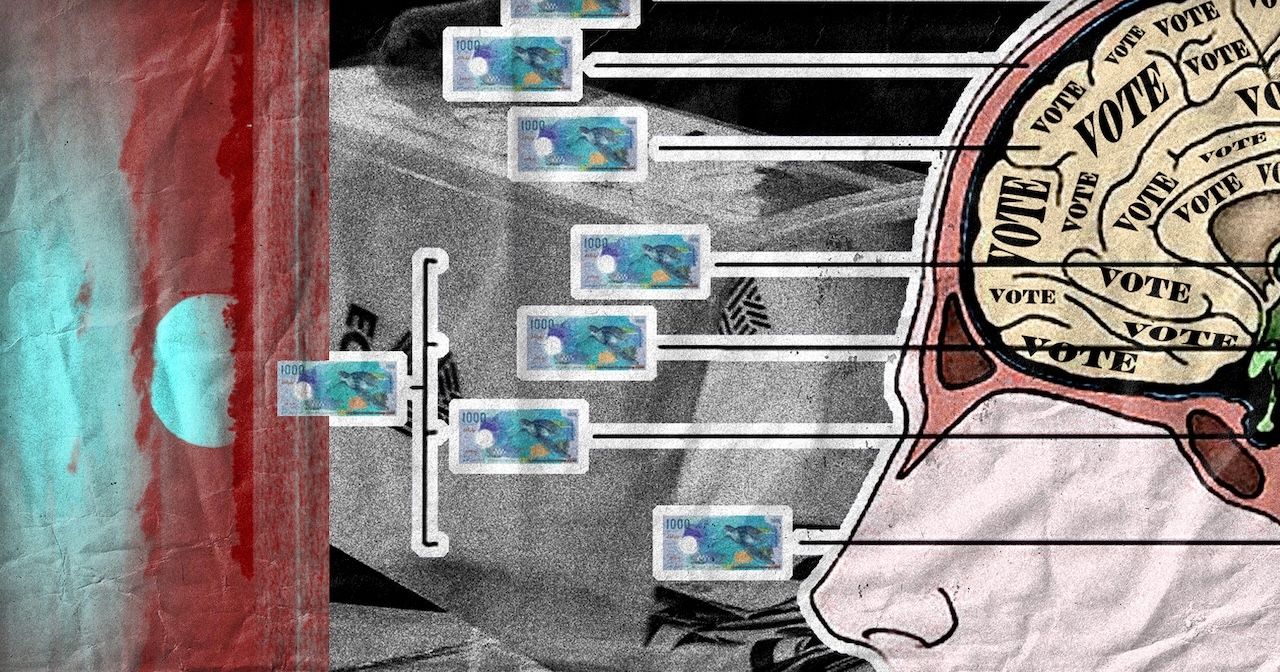
Artwork: Dosain
02 Apr, 12:17
The Maldives is now moving towards a referendum on whether presidential and parliamentary elections should be held on the same day. As with any constitutional reform, there are arguments on both sides. No electoral model is without trade-offs.
But in the Maldivian context, the advantages of aligning these two elections far outweigh the disadvantages.
This is not simply a matter of convenience or electoral timing. It is a matter of governance, stability and respecting the mandate given by the people.
The structural problem in the current system
Under the present arrangement, parliamentary elections take place within six months of the presidential election. On paper, that may not seem like a major issue. In practice, however, it creates a serious governance problem at the very beginning of a new administration.
In the final year of a parliamentary term, the People’s Majlis passes the national budget for the following year before that year begins. This means that the outgoing parliament gets to approve the first budget that the incoming government must work with.
In the Maldivian political experience since 2008, presidential elections have never been won by the incumbent. As a result, an outgoing parliament often prepares, debates and amends a budget for a government that has not yet taken office, and in many cases, does not enjoy the confidence of the parliamentary majority.
This creates an obvious political incentive. Members of parliament are able to amend the budget by adding or removing projects and reallocating resources in ways that may serve their own electoral interests or weaken the ability of the incoming government to govern effectively.
The result is that a newly elected government begins its term constrained by a budget it did not design, shaped by a parliament nearing the end of its own mandate, and often facing political calculations that are not aligned with national priorities.
In effect, the country loses valuable time. A government elected with a fresh mandate is often unable to fully begin implementing its programme for nearly a year.
The budget problem is not theoretical
This is not a hypothetical concern. It has been a repeated feature of the political cycle after presidential elections.
When budgets are amended in this way, projects are sometimes inserted without proper planning, without realistic costing, and without the fiscal space necessary to implement them responsibly. In some cases, even ongoing projects are assigned budget figures so inadequate that contractors cannot be paid properly and implementation becomes difficult or stalled.
This is not sound public finance. It is not responsible budgeting. And it is certainly not the best way to ensure continuity of government or delivery of services to the people.
The budget passed in 2023 for implementation in 2024 reflected many of these problems. It showed how damaging it can be when political timing allows the outgoing parliamentary cycle to distort the governing space of the incoming administration.
A simultaneous mandate would improve governance
Holding presidential and parliamentary elections on the same day would resolve this structural mismatch.
It would ensure that the government and parliament begin their terms together. It would allow the executive and legislature to operate within the same democratic cycle, with a shared timeframe and a clearer public mandate.
Most importantly, it would mean that the first budget of a new administration is prepared and considered within the political reality created by that election, not by an outgoing parliament operating under different incentives.
That would reduce the likelihood of budget manipulation for electoral advantage. It would give a newly elected government a fair opportunity to govern from the start. And it would strengthen accountability, because the people would be able to judge both the executive and the legislature over the same five-year period.
This is not about eliminating checks and balances. Parliament would still retain its constitutional role. Debate, scrutiny and amendment would continue. But those powers would be exercised by a parliament elected within the same democratic moment as the government, rather than by one approaching the end of its term and facing its own separate electoral pressures.
Why not combine parliamentary and local council elections instead?
Some argue that, if election dates are to be aligned, parliamentary elections should be held together with local council elections instead. There is some merit in examining that option. But it creates a different problem.
If parliamentary elections are held in the middle of a presidential term, they effectively become a mid-term election. That means a government elected for five years may find itself facing a completely new parliamentary reality halfway through its mandate.
That can severely disrupt governance during the second half of the presidential term. It can undermine political stability, delay policy implementation, and shift the focus of national politics towards constant electoral calculation rather than sustained delivery.
People elect a government for five years. Political stability requires giving that government a fair opportunity to function during those five years. At the end of that term, the people should then decide, at the ballot box, whether that trust has been earned or lost.
That is the more coherent democratic principle.
The question of extending the current parliamentary term
There is also a practical question. If parliamentary elections were to be shifted into the middle of the presidential term, the current term of the People’s Majlis would need to be extended by two years in order to create that new cycle.
It is difficult to see how such an extension would be accepted by the public.
Any reform that appears to prolong the mandate of sitting members without a fresh election is likely to face understandable resistance. Democratic legitimacy depends not only on constitutional design, but also on public confidence. Extending terms for convenience would be a difficult case to make.
By contrast, synchronising presidential and parliamentary elections offers a cleaner and more principled solution.
A reform for stability, accountability and effective government
At its heart, this issue is about whether the Maldivian state should continue operating with a built-in period of instability at the start of every new administration, or whether we should adopt a system that gives governments and parliaments a clear and simultaneous mandate from the people.
The current arrangement has repeatedly produced friction, budgetary distortions and lost time. It has made transitions harder than they need to be. It has weakened the ability of newly elected governments to move quickly on the promises they were elected to deliver.
A same-day presidential and parliamentary election would not solve every political challenge. But it would remove one of the most persistent structural obstacles to effective governance in the Maldives.
For that reason, while there may be arguments on both sides, the balance is clear.
In the Maldivian context, the case for holding presidential and parliamentary elections on the same day is stronger, more practical, and more democratic.
Dr Abdulla Muththalib is the minister for construction, housing and infrastructure.
All comment pieces are the sole view of the author and do not reflect the editorial policy of the Maldives Independent. If you would like to write an opinion piece, please send proposals to editorial@maldivesindependent.com.
Discussion
No comments yet. Be the first to share your thoughts!
No comments yet. Be the first to join the conversation!
Join the Conversation
Sign in to share your thoughts under an alias and take part in the discussion. Independent journalism thrives on open, respectful debate — your voice matters.
Support Independent Journalism
Help us keep the news free and fearless
Give once
$
or
Become a memberfrom $5/month

