
A hunger strike and a justice system out of answers
What it took to make the state deal with his neighbour.
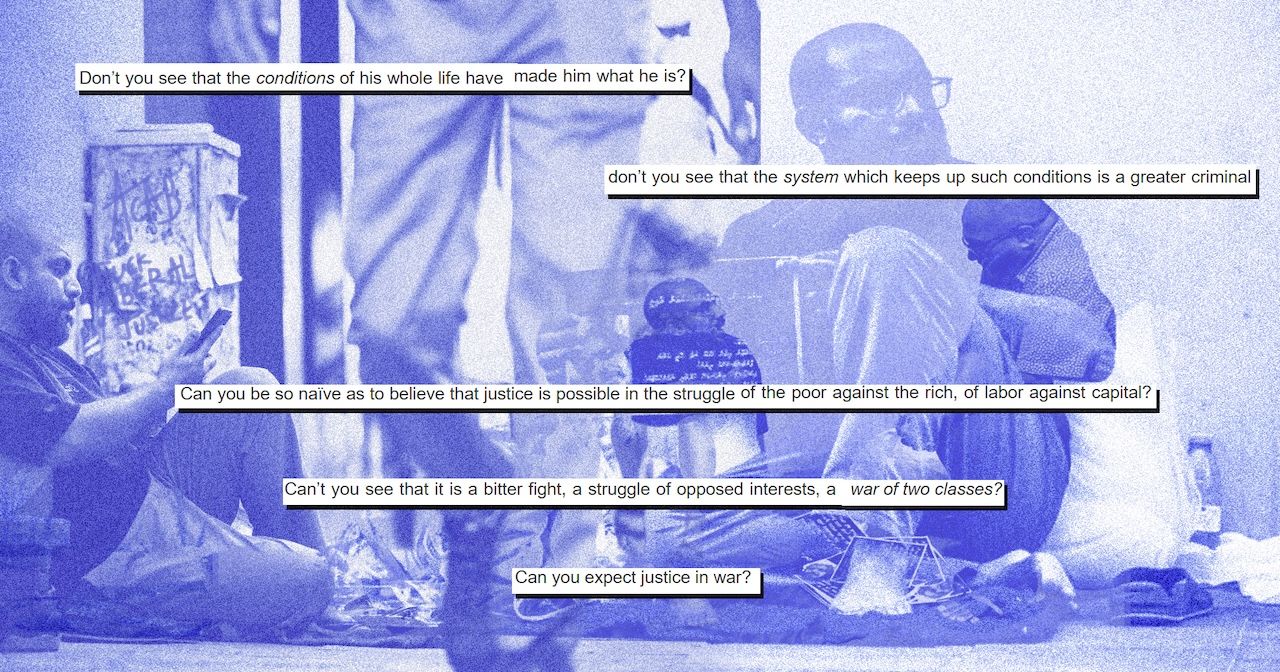
Artwork: Dosain
10 minutes ago
On the morning of 17 October, I heard that someone had begun a hunger strike outside the police headquarters. His complaint was about a man named Fairash, who is suspected of using drugs, near his home on Sosun Magu. The harassment and nuisance Fairash caused him and his family had become too much. A year and a half after he reported it to the relevant government authorities, nothing had been resolved. When I looked into it, I found the man at the centre of it was Mohamed Saeed, a friend of many years. A friend from my school days.
I know Mohamed Saeed’s family too. He is a worldly man who knows how things work. He is on good terms with people in various positions of the state – the kind of terms where he can deal with them over the phone. He is seasoned, educated and level-headed. He currently holds a senior position at Bank of Maldives, has more than 20 years of professional experience and is highly educated. Saeed is not an “unreasonable” person. He is someone you can talk things through with even when you disagree. So I was certain that if he had started a hunger strike, or done anything of the kind, it was only because he had genuinely run out of options. I first read about Saeed’s strike in the papers on the morning of 17 October. This case worries me for several reasons.
First, it will shake people’s trust in the system of government in general, and in the criminal justice system in particular. When people hear this story, they will think of some similar bad experience of their own. That is the story that will keep replaying. As a result, all the hard work that so many people have put in over so long to build trust in the system will be set back. The purpose of this article is not necessarily to hold anyone accountable. Rather, it is to look at how things got to this point, how a solution can be found for Saeed and how this can be kept from happening again.
From what Saeed says, there is no one he has not spoken to about this. The news reports, and what state officials said when they visited Saeed, make it clear that the authorities themselves accept Fairash is a real problem. That goes for the Prosecutor General, the Home Minister and police officers of every rank. Yet no one will take action. Some blame the law. Others say the drug centre is not taking people in. The Guraidhoo centre will not take him on either. And the people saying all this are the ones in charge of running those institutions.
The home minister reportedly promised a solution. That solution was to arrest Fairash. He was arrested that same day. But Fairash has reportedly been arrested some 30 times for various reasons, so it is plain that arresting him is no solution. That was confirmed when the media reported he had escaped from Himmafushi on 31 October. The home minister’s solution was no solution at all.
It made me think of what happens at a Maldivian resort when a guest locks the room key inside and goes to tell a restaurant waiter they have lost it. The waiter will not say, “That’s nothing to do with me, go to reception – it’s not my job.” Nor will he say he does not know what to do about it. He will take the guest to someone who can sort out a key and make sure the guest can get back into the room. The people who do this are not highly educated. They do not hold degrees in law and sharia. They do not have letters and titles before their names. He probably would not even know where America’s biggest military academy is. But resort management has taught the waiter one thing: service. A culture of service. Maldivian tourism stays world-class because that culture of service is so strong. I find it hard to accept that this quality is missing in government – among the police, prosecutors and home ministry staff just one island over.
The relevant state officials accept that Fairash is a nuisance to people. Everyone also agrees Saeed must be given a solution. The ones saying so most loudly are those with the legal responsibility to provide it. What they do not know is how to perform “legal acrobatics” to find one. The essence of service is finding a solution for the person who comes to you. Finding a way to get the guest a key.
This is what I mean by the difference between the learned and those who merely know. Those who know are people who can read what is written. The learned are people who know how to find, within what is written, a solution to a real-life situation – people with knowledge, forbearance and an understanding of the world. They are two different kinds of people.
The videos Saeed has shared so far show Fairash doing things defined as offences in the Penal Code. One video shows him striking someone with a bottle. That is an offence under Section 210(a) of the Penal Code. The baseline sentence for it is one month and six days in prison. But the offence was repeated, committed in a public place and against a woman or a child, so the sentence can be raised step by step to three months. Another video shows him exposing himself. That is the offence of committing an act harmful to the public interest under Section 615 of the Penal Code. That too carries one month and six days in prison, which can be raised to three months with aggravation. Saeed has told me about many other offences besides these.
Statistics show that 86 per cent of cases filed by the Prosecutor General’s Office end in conviction. So if he were charged separately in 30 cases, he could be convicted in at least 25. If each conviction brought a three-month sentence, he would spend at least six years in prison. The way to do this is to bring and conclude one case at a time. Prosecutors would talk to the witnesses in these cases, and to the courts as well, and conclude the cases in a set order. That way a solution to the Fairash problem could be found within six months or so, all within the existing legal system. There: a solution for Saeed, through the legal system.
Fairash would then face a choice. With case after case being filed against him, does he spend the next six years or so in prison, or does he change his life so he stops being a nuisance to people? If he wants to reform and return to society, he could enter an admonition agreement or a plea agreement with the PG’s Office. As a condition of that agreement, he would get counselling, giving him the chance to rejoin the community. The laws already in force allow for showing him compassion too, while bringing fairness to the whole community. That is what “legal acrobatics” means. No law can ever be written that fully anticipates everything that might happen. The role of the legally learned is to find solutions with whatever tools are available. Those who merely know the law cannot do this.
The last part of my concern is that public safety is a service provided by the state alone – one over which the state holds a monopoly. If the state cannot deliver a service it monopolises to the fullest standard, bad outcomes may follow. For someone seeking such a service to become “hopeless” is very dangerous. It could force people to turn to gangs, groups and other “private service providers”. At that point demand for that “service” could take hold, and a “service” could emerge that operates separately from the state, “alongside the law”. And then the ones standing up to stop it will be those very same knowing gentlemen. What happens next is what is bound to happen. That is a story for another time.
Hussain Shameem served as prosecutor general from December 2019 to August 2024.
All comment pieces are the sole view of the author and do not necessarily reflect the editorial policy of the Maldives Independent. If you would like to write an opinion piece, please send proposals to editorial@maldivesindependent.com.
Discussion
No comments yet. Be the first to share your thoughts!
No comments yet. Be the first to join the conversation!
Join the Conversation
Sign in to share your thoughts under an alias and take part in the discussion. Independent journalism thrives on open, respectful debate — your voice matters.
Support Independent Journalism
Help us keep the news free and fearless
Give once
$
or
Become a memberfrom $5/month