
Part three: The Cannanore covenant
What did Cannanore claim it was owed and who was Mohamed Thakurufaan?
Artwork: Dosain
1 hour ago
In part two, I traced Holhīn, the name Buraara Mohamed Fulhu’s account gives the men of Cannanore, back to Sōlhiyā, the Dhivehi word for a Chola. I suggested that the split between the two words goes back to a falling-out between Mohamed Thakurufaan and his Malabar allies after the capture of Malé in 1573 – a dispute that ran on into the 19th century. In this final part, I follow that dispute through two more accounts of 1573 and a letter that reached Malé more than 250 years later, and return to the question this series began with.
Pyrard and the betrayal of the Malabars
The French traveller François Pyrard de Laval, who spent five years in the Maldives after being shipwrecked there in 1602, also tells the story of the brothers’ revolt against the Portuguese, in The Voyage of François Pyrard of Laval to the East Indies, the Maldives, the Moluccas and Brazil (translated by Albert Gray for the Hakluyt Society, 1887). He never once uses the name Holhīn – he simply calls them “Malabar corsairs” – and his details differ from Buraara’s. But the episode he describes points to the same rupture that Buraara’s account and the word Holhīn both hint at. After eight years of harassing the Portuguese garrison at Malé, the two brothers struck a deal with a passing Malabar raiding fleet:
“There arrived four galleys of Malabar corsairs for the purpose of war and pillage, as was their wont. The two brothers accosted them, and agreed with them to make war upon the Portuguese on terms of half the booty.”
Learning that the Portuguese captain was away at Cochin with most of his garrison, the allied force struck:
“One night they surprised it by escalade, and made themselves masters of the place, putting to death upwards of 300 men that were within, and taking prisoner the native governor [ie Thuffaashana] who was set there by the Portuguese.”
It is what happened immediately afterwards that Pyrard flags as treachery, and that bears directly on the Holhīn’s later grievance against Mohamed. Once the fort was taken and sacked, the Malabars collected the share of the spoils they had been promised and prepared to sail home – at which point the brothers turned on their own allies:
“The place being taken and sacked, the Malabars, having got their agreed share of the spoil, were going home, leaving the two brothers masters of the town; but they, jealous to see so much of the riches of the islands being carried off, resolved to attack the Malabars. This they did, and, after a long engagement, at length were left victorious, and got both the booty and the galleys, sending the men back to the Malabar coast, and thus repaid with treachery the good service they had of them.”
Pyrard’s own summary judgment could not be plainer: the brothers “repaid with treachery” the Malabars who had just helped them take Malé. The men who had fought and bled alongside Mohamed were stripped of their agreed share, lost their galleys and were sent home empty-handed and humiliated – not killed, but plundered by the very ally they had just helped install in power.
Hasan Tāj al-Dīn: a third account, closer to Buraara
A third version of the attack on Malé survives in Hasan Tāj al-Dīn’s dynastic Arabic chronicle, Tarikh Islam Diba Mahal, compiled around 1705 and continued after his death by Muhammad Muhibb al-Din and then Ibrahim Siraj al-Din (critical edition by Hikoichi Yajima, Tokyo, 1984, vol. 2). Its telling of the night attack, checked here against a 2020 Dhivehi translation by the late historian Nadwi, is worth quoting at length:
“So those Muslims resolved to catch them by surprise while they lay in heedlessness; having settled on this plan, they withdrew and set out for Cannanore. There they asked Ali Raja of Cannanore for military assistance, and Ali Raja agreed to the request and sent a force of Malabari troops with them. This force arrived near Malé on the night before the day the Christian infidels had fixed for forcing the Muslims of Malé to apostatize, accept the Christian religion, and prostrate before the idol — and the Christians had resolved to kill anyone who refused to abandon his religion and insisted on remaining, even unto death, in the religion of Muhammad.”
“(It is said that the Malabari force did not actually reach Malé until after the fighting was already over.)” [Qīla anna ahla Malībār mā waṣalū Maḥal illā baʿda inqiḍāʾ al-ḥarb]
The islanders then gathered to resolve how they would meet the Portuguese ultimatum:
“All the people then gathered at the house of Qāḍī Abū Bakr — this Abū Bakr being Qāḍī Abū Bakr, son of Qāḍī Don Korali, son of Qāḍī Sharaf al-Dīn Ismāʿīl al-Famuladheyri, son of Ibrāhīm. They agreed among themselves not to renounce Islam and not to go to the place where they were being summoned to prostrate before the idol; and that if forced out by violence, they would fight and die as martyrs upon Islam. They then made ready whatever swords, arrows, knives, clubs, and spears they could gather.”
“After this, they made a vow: that if Muhammad Thakurufaanu and his companions came before dawn that night and granted victory to the Muslims and to Islam, they would, every year thereafter, recite a mawlid in honour of the Noble Messenger at the shrine of Shaykh Yūsuf Shams al-Dīn al-Tabrīzī.”
Their prayers, the chronicle says, were answered that very night:
“As it happened, when two-thirds of that night had passed, the galley of Muhammad Thakurufaanu and his companions put in at the harbour of Malé. When they came ashore, the Franks lay in a deep, heedless sleep. After surveying how matters stood in various parts of Malé, they made straight for the residence where the captain was staying. Drawing near the open ground before it, they saw him sitting in a chair on the veranda, with some of his retinue standing around him by lamplight. Seeing this, Muhammad Bodu Thakurufaanu aimed his gun at the captain and fired. The shot found its mark, striking the captain’s body. At that very instant, the captain also fired back toward where the shot had come from, and then fell to the ground. But Muhammad Thakurufaanu had already moved from where he had stood, taking shelter behind a palm tree, and so escaped the infidel’s bullet unharmed.”
“Seeing this, the infidels turned their guns on the Muslims’ position; the Muslims returned fire. Close fighting followed between the two sides, and the Muslims’ weapons found their enemies’ bodies; God gave His Muslim servants the victory. They did not cease fighting the infidels until God had utterly humbled them — seizing them in a terrible seizing and slaughtering them thoroughly, so that they all fell slain.”
“So the Portuguese power and rule vanished from the land of Dibā Maḥal, their dominion extinguished and their influence erased so completely that it became unknown that they had ever ruled there at all. Frankish Christian rule had lasted seventeen years in the Maldives. This famous defeat, and the conquest of the Maldives, took place at the hands of Khatib Bodu Muhammad on the first day of Rabīʿ al-Awwal in the year 981 of the Hijra [July 1573]. With this glorious conquest, the hearts of the Maldivians were filled with a joy beyond description.”
That aside about the Malabaris’ late arrival marks exactly where Tāj al-Dīn’s version diverges from Pyrard’s and aligns instead with Buraara’s: in both, the Malabar ship reaches Malé only after the fighting is over. Pyrard has the Malabar corsairs fighting alongside the two brothers, sharing fully in the assault and the plunder, before being robbed of their share and sent home – the falling-out part two traced in the word Holhīn. Tāj al-Dīn, by contrast, credits Mohamed and the Maldivian defenders alone with the victory, relegating the Malabari contingent to a reinforcement that, by the report he records, arrived too late to fight at all. There is no battle shared with the Malabars here, and so no betrayal to report – the entire episode Pyrard flags as treachery is simply absent.
A most perturbing letter (1827)
Fast forward more than 250 years, to the reign of Sultan Mohamed Mueenudeen of the Huraa dynasty. This king’s rule began as a regency. When his father, King Hassan Noorudeen, departed for haj in January 1799, he put his son in charge of royal affairs under the name Sultan Mohamed Mueenudeen. The regency became a full kingship when Hassan Noorudeen, having quarrelled with Sharif Ghalib of Mecca and been stripped of his wealth, died of smallpox at Jeddah in June 1799; of the roughly 300 pilgrims who had travelled with him, only 70 survived to return to Malé in December 1799.
Sultan Mohamed Mueenudeen was a man of peace: not quarrelsome like his father, nor a warrior like our hero Mohamed Thakurufaan. His biggest feat was a voyage in 1804 to Ari Atoll, only about 60km west of Malé, which his great friend Bandeyri Hassan Manikfan set down in raivaru verse. When Hassan Manikfan presented the poem, the king challenged him: it was easy enough, he remarked, for a poet to versify something that actually happened, but far harder to invent a story that never occurred and make it convincing. He then set Hassan Manikfan the task of composing a beautiful raivaru about events that never took place: the “Dhiyo’s Raivaru”.
But back to our story. Picture this same king – an introverted, withdrawn man with a fondness for raivaru, both fiction and non-fiction – and imagine the look on his face when, on 25 January 1828, a war letter arrived from the Ali Raja of Cannanore:
After this, we inform you of the matter of Malé: there exists between us a covenant, a pact, and a settled agreement concerning Malé, with no dispute whatsoever — thus it is written between us and you, and this agreement is ours and remains in our possession. For Malé Dibā is under our authority, just as any of the islands among our own territories; for we installed and established in Malé Dibā a sultan named Utthu Muhammad Bodu Thakurufan, and we appointed alongside him, as his minister, Al-Hajj Ali — this is what we did.
The revenue collected from Malé Dibā was [accordingly] divided into three parts: a part for the two Noble Sanctuaries [Mecca and Medina], a part for us, and a part for you, for your own payment of jizya — this is what we settled and determined. As for our own share — the part for the two Noble Sanctuaries, for the saint (Quṭb) Sultan Muhyi al-Din Abd al-Qadir al-Jilani, and for the saint Abu Bakr ibn Abd al-Aydarus — this we can only fulfil once that wealth actually reaches us.
We remain certain that this wealth will reach us by the blessing of these saints. Even though, for a long time now, it has not reached us, we remain certain that, God willing, by their blessing, it will yet come to us. You, for your part, should remember your obligation to the two Noble Sanctuaries and to these saints. Write to us what you have decided regarding this money. If what you intend in this matter is friendship and peaceful resolution, write to us accordingly; and know too that the mighty English (“Bahadur”), if they hear of the matter of our dues for these saints, will — God willing, by His grace and generosity — support us in our affairs, in this matter and others. Likewise, favour has come to us from His Excellency the Exalted, Honoured Sultan of Rūm [the Ottoman Sultan] — may God perpetuate his reign. So if you wish this matter to proceed in friendship and goodwill, write back to us with a proper answer.
This is what we wished to make known to you — a fitting conclusion. Peace be upon you, and the mercy of God and His blessings. Our final word, too, is praise to God, Lord of the Worlds.
This letter was written on Friday, the seventeenth of Jumādā al-Ūlā, in the year one thousand two hundred and forty-three [1243 AH] (Friday, 7 December 1827 CE).
Two unwelcome surprises
Reading this letter, the people of Malé would have had plenty to be astonished about – but two details in particular must have stopped them cold.
The first was almost too much to take in. The Ali Raja’s letter names the minister Cannanore installed alongside Mohamed Thakurufaan as Al-Hajj Ali – and Maldivian memory has long cherished this very figure as Ali Haji of Thimarafushi, the local hero who fought shoulder to shoulder with Thakurufaan against the Portuguese, received his title, Doshimeynaa, from Thakurufaan’s own hand and lies buried at Malé’s Faaru Reethi Miskiy. If the Ali Raja is to be believed, the man generations of Maldivians have honoured as one of their own was, in fact, Cannanore’s man all along – installed, in effect, as a Malabar agent at the very moment of Maldivian “liberation”. It is hard to imagine a more unsettling thing for Mueenudeen’s court to read.
The second surprise concerned the nadhr, or vow, itself – the very vow Tāj al-Dīn’s chronicle describes the defenders of Malé making on the eve of the attack. As quoted earlier, Maldivian memory of that vow was precise and modest: if Mohamed Thakurufaan brought victory before dawn, the grateful islanders would, every year thereafter, recite a mawlid at the Medhu Ziyaaraiy, the shrine of Shaykh Yūsuf in Malé – nothing more. If the religious shares in the Ali Raja’s letter are an echo of that vow, Cannanore remembered it very differently: a three-way division of Malé’s entire revenue, one share to Mecca and Medina, one to Cannanore and the last to the Maldivians themselves merely so that they could pay their own jizya – with Cannanore’s own share earmarked, further still, partly for the saint ʿAbd al-Qadir al-Jilani. No Maldivian account I know of records any such arrangement. Two and a half centuries on, Mueenudeen’s Malé was being asked to accept not a story about a mawlid, but a treaty disposing of the entire wealth of the kingdom – on the strength of a letter alone.
Malé’s answer: seven days of silence, then a reply
The chronicle’s continuation records that the king ordered every man of seven years or older to speak his mind about the Ali Raja’s letter, with no fear of consequence – and that, for seven full days, no one said a word. Then, on Thursday, 13 Rajab 1243 AH (31 January 1828), a reply was finally written:
“We then inform you that your letter, which you sent to us, has reached us; we have read it and understood what is in it — your statement that there exists between us and you a covenant and a pact. That pertains only to a group of people who went to you, people who possessed almost nothing.”
“Is there, among your own subjects, even a single man who owns all the villages outright? Likewise, those from our country who went to you did not own all the islands.”
“A financial agreement, or any other, binds only the one who makes it and the one to whom it is made, in respect of property he himself owns — no one else is bound by it.”
“And indeed, our country, the Maldives, is the common property of all its own people, in accordance with the saying of the Noble Messenger — may God’s blessings and peace be upon him — ‘I have been commanded to fight the people until they testify that there is no god but God and that Muhammad is the Messenger of God, and establish prayer, and give the zakat. If they do that, their blood and their wealth are protected from me, except by the right of Islam, and their reckoning is with God, Most High’ — related by al-Bukhari and Muslim.”
“And we, all of us in the Maldives, entered Islam peacefully, without any coercion, at the hand of Shaykh Yusuf Shams al-Din al-Tabrizi, in the year five hundred and forty-eight [548 AH, 1153 CE]. For this reason, all our islands belong to their own people. However, wealth is God’s wealth, which God has placed in the hands of mankind, and it may not be given to another except under conditions valid in the Sharia of Islam, by his saying — may God’s blessings and peace be upon him — ‘Every condition not found in the Book of God is void.’”
“On these two hadiths the kings and scholars before us agreed — and they were more knowledgeable than we are, in learning and in judgement — that nothing should be given that is not valid under the Sharia of Islam, and we follow their example in all matters.”
A quiet jab at the Utheemus
One line in Mueenudeen’s reply deserves closer attention than its place in a routine legal rebuttal might suggest. Addressing the claim that a binding agreement existed between the Maldives and Cannanore, the Arabic text reads:
“Humā alladhāni rāḥū ilaykum. Qawmun laysa lahum fī mulkihim illā qalīl. Fa-hal fī raʿiyyatikum rajulun yamliku al-qurā kullahā wa-law wāḥidan, wa-kadhālika al-rāʾiḥūna ilaykum min bilādinā. Lam yamlik ʿalayhim al-qurā kullahā.”
The 1901 Dhivehi translation by the History Committee, headed by Naibu Tuttu, renders the same passage as:
“Thiya baimeehun gaathah gos thiya ahudhakaai qaraareh liyedhinee ... emeehunge milkugai dhaadhi kuda ethikoleh noonee nuvaabayekeve. Emeehunee hurihaa rahrah milkuvegenvaa bayeh nooneve. Thiyameehunge thereygai ves hurihaa rahrah milkuvegenvaa meehaku veyhey?”
“Those who went to you” can only mean one person and his circle: Mohamed Thakurufaan himself, and whichever of his Utheemu kinsmen and allies dealt with Cannanore back in 1573. Mueenudeen’s chosen rebuttal is not that the old agreement never happened, or that its terms were misreported – it is that the people who struck it were never in a position to bind the whole kingdom in the first place: they were “people who possessed almost nothing”, and they “did not own all the islands”.
The teacher in Beypore
If the Utheemus held little property of their own, as Mueenudeen’s letter insists, the natural question is where their real ties lay instead – and the answer runs through the very waters this series has been tracing all along.
Buraara records a night’s conversation between Mohamed, already an exile, and his teacher in Beypore in the 1560s, who finally presses him to say who he is. In Michael O’Shea and Fareesha Abdulla’s translation:
“I married a woman from Baarah, and my father refused to feed me and drove me out of the house. I left because of that. And then I came here and became your pupil.”
“Who did you marry in Baarah, Mohamed?”
“Rehendhi Goyye, the daughter of Baarah Boashi Valu Bulhaa Fathma.”
“Is that the real name of that woman?”
Mohamed admitted it wasn’t, and told his teacher her real name.
“What’s your father’s name?”
“Utheem Hussein Kateeb Takurufan.”
“And your grandfather?”
“Utheem Kalhu Ali Kateeb Takurufan.”
What is telling is not only what Mohamed says, but what the teacher already seems to know. He catches the decoy name Mohamed gives for his Baarah wife – “Is that the real name of that woman?” – and his questions about Mohamed’s father and grandfather read as confirming names he already holds, not hearing them for the first time. This reads like a teacher in Beypore already familiar with the older generation of the Utheemu family, and with Baarah besides.
The Chola legacy in the Maldives
The Cholas left the Maldives a word, and also a sea-road that outlasted the memory of who had opened it. The evidence is a working seaman’s handbook compiled in Addu, in the far south of the archipelago, barely a century ago: the Addu Hulhudhoo Arāiragē Mūsā Mālimī ge Niyamināmā, put together around 1920 by the pilot Mūsā Mālimī, giving sailing directions and star-based navigation and, from its twenty-eighth page, a gazetteer running from the Maldives through the Laccadives, Ceylon, the Coromandel Coast and the Bay of Bengal to the Straits of Malacca.
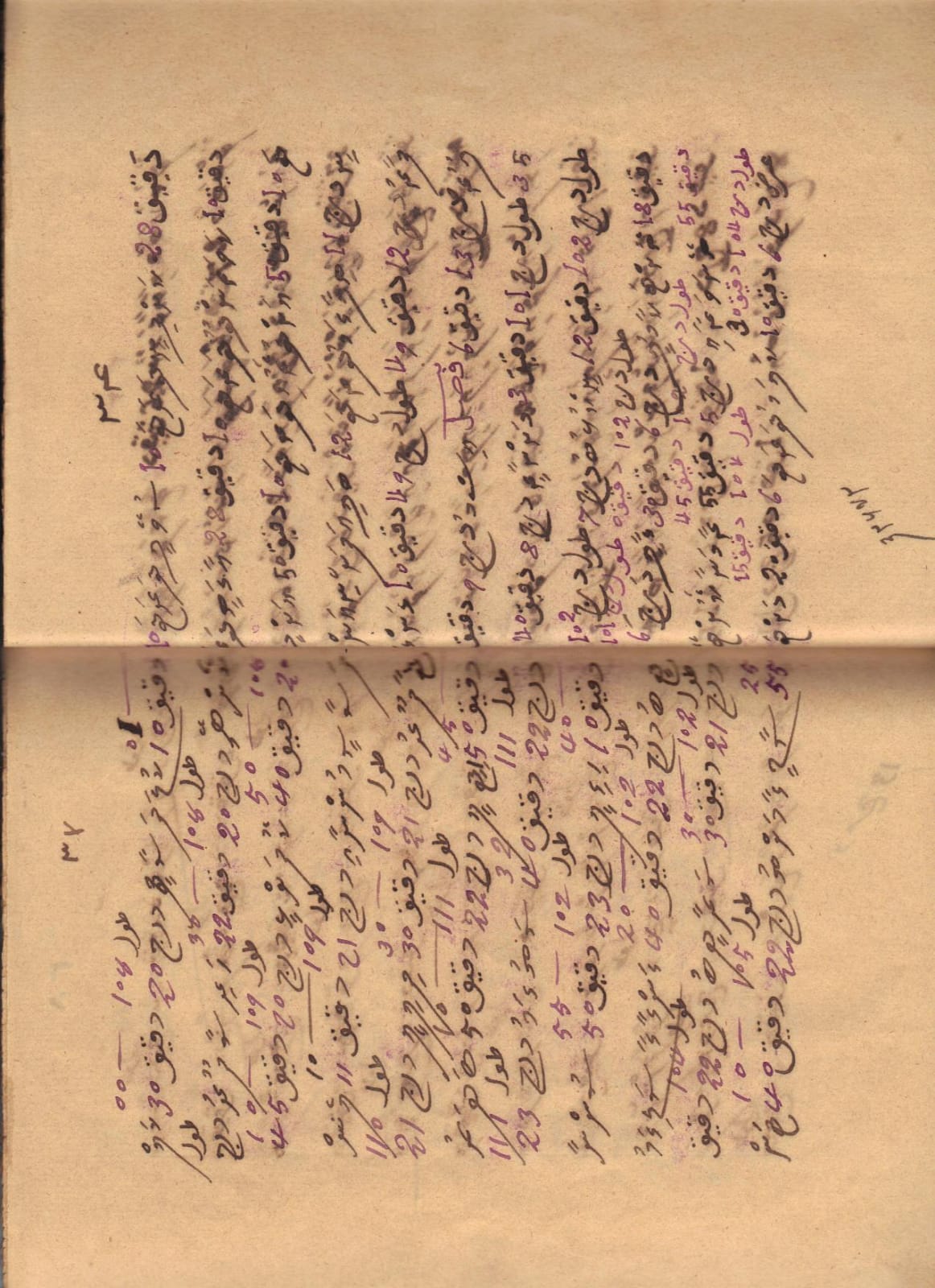
What matters here is not the astronomy but the names. Along Ceylon’s northern, eastern and north-western coasts and the Coromandel opposite, the book ignores both the Sinhala names in daily use and the European names current for centuries, and gives the Tamil instead: Nīrkoḻumbu, not Mīgamuwa, for Negombo; Tharangambāḍi, not the Danish “Tranquebar”; Mayilāppūr and Chennappaṭṭinam, not “Madras” – a name the book never uses, even though Fort St George had stood there since the 1640s. The Tamil forms carry their own grammar across intact, suffixes like -paṭṭinam and -kōṭṭai still recognisable in the Dhivehi spellings.
The pattern stops exactly where Tamil stops being spoken – round Ceylon’s Sinhala south-west the book’s names turn Sinhala again – which suggests a pilot’s working vocabulary, learned from the Tamil-speaking Muslim shipowners of those coasts, not a scholar’s borrowing. It even knows small places such as Kunimēdu, a village on the Coromandel Coast north of Pondicherry.
Some of the place names in the gazetteer:
The Chola inscriptions of Rājarāja I record the taking of “the old islands of the sea numbering twelve thousand”, read since as the Maldives and the Laccadives. The dynasty itself had collapsed by the late 13th century; the sea-road it opened did not. Nine centuries later, a pilot in Addu who had never seen a Chola inscription was still steering by Tamil landfalls and calling the ports what Tamil-speaking Muslim sailors called them – evidence that the entanglement this series has traced was never one family’s alone, but the ordinary, centuries-deep condition of Maldivian seafaring. Against that background, a sixteenth-century Utheemu family with a teacher in Beypore who seems already to have known their fathers’ names is not an anomaly. It is exactly what nine hundred years of that same sea-road would produce.
There is a wider pattern behind this, visible even in the formal language the Maldivian court itself used towards Ceylon for centuries. The missives sent from Malé to Colombo open, again and again, with the same preamble: “WHEREAS it has been customary for a long time with the Sultans of the Maldive Islands to pay tribute to the Government of Ceylon; and whereas the Government of the former has been under the protection of the Governor of Ceylon, we too are paying tribute annually to the Government of Ceylon.” Read against that formula, it has always been natural to assume the relationship was essentially a fraternal one – the Dhivehin and the Sinhalese, two island peoples whose languages both descend from Prakrit, bound by that shared inheritance. But the Niyamināmā’s gazetteer, and this series as a whole, point the other way. The working, lived contact was never with the Sinhalese court or the Sinhalese hill country; it was with the Muslim Tamils of Ceylon and the Malabar shore opposite – the Tamil-speaking shipowners who taught Maldivian pilots their landfalls, the Dhon Sōlhiyā Kaleyge who sheltered a Maldivian exile, the teacher of Beypore who seems to have known the Utheemu lineage by heart. Sinhalese and Dhivehi share a mother tongue; but the Dhivehin’s practical, everyday kinship ran to the Tamil-speaking Muslims across the water instead – a case of being divided by language, yet united by being people of the sea.
Conclusion
In Oscar Wilde’s A Woman of No Importance, one character remarks that “when good Americans die they go to Paris”. And when bad Americans die? “Oh, they go to America.” Something of the same joke seems to fit Sōlhiyā and Holhīn: when good Maldivians died, they went to Sōlhiyā-land, Ceylon; and when bad Maldivians died, they went to Holhi-land, the Malabar coast.
Two threads tie this series together, one philological and one biographical. Sōlhiyā and Holhīn are the same word, caught at two points along the sound shift part two traced through Fritz’s work – the initial Dhivehi/Sinhala s that softens to h (Sinhala sanda/handa, “moon”, against Dhivehi handu). Sōlhi – “Chola” – becomes Holhi, and then, with the ordinary Dhivehi human plural -n, Holhīn. But the split is not just phonetic. As part two suggested, Sōlhiyā stayed the plain, unshifted, respectable word for a Chola – the word fit to survive as a personal name, Dhon Sōlhiyā Kaleyge, for Mohamed’s own Ceylonese host and protector. Holhīn, on this reading, is the same word gone the other way: worn down in the mouth, and worn down in standing along with it, into the ordinary Dhivehi word for a man of the Malabar coast – the Chola a Maldivian would rather not claim kinship with. That, and not mere sound change, is the Wilde joke above: Sōlhiyā is where the good Chola went in Maldivian eyes; Holhīn is where the bad one went.
The second thread is Mohamed Thakurufaan himself. Whether the Utheemu family was Chola by blood as well as by name remains a question this series has raised, not closed. But the deeper kinship it traces was never confined to one family. It was the ordinary condition of these islands’ life at sea – and it ran, as it always had, towards the Tamil shore rather than the Sinhala one.
In my own opinion, for what it is worth, Mohamed Thakurufaan was a second-generation Maldivian, born to a family not long settled on Utheemu, whose own roots lay among the Tamil Muslims – the Sōlhiyā – of the Coromandel and Ceylon rather than among the old indigenous Maldivians. No single piece of evidence gathered here proves it outright. But taken together – Pyrard’s account of a family with no grand estate (see part one), Mueenudeen’s own chancery conceding the same point two and a half centuries later, a teacher in Beypore who seems to have known the Utheemu elders by name before Mohamed spoke, and a Maldivian seafaring tradition that for nine centuries looked towards the Tamil shore rather than the Sinhala one – it is enough, to my mind, to call Mohamed Thakurufaan a son of that Sōlhiyā world: not a Chola king, but a second-generation Maldivian of Tamil Muslim stock.
Discussion
No comments yet. Be the first to share your thoughts!
No comments yet. Be the first to join the conversation!
Join the Conversation
Sign in to share your thoughts under an alias and take part in the discussion. Independent journalism thrives on open, respectful debate — your voice matters.
Support Independent Journalism
Help us keep the news free and fearless
Give once
$
or
Become a memberfrom $5/month