
Measles in the Maldives: what's happening and how to protect yourself
It's spreading among adults, many of whom never completed a second dose.
Artwork: Dosain
15 Jul, 18:20
A 24-year-old Maldivian man who contracted measles died on Monday and health authorities are working to establish whether the disease caused his death. The Health Protection Agency said the cause is unconfirmed. It is reviewing the case under clinical and epidemiological procedures.
The immunocompromised man from Gaaf Dhaal Fiyoaree was reportedly being treated for other infections after testing positive for measles last month. He passed away at Hulhumalé Hospital.
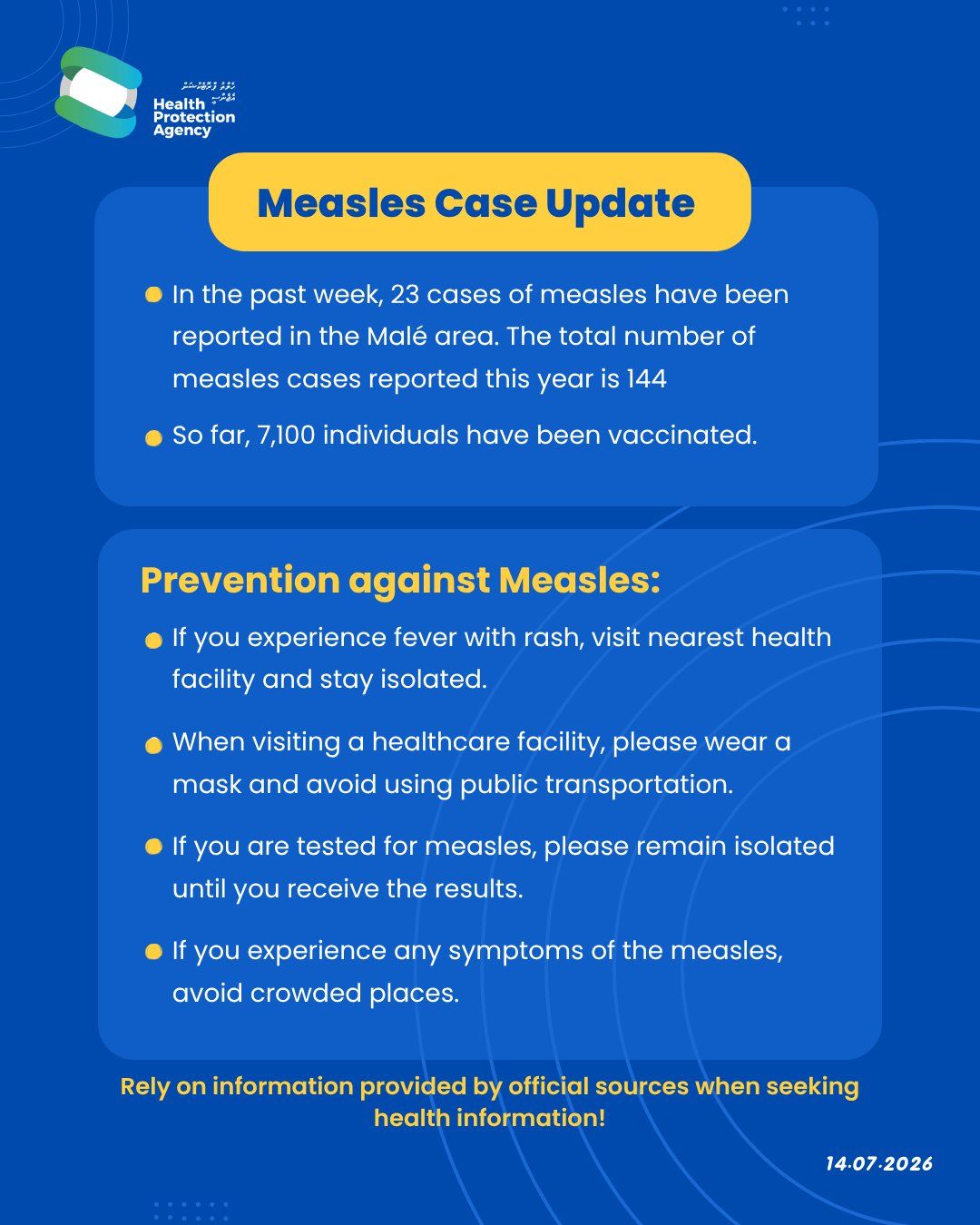
His death came amid the largest measles outbreak since the Maldives was declared free of the disease nine years ago. The Health Protection Agency reported 144 confirmed cases this year as of Tuesday, with 23 recorded in the Malé area over the past week. More than 7,100 people had been vaccinated in an ongoing drive.
"Of the 144 confirmed cases, the majority are Maldivian nationals," HPA told the Maldives Independent on Wednesday. "A small number of cases have been reported among expatriate populations of several nationalities. HPA continues to monitor all cases and contacts as part of the national outbreak response."
Measles is spreading not among the country's children, who are largely well protected, but among adults, most of them aged between 15 and 39. The outbreak is also largely confined to the capital. No confirmed cases have been reported outside the Greater Malé area since June 30, HPA said.
The following is based on written responses sent by the HPA on Wednesday afternoon and an earlier interview with Dr Ahmed Faisal, a paediatrician at Indira Gandhi Memorial Hospital.
Wasn't measles eliminated in the Maldives?
It was. The World Health Organisation verified the Maldives in 2017 as the first country in its South-East Asia region, alongside Bhutan, to have eliminated measles, three years ahead of a regional target. The country had recorded no local case since 2009.
Elimination does not mean the virus can never return. It means there is no continuous local transmission. Because measles still circulates in much of the world, a single imported case can start a new outbreak if enough people are unprotected.
Why is it back?
Routine childhood vaccination in the Maldives is now very high. HPA reported coverage of 99 percent for both doses in 2025. Only four of the 121 confirmed infections as of last week were children. One of those was a five-month-old too young to be vaccinated.
The problem is a gap among adults.
"The first dose of the measles-containing vaccine was introduced into the national routine immunisation schedule in 1983 and was administered at nine months of age. A second dose (MCV2), administered at 18 months of age, was subsequently introduced into the routine schedule in 2007. In 2017, the measles-only vaccine was replaced with the Measles-Rubella (MR) vaccine," HPA explained.
"Accordingly, individuals who completed their routine childhood immunisation before the introduction of MCV2 in 2007 would not routinely have received a second childhood dose through the national immunisation programme. However, some individuals in these cohorts may have subsequently received a second dose through catch-up immunisation activities, outbreak response vaccination campaigns, travel-related vaccination requirements, or other vaccination opportunities."
According to Dr Faisal, the vaccination campaigns for adults achieved coverage of about 80 percent. That left about a fifth of them without a second dose: people who missed the campaigns, were abroad at the time, or did not complete the course.
"That is what we call an immunity gap," he said.
Measles needs about 95 percent of a population to be immune before it stops spreading. Every outbreak in the Maldives begins with an imported case: an infected traveller arriving, or a Maldivian catching the disease abroad, Dr Faisal noted. Measles is currently spreading rapidly in Bangladesh and India, among other places. Once the virus is here, whether it spreads depends on how many people are unprotected.
Wasn't there meant to be a campaign to fix this?
There was. HPA said a targeted campaign for people without documented evidence of two doses was launched in 2020, aimed squarely at this gap. But it was suspended because of competing public health emergencies. It resumed in 2024 and remained open until April 2025. "Coverage estimates for these initiatives are not currently available," HPA said.
Isn't measles a mild childhood illness?
It is not. Dr Faisal was emphatic on this point. Measles is among the most contagious viruses known. A single case can infect 16 to 18 unprotected people. The virus lingers in the air of a room for up to two hours after an infected person has left.
Its complications include pneumonia, blindness and swelling of the brain. Some such as cognitive impairment can appear as long as a year after apparent recovery. The risk of severe illness rises among people with underlying conditions such as diabetes or kidney disease, and among those whose immune systems are weakened.
Even where it does not kill, the disease exacts a heavy toll: patients must be isolated and treated with protective equipment, children miss school, and parents miss work. "If a person doesn't die, some people might not see it as that serious. But I feel it is still big," he said.
HPA said there have been "no serious complications reported, and cases have generally been managed without significant clinical complications."
Who is most at risk?
The adults in the immunity gap. Those who never completed two doses and two groups who cannot be fully protected by their own vaccination: babies under 18 months, who are too young to have had the second dose, and people whose immunity is weakened by illness.
In contrast, people over 50 are mostly protected. Not by the vaccine but by having lived through measles before it was eliminated. "A lot of people, when you ask, will say, 'I caught it as a child,'" Dr Faisal said. Those who had the disease cannot catch it again.
Why should I get vaccinated if I feel healthy?
Because vaccination protects more than the individual. "The main reason for getting the vaccine isn't only for the person," Dr Faisal said. "It's very important to ensure that the disease doesn't spread from that person to others."
When enough people are immune, the virus can no longer find a path to those who cannot be vaccinated, such as young infants. This is called herd immunity. It is the only thing that protects the most vulnerable.
"The measles vaccine provides long-lasting, generally lifelong immunity for the vast majority of individuals who receive the recommended two doses," HPA said.
"Scientific evidence shows that two documented doses of a measles-containing vaccine are highly effective in preventing measles and provide durable protection for most recipients. Waning immunity is not considered a significant contributor to measles transmission at this time."
How do I know whether I've had two doses?
It may take some checking. Recent vaccinations are recorded electronically, HPA said, but older records exist in varying formats depending on the period. Vaccination centres hold the older books and some people have their own vaccination cards. If you cannot establish your status and are unsure, the safer course is to be vaccinated.
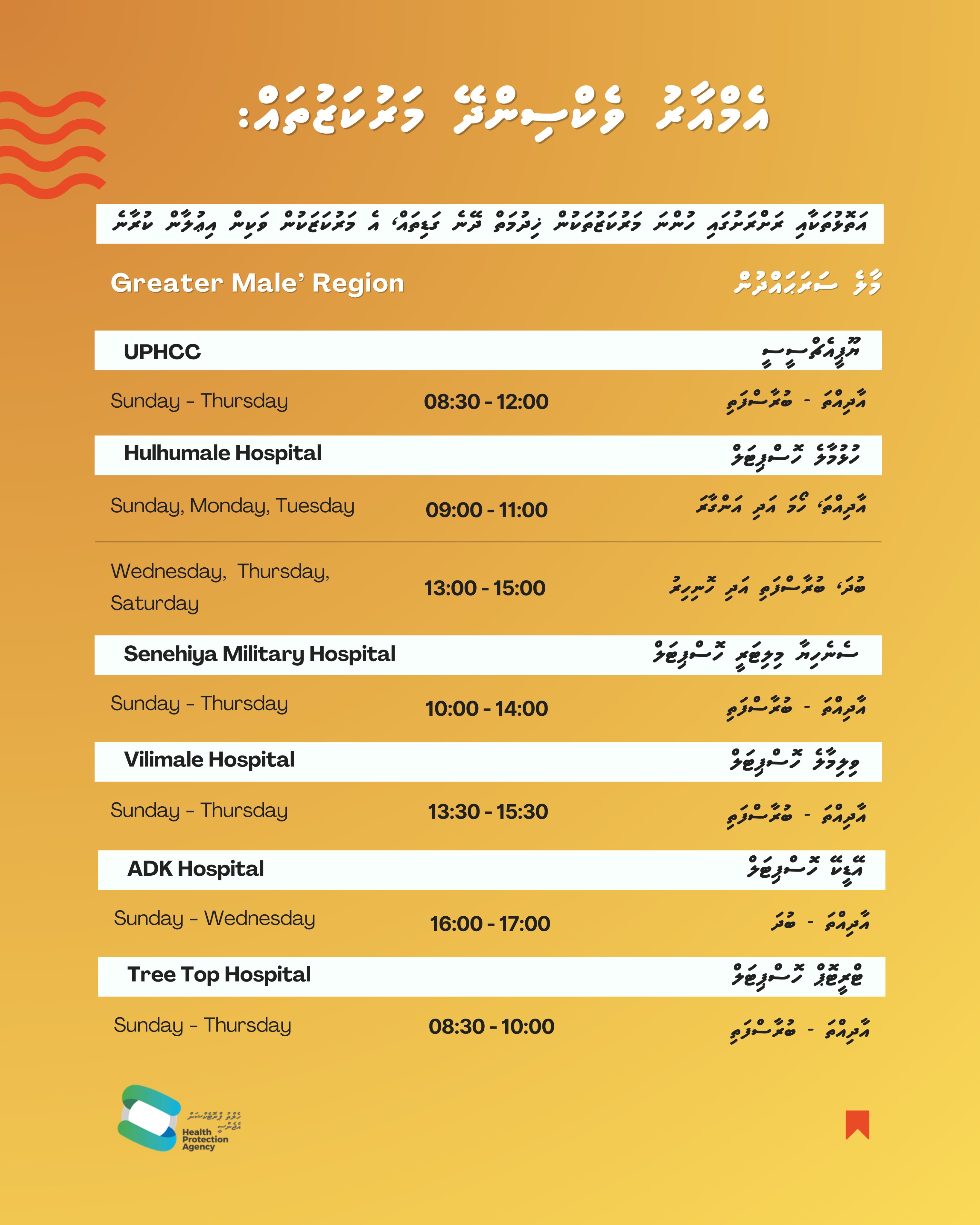
Can I get vaccinated and where?
Yes. The measles-rubella vaccine is free at designated centres across Greater Malé and the atolls. HPA is running the drive in four phases, expanding to all eligible people under 49 – including migrants – and aims to complete vaccination of those identified as eligible by the end of July.
Of 5,495 doses delivered as of July 7, 3,889 were administered in Greater Malé, and 1,606 in the atolls, HPA said. The vaccination drive "combined with surveillance, case investigation, contact tracing, and public awareness, remains central to interrupting transmission," it said.
HPA said 1,095 contacts of confirmed cases had been identified through contact tracing, of whom 503 remained under active monitoring.
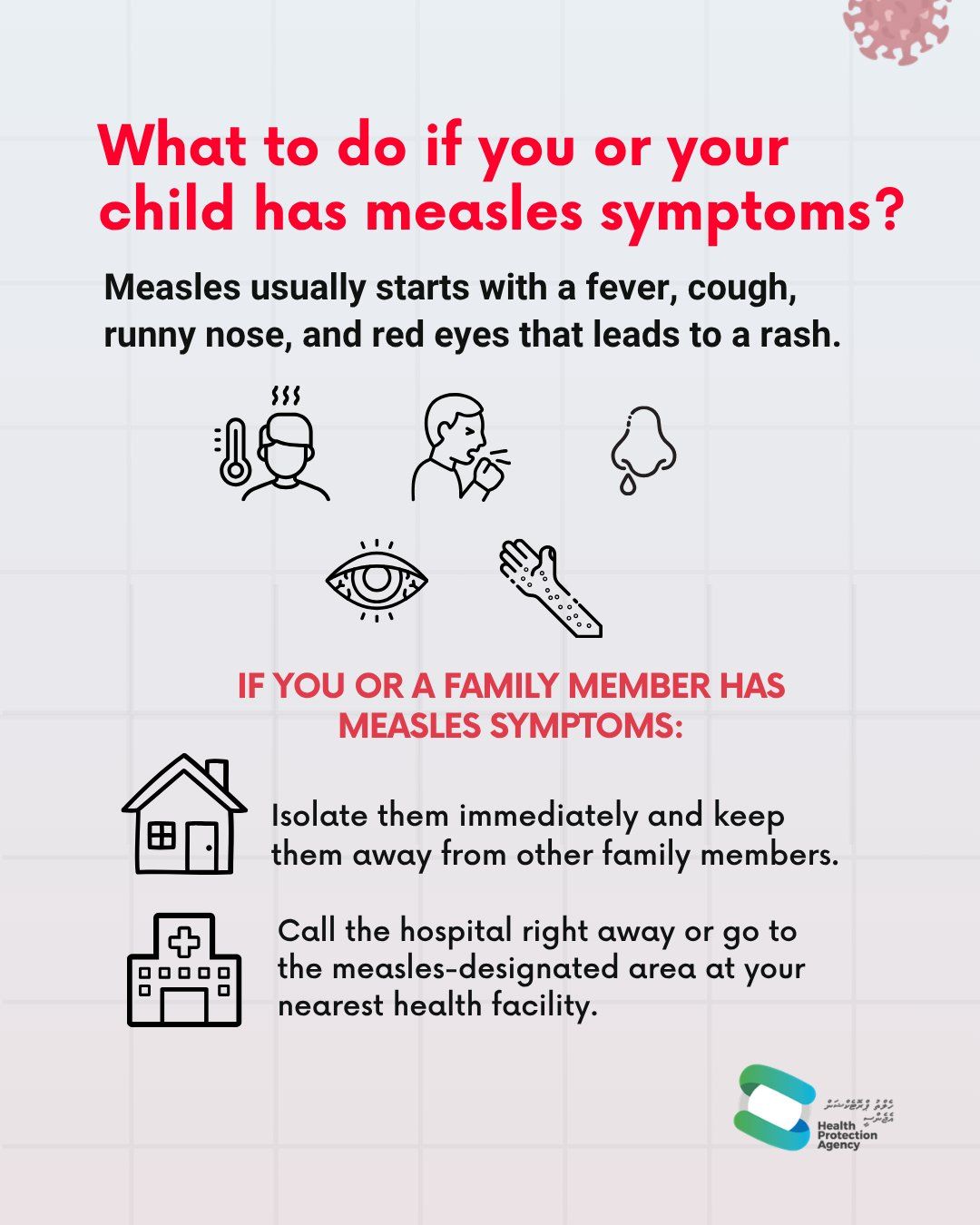
What are the symptoms and what should I do?
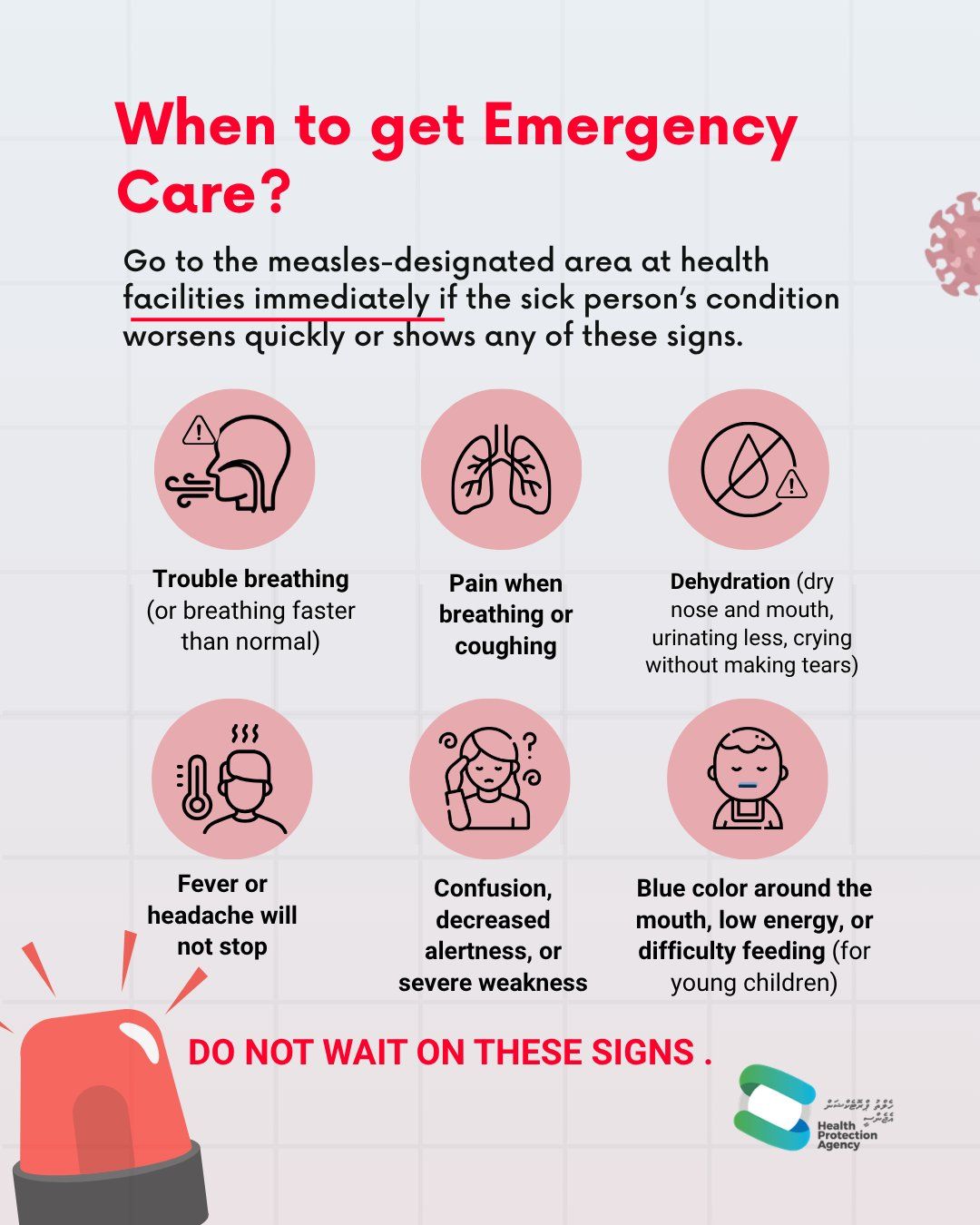
Fever, cough, red eyes and a body-wide rash. HPA advises anyone who develops a fever and a rash to seek medical care promptly, to wear a mask and avoid public transport when doing so, and to isolate while awaiting test results if measles is suspected.
Could the Maldives lose its measles-free status?
It is possible if the outbreak is not contained. Dr Faisal pointed to Sri Lanka, where measles spread for more than a year and the country's elimination status was withdrawn.
He suggested that the current case count is a warning sign: "It is a lot in proportion to the population." To keep the status, transmission has to stop. Two incubation periods – at least six weeks – must pass with no new case. If transmission continues beyond 12 months, the status is lost.
"It took a lot of effort to get here in 2017," Dr Faisal said. "So we need to work to maintain that. If we don't, it will be very easy to be lost, because measles is the most contagious virus."
HPA said it is working with WHO and partners to interrupt transmission and maintain elimination status under WHO criteria.
The public response to the vaccination programme has been "encouraging overall, and vaccination uptake has been positive," HPA said, encouraging "all eligible individuals to be vaccinated."
The Maldives has its own strand of vaccine scepticism: a small but persistent online movement that treats the sudden deaths of young people as evidence against the Covid-19 vaccines, a claim official mortality data did not support. Health officials have warned that such scepticism could erode the coverage that had eliminated polio and measles.
How do the authorities know where the virus came from?
Through genotyping. Samples from cases are sent to IGMH and abroad for genetic analysis, Dr Faisal said, which can show whether the virus circulating in the Maldives is the same lineage spreading in Bangladesh, and whether individual cases are linked to one another. For instance, genotyping can reveal whether a case in Malé and a case in another atoll are the same chain of transmission.
Discussion
No comments yet. Be the first to share your thoughts!
No comments yet. Be the first to join the conversation!
Join the Conversation
Sign in to share your thoughts under an alias and take part in the discussion. Independent journalism thrives on open, respectful debate — your voice matters.
Support Independent Journalism
Help us keep the news free and fearless
Give once
$
or
Become a memberfrom $5/month