

El Niño is here: what it means for Maldivian reefs
A guide to the timeline, the record and the hardened forecast.
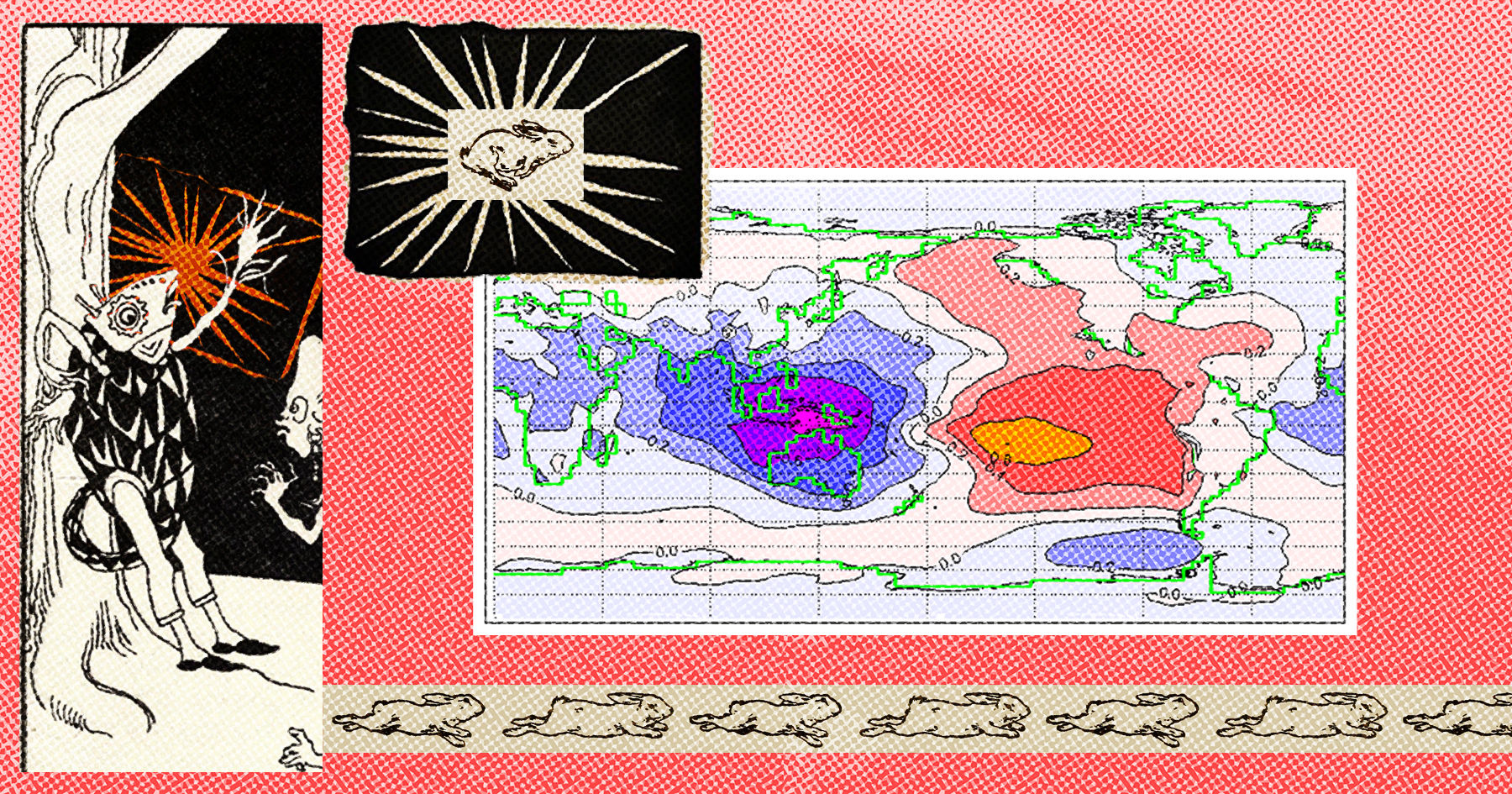
Artwork: Dosain
21 Jul, 18:05
When former Met Office climatologist Ahmed Shabin wrote for us in June, El Niño was a forecast: an 80 percent likelihood over the June to August period, at least moderate and possibly strong. Six weeks later, the forecasts have grown considerably more alarming.
On July 13, the US National Oceanic and Atmospheric Administration's Climate Prediction Center confirmed that El Niño is present. Sea surface temperatures are above average across the central and eastern Pacific and there is a 97 percent chance the event persists into early 2027.
The World Meteorological Organisation warned in early July that conditions would strengthen rapidly between July and September, intensifying the risk of heatwaves on land and marine heatwaves across many regions. Australia's Bureau of Meteorology says the majority of models now point to a peak among the strongest observed since 1950, territory occupied by only a handful of events, most recently in 2015-16.
Forecasters have begun using a term reserved for that rare class: a super El Niño, which has now been given a greater than 80 percent chance. The event is expected to peak between November and January.
What is it again?
El Niño is a natural climate cycle in which sea surface temperatures in the central and eastern equatorial Pacific rise above normal, reshaping weather patterns worldwide. It recurs every two to seven years and varies in strength. The strongest events push heat into oceans far beyond the Pacific, including ours.
For the full picture on the science, the Indian Ocean mechanics and the two scenarios for the Maldives, Shabin's essay remains the essential read.
What the record shows
The Maldivian record is unambiguous. The 1997-98 super El Niño triggered the worst coral die-off in the country's modern history, devastating shallow reefs nationwide. The 2015-16 event – the last of comparable strength to what is now forecast – bleached reefs again before recovery from 1998 was complete.
Speaking on Dhauru's podcast on Friday, Met Office Senior Meteorologist Thahumeena Abdul Kareem noted a foreboding finding from 2015-16 about deeper waters: bleaching damage was recorded on reefs at depths of seven to 13 metres, not only the shallow reef flats hit in 1998. Reefs need about a decade to recover from a severe event and the intervals between severe events are now shorter than that.
The pole-and-line tuna fishery, which accounts for the bulk of Maldivian export earnings, runs on live bait taken from reef lagoons, the same shallow systems that bleached almost completely in 1998. Tourism, the vital pillar on which the economy stands, sells the reefs directly: dive sites, house reefs, the snorkelling that fills resort schedules. When the reefs degrade, both industries will feel it.
The country has recent practice reading these warnings. During the 2024 global bleaching event, the Environmental Protection Agency suspended dredging, reclamation and sand pumping for a month to reduce human stress on reefs, a measure the former EPA director general described as essentially the only lever available. But an exemption granted to a US$ 343 million resort project at the time showed how contested that lever was.
In November last year, the Global Tipping Points report – the work of 160 scientists across 23 countries, released ahead of the COP30 summit – concluded that warm-water coral reefs have crossed their thermal tipping point, among the first major Earth systems to breach a threshold beyond which consequences become irreversible. The central estimate for that threshold (1.2°C of global warming) has already been exceeded. The report judged it virtually certain that reefs will eventually tip even under optimistic emissions pathways.
The findings suggest that a strong El Niño will not just be a shock to a healthy Maldivian reef system, but another blow to one already past its limit.
The second driver is still loading
Shabin's essay flagged a compounding risk: a positive Indian Ocean Dipole developing alongside El Niño, as happened in 1997. That part of the forecast remains unresolved. As of mid-July the IOD is neutral, but models suggest a positive event is likely to develop through the coming months with wide uncertainty on timing and strength. If it materialises, it would pile additional heat stress on the western Indian Ocean at exactly the wrong moment.
What to watch, and when
El Niño's peak is forecast for November to January. But in both 1998 and 2016, mass bleaching in the Maldives struck in the April-May warm season that followed the winter peak. That points to about March to May 2027 as the danger window for Maldivian reefs, and to the months between now and then as the window to prepare.
Coral reefs form the bedrock of Maldivian islands. Bleaching occurs when warmer water stresses the coral and disrupts the symbiotic relationship with a micro-alga called zooxanthellae, causing the coral to expel the food source and turn white. Bleached coral can starve and die.
NOAA has already warned that this current event could trigger a fifth global coral bleaching event. Every strong El Niño since 1998 has produced one. The fourth, which ended only last year, affected 84 percent of the world's reef area. NOAA's Coral Reef Watch publishes a rolling four-month bleaching outlook. The Climate Prediction Center updates its El Niño assessment on the second Thursday of each month.
Preparation involves identifying the reef areas at greatest risk before the heat arrives, Thahumeena advised, and concentrating restoration efforts (coral planting and artificial reef programmes) on those hotspots now rather than after the damage is done.
Discussion
No comments yet. Be the first to share your thoughts!
No comments yet. Be the first to join the conversation!
Join the Conversation
Sign in to share your thoughts under an alias and take part in the discussion. Independent journalism thrives on open, respectful debate — your voice matters.
Support Independent Journalism
Help us keep the news free and fearless
Give once
$
or
Become a memberfrom $5/month

