

President champions climate adaptation abroad as dredgers blanket atoll in sediment
Dive sites abandoned, bait grounds destroyed as plume engulfs Malé atoll.
Artwork: Dosain
12 Feb, 17:15
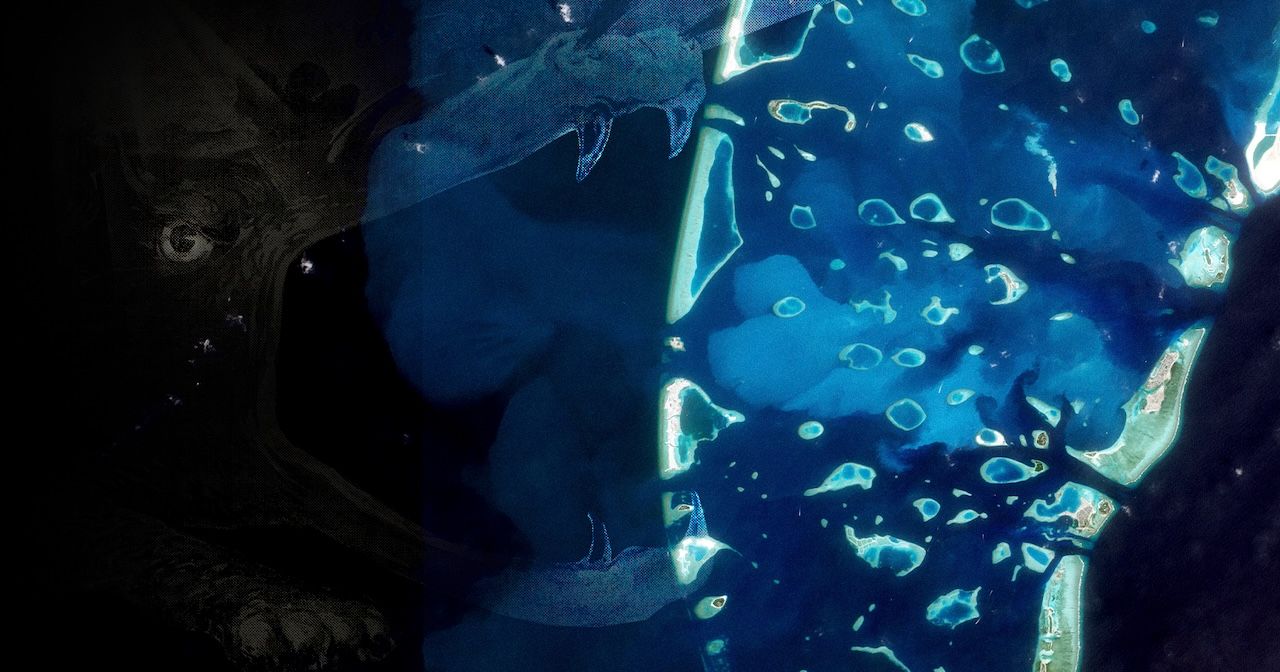
As President Dr Mohamed Muizzu urged the world to protect coral reefs as "the most effective and affordable climate defences" from a podium in Berlin on Wednesday, three industrial dredgers were churning up sediment across Malé atoll on a scale visible from satellite imagery, turning popular dive sites murky, driving away sharks, and destroying bait fishing grounds.
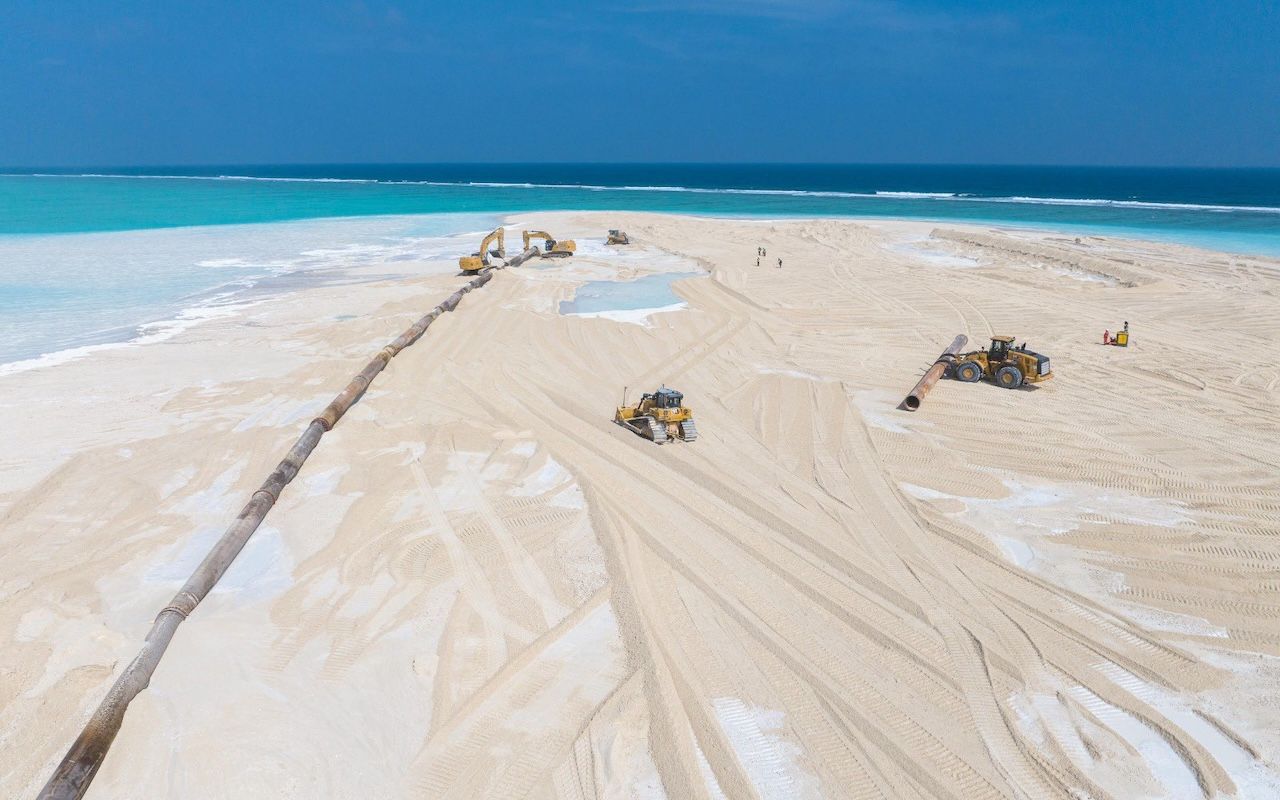
The president calls the reclamation of the Fushidhiggaru lagoon south of Malé the "largest climate adaptation project" ever carried out in the Maldives. As its flagship project, his administration plans to create 1,153 hectares of land – about three times the size of Hulhumalé – to develop a zero-carbon "eco-city" called Rasmalé.
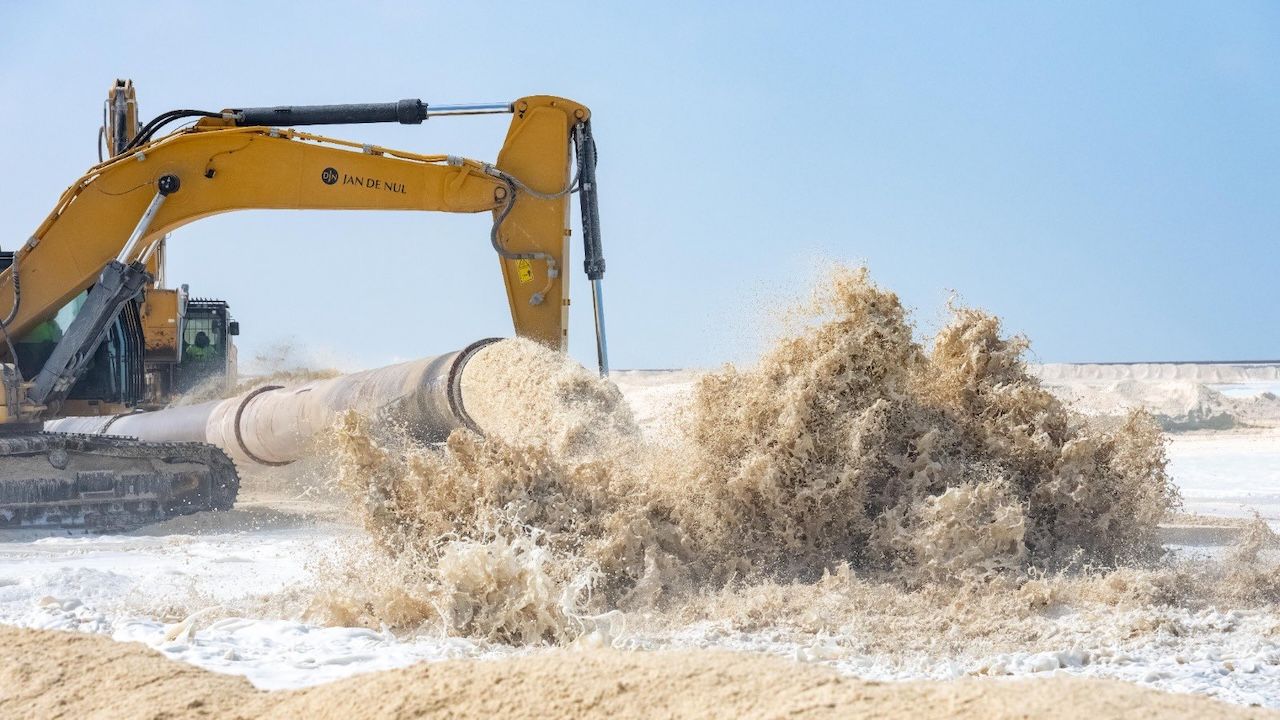
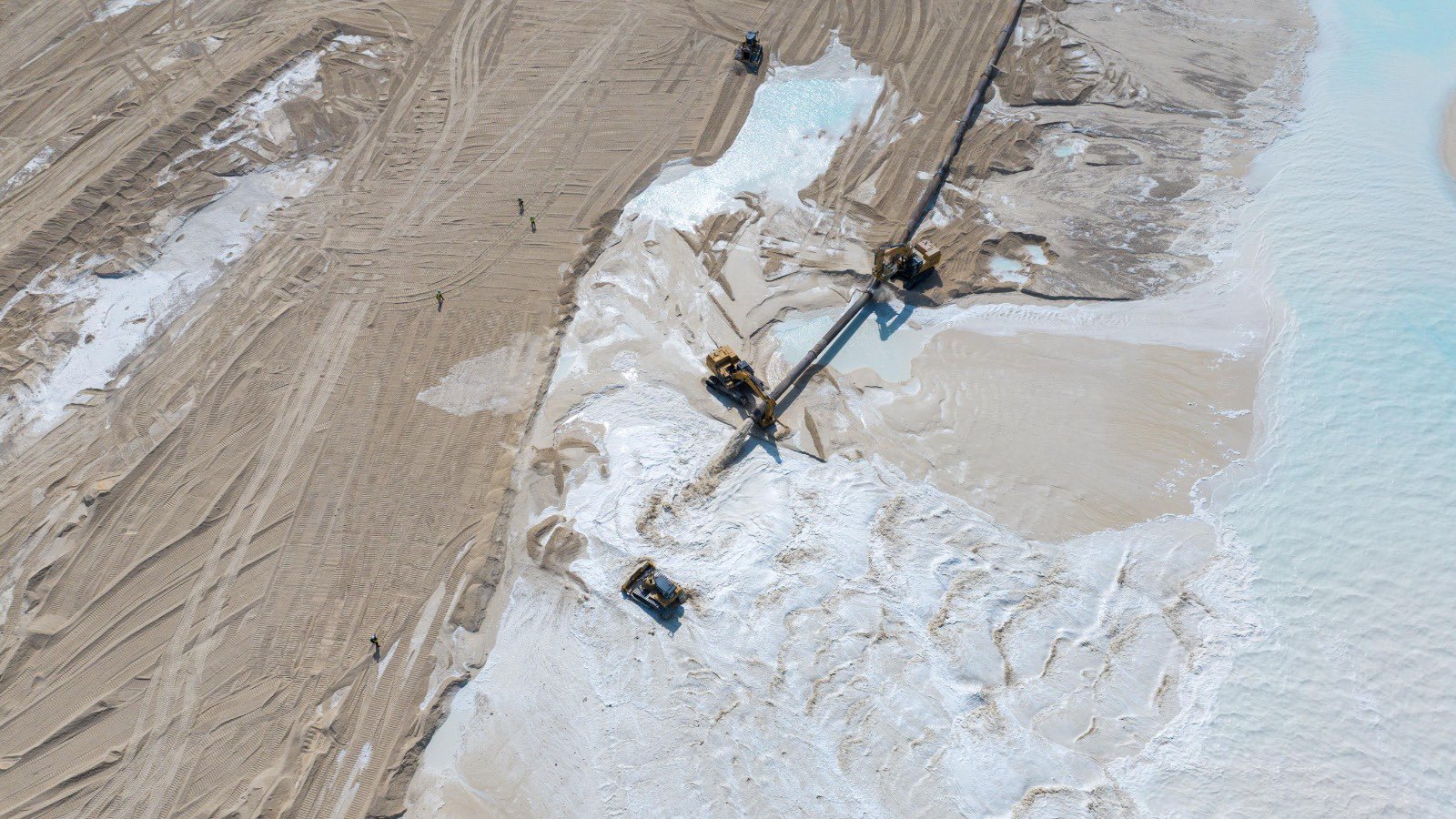
Land reclamation involves dredging up sand from the ocean floor, sucking it through pipes and dumping it to expand coastlines or create manmade islands on shallow lagoons. The massive sediment plumes are the most visible impact of dredging, but it's the unseen damage to coral reefs and fragile marine ecosystems – which underpin both tourism and fisheries – that worries scientists and environmental activists most.
Among those counting the cost are dive operators, who say the dredging has made some of the atoll's most popular sites unusable.
"It's very murky in the shark tank near Hulhumalé. Murkiness and visibility is one problem and the other is the noise from the dredgers when they are doing the work, which really affects shark sightings," Abdulla Hasrath 'Haththu,' owner of Dive Club, told the Maldives Independent.
"Sedimentation is a very big problem, especially because it's the northeast monsoon and the wind is stuck on the east side, so the sediment is not moving. A lot of dive centres are losing money from shark tank. At the moment, several companies that dive there have even stopped. We are still diving based on the conditions on the day."
The sediment has spread beyond Hulhumalé. "Another site that has been affected is Kurumba house reef, which is also in very bad condition," Haththu said, referring to the resort island near the airport. "Banana reef as well, but that reef has been suffering for the past 20 years because of different phases of Hulhumalé reclamation."
Bait fish driven out
Fishermen are reporting similar damage. Persistent reclamation in Malé atoll has significantly affected the inner atoll bait fishery, according to Mohamed Rasheed 'Galy' from the Bodu Kanneli Masveringe Union (Union of Yellowfin Tuna Fishermen).
"We have put out statements before because bait fishery is being affected from reclamation, I have posted personally and commented as well. Isn't it the state's responsibility to stop it when they know that bait fishery as a whole is being destroyed from this? We have asked to at least stop taking sand from our prime bait fishing locations," he told the Maldives Independent in January.
The union wrote to the Environmental Regulatory Authority to raise their concerns. But the rebranded agency has yet to respond.
Fishermen from the rest of the country have echoed these concerns, said Humaida Abdul Gafoor 'Humay,' an environmental activist with the Save Maldives campaign.
"I had a conversation with a Kulhudhuffushi fisherman about this too. What happens is that because it's a shallow lagoon, bait fish like it and aggregate there. But when [sand] is taken from there, the depth is different and the bait fish do not like this area. So when you destroy that physical environment, it is no longer hospitable for bait fish," she explained.
The Maldives Independent was awaiting a response from the environment ministry at the time of publication.
Visible from space
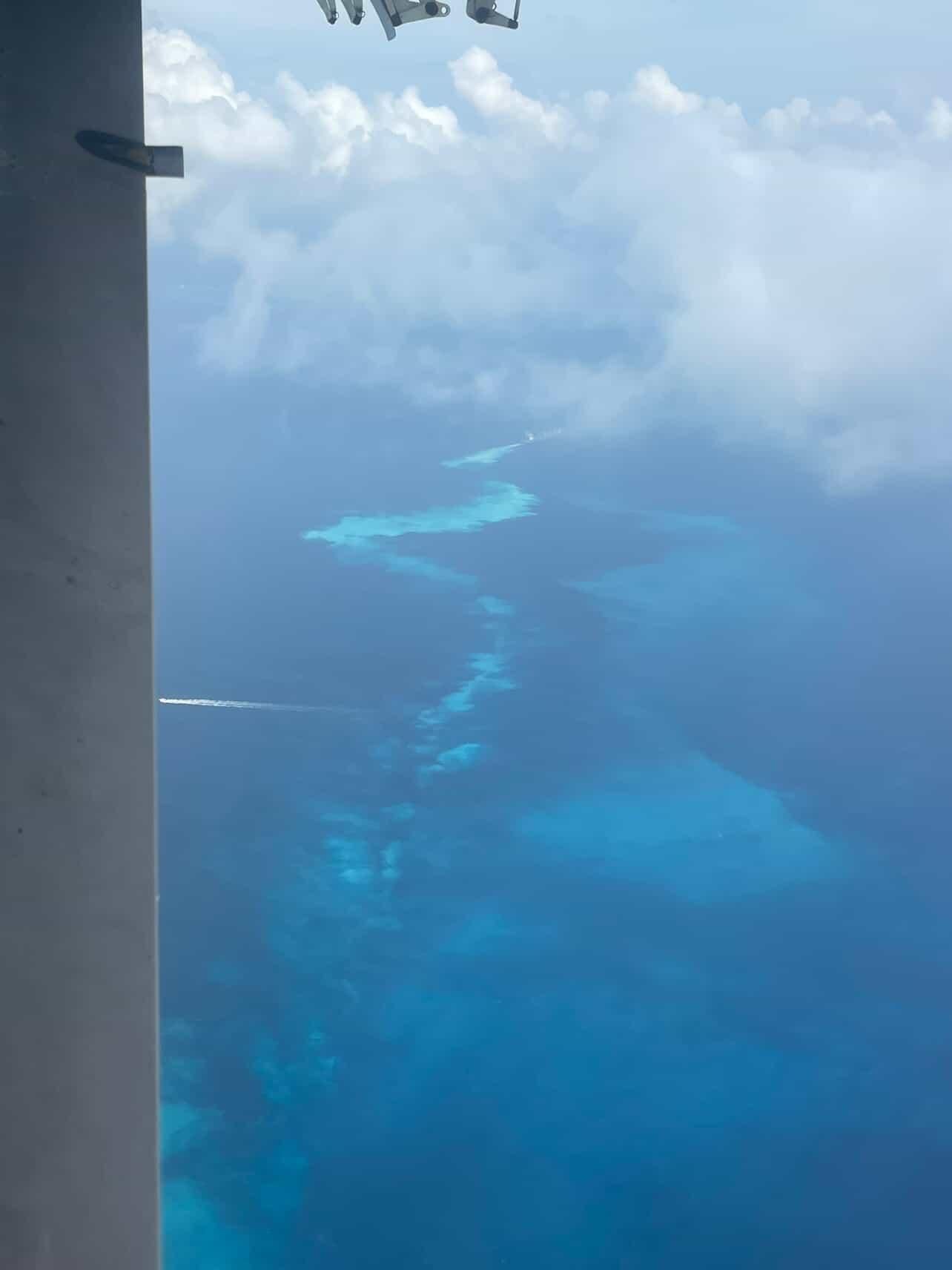
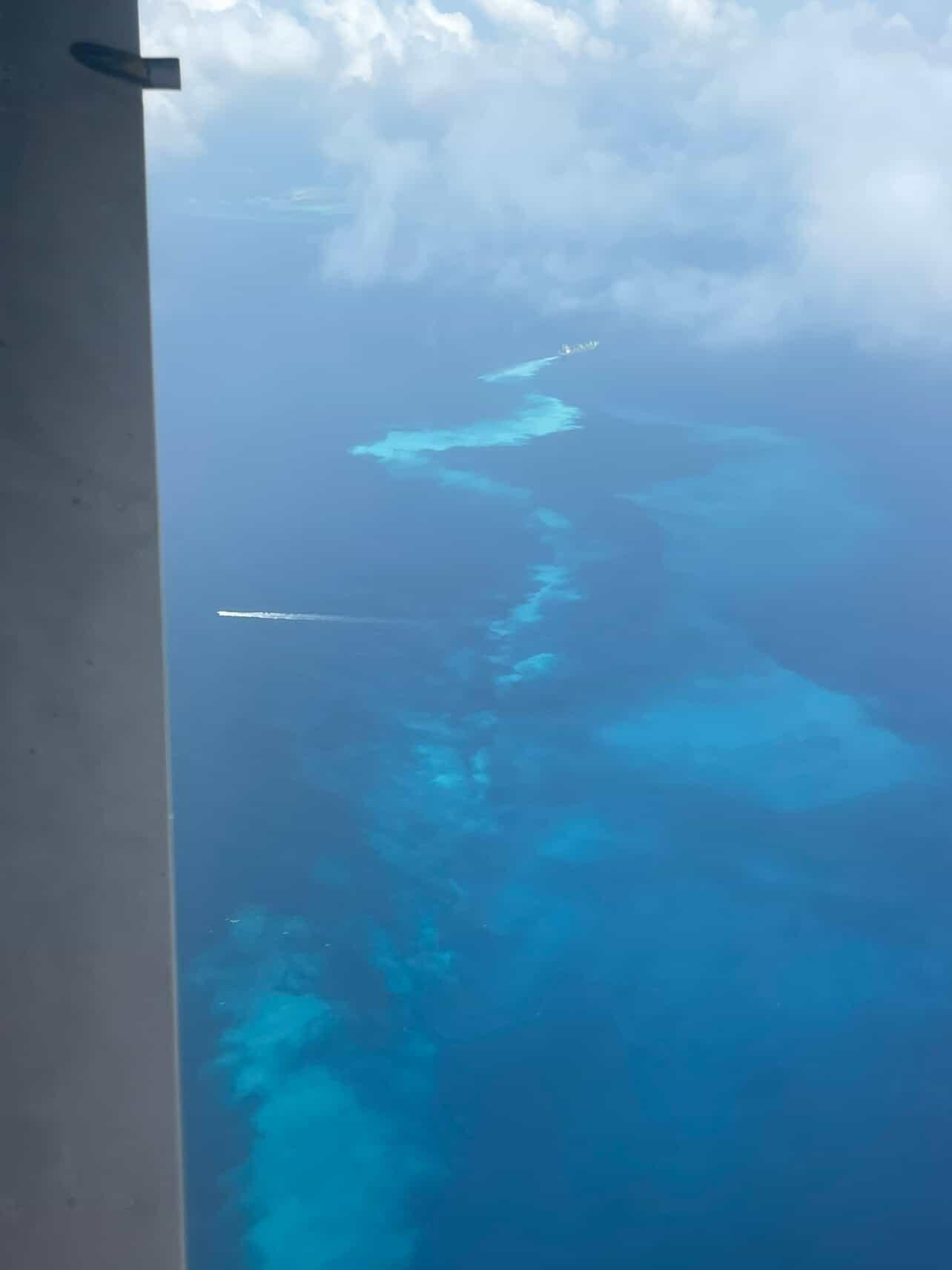
Sentinel 2 satellite imagery shows sediment plumes spreading and blanketing large swaths of South Malé atoll in January.


Aerial photos shared on social media confirm how the sand has been spreading throughout the atoll.
A study published in 2021 showed that Maldives accounted for more than 60 percent of net global increase in atoll land area as a result of land reclamation. North Malé atoll alone contributed 15.5 percent – comparable to reclamation in the whole of the South China Sea.
Climate adaptation or greenwashing?
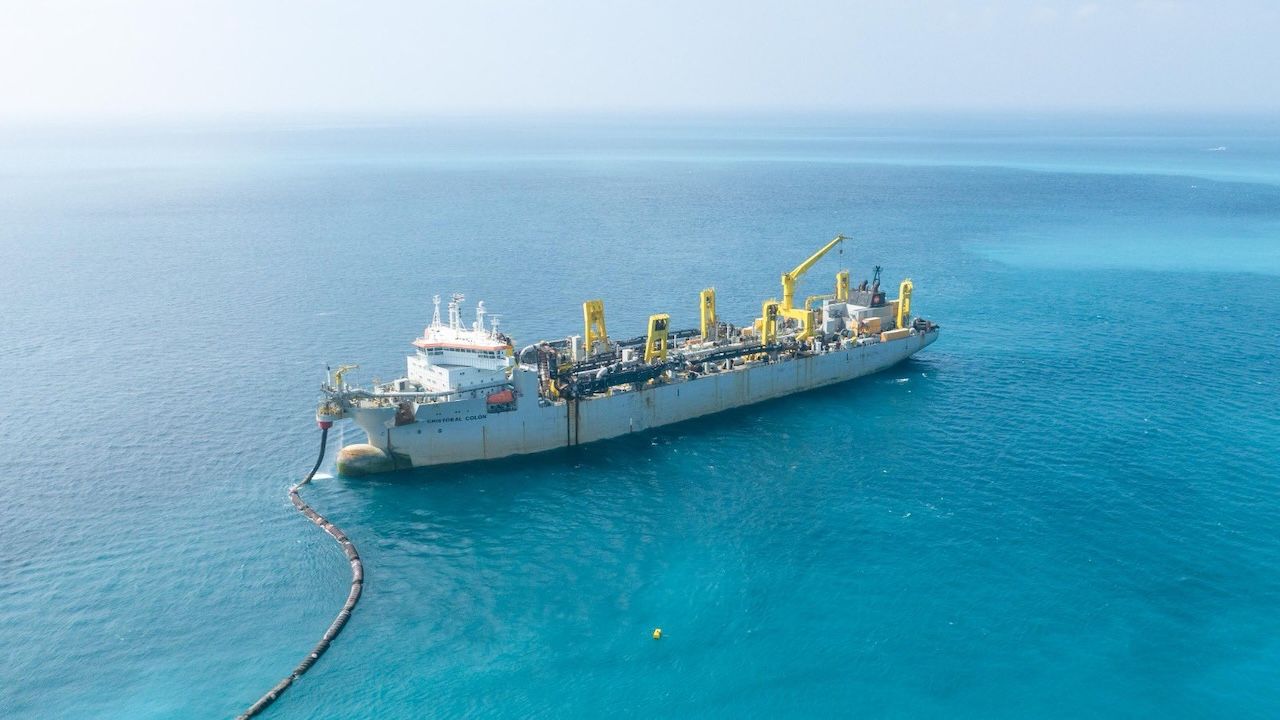
The government is simultaneously reclaiming land on multiple fronts across Malé atoll. The Cristóbal Colón, one of the world's largest trailer suction hopper dredgers, is reclaiming land for Rasmalé. Two more dredgers, the Prins Der Nederlanden and Oranji, are reclaiming land to expand Hulhumalé.
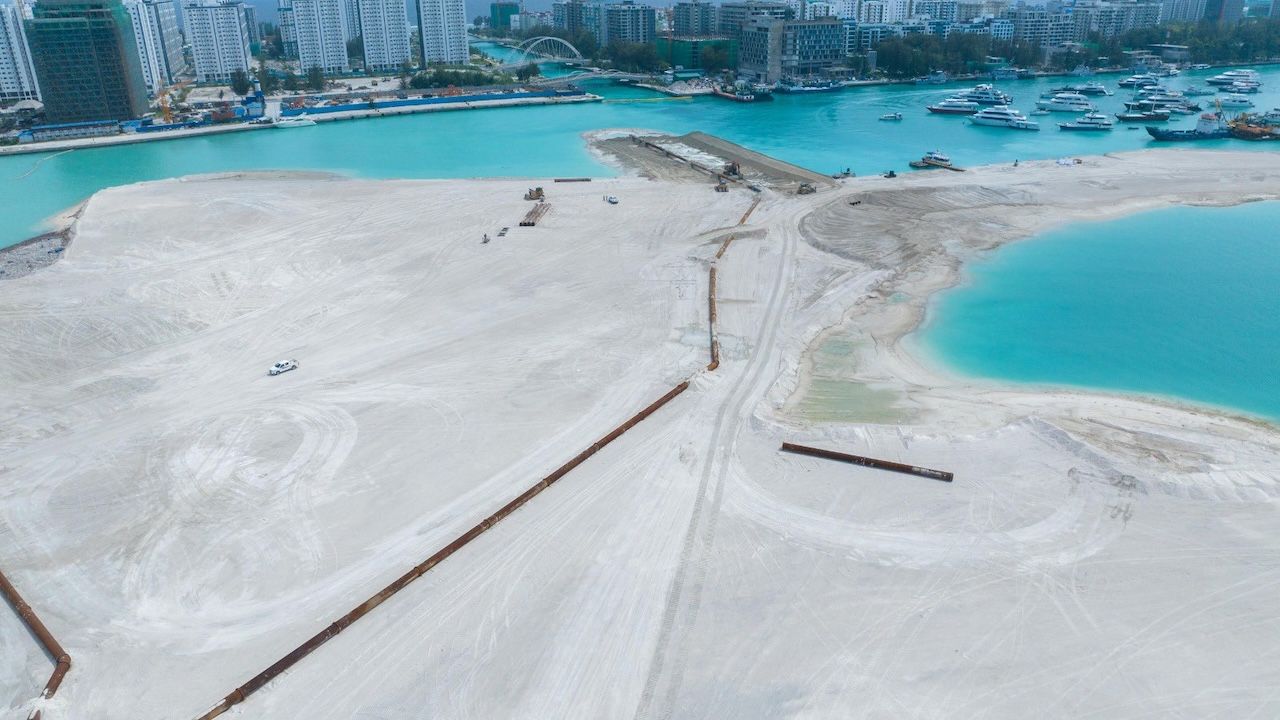
"One of the two world's largest Trailer Suction Hopper Dredgers 'Cristóbal Colón' of Jan De Nul started reclamation works today to triple up the speed of creation of land for the 100% net zero carbon, smart eco-city 'Rasmale': the largest climate adaptation project to be carried out in the Maldives," President Muizzu posted on December 1.
In November, Muizzu celebrated the arrival of TSHD Prins Der Nederlanden. After Hulhumalé, the two dredgers are to be deployed to the Giraavaru lagoon west of Thilafushi. According to Marine Traffic data, Oranji was operating north west of Hulhumalé on Thursday while Cristóbal and Prins Der Nederlanden were both operating in South Malé atoll.
Meanwhile, both Muizzu and Environment Minister Thoriq Ibrahim are currently overseas pitching for climate finance and adaptation support.
While Thoriq was in the UK discussing marine protection, Muizzu visited Humboldt-Universität zu Berlin and delivered a speech where he called to scale up finance mobilisation to deliver climate adaptation.
"President Dr Muizzu noted that delaying adaptation only multiplies future costs, that communities are active agents of change, and that reefs, mangroves and other natural ecosystems remain among the most effective and affordable climate defences. He stressed that adaptation and development must go hand in hand," the President's Office said.
Humay was unsparing in her criticism of the president's rhetoric.
"It's extreme greenwashing. The most accurate way to describe it is lying. They are spreading disinformation and misinformation and lying to the public. There's nothing ecologically sound about what they are doing. There is nothing sustainable about it, that is absolutely clear. They are disrupting the geophysical balance, the ecological balance or the biodiversity balance of the reef system. It is lying to say that this is sustainable that this is ecologically sound," she said.
"And now they are saying 10 kilometres of sediment has spread. That is not unusual because it has been reported in EIAs before that when reclamation is done in one location, reefs are affected 10 kilometres away. It all depends on the current and wave motion and hydrology."
Lack of real research on the impact of reclamation is also worrying, Humay added: "we can only see what is visible to us."
The government's own Environmental Regulatory Authority is running a five-year coral restoration project in the Rasfari lagoon in north Malé atoll. According to the ERA's latest annual report, most of the corals planted under the project died during last year's mass bleaching event. Scientists warn that local stressors including lagoon dredging and land reclamation compound bleaching damage and hinder reef recovery.
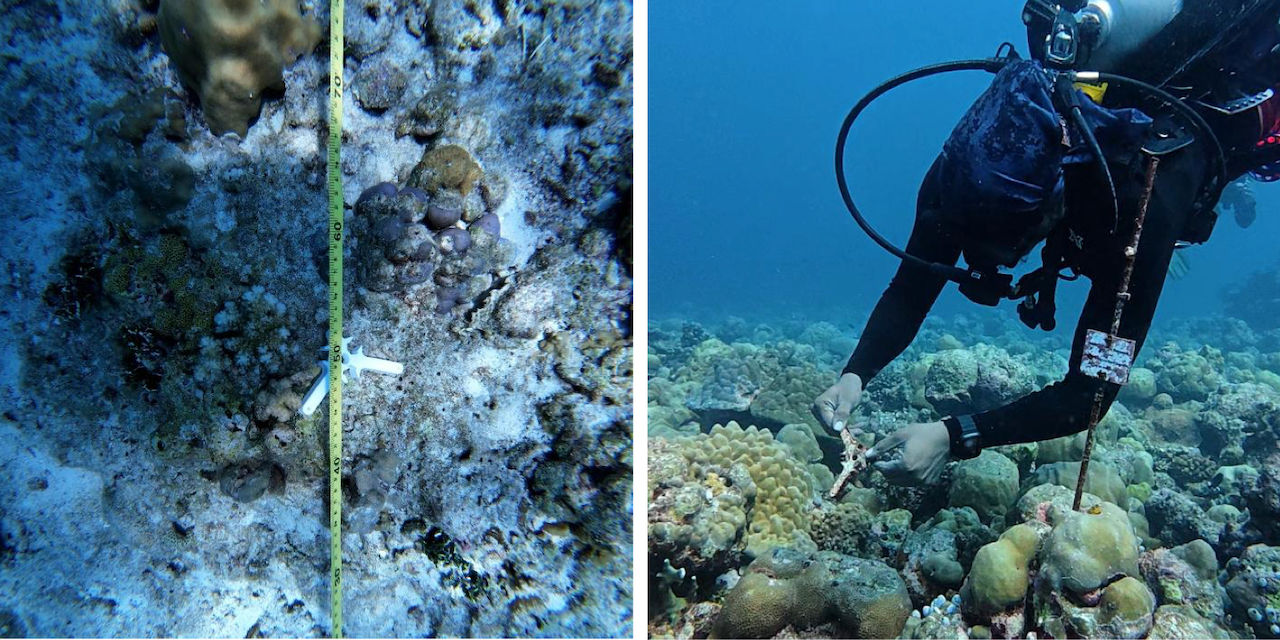
"There's no study done on what is being destroyed. We can see the kind of disruption that is happening to our reefs. We also know there are fewer shark sightings in this area now. We don't know what it's doing to the reef system and corals. Nothing is being done to study the impact," Humay stressed.
"All they focus is doing what they are doing which is to destroy and disrupt the ecological balance of the atoll system which will have an impact later in terms of erosion and destruction to the natural cycle."
The dredging comes as scientists warn that warm-water coral reefs have already crossed their thermal tipping point. A Global Tipping Points report released ahead of COP30, authored by 160 scientists, found it is "virtually certain" that reefs will undergo severe degradation. The report called on governments to reduce local stressors – including "unsustainable coastal development" – to give reefs a chance of recovery.
It is questionable whether much of the reclamation is necessary. An investigation by the Maldives Independent in October found that a majority of the country's 52 reclamation projects since 2007 produced land that sits unused. The former director general of the Environmental Protection Agency told parliament in 2022 that land should not be reclaimed "unless we really need to."
Discussion
No comments yet. Be the first to share your thoughts!
No comments yet. Be the first to join the conversation!
Join the Conversation
Sign in to share your thoughts under an alias and take part in the discussion. Independent journalism thrives on open, respectful debate — your voice matters.
Support Independent Journalism
Help us keep the news free and fearless
Give once
$
or
Become a memberfrom $5/month