

Wilson the castaway cat: how a ginger tom was rescued from a desert island
A stranded cat, a viral plea, and a rescue mission during Ramadan.

Artwork: Dosain
12 Mar, 15:06
The tourists heard him before they saw him. Somewhere in Fenboa Finolhu, an uninhabited island in Meemu atoll, a ginger cat was crying out as they stepped ashore from a safari boat. He was alone, stranded, and desperate for attention.
Melissa McDevitt, a tourist on the yacht, immediately wanted to rescue him. But the safari operator strictly enforced a "no pets" policy. So she posted a plea to a Facebook group popular with visitors to the Maldives.
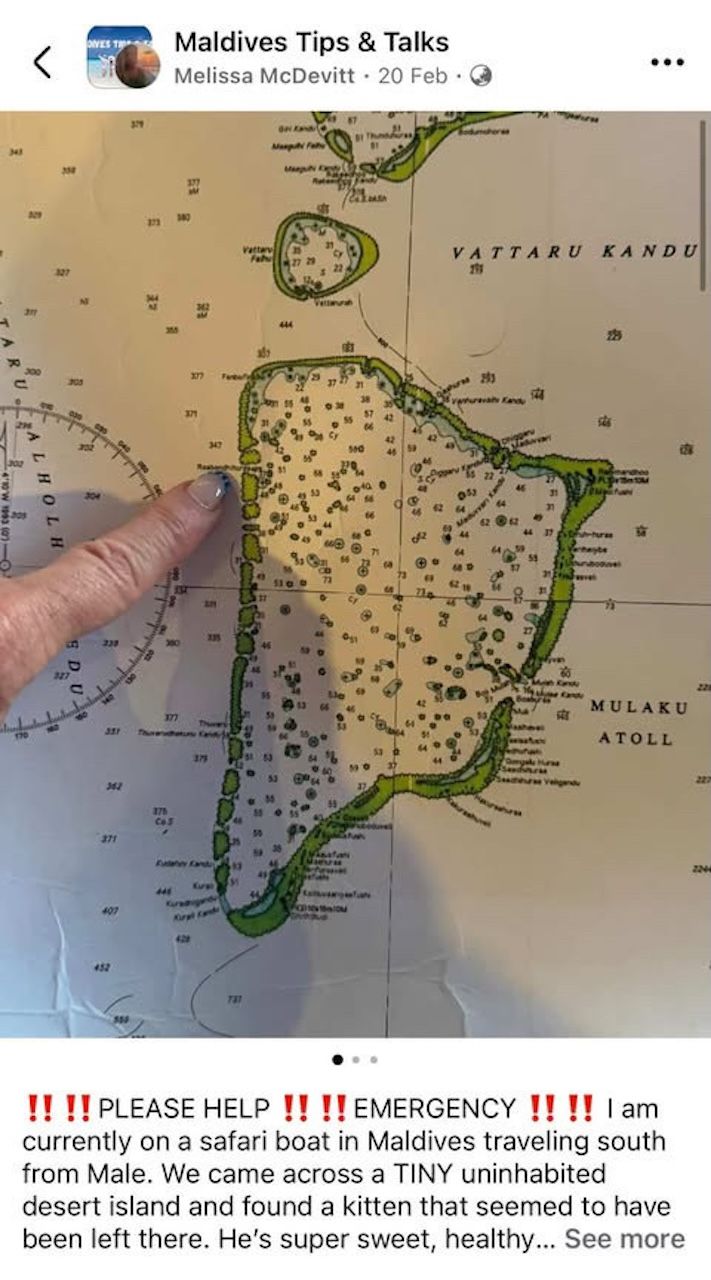
The internet answered the call. A day later, a video of a group attempting to rescue the ginger tom was widely shared. The internet named him Wilson.
"People on the internet decided that his name should be 'Wilson', after the volleyball from Tom Hanks' Castaway," said the team from Zoophilist Maldives, recounting their rescue effort to the Maldives Independent.
The mission
Zoophilist Maldives was sent the social media post multiple times, "both locally and from our followers abroad." Tofu Foundation, another local group, contacted Zoophilist directly, asking them to send a boat and promising to fund the operation.
Zoophilist reached out to contacts in Meemu Maduvvari and the rescue troop began work. It took them two days.
The morning after the post, Zoophilist sent a group of three men to the uninhabited island. They couldn't find the cat. So the team sent a carrier to Maduvvari and asked the rescue troop to stay longer on the island and wait him out.
"Due to Ramadan, this meant that they had to go there in the afternoon, camp on site and have their iftar there while waiting for the cat. This is how it worked – he appeared and the guys managed to put him into our carrier, take him on the speedboat and back to Maduvvari," the Zoophilist team explained.
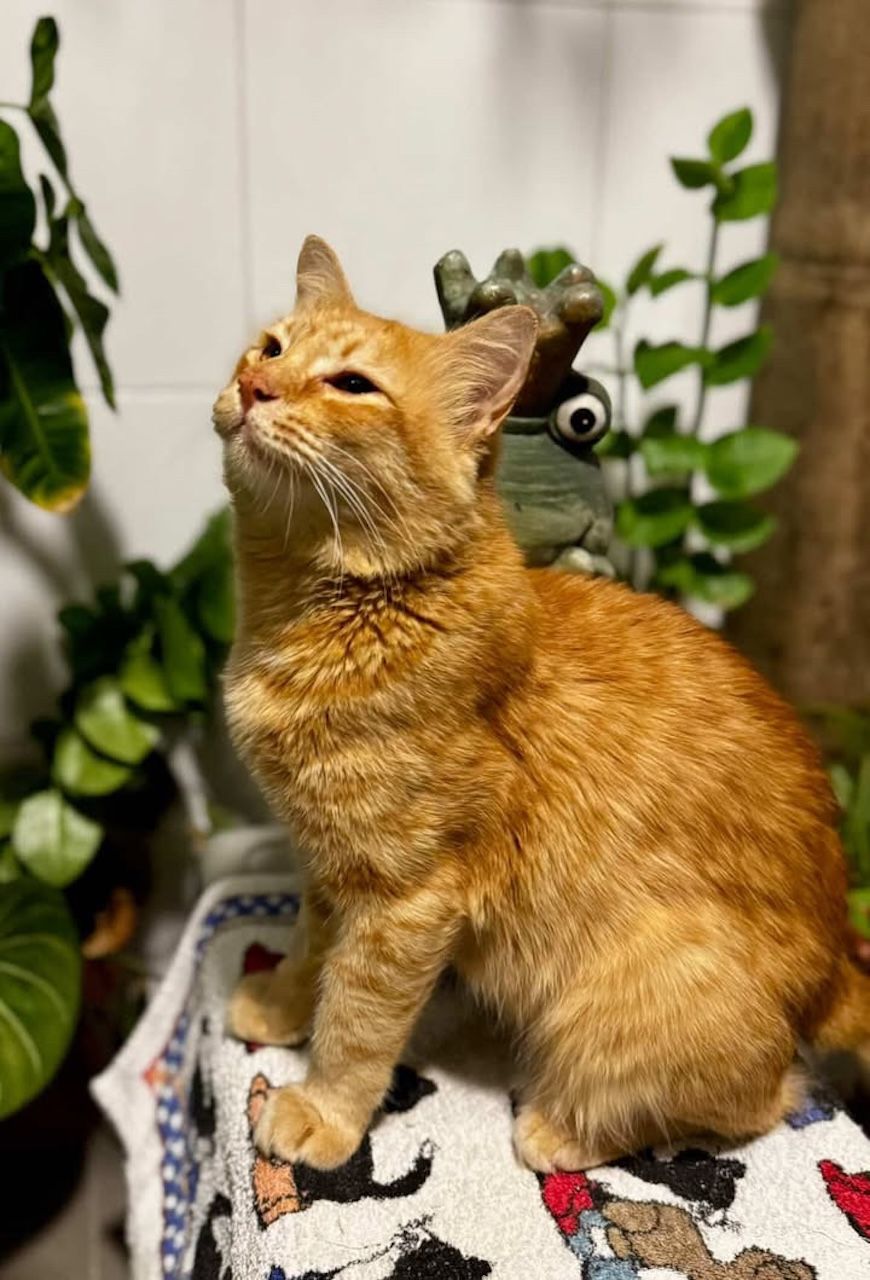
In Maduvvari, a local lady immediately agreed to look after Wilson. However, after he peed under her sofa, the Zoophilist team suspected something was amiss. As Wilson had been stranded on the island without access to fresh drinking water, the team thought he might have a urine infection.
They brought him to the capital on a supply boat. After a day spent with the team in Malé, the team noticed Wilson was not passing urine. They took him to Atoll Vet Care, a veterinary clinic in Hulhumalé that they work with.
"We told Dr Shazit that we wanted to neuter him, but since he didn't pee, asked him to check his bladder. An x-ray confirmed that his bladder was full and he was unable to empty it on his own due to an infection. So Dr Shazit unblocked him in the most impressive way I have seen without putting him under general anaesthesia, without pain," they recalled.
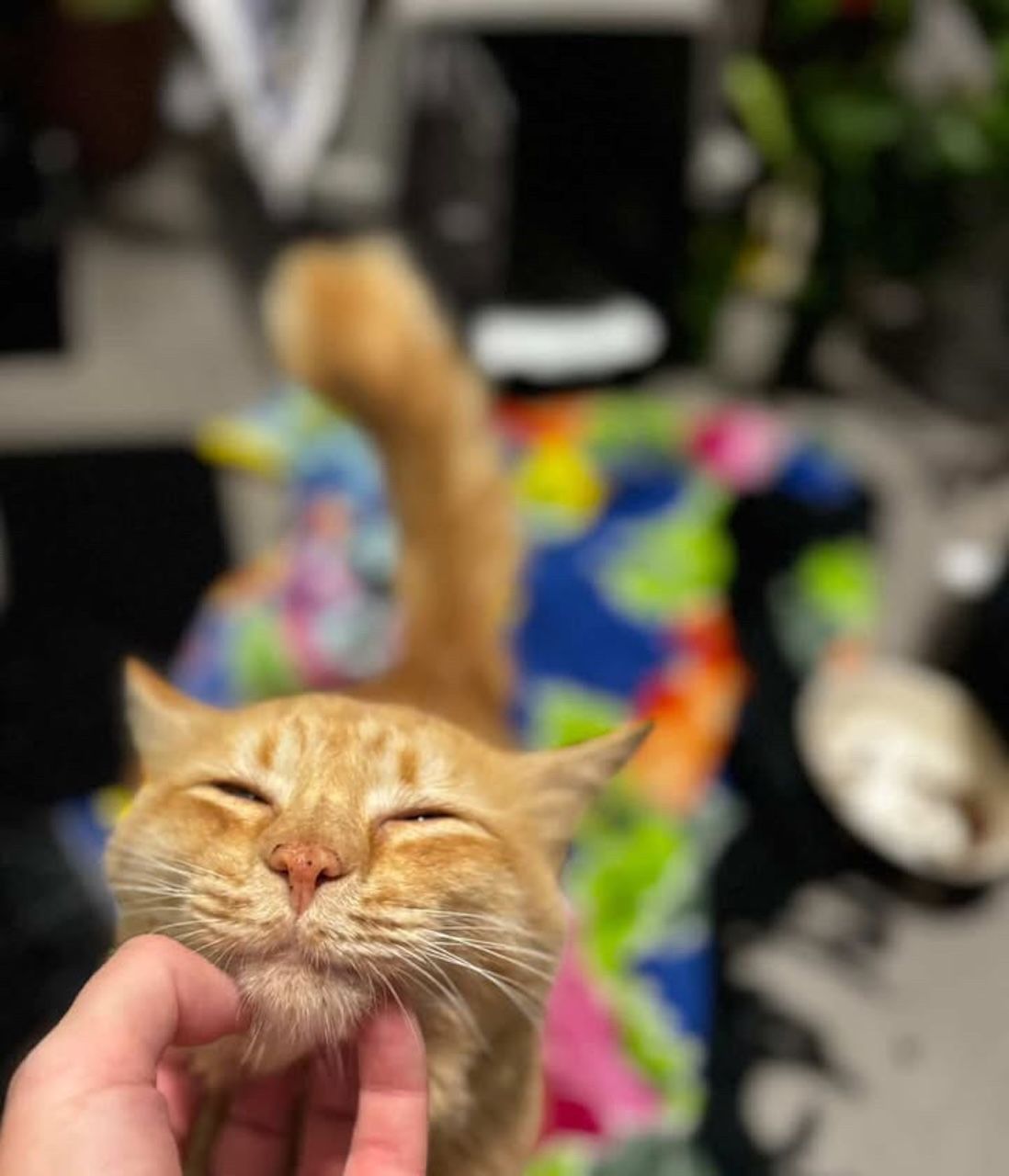
Once Wilson was relieved, the doctor gave him medication for both his infection and a bit of constipation. After a week of antibiotics, he was ready to get neutered, which was done swiftly at the same veterinary clinic. Wilson was also vaccinated. Neutered, treated, and vaccinated, he was finally ready for adoption.
The rescue mission, including the boat rental and vet bill, cost almost MVR 10,000 (US$ 648). “That's an amount we can usually not afford just like that. Thanks to the Tofu Foundation, Wilson was a lucky boy and all bills were paid,” the team said.
Animal abandonment
The Zoophilist team later learned that Wilson was allegedly abandoned by someone from Meemu Dhiggaru. His story, while dramatic, is not unusual. Abandonment is common across the Maldives, the team said, and the consequences fall on a handful of overstretched NGOs and the volunteers who feed strays every day.
Every Rufiyaa the team collects from donations goes directly to veterinary treatment for sick and injured cats or to cat food for those feeding colonies. Without widespread neutering, the team said, the cycle continues. Uncontrolled breeding leads to more cats on the streets, more road accidents, more disease, and more complaints from residents, which in turn leads to poisoning and killing of cats.
"If the cats were all neutered and the population would decline, over time the vet bills will go down because there will be less fights among tom cats, there will be less competition on the roads, there will be less complaints by people and less hatred which now often leads to poisoning of cats and killing," the Zoophilist team said.
The team's appeal is straightforward: spay and neuter house cats, do the same for strays where possible, and if you can afford it, donate to one of the NGOs working on animal welfare. "Your money will be definitely used the right way," they said.
Discussion
No comments yet. Be the first to share your thoughts!
No comments yet. Be the first to join the conversation!
Join the Conversation
Sign in to share your thoughts under an alias and take part in the discussion. Independent journalism thrives on open, respectful debate — your voice matters.
Support Independent Journalism
Help us keep the news free and fearless
Give once
$
or
Become a memberfrom $5/month