

Kooddoo shark attack was foreseeable, say divers, as feeding debate resurfaces
Experts say threat was known before honeymooner lost leg in latest incident.
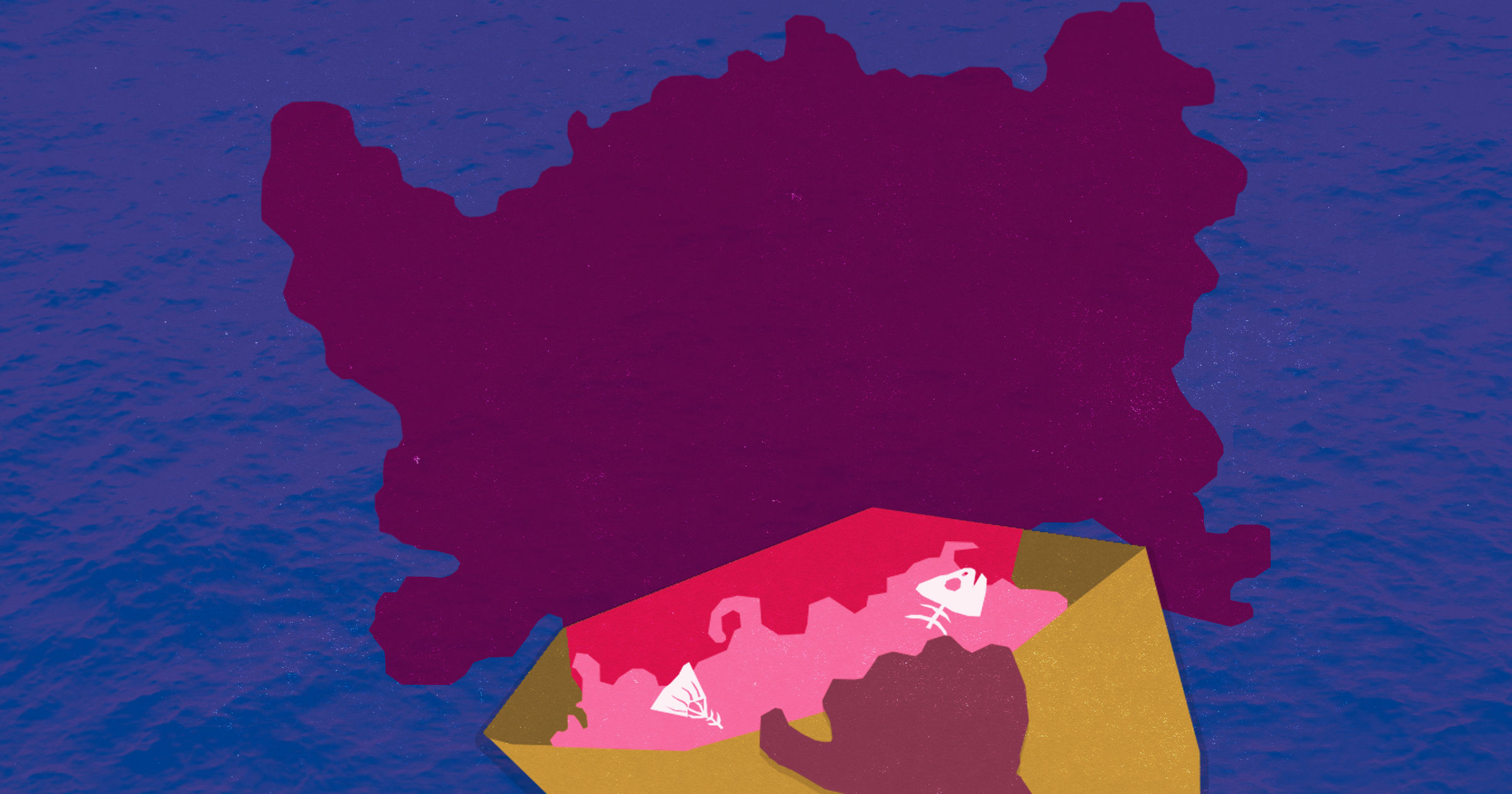
Artwork: Dosain
22 Apr, 13:59
Local sources and diving experts have suggested a devastating shark attack on a Spanish tourist earlier this month could have been predicted, saying waste dumping has been causing sharks to mistake divers and snorkellers for food.
Thirty-year-old tourist Borja Garcia Sousa was attacked on April 11 while in the water near Gaaf Alif Kooddoo during his honeymoon. The injuries sustained by Sousa – who is reported to be a gynaecologist and a semi-professional footballer – resulted in the amputation of his right leg.
A local fisherman told the Maldives Independent that diving guides had been timing their excursions to coincide with food dumping near the island, while a dive operator suggested it was no longer safe to jump straight into the water.
“A couple of years ago, when I went out to sea with my kid, I was not afraid to drop him in the water. But now it’s different,” said dive operator Mohamed Seeneen. “I will not dare to push them in the water like that anymore. Because I see what is happening now. I see that the sharks that come near the reefs are not the same as the ones as before.”
The incident has thrust the controversial practice of chumming back into the spotlight, with conservationists and travellers discussing the alarming new behaviour of sharks as global media covers another attack in a country where such incidents were almost unheard of just a few years ago.
Police said Sousa was treated in the intensive care unit of the Gaaf Alif Atoll Hospital on the neighbouring island of Villingili before being airlifted to Malé, where his leg was removed at ADK Hospital. Ali Shameem, an official from the atoll hospital, said Sousa arrived with severe trauma to both legs and critical blood loss.
“A huge chunk of his right thigh was bitten off. His arteries were very damaged, a part of the bones were bitten off too and he was losing a lot of blood. We had to try very hard to stop the bleeding,” Shameem told the Maldives Independent, adding that up to four pints of blood was transfused.
After intense media coverage, ADK hospital said Sousa had asked for privacy and declined to give further updates on his condition.
Despite contributing millions to the economy, sharks have been at the center of controversial practices like ‘chumming’ to increase sightings. A rise in negative encounters with humans - including a fatal attack in Laamu atoll in 2024 - have led to suggestions shark populations have increased too much since a 2010 ban on shark fishing. But conservationists say numbers are stable and that new fishing methods and irresponsible tourism are the cause. After growing pressure, the government reopened gulper shark fisheries last year.
Feeding frenzy
The Maldives Shark Incident Registry, maintained by a diver who wishes to remain anonymous, has been documenting shark attacks since 2021. They also concluded that the Kooddoo attack was “consistent with a feeding-associated response” rather than an “exploratory bite”, suggesting the species was either a spinner shark or a bull shark.
After viewing images of the injuries, also seen by the Maldives Independent, the registry recorded bites causing “extensive soft tissue avulsion to upper and lower leg”, showing “deep penetrating bite wounds with exposed muscle and probable joint involvement and multiple secondary lacerations along the limb”.
The registry recorded one attack each in 2021, 2022 and 2023 but eight incidents since then, including the fatal attack in Laamu atoll which led to the death of a Maldivian soldier.
This month’s attack occurred at a popular site in the channel between Kooddoo and Villingili, an area widely known among locals as a dumping ground for fish waste from the nearby processing plant. While the species involved and the specific circumstances of this particular attack have not been confirmed, multiple sources told the Maldives Independent that regular dumping attracts large numbers of sharks, making it a popular dive and snorkeling spot.
Ali, a diver and a fisherman from a nearby island in Gaaf Alif atoll said spinner sharks are commonly seen there and have become “tamed” as a result of dumping. “These sharks are bigger than the normal grey reef sharks, about 1.5 to 2.5 metres,” he said, also asking not to be identified by his real name or island for fear of industry reprisals.
“Everyone knows that Kooddoo dumps food waste there. Safari boats also come there by paying Kooddoo and coordinating their dive time so, when they dump the waste, sometimes they dump their own fish too.”
He challenged media reports that feeding had stopped in the days before the attack due to the low fishing season, leaving the sharks “hungry”, saying that food from the plant was still being dumped. “Even though fishing was low that week, the food waste from the canteen, which includes fish and other food waste, was dumped there that day too,” he continued, citing a friend who works at the Kooddoo factory.
Ali said he had been among the first to discover the area, years ago. While he used to practice ‘negative entry’ at the site – where divers jump in and descend immediately – he soon realised this attracted sharks. “Once a shark grabbed a friend's hand, so we realised it wasn't safe. Then we would go there, stop the boat and make it silent and quietly climb down into the water from the ladder. We noticed that if you jump, it’s the same sound and movement as a dustbin bag dropping into the water.”
He said he did not encourage guests to snorkel either, because the splashing of fins in the water also created the same movement.
Worrying patterns
Experts fear this recent attack reflects a concerning national trend, with veteran diver Hussain Rasheed 'Sendi,' saying it was a topic that needed discussion and warning that a lack of guidelines could be "disastrous".
“In general, we have seen this trend of fish factories across the country dumping their fish waste and inadvertently creating shark attraction points. These points become areas where fish are drawn to; where sharks are drawn to,” he said.
Seeneen has also been outspoken about shark diving and feeding, which is prohibited for dive centres under tourism regulations tourism regulations, though third parties can still dump food at dive sites. He said that the incidents have been rising. “From 2024 onwards, there has been a steady increase in attacks, and almost all are related to feeding,” he told the Maldives Independent.
He said sharks were naturally intelligent and had learned the pattern of boats stopping and dumping food in the water. “Every time the boat comes to a stop and is put into reverse, the specific sounds and vibrations of the boat is a signal,” he said. “You have to understand that sharks have been around for 450 million years. They are not stupid to have been able to survive for this long.”
The practice of shark feeding has driven more predatory species such as spinner sharks, bull sharks and tiger sharks to inner atoll areas, he continued, changing their behaviour to make swimming or diving more unpredictable. “I am a diver and I blame divers. Shark feeding is something that divers have done over the years using different loopholes,” he said.
His opposition to shark feeding had often brought him into conflict with other divers, explained Seeneen, saying the practice is hard to stop but that it could be mitigated. “For one thing, the government should tell fish factories that they should not dump their fish inside the atoll and they should also not sell it to dive centres to do it inside the atoll. They should go to the outer ocean to dump it.”
One solution could be shark feeding outside the atoll, for divers who are willing to pay more and who understand the risks, he suggested. Businesses interested could invest in a pilot project to test the use of big platforms, big barges to do shark feeding for dive tourism in the outer ocean. “The people who will go out there would be aware of what they are getting into, not your everyday recreational diver”.
Shaha Hashim, executive director of Maldives Resilient Reefs, told the Maldives Independent last year that newer methods of reef fishing were combining with “irresponsible tourism practices, such as disposing of food waste in the ocean and shark feeding tourism” to disrupt sharks' natural behaviours, leading to increased negative encounters.
Speaking this week, Zara Athif, a conservationist with Small Island Geographic Society also blamed “risky” diving practices but criticised “sensational media coverage” of attacks, which “warp people’s perceptions on shark populations”. Citing a report from local outlet Mihaaru, which she said had conflated rising shark numbers with increased threats to tourists, Zara said this was “irresponsible journalism that manufactures consent for shark fishing”.
Discussion
No comments yet. Be the first to share your thoughts!
No comments yet. Be the first to join the conversation!
Join the Conversation
Sign in to share your thoughts under an alias and take part in the discussion. Independent journalism thrives on open, respectful debate — your voice matters.
Support Independent Journalism
Help us keep the news free and fearless
Give once
$
or
Become a memberfrom $5/month