
Half a gas cylinder, double the diesel price: the oil shock hits Maldives
From the pump to the jetty, the war's cost arrives.
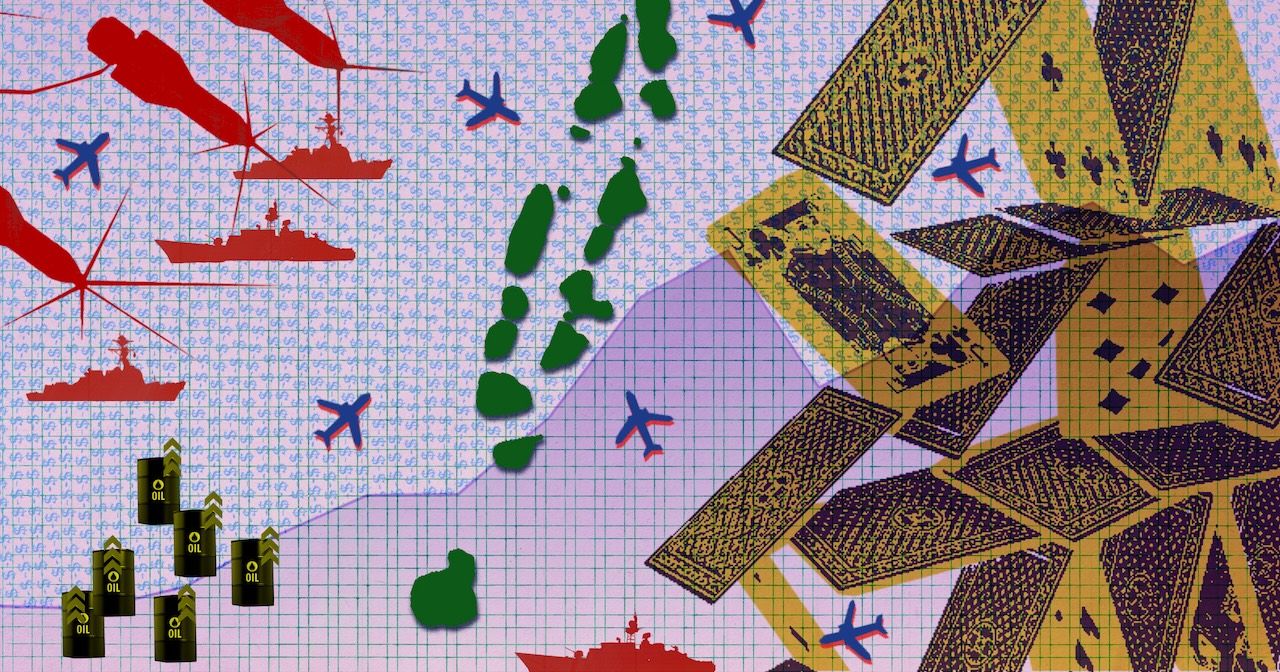
Artwork: Dosain
17 Mar, 17:25
The government says oil supply will not be interrupted. It also says the price of maintaining that supply has more than doubled.
On Saturday, state-owned Maldives Gas halved the amount of cooking gas sold per cylinder, filling 10kg bottles with only 5kg. On Monday, the State Trading Organisation nearly doubled wholesale fuel prices to businesses. Diesel delivered to businesses shot up from MVR 16.52 (US$ 1.07) to MVR 27.22 per litre in the Malé area. Petrol jumped from MVR 15 to MVR 26.14. Compounded by delivery costs, the spike was significantly higher in atolls further from the capital. Prices hit MVR 29.26 for petrol and MVR 30.13 for diesel in Addu, MVR 29.30 and MVR 29.51 in Kulhudhuffushi, and MVR 27.63 and MVR 29.10 in Thinadhoo.
Days before Eid, ferry tickets soared up to 70 percent. The Union of Yellowfin Tuna Fishermen warned that with diesel at MVR 27.24 per litre and yellowfin fetching MVR 55 a kilo, fishing boats would stop going out.
The Drivers Association of Maldives called on the government to raise the regulated taxi fares. Drivers cannot absorb the fuel cost increase if rates remain fixed, they said. The association formally requested talks with the transport ministry, warning that without a fare review, many drivers who support families in Malé will face "severe difficulties."
Late on Monday night, STO announced a partial reversal through state media. The state-owned wholesaler will continue to sell fuel at the previous subsidised rates to ferry operators, public transport providers and fishermen enrolled in the government's "Fahi Hakatha" subsidy programme. Atoll fuel shed operators buying from STO would also keep the old rates. Fuel Supply Maldives retail pump prices remain unchanged at MVR 16.01 for petrol and MVR 17.54 for diesel.
STO did not publicly announce the new wholesale rates for commercial buyers. Earlier on Monday, Velidhoo MP Mohamed Abbas disclosed an FSM email informing customers of the new prices, criticising the government for raising prices while creating hundreds of new state company jobs. Addu Mayor Ali Nizar said the prices were disproportionate to global market levels. "Even during the Gulf War, fuel prices were not raised to this extent," he said. Kulhudhuffushi Mayor Mohamed Athif called the prices alarming given the government's assurances that there would be no fuel or gas shortages – and that there was "no concern at all" with meeting a historic debt obligation – from Day 1 of the conflict.
"The president's guidance" was to ensure the price burden did not fall too heavily on the public, Finance Minister Moosa Zameer told MMTV on Sunday, while out campaigning with President Dr Mohamed Muizzu for the April 4 council elections. "When the price of oil more than doubled globally, in the Maldives the price hasn't increased by even 30 percent yet," he said. Gas stocks were at normal levels, he assured. Two STO tankers were en route. "We're monitoring very closely."
Since the United States and Israel launched strikes on Iran on February 28, killing Supreme Leader Ayatollah Ali Khamenei and triggering a regional war with no end in sight, the Strait of Hormuz – the narrow waterway through which a fifth of the world's oil passes – has been effectively closed for over two weeks. Oil prices have surged from US$ 67 to above US$ 100 a barrel.
Tourist arrivals are down more than 20 percent. A US$ 500 million sukuk repayment deadline is three weeks away.
Here is where things stand.
The government's case
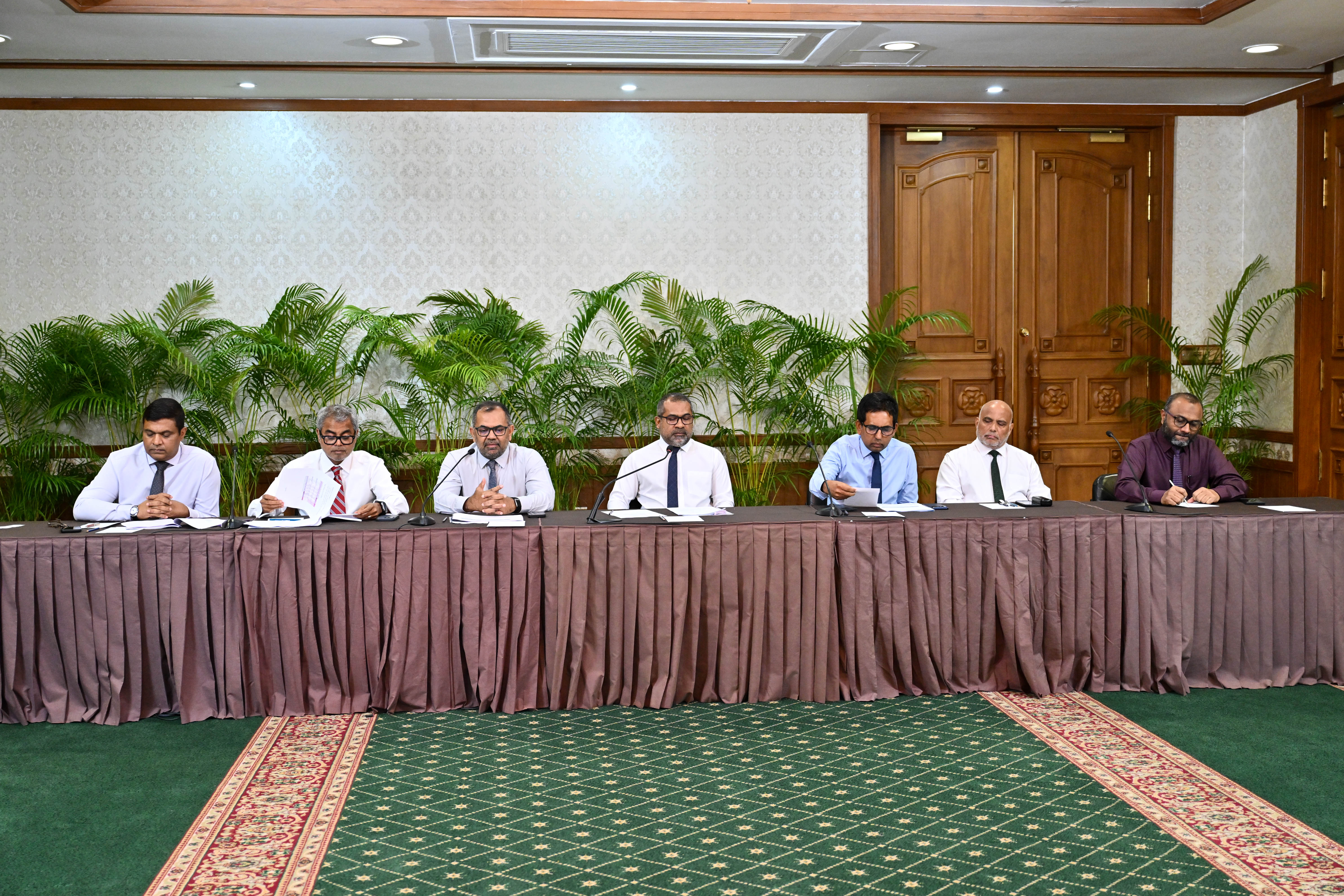
After nine days in which the only official communication was the economic minister repeating the president's assurance that the country "will not run out of oil," the ministerial crisis committee faced the press last Thursday with a more detailed official accounting of the war's economic impact.
Zameer argued that the Brent crude price widely cited in media – about US$ 103 on Tuesday – is not what the Maldives pays for fuel. STO purchases at the Plex platform price, a subscription-based benchmark that reflects the cost of refined fuel products at the point of sale rather than the crude oil price. When the war started, the Plex price was about US$ 70 per barrel. It has since hit US$ 170, he said.
The difference is being absorbed through a combination of direct government subsidy and a plan to cross-subsidise from STO's anticipated annual profit of MVR 1.5 billion (US$ 97 million), Zameer said. "A price isn't made for every shipment," Zameer explained "A weighted average is taken." The government is not arbitrarily raising prices, but managing a complex pricing mechanism to shield the public from the full force of the global oil shock, he insisted.
Foreign Minister Dr Abdulla Khaleel said the government is working with neighbouring countries to diversify supply routes and considering increasing national storage capacity. He also revealed that the government has been rejecting requests to use Maldivian airspace for military operations: "We note that Maldivian airspace has not been used to attack any country – any country – and we have been rejecting such requests." He did not say who made the requests or when.
At the press briefing, Dhauru journalist Ahmed Naaif counted ministers invoking "the president's guidance" or similar formulations – "under the president's direction and instructions" – about 20 times. He heard nothing about GDP impacts, inflation forecasts, or detailed fiscal policy shifts. "The biggest problem I have right now isn't that the news is bad," he wrote. "It's that the government refuses to speak to us like adults." The briefing was scheduled just before iftar, leaving little time for follow-up questions.
According to the foreign minister, there are about 500 Maldivians in the UAE at any given time. Embassies have set up hotlines and are checking on citizens in the region, Khaleel said.
More than 2,000 Maldivians left during Ramadan for Umrah. Some were unable to travel due to transit disruptions, so the government chartered a flight to Mecca. About 50 pilgrims remain unable to return; the Hajj Corporation is working to bring them back. Visas have been issued to all 1,000 Maldivians on the Hajj quota and there is no indication of disruption to Hajj flights.
There are 75 Maldivian students in the Middle East: 42 in Egypt, 21 in the UAE, 10 in Türkiye, and two in Saudi Arabia. Students whose education is disrupted have been authorised to return without penalty.
The fuel shock
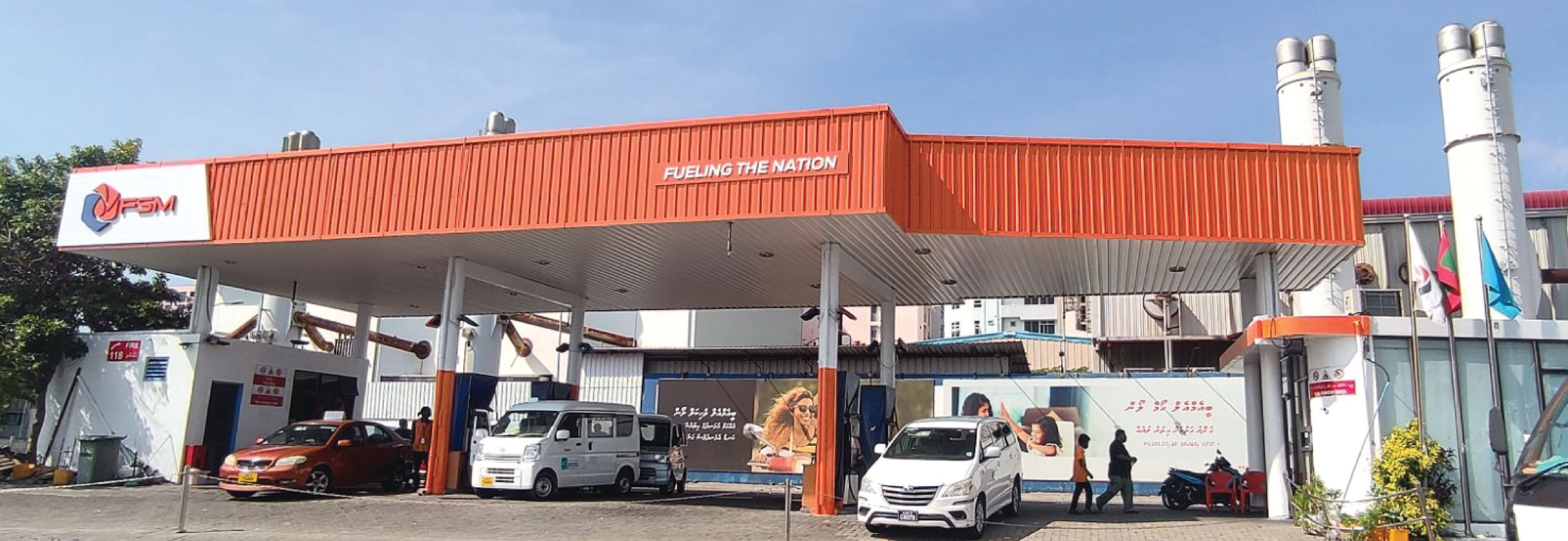
FSM's retail pump prices hike by MVR 3.62 per litre on March 5 was the largest single increase in recent history. Monday's hike on wholesale prices to businesses was far larger with diesel in Malé jumping 65 percent and petrol rising 74 percent.
As the cost of the refined diesel and petrol the Maldives imports has more than doubled since the war started, Zameer said imports now cost an additional US$ 20 million a month. To offset this, the government has reached an agreement with two international multilateral agencies for US$ 100 million in emergency financing. A letter seeking final presidential approval was sent on Thursday. "If it stays this way for five months, it can be financed like that," he said. He did not name the agencies.
The Indian External Affairs Ministry confirmed last week that the Maldives was among neighbouring countries that had requested diesel supplies. Foreign Minister Dr Abdulla Khaleel declined to confirm the request at Thursday's press conference, saying only that negotiations with friendly nations were "at an advanced stage" and that responses had been "very positive."
The US Energy Information Administration expects prices to remain above US$ 95 for the next two months before easing below US$ 80 in the third quarter if the conflict ends. Even a ceasefire today would not bring immediate relief: energy analysts estimate it would take two months from the reopening of the Strait of Hormuz for oil supply chains to return to normal. The International Energy Agency has described the disruption as the largest in the history of the global oil market.
The last time the Maldives faced a sustained oil price spike above US$ 100, after Russia invaded Ukraine in 2022, government spending on fuel subsidies rose sixfold to MVR 3.2 billion (US$ 207 million) as electricity tariffs were kept unchanged. The Ramadan electricity discount, announced before the war to cap the bill at MVR 400, remains in place.
The cooking gas shortage is a separate but related problem. Maldives Gas previously ran out of stock in January and had to buy from private competitor Villa Gas. Qatar, which supplies 20 percent of the world's LNG, has since suspended gas exports after Iranian drone strikes on its Ras Laffan facility. The Strait of Hormuz closure has disrupted LPG supplies across Asia. India has imposed emergency rationing on cooking gas. But STO said the Maldives rationing was a temporary measure for this week and that two new shipments would arrive by Monday.
While many global insurers have cancelled war risk coverage for fuel shipments – a key reason tanker traffic through the Strait of Hormuz has ground to a halt even without a formal blockade – STO has so far managed to keep importing with insurance, Managing Director Shimad Ibrahim told Mihaaru on Sunday. The Maldives sources fuel from Oman, whose ports lie outside the Strait of Hormuz. But Oman itself has come under Iranian fire, and war risk premiums have surged across the Gulf and Arabian Sea. If insurers withdraw coverage for Oman-origin shipments, fuel costs would rise further or supply could be disrupted regardless of whether the route avoids the Strait.

At his press briefing on March 2, President Muizzu said current stocks could last "nearly a month" and that this was "the maximum amount that can be stocked in the country." Malé Mayor Adam Azim put a sharper point on the vulnerability on Monday. Water production in the capital and across many islands runs entirely on diesel and the diesel stock available in Malé is sufficient for "a maximum of one day." He called on the government to establish a clear order of priority for diesel use and to inform the public of its contingency plan. "What happens if we run out of water?" he asked.
The Maldives is entering the hottest period of the year. Weakening winds, clear skies, and high humidity from mid-March to April combine to push "feels-like" temperatures above actual air temperatures and above climatological norms, the Met office explained.
On Saturday, former President Mohamed Nasheed went further than asking for contingency plans and proposed specific emergency conservation measures. The Maldives can store roughly 70 million litres of diesel and 25 million litres of petrol between STO and the private sector, which is about 20 days of supply, he estimated. "The chance of the Maldives running out of fuel is high," he warned. His proposed measures included scheduled power cuts, restricting vehicle use, shortening hours for government offices and schools, reducing social events, rationing fuel to resorts and fishing boats, rationing aviation fuel, and establishing alternative supply routes through South and Southeast Asia using vessels that do not need to pass through the Strait of Hormuz.
Zameer said "it's not business-as-usual now" and that the government has "very much rationalised expenses over which we have discretion." But he did not specify which expenses have been cut or by how much. The only visible austerity measure announced so far has been scrapping Eid festival lights on islands and limiting celebrations to designated locations in five cities.
The tourism damage
Tourist arrivals in the first 15 days of March fell 20 percent compared to the same period last year, down to 76,369 from from 95,755, a shortfall of more than 19,300 tourists. The disruption came after five percent growth in January and 17 percent in February.
The worst day was March 2, the first full weekday after strikes began, when just 4,107 tourists arrived, a 50 percent collapse from the 8,128 who arrived on the same date last year. Weekday arrivals have since stabilised between 4,400 and 5,000, about a quarter below last year's figures. Weekends show signs of a partial recovery: Sunday, March 15 recorded 6,721 arrivals. It was the strongest day since the war began and just 10 percent below the same date last year.
Cancellation data shared by the tourism ministry shows 3,357 bookings were cancelled across 135 tourism facilities between March 2 and 15, wiping out 27,918 bed nights. Thirty-one tourists remain stranded at resorts unable to depart because of cancelled Middle Eastern flights.
Between 2,500 and 3,000 tourists have been cancelling bookings daily, according to Mohamed Firaq, CEO of tour operator Inner Maldives.
Based on the shortfall of more than 19,300 tourists and the cancelled bed nights, estimated tax losses over the first two weeks alone amount to about MVR 50 million (US$ 3.2 million), comprising lost T-GST, green tax, departure tax and airport development fees. Projected over a full month, the loss from tourism taxes alone could approach MVR 100 million.
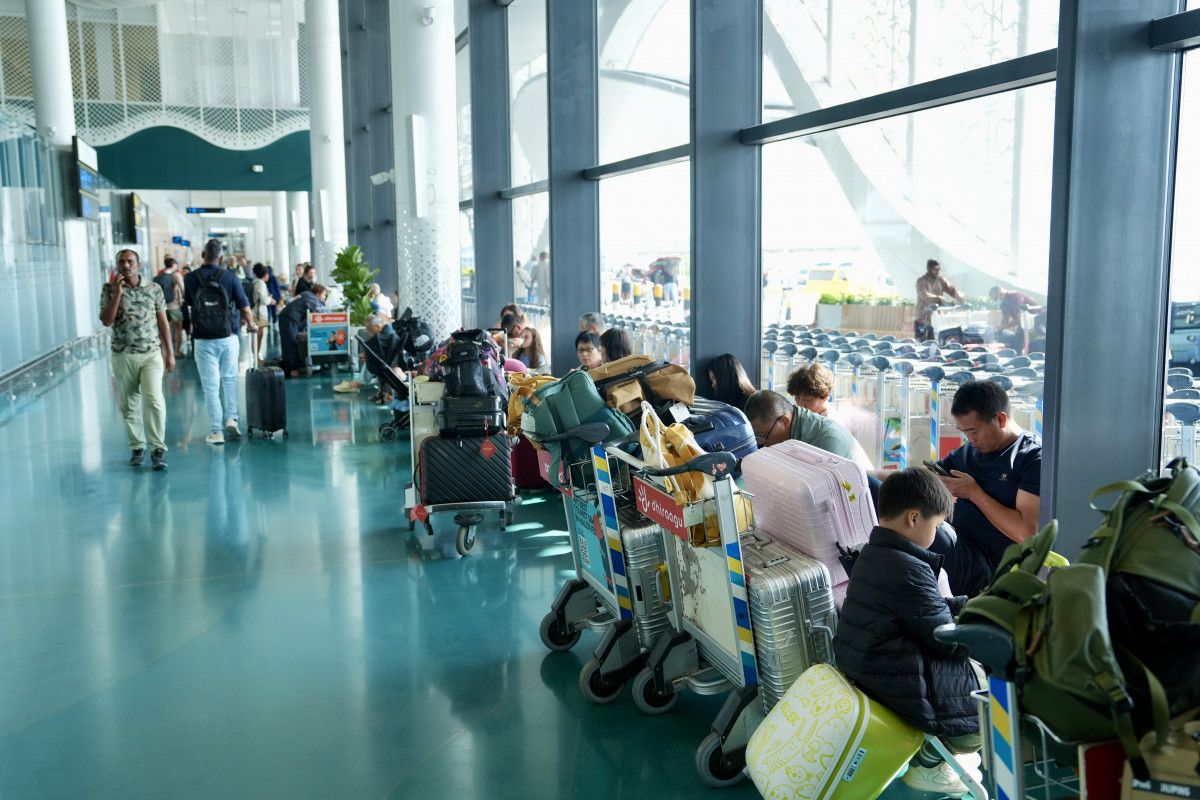
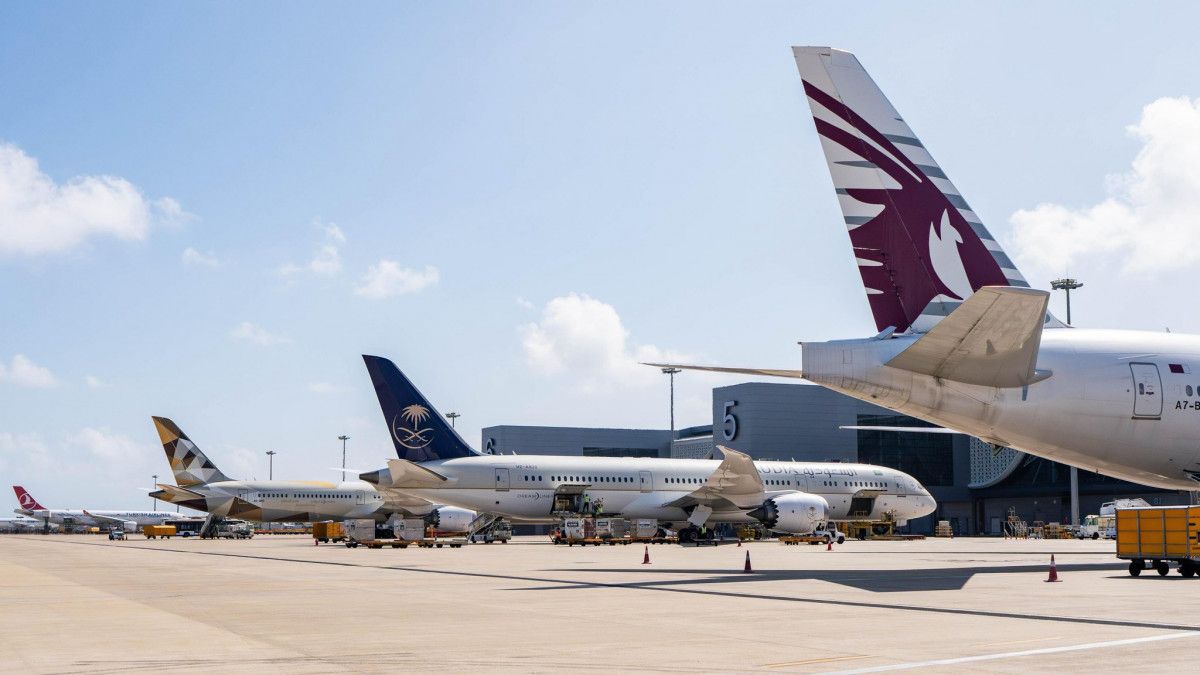
Tourism Minister Thoriq Ibrahim confirmed that Middle Eastern flights accounted for 30 percent of daily flights to Velana International Airport and that arrivals dropped with a 31 percent reduction in capacity. There has been a wave of cancellations in March and April. "However, when we look beyond that, no cancellations," he said. Resorts are offering free re-bookings instead of outright cancellations, a policy that UK operator Purely Maldives told the Maldives Independent could put the 38-year-old company into liquidation because UK law requires full refunds on cancelled package holidays.
To fill the gap, the government offered an incentive package to airlines. Transport Minister Mohamed Ameen said Aeroflot agreed to double to 14 weekly flights, adding about 2,000 seats. Air India will also go to double daily, providing connections to Europe and the US. Etihad agreed to resume double daily services. Talks are nearing conclusion for wide-body aircraft to replace the AirAsia A320 that currently operates. The government also opened "fifth freedom rights" and said efforts were nearing completion with one European airline. An air service agreement with Ethiopian Airlines is close to finalisation, Ameen said.
Thoriq said a delegation would travel to China soon for talks on new routes from Chinese cities. Russia "very much has appetite at the moment." India is reachable by short-haul flights of about four hours. Turkish Airlines could serve as a transit hub, and Central Asian countries such as Azerbaijan and Kazakhstan are being explored as transit options for European tourists, the tourism minister said.
Unlike the tourist who flies via Doha, the ultra-luxury traveller who can bypass commercial aviation entirely has not been affected by the war. Both Thoriq and Ameen touted the growth of private jet movements. A total of 128 private jets landed in the Maldives between February 28 and March 14, a 166 percent increase on the 70 that arrived in the same period last year, according to data published by Visit Maldives. Daily arrivals averaged 12, up from five last year, with a single-day record of 18 jets on March 3, the day after commercial aviation collapsed. At Maafaru airport, more than 25 private jets were parked on the apron simultaneously, the most it has ever handled.
The fiscal picture
The government estimates a revenue loss of between US$ 85 million and US$ 100 million if the war continues for one month "at the same intensity." The World Bank has backed the estimate, according to Zameer.
Customs data shows that Oman and the UAE together accounted for roughly MVR 4.2 billion in imports in the last quarter of 2025 alone, between a quarter and a third of all goods entering the country. Oman is the primary source of fuel; the UAE's Jebel Ali port is the main logistics hub for food, construction materials and consumer goods. Both countries are under Iranian fire. The government says it is "opening new doors" to diversify supply routes.
The Maldives Monetary Authority, finance ministry and Maldives Inland Revenue Authority have formed a joint technical committee to study the revenue impact and prepare scenarios for the war lasting 12, 15, 30 and 60 days. Zameer said he is working "very closely" with the MMA governor to maintain the reserve at an "optimal level."
On the US$ 500 million Islamic bond due on April 8, Zameer repeated the government's position: "Even if we have to pay the sukuk tomorrow, we will be able to do it at the moment with funds left over in the reserve."
President Muizzu said on March 2 that the government had US$ 650 million available: US$ 320 million in the Sovereign Development Fund and US$ 330 million in usable reserves. Taking the president's figures at face value, paying the sukuk from reserves would wipe them out.
According to former STO chief Hussain Amr, the real financial impact will arrive in six months, when bills for fuel purchased at crisis prices come due. "We do have time right now to get things in order," he said. "But when the price of oil suddenly doubles, two months of reserves instantly becomes one month."
On Tuesday, the main opposition Maldivian Democratic Party issued a statement accusing the government of a lack of transparency and of being preoccupied with "centralising power through a rushed constitutional referendum" rather than preparing the country for the economic consequences. "Last week, President Muizzu sought to placate the public by declaring there was 'nothing to worry about.' Just 48 hours later, fuel prices were increased," the party said. "The Maldivian people deserve a government that confronts the crises of the day, not one that exploits them to consolidate power."
Former MDP Chairman Fayyaz Ismail warned the government's pre-war spending patterns – expanding state-owned enterprise employment "to unheard of levels" and crowding out the private sector – had created "the perfect storm" for an external shock to cause economic breakdown.
"Now the sudden increase in fuel prices and the rationing of gas has caused an onset of panic buying, inevitably worsening the fuel shortages and increasing transport prices, and ultimately the prices of goods in the shops. More pressing and concerning issue is of water shortages," he wrote. "The dry season is around the corner and we are completely dependent on desalination for our water needs.
The government must come out of the delusion of normalcy and follow almost every other country in the region in taking concrete steps in anticipation of a drawn out war by preparing the people and reducing unnecessary spending."
By Tuesday, the price shock triggered what Fayyaz predicted. Sun reported long queues at fuel sheds on islands. Residents in Madaveli and Addu's Maradhoo lined up with jerry cans and containers to stockpile petrol. Social media posts showed similar scenes in Malé. People appeared to be buying more than they immediately needed. In Addu Maradhoo, petrol was initially sold at MVR 29 a litre before being brought down to MVR 18.56, the same price as nearby Hithadhoo
Meanwhile, on the upcoming sukuk repayment, Fayyaz raised fears that the government will "abuse the MMA, SOEs, and local banks so as not to default, and will instead devastate the local economy, from which we may not recover for decades."
Zameer was more candid than the president about the risk. Asked by his child whether he should be worried, Zameer said he replied: "Son, if there's a war ahead of us, we would always have to worry. But that doesn't mean we should stop living, should we?"
Discussion
No comments yet. Be the first to share your thoughts!
No comments yet. Be the first to join the conversation!
Join the Conversation
Sign in to share your thoughts under an alias and take part in the discussion. Independent journalism thrives on open, respectful debate — your voice matters.
Support Independent Journalism
Help us keep the news free and fearless
Give once
$
or
Become a memberfrom $5/month