

The clothes we left behind
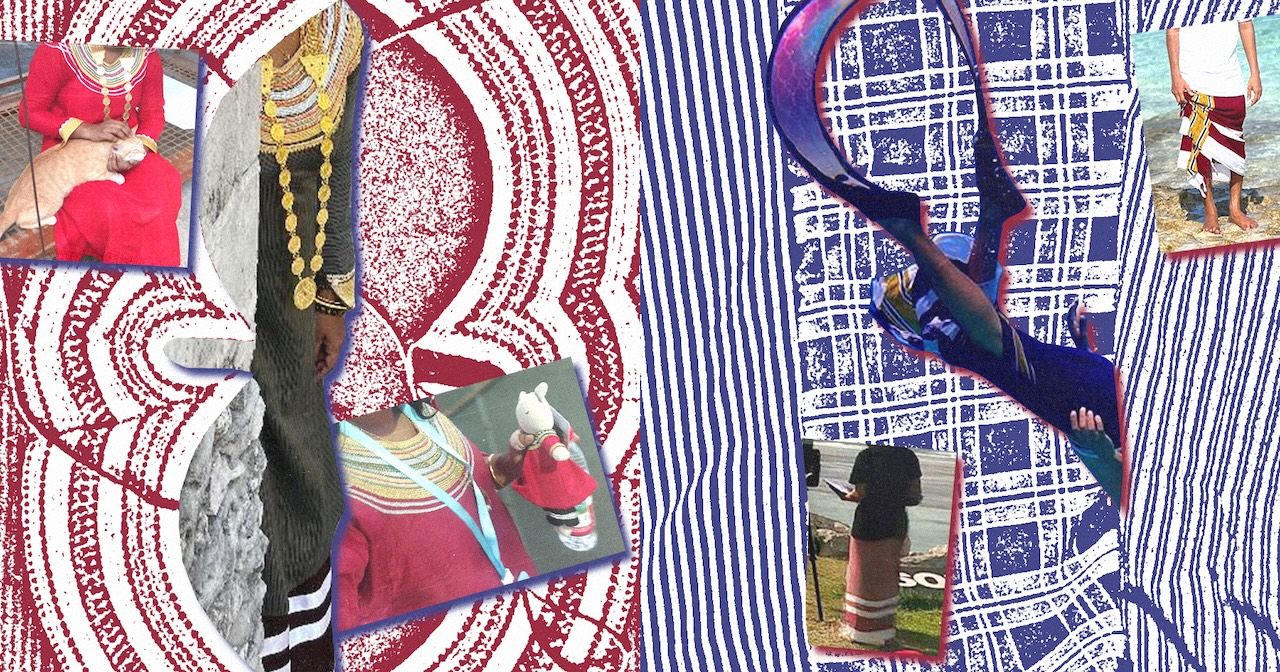
Libaas and feyli left everyday life. Three Maldivians never stopped wearing them.
Artwork: Dosain
08 Aug, 13:32
A woman in a lilac libaas stands beside another dressed in emerald green, leaning against a coral stone house, a sight that was once entirely ordinary. The photograph, taken sometime in the 1970s, has faded with age, but the clothing remains instantly recognisable.
I continue scrolling through archival Instagram pages. Another photograph appears: a group of women in dhigu hedhun, standing alongside men in shirts paired with mundu and feyli. Sepia-toned images spanning the 1950s through to the 1990s quietly document what everyday life in the Maldives once looked like.
I put my phone down and reach instead for an old family album. Tucked inside its clear plastic sleeves are photographs of my grandparents and great-grandparents, dressed in dhigu hedhun and libaas as though it were the most ordinary thing in the world.
Because it was.
These were not ceremonial garments reserved for weddings, Eid or official occasions. Only a generation or two ago, seeing women and men in traditional attire walking through the streets would have been entirely unremarkable. Today, the opposite is true. A stroll through Malé reveals oversized denim, loose-fitting T-shirts and silhouettes shaped by global fashion rather than clothing rooted in the islands themselves. Spotting a young person in a dhigu hedhun, libaas or even a mundu is now unusual enough to turn heads.
What strikes me most is not that fashion has evolved – change is inevitable – but how completely traditional dress has retreated from everyday life. More often than not, it survives on the shoulders of our grandparents, a generation that is slowly slipping away. Their children wear it only occasionally. My generation, and those younger still, rarely wear it at all.
The garments themselves have not disappeared. They remain carefully folded in wardrobes across the country, emerging only when an occasion calls for them. And increasingly, those occasions seem few and far between.
One cannot help but wonder whether the sight of someone wearing a dhigu hedhun or mundu as everyday clothing will one day exist only in faded family photographs and museum displays.
Searching for answers
Driving through the streets of Malé, I often notice how remarkably alike we have begun to look. The same oversized silhouettes. The same carefully curated Pinterest-inspired aesthetics. The same make-up trends repeated from one social media feed to another.
It makes me wonder whether, in our eagerness to belong to a global culture, we have quietly stopped asking what our own identity looks like.
From the time Ibn Battuta documented the clothing of the Maldivian people in the 14th century to the present day, our traditional attire has formed part of our visual identity. More than six centuries later, that identity has quietly faded from everyday life. Is this simply what cultural evolution looks like? Or have we mistaken modernity for uniformity?
When I first began researching this article, I expected to find answers. Instead, I found more questions: why did traditional dress disappear so quietly? Was it convenience? Globalisation? Changing ideas of modernity? The accessibility of inexpensive ready-made clothing? Or was it something so gradual that we barely noticed it happening?
If younger generations can embrace boduberu so wholeheartedly as an expression of Maldivian identity, celebrating it with pride at festivals and public events, why has its sartorial counterpart become so much harder to accept?
Who decides what looks modern?
Just last month, a pro-government media outlet published a video of a man stepping off a boat while commenting on Malé’s newly widened road. What unfolded next was difficult to watch.
The man, dressed in a mundu, was mocked by a woman who dismissed his attire as old-fashioned and told him to take it off.
The clip was widely criticised online, yet no public response came from the media outlet.
Watching it, I found myself asking an uncomfortable question. Do some people genuinely see the mundu as something outdated, something that ought to be discarded in the name of progress?
More troubling still was the fact that the remark had passed through editors, producers and publishers before reaching the public. It was not an offhand comment made in passing. It was a conscious editorial decision.
Whether intentional or not, it revealed that such attitudes still exist.
Yet the more people I spoke to, the more I realised there was another story unfolding quietly alongside it. Across the country are individuals who have chosen not to reserve traditional clothing for weddings or official ceremonies. They wear it because it feels authentic, because it reflects who they are, and because they believe culture should be lived rather than merely remembered.
Choosing to wear tradition
I have seen Niyaz at public events for a couple of years now.
In a crowd of men dressed almost identically, he stands out effortlessly - often the only person wearing a feyli and, more often than not, barefoot. There is no sense of performance about it. No attempt to attract attention. He simply wears what feels authentic to him.
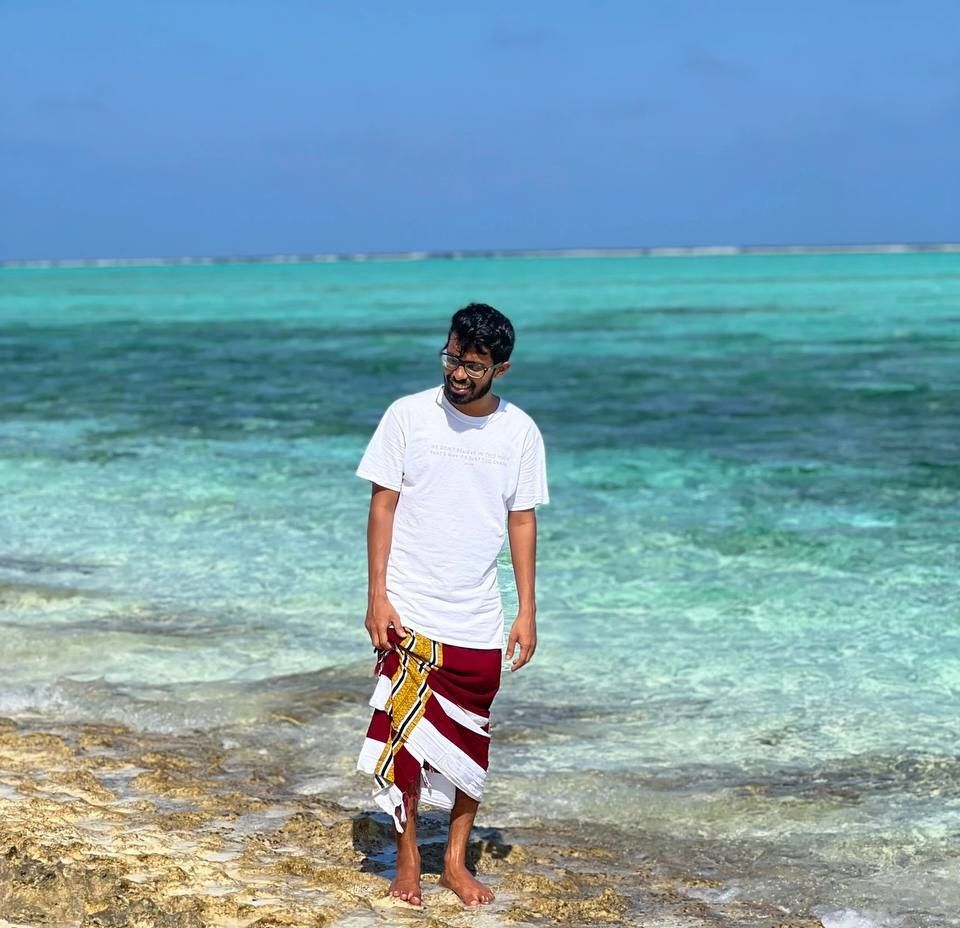
"The turning point came in 2013, during my first year at university, when I encountered IPCC climate reports for the first time. Reading them felt like confronting the inevitable loss of home. This was before the Paris Agreement, a darker and less hopeful time in the climate conversation. That sense of grief brought on an unexpected reckoning with identity," he said.
"Growing up, I had a complicated relationship with Dhivehi and Maldivian culture. The household I was raised in was strongly opposed to the tiered language system, and I think I internalised that by largely rejecting Dhivehi. I spoke almost exclusively in English from the time I first began to speak. There was an apathy towards my own heritage that I did not fully recognise at the time."
University changed that.
"I began to appreciate the language and the deeper nuances of our culture. When I returned home, it felt like Plato’s allegory of the cave – I had seen something that those around me had not yet been exposed to, particularly regarding climate change and what it meant for the Maldives.
"The feyli became a way of bridging that disconnect: staying tethered to the culture I had grown up distant from without abandoning what it truly meant to be Maldivian."
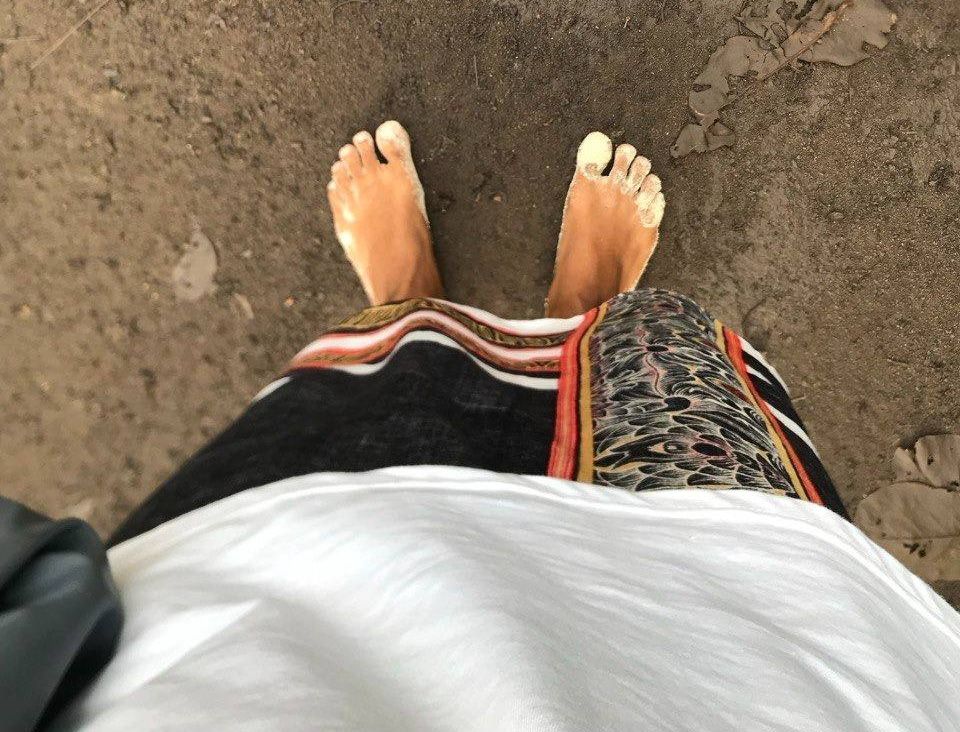
For Niyaz, wearing the feyli is not simply about preserving tradition. It is also a quiet statement about the kind of future he hopes the Maldives does not abandon.
"The last memory I had before leaving to study was President [Mohamed] Nasheed’s ousting – and with it, the loss of a particular national vision: the Maldives as a global leader in climate adaptation, a people who had always lived sustainably.
“What followed felt like a rejection of that identity in favour of a modernised, tourism-dominated, extractive model of development. Wearing the feyli is, in part, a quiet rejection of that. It belongs to the islands themselves – to a way of life that predates the resort economy.”
Unexpectedly, the garment has also become a conversation starter.
“The most common observation is that I’m wearing it ‘inside out’ - because I deliberately do. I wear it the wrong way around and, when someone points it out, I usually respond with a question: 'what does it mean for something to be the right side?'
“I prefer the look of the inside, and there is something I appreciate about its honesty – showing the construction rather than concealing it.
"That small detail tends to open up genuine conversations. It invites people to question assumptions they didn’t know they had. Those are the conversations I enjoy most."
Wearing the feyli has become unconditional for Niyaz.
About two years ago, he needed to visit the President’s Office and checked the official dress code beforehand. The feyli was listed as acceptable formal attire.
“Once I knew it was recognised in even the most formal of settings, there was no longer any context in the Maldives where it would not fit. I no longer see a reason to wear anything else here.”
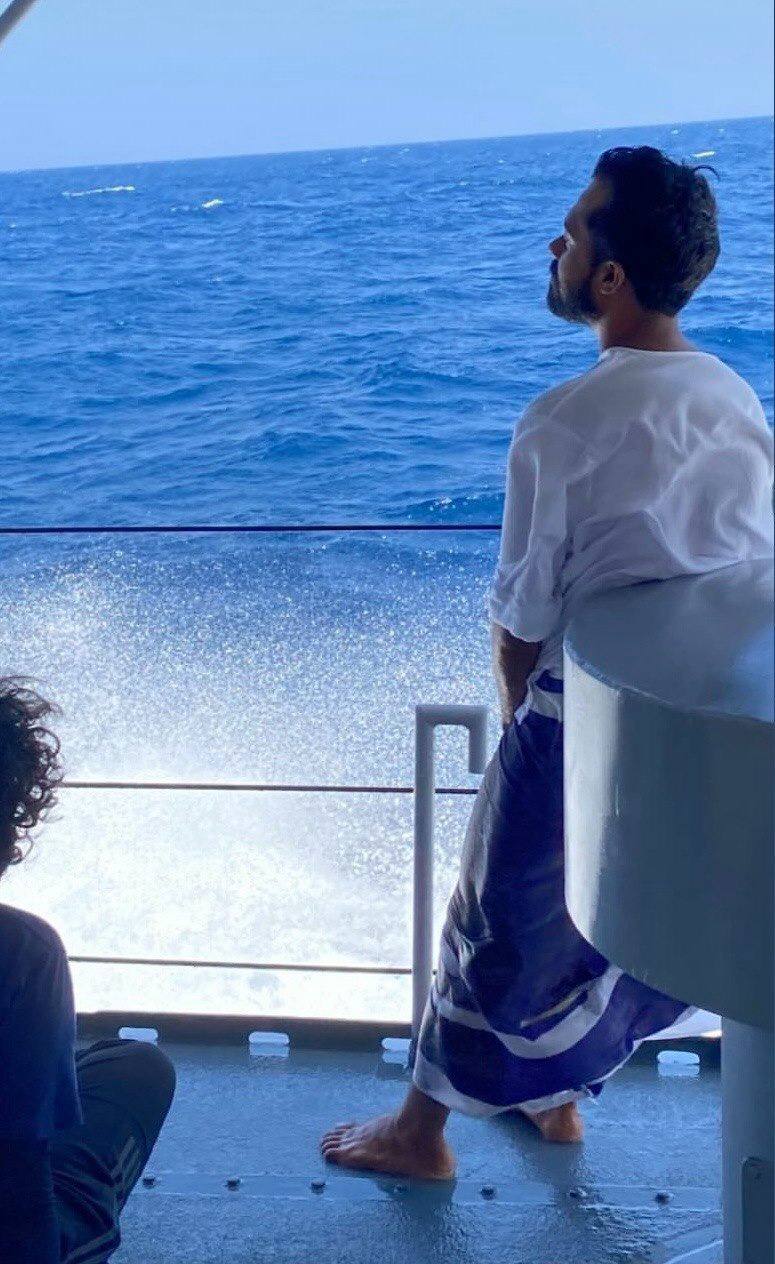

Niyaz is not alone.
Most people in the Maldives have probably come across Gathaa Tales, an Instagram page documenting the intricate craft of traditional lace braiding and weaving. Behind the account is Naduha, better known as Nadu, who, much like the traditions she documents, and teaches, has become something of an embodiment of them.
Like Niyaz, she is someone I have often noticed in passing. Crossing the busy streets of Malé or attending public events, she is instantly recognisable in a bright red libaas paired with a feyli. Passers-by glance in her direction. Some stare. She appears entirely unbothered.
She wears it as though it were second nature.
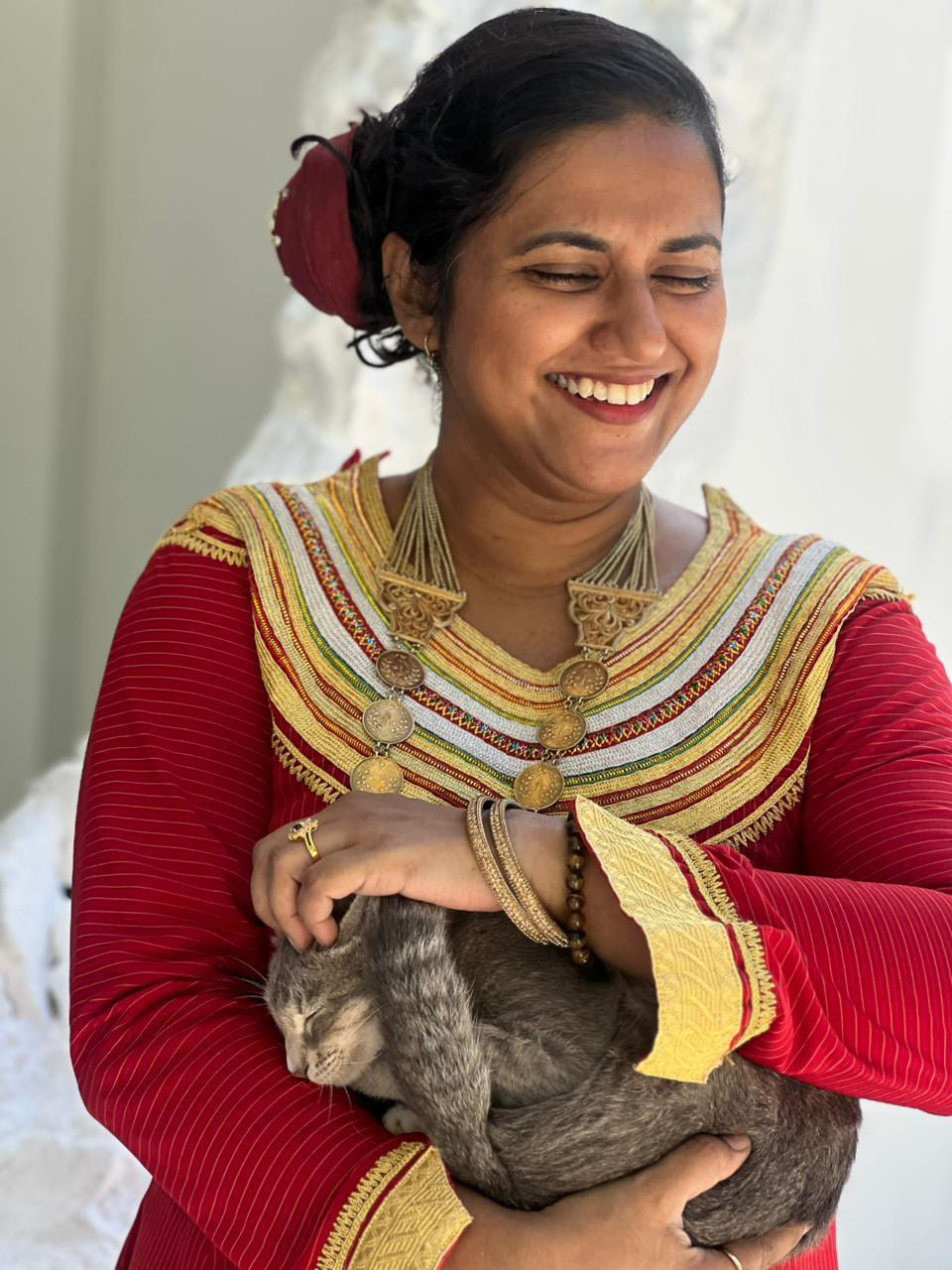
"I have always loved Dhivehi libaas. I simply looked for opportunities to wear it," she said.
"I started wearing it casually after seeing our neighbours wear saris as everyday clothing. I remember thinking, why not us? Once I began wearing libaas regularly, I realised just how versatile it actually is. Later, when I started learning the craftsmanship involved in making them, I wanted to wear them even more."
Although she frequently wears libaas, Nadu admits she tends to reserve dhigu hedhun for official functions and formal meetings, partly because it is still more readily accepted in those settings.
Her decision to wear traditional dress has often invited curiosity.
"Initially, people stared quite a lot when I wore it to work or while simply going about my day. There were comments too. Eventually I began asking people why they stared.
"The responses surprised me. Many older people told me it reminded them of their grandmothers. For them, it carried a deep sense of nostalgia. Those conversations made me realise just how much our lives have changed over the years."
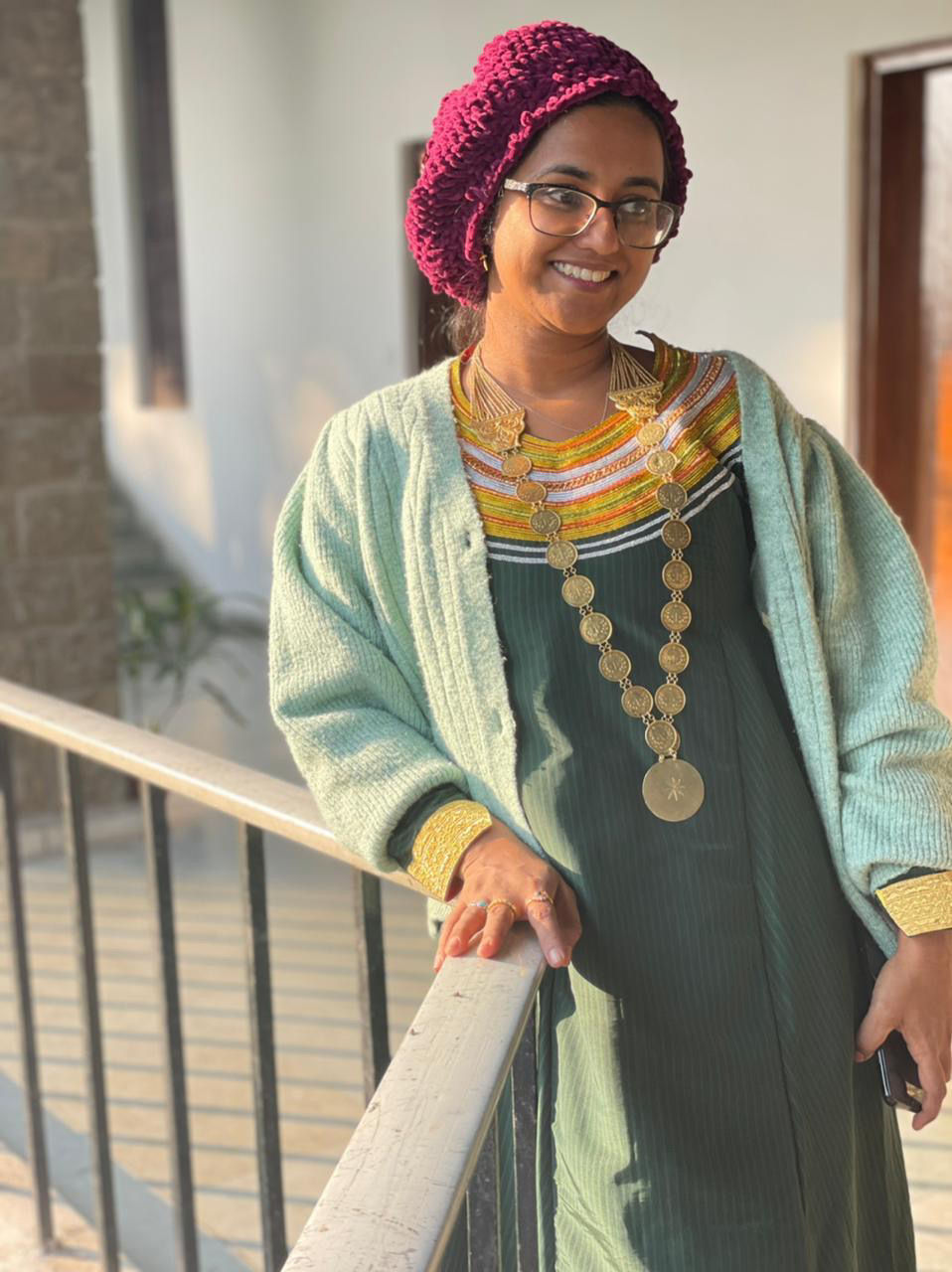
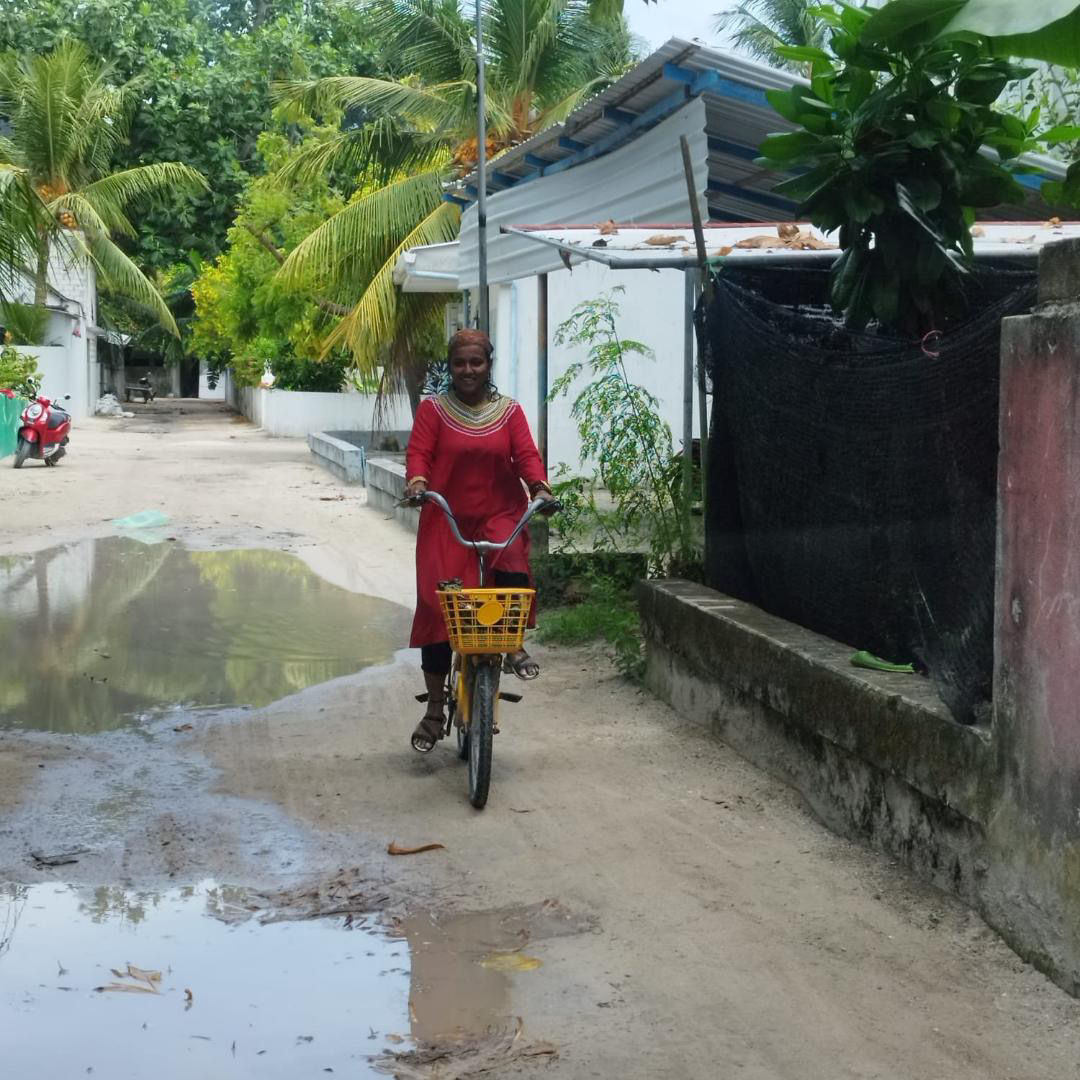
Rather than discouraging her, those encounters strengthened her resolve.
She hopes to continue wearing libaas and dhigu hedhun as everyday clothing and has even begun making garments specifically for that purpose.
"If I ever work in an office environment again, I’d probably wear traditional attire to work much more regularly."
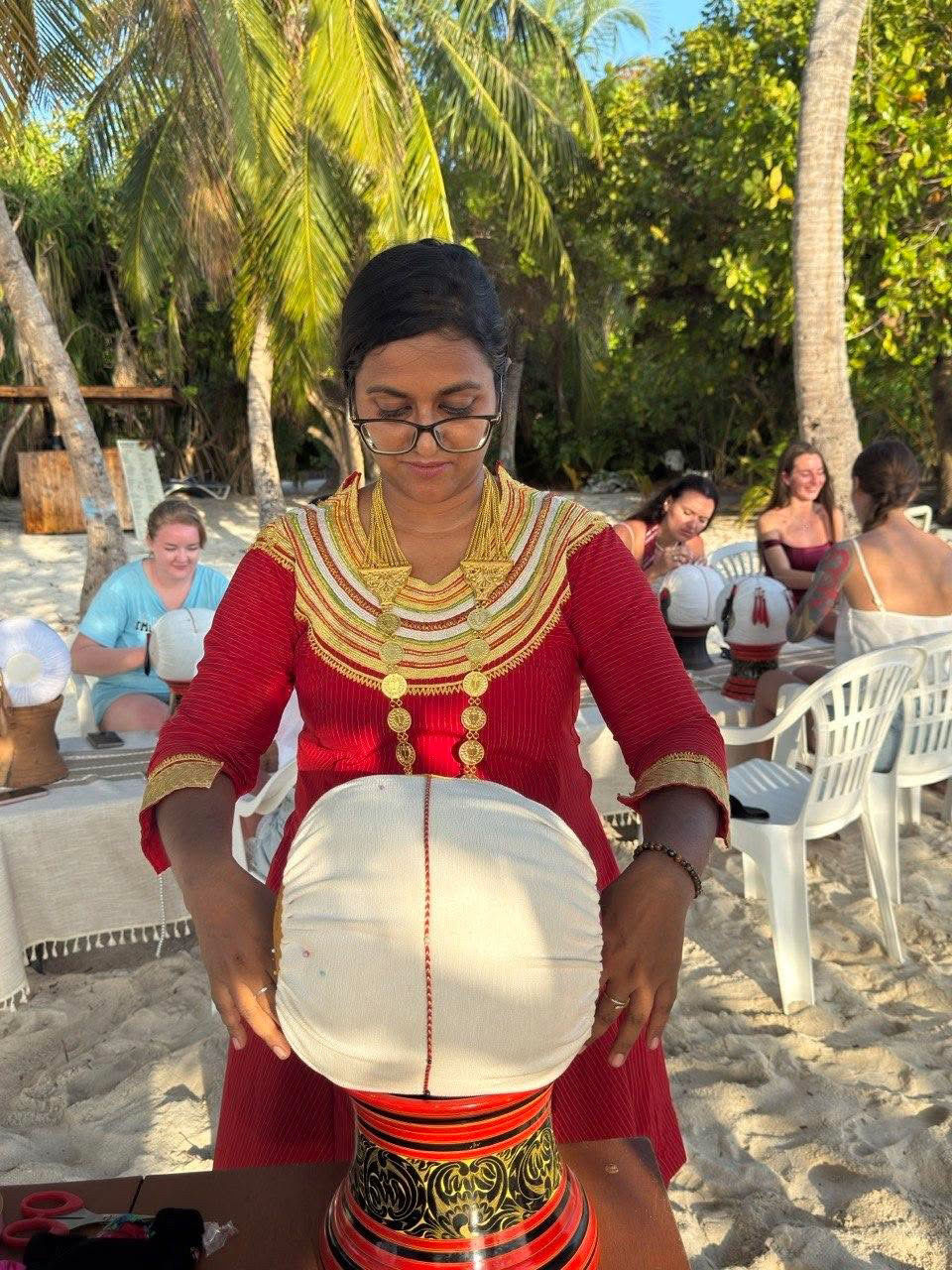
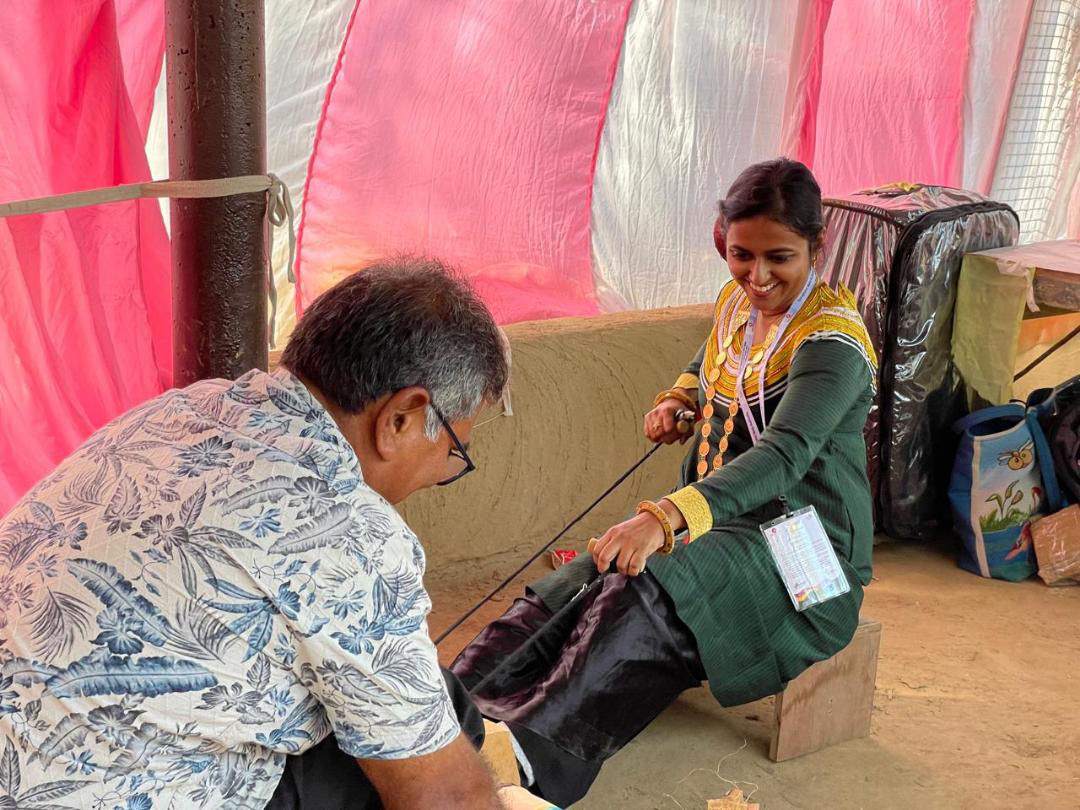
Muna is another familiar face at public events.
Few people wear traditional dress with quite the same quiet confidence. Yet perhaps it is not the clothing alone that draws attention, but the certainty with which she wears it. Confidence has a way of making even the most familiar garments appear extraordinary.
For Muna, the decision to adopt traditional clothing as daily wear began many years ago while preparing to attend the SAARC Poetry Symposium in New Delhi, India, where she represented the Maldives as part of a delegation organised by the Dhivehi Language Academy.
"The thought came to me then," she recalled. "I realised that all the women in my family had worn Dhivehi traditional clothing every single day while going about their lives. They did everything in those clothes. So I asked myself, why shouldn’t I?"

She describes the decision as a tribute to the women who came before her.
"I wanted to wear it in their remembrance and in honour of everything that made them so deeply Maldivian. Emeehunge handhaanugai, sharafugai [in their memory and honour], I wanted to wear it."
Unlike many contemporary interpretations, Muna deliberately chooses garments that remain faithful to their original form.
"For me, they have to be original Dhivehi clothing – not replicas or modernised versions that no longer resemble what Maldivian women traditionally wore."
Her daily experiences reveal just how unusual traditional clothing has become.
While speaking over the phone, she laughed as she recounted how often people assume she must either be on her way to an event or returning from one. Others mistake her for a foreign visitor because seeing a Maldivian woman in traditional dress on the streets has become so uncommon.
"Almost everyone loves the fact that I wear it," she said. "People brighten up when they realise it is my everyday clothing. Many are genuinely surprised that anyone would choose to dress this way today.
"Very occasionally someone dislikes it, but that is rare."
For Muna, wearing traditional clothing has never been about making a statement. It is about continuity. It is a way of carrying forward the traditions of the women who came before her.

Speaking to all three left me unexpectedly moved.
Before beginning this article, I feared I would find only stories of decline – another quiet tradition disappearing into history. Instead, I found people who had chosen not to preserve culture by placing it behind glass, but by living it. They reminded me that tradition survives only when someone continues to practise it.
Not when it is remembered.
When it is worn.
The cost of forgetting
The irony is difficult to ignore. While many societies across Asia continue to replace traditional clothing with Western dress, fashion houses across Europe increasingly look eastward for inspiration. Whether through Indian embroidery, Chinese silhouettes or garments long worn throughout South Asia, traditional forms continue to influence global fashion – often without proper acknowledgement.
The recent debates surrounding luxury brands borrowing from Indian craftsmanship are only the latest examples of a much broader conversation about cultural ownership and recognition.
The quiet disappearance of traditional clothing is not unique to the Maldives. Across Singapore, Malaysia, India and much of South and Southeast Asia, everyday traditional dress has gradually given way to Western clothing, shaped by globalisation, urbanisation and the rise of inexpensive ready-made fashion.
Convenience is difficult to compete with.
A libaas or dhigu hedhun is tailored to its wearer. The fabric is carefully chosen, measurements are taken, and the garment is often worn for years, sometimes decades. It is not dictated by seasonal trends. At most, only the fabric or print changes.
A T-shirt can be bought off the rack in minutes. Perhaps that convenience has quietly changed not only what we wear, but how we think about clothing itself.
Because clothing has never been merely practical. It is one of the most immediate expressions of identity, quietly communicating where we come from, the communities that shaped us and the stories we carry with us.
Last year, in one of my earliest published articles here, I wrote that fashion is not frivolous. It is a living archive of who we were, who we are and who we are becoming.
I believed that then. I believe it even more today.
When I began writing this feature, I hoped to discover why traditional clothing had disappeared from our streets. Instead, I found myself returning to the same question again and again.
Why? Perhaps there is no single answer.
Culture rarely disappears overnight. It changes slowly, almost imperceptibly, until one day we look around and realise something familiar has quietly vanished.
I think back to those faded photographs. The women in lilac and emerald libaas. The men standing proudly in mundu and feyli. None of them could have imagined that the clothes they wore every day would one day become reserved for ceremonies and national celebrations.
I wonder what photographs taken today will say about us 50 years from now. Will future generations recognise themselves in the clothes we wear today?
Or will they look back at those same faded family albums and wonder why we stopped wearing the garments that once told the world exactly who we were?
Discussion
No comments yet. Be the first to share your thoughts!
No comments yet. Be the first to join the conversation!
Join the Conversation
Sign in to share your thoughts under an alias and take part in the discussion. Independent journalism thrives on open, respectful debate — your voice matters.
Support Independent Journalism
Help us keep the news free and fearless
Give once
$
or
Become a memberfrom $5/month