

Science or business at 14? The school choice that is hard to undo
Educators say the stream picked in grade eight can close doors.
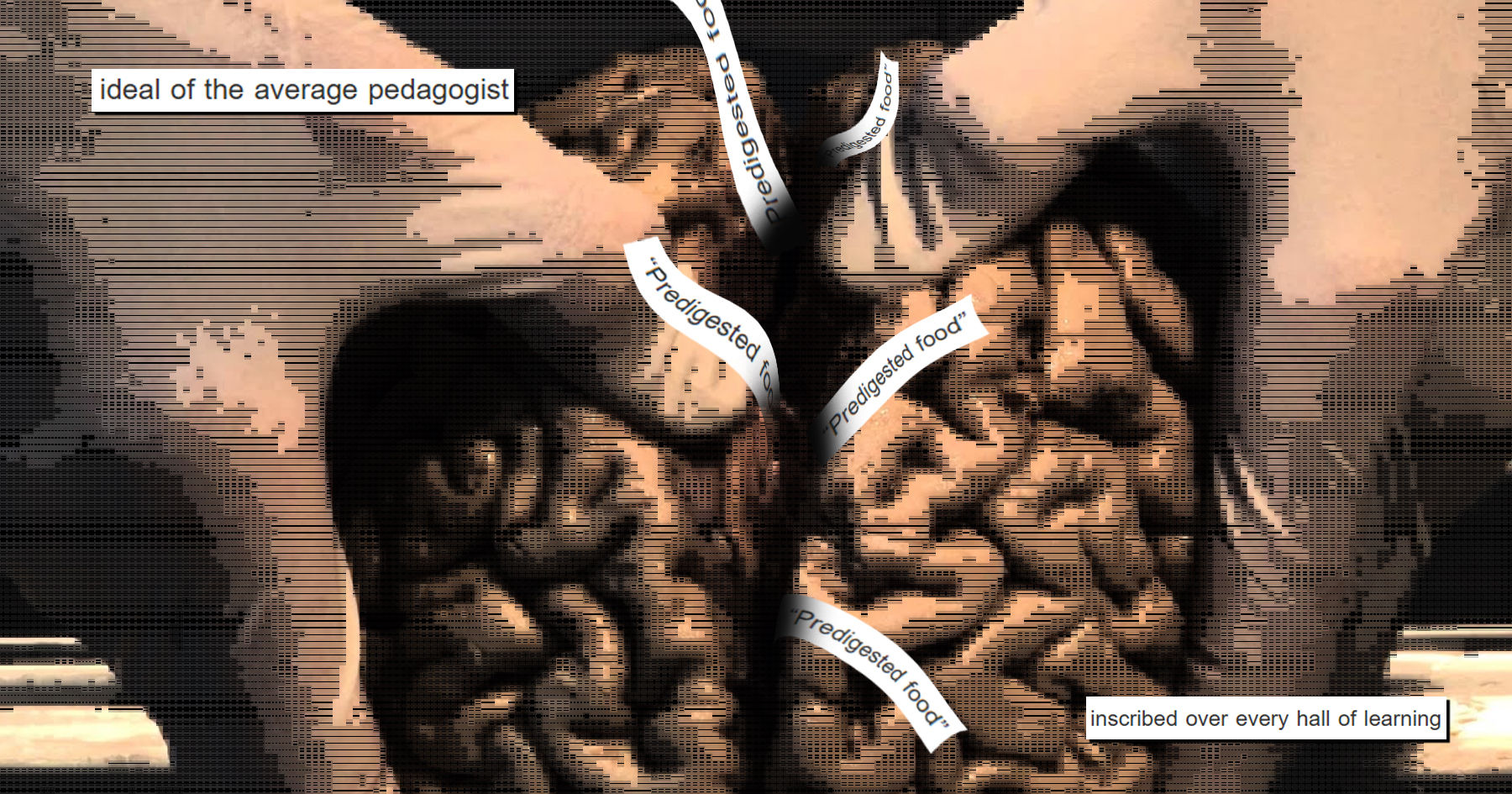
Artwork: Dosain
20 Oct, 15:49
Aisha* became an architect because of a decision she made at 13. She chose science over business. That kept the door open.
Students who go the other way can find it much harder to reopen. One educator knows of students who crammed two years of science into a one-year foundation course, got into medicine and dropped out within a year.
In the Maldives, students choose between the science, business and arts streams when they reach grade eight. The choice shapes what they study for the rest of secondary school. In 2008, 71 per cent of students were in commerce and 28 per cent were in science. Last year, science rose to about 50 per cent and business fell to 49 per cent. Arts has stayed at about one per cent since 2008. Educators disagree on how much of this has to do with student choice.
"I was always more interested in science subjects and thought if I wanted to pursue business in the future anyway, I could always work my way up and learn as I go," recalled Aisha, who is now working after finishing school. "But with science, you’d need a very good academic understanding of the basic/foundational concepts if you wanted to pursue a science related career in the future."
She chose science with economics and went on to earn an A*.
"I wanted to choose economics as an optional subject so I could have somewhat of an understanding into the business field and I loved it too. I think it came very naturally to me," she said.
"At the time, all I knew was that I didn’t want to study business or work in the field of business. I ended up wanting to do Architecture and this was only possible because I chose a science degree."
Moving the other way is harder. A student who drops science at 14 can still reach medicine or engineering, but it is difficult, an educationalist told the Maldives Independent.
"If a student has dropped science altogether at lower secondary level, the chances are that most students may have lost interest, let alone the skill and knowledge of science subjects or topics," he said.
Some students try to catch up through foundation programmes. These often compress two years of study into one. The educationalist knows of students who took this route into medicine and dropped out after a year.
Dr Hassan Hameed is the former chancellor of the Maldives National University. In 2008, he co-authored a presentation that called for an end to streaming. He welcomes the shift but says it has taken too long.
“Although the reduction in the proportion of students pursuing commerce, from 71 per cent to 49 per cent, may be regarded as a positive development, the fact that this change has taken more than 17 years to achieve raises concerns about the pace of curricular reform. The change is too little too slow. The nation is experiencing the undesirable impact of the limited curriculum," he told the Maldives Independent.
"Local nursing schools have to teach basic science to would-be nurses to place them in nursing programmes now because some applicants think that the heart is in the abdomen. They have not been taught biology at secondary level.”
A choice, or no choice
In the view of the educationalist, who has worked in the public and private education sectors for nearly three decades and asked not to be named, the system itself drives the decision.
"The fact that streaming is engineered into the system, especially lower secondary level, drives the choices for streaming," he said.
He named several reasons students lean away from science. Science subjects are seen as harder. Teaching at primary level is often poor and relies on rote memorisation. Results from the National Assessment of Learning Outcomes show weak performance in maths.
"Hence by the time students come to lower secondary level without the foundational learning in literacy and numeracy, students start perceiving maths and science as more difficult," they said.
Arts is seen as a stream for low achievers. The growth of tourism, hospitality, private business and accounting makes commerce look like an easier route to a job. Career guidance is not built into the system.
A boy in eighth grade, who has just chosen his stream, explained why he picked business, with travel and tourism. “I love travelling,” he said.
Asked how the subject would help him in the future, he repeated: “To travel all around the world.”
The educationalist also questioned whose interests the choice serves. “With heavy emphasis on top ten achievements and a default system to judge school performance, schools may have been invariably involved in promoting streams that are more favourable to them, rather than students themselves,” he said.
Students once studied science and arts subjects together, he noted. When secondary schooling expanded to the atolls, investment in science teaching fell behind.
Dr Hameed believes most of the imbalance was never a student decision.
“I think nearly 90 per cent of the issue arises because MOE [ministry of education] only offered business stream to the schools which wanted to start a secondary section," he said. "The students were effectively given a Hobson’s choice: accept the limited curriculum or no secondary section."
He rejected the idea that schools need labs to teach science: “For the first few years of science teaching, Majeediyya did not have labs, but students did quite well. You use what is around to teach the science topics."
What the choice keeps open
When Dr Hassan Hameed shared data on streaming obtained through a right to information request last month, a statistician argued on X that demand for scientists and engineers is limited and that schooling should follow a tourism-led labour market.
Dr Hameed disagreed. He pointed to health data from a STEPS survey showing that about half of Maldivian women are overweight and a quarter are obese.
"The basics of science are required to live healthily, to be active and value the dignity of manual labour," he said. "I disagree with her short-term, narrow-minded view of schooling as preparing students to serve the economy. The aims of education have little to do with the economy."
The educationalist said there is no credible evidence so far that business or accounting graduates are struggling to find work in their field.
Should students be streamed at all?
The 2008 presentation proposed ending streaming and cutting commerce to 20 per cent within four years. Dr Hameed said it was presented at a national curriculum symposium at Dharubaaruge. The symposium ended without agreed outcomes after participants learned the organisers had drafted the results in advance.
He no longer holds to the 20 per cent figure, which he says suited the UK. He wants a broad curriculum for everyone.
"I would like to see a broader curriculum in schools, a curriculum that provides a generalist background for all so that they can choose and switch their careers as and when needed," he said.
He doubts business subjects need a stream of their own: "How many local employers require staff with the knowledge of business subjects? Are there any such subject a generalist student cannot learn in one month?"
In his post on X where he shared the streaming figures, Dr Hameed noted that some people link corruption in the country to the share of students in business. He argued that a narrow curriculum may weaken ethical reasoning and independent judgement. But he does not claim the stream causes corruption.
"I am not saying that business stream schooling causes corruption. There is nothing wrong with doing commerce subjects while studying seven other subjects," he said.
Since most Maldivians educated since 1992 studied commerce, the backgrounds of convicted fraudsters would not prove a link, he added.
The educationalist said he had seen no credible evidence of a link either. "Isn’t this more speculative rather than evidentiary?" he asked.
On teachers, the two differed in emphasis. The educationalist recalled a time when maths and science teachers were hard to recruit. Dr Hameed said the country has close to 2,000 expatriate teachers. "Expatriate teachers can be recruited in any subject area. What is lacking is the conviction that a narrow curriculum is detrimental to the progress of the nation," he said.
The educationalist would also prefer no streaming at lower secondary. "Lower secondary level with all the relevant subjects provide a more solid foundation to build on any pathway at higher levels," he said.
Until that happens, he sees a middle path. Some island schools already run a combined stream that mixes business and science subjects.
"Given the restrictions and resource limitations, offering a combined stream mixing science and business subjects could be a useful and pragmatic way of offering greater options for students for their higher studies," he said.
*Name changed to protect privacy
Discussion
No comments yet. Be the first to share your thoughts!
No comments yet. Be the first to join the conversation!
Join the Conversation
Sign in to share your thoughts under an alias and take part in the discussion. Independent journalism thrives on open, respectful debate — your voice matters.
Support Independent Journalism
Help us keep the news free and fearless
Give once
$
or
Become a memberfrom $5/month