Finders not keepers: the fisherman, the bolts, and the rocket from the sky
India's space debris reached Laamu Kunahandhoo.
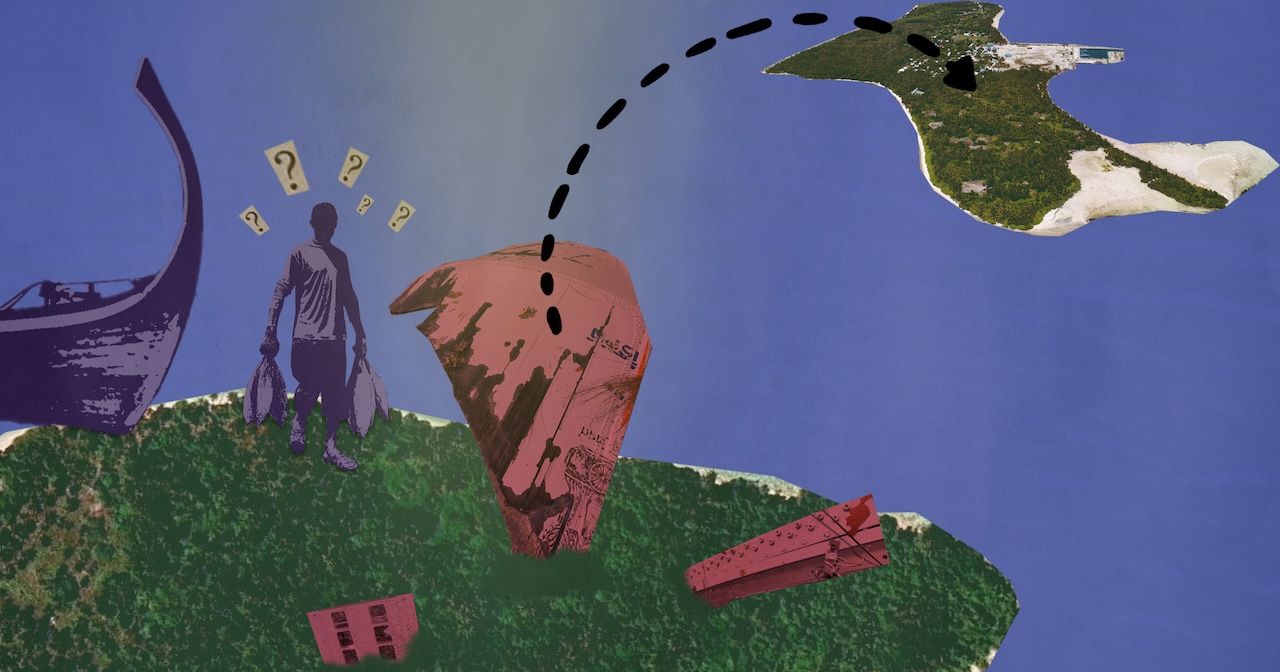
Artwork: Dosain
24 Feb, 14:45
Of all the remote islands in all the atolls in all the world, it fell into Captain Jack’s lap. Literally from outer space.
Naseem, a billfish fisherman from Laamu Kunahandhoo called Captain Jack among friends, found a piece of large metal, measuring about eight feet, on a nearby uninhabited island and hauled it back home on the night of February 12. He told others about it. But that was the extent of his involvement.
“He doesn't talk much. He just goes fishing," said Ahmed Rameez, a young man from Kunahandhoo. "He didn't even go to look at it afterwards. He just brought it and told us about it."
The unintentional discovery stirred much excitement in the small island community. What drew Naseem and others to it was a set of strong bolts without any sign of rust.
“It had a lot of small bolts in it. SS [stainless steel] bolts are hard to find here. Marine grade bolts. A lot of people want such good bolts. That's why he brought it to the island,” Rameez recounted to the Maldives Independent.
The metal was kept in the boatyard. People came with tools, trying to work the non-rusting bolts loose. But it was about to become someone else’s property.
“We went there to have a look and after spending a long time there, we thought it might be a piece of a rocket,” Rameez recalled. “Then a younger brother of mine came by, and he looked it up online…And found out what it was about. It belonged to the [Indian] Space Research Organisation, and it’s part of something that was sent up to space. He found that parts of it were taken from Lanka, too.”
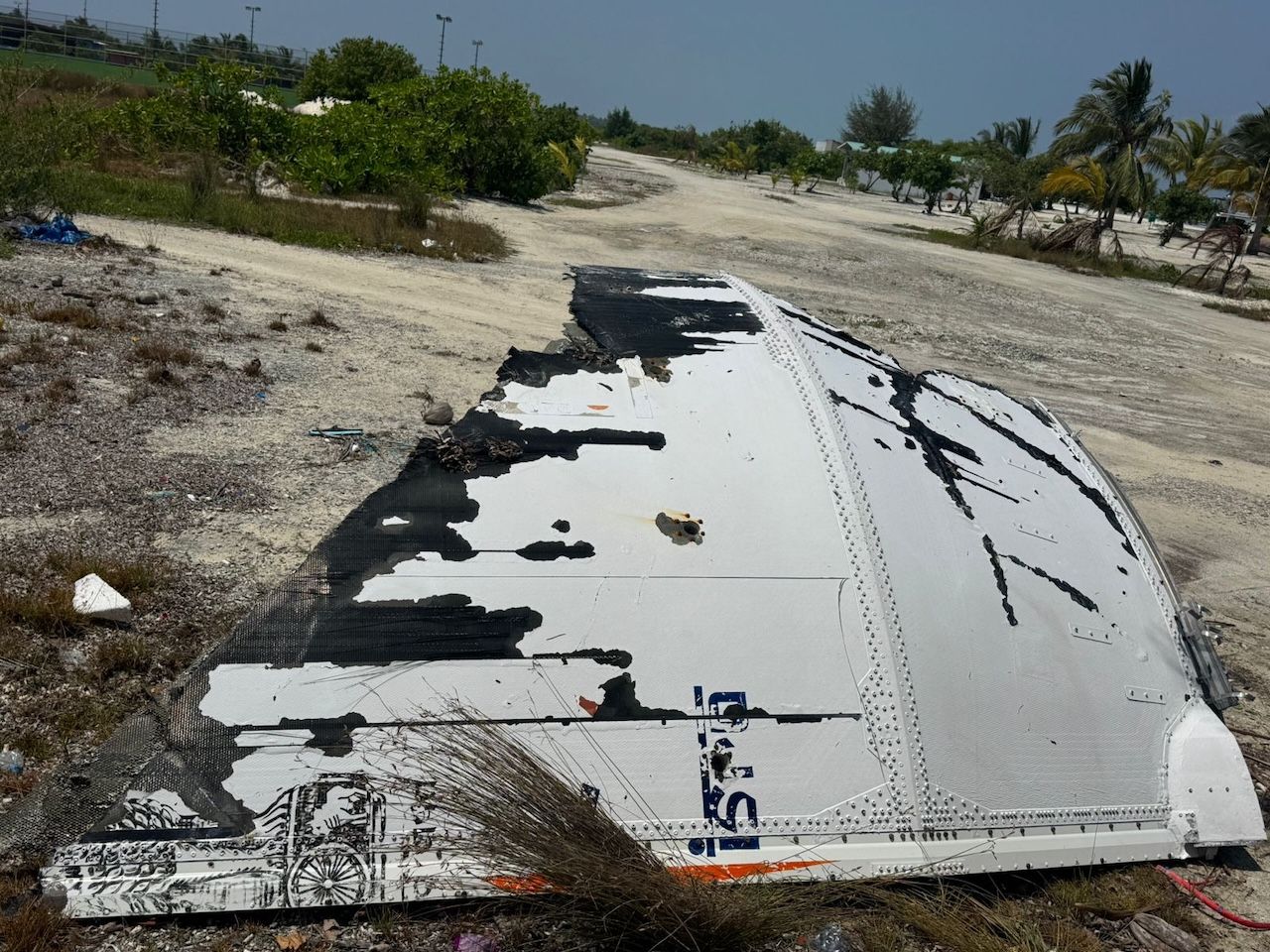
Rameez said his brother sent photos over to the ISRO for confirmation.
Less than 10 minutes later, police officers on the island got a call from the Maldives National Defence Force, informing them that the army would come to collect it, according to Kunahandhoo council president Ibrahim Shakeeb.
Rameez said the residents who had an eye on the bolts on the piece of metal were told to leave it alone. “Yeah, they weren’t able to get the bolts. Police came and cordoned off the area immediately and started guarding it,” he said with a laugh.
“Apparently, they collect it because it would have data, it would have small sensors. Even if we don’t know, those who know [how to operate it] could steal from the data, right? So the police took it over and the army came to take it back the next day.”
Police officers told them to leave it alone until the soldiers arrived, said Shakeeb, the council president. “They said if the guys had taken the bolts before its owners were contacted, police wouldn't have a problem with it. But they couldn't let it happen now.”
A team from MNDF arrived from Gan the following day and took everything. The debris and the bolts.
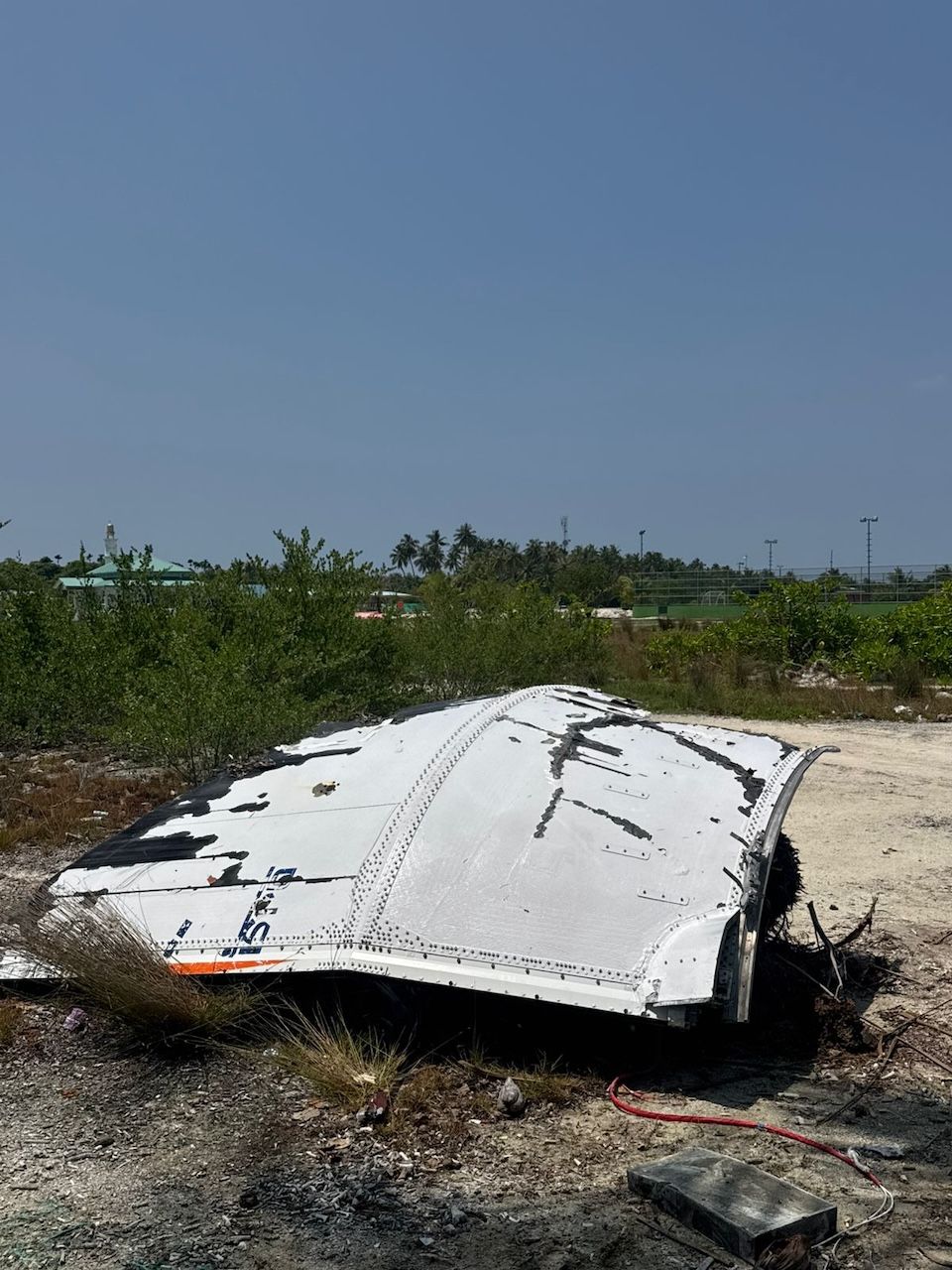
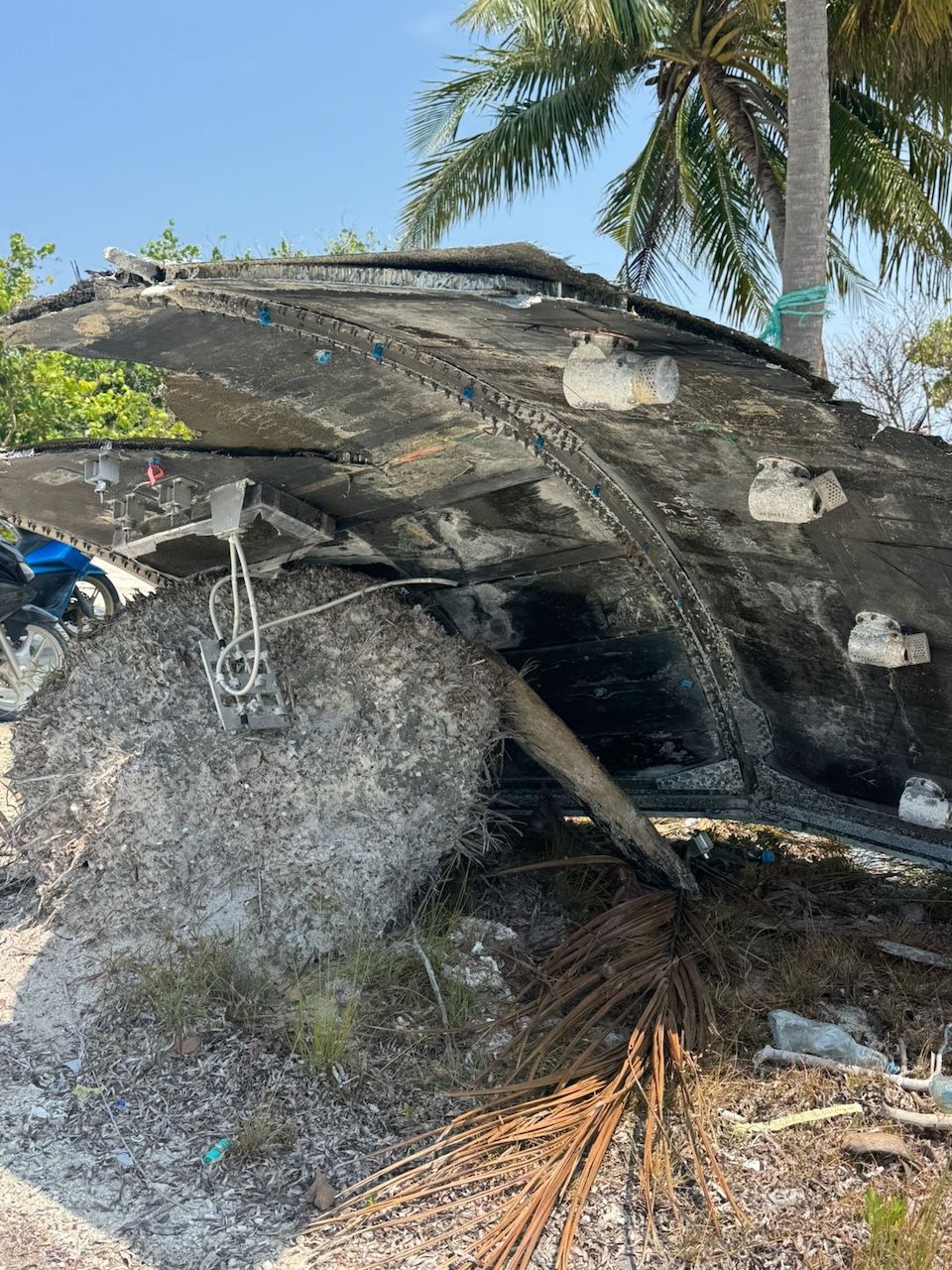
Kunahandhoo was not the first shore this rocket reached. On December 30, barely a week after launch, a much larger section of what appears to be the same payload fairing was found washed up on a beach at Malaimundhal in Sri Lanka's Trincomalee district, roughly 750 kilometres from the Sriharikota launch site. Fishermen there spotted it first, too.
Payload fairing is the protective nose cone that shields satellites during launch, then detaches and falls away once the rocket clears the atmosphere. The LVM3-M6 heavy-lift rocket was launched for a mission that carried a pair of Bluebird Block-2 communications satellites built by the US firm AST SpaceMobile into orbit.
The Maldives sits south of Sriharikota's launch trajectory. ISRO has not publicly commented on either the Sri Lanka or Maldives incidents.
ISRO routinely jettisons fairings over the ocean to avoid debris falling on land. Most fragments sink or break apart. But the fairing is made of lightweight composite material designed to survive extreme conditions. Sometimes it floats. In 2023, debris from a different ISRO rocket turned up on a beach in western Australia.
Under the 1972 Convention on International Liability for Damage Caused by Space Objects, a country that launches a space object is absolutely liable for any damage its debris causes on the surface of the Earth. No negligence needs to be proved. India has ratified the convention.
But the mechanism for claiming compensation requires a state to file against a state. In the convention's fifty-three year history, only one claim has ever been filed: Canada's, against the Soviet Union, after a nuclear-powered satellite scattered radioactive debris across its northern territory in 1978. Moscow eventually paid three million Canadian dollars.
Captain Jack, for his part, went back fishing.
Discussion
No comments yet. Be the first to share your thoughts!
No comments yet. Be the first to join the conversation!
Join the Conversation
Sign in to share your thoughts under an alias and take part in the discussion. Independent journalism thrives on open, respectful debate — your voice matters.
Support Independent Journalism
Help us keep the news free and fearless
Give once
$
or
Become a memberfrom $5/month