

Death in SAMPA: propeller guards mandated, none installed
A year of failed enforcement in South Ari's largest marine protected area.
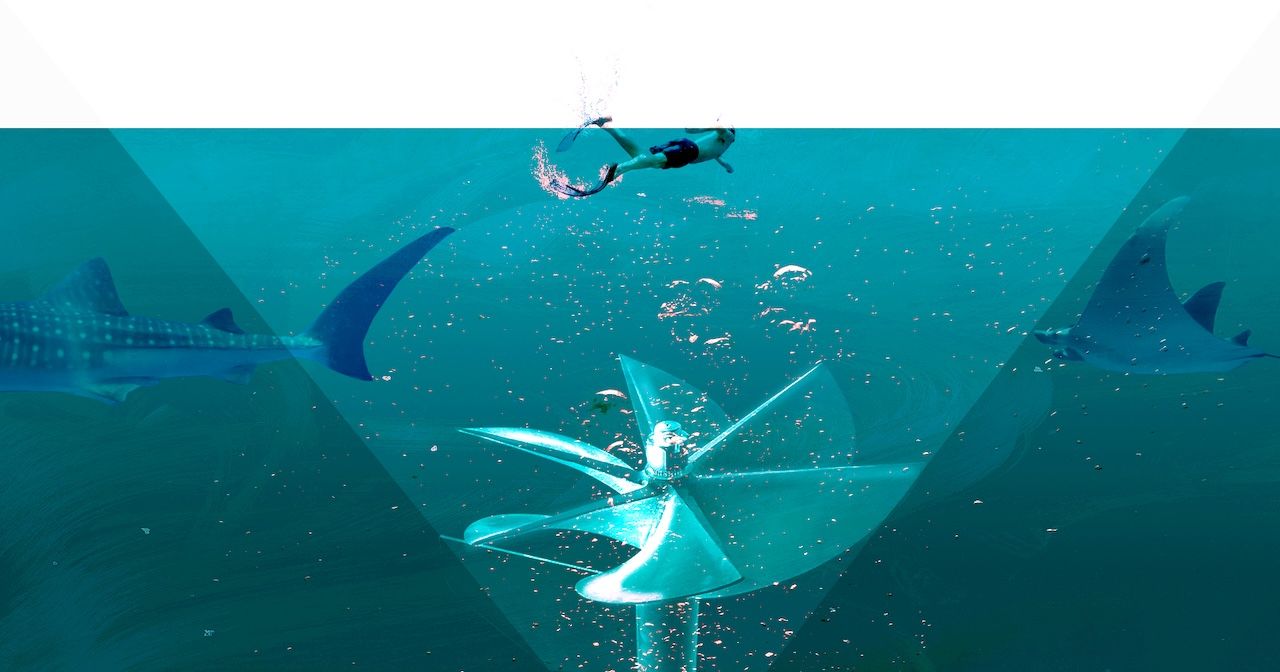
Artwork: Dosain
08 Apr, 17:15
The German tourist who died at the Rangali Manta Point last week was not hit by a speeding boat, as many initially feared. He jumped from a dive boat as it reversed and was caught in a propeller.
The propeller should have had a guard fitted as mandated under the South Ari Marine Protected Area's management plan.
The incident on April 1 immediately sparked fears of yet another boat running over a snorkeler or a diver in the high-traffic zone where thousands of tourists seek manta rays and whale shark encounters. But the consensus among the local close-knit diver community was that the fatal accident occurred because the guest jumped into the water from the Horizon 3 liveaboard's dive boat as it was in reverse.
"He got caught in the propeller and was stuck in it so much that the crew waited till police arrived. So the photo shows him after he was pulled up when the police arrived," reads a message shared by an employee of the Blue Horizon group, referring to a photo that circulated of a body bag being taken onto the deck of a dive boat.
After concluding a diving excursion, the boat was preparing to drop off snorkelers to watch a whale shark when the guest jumped, according to the message.
A mandate with no teeth
The South Ari Marine Protected Area (SAMPA) lies in the southern tip of Alif Dhaal atoll. It covers a one-kilometre area seaward from the reef crest of the islands between the southwest corner of Rangali reef all the way to the northern tip of the Dhigurah reef. The total area encompasses 5,610 hectares.
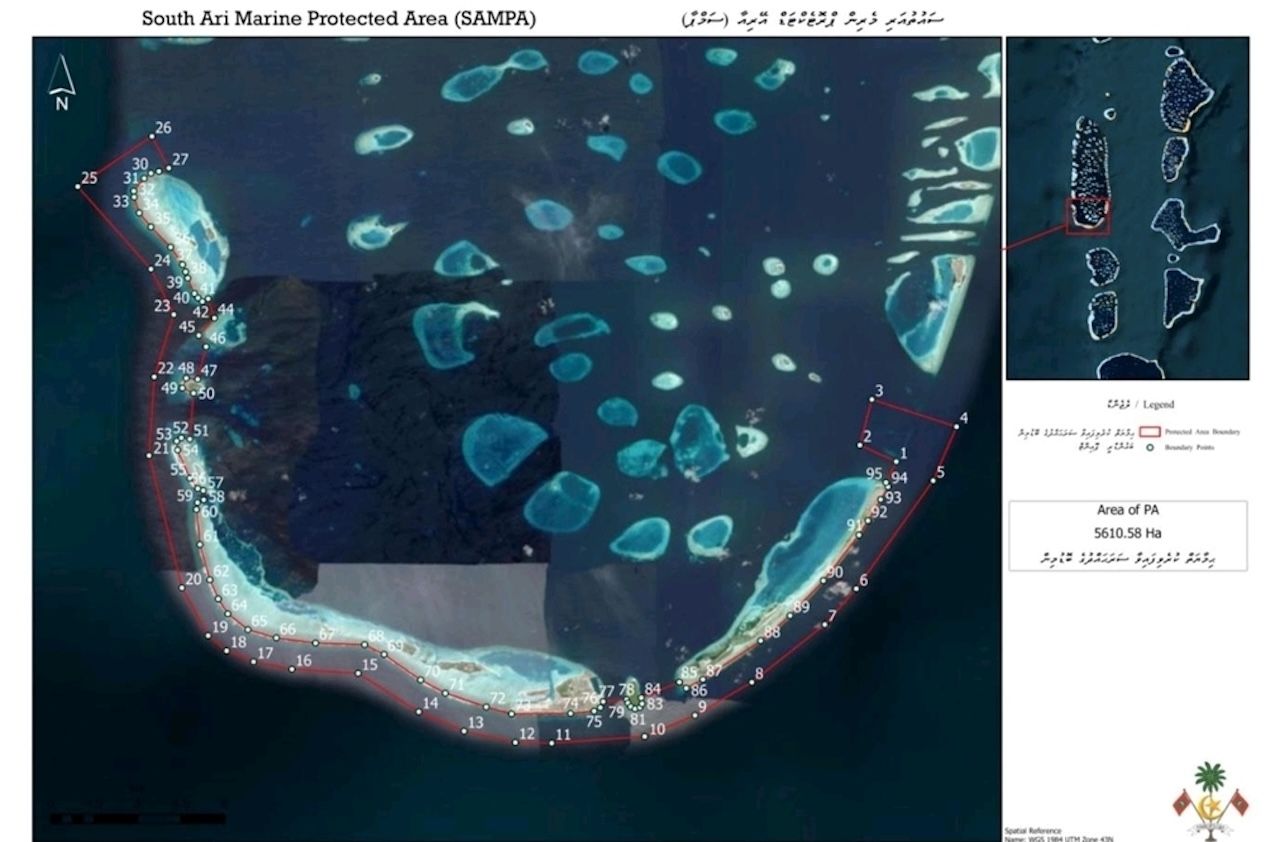
A long-awaited management plan and revised zonation came into force on February, 1 2025. It was the environment ministry's final announcement before being merged with the tourism ministry.
The plan imposed speed limits and mandated the installation of propeller guards as well as the registration of all vessels conducting diving or snorkelling activities within SAMPA. No more than six vessels should be in the contact zone (250 metres from a whale shark) at the same time, and no more than 60 guests should be in the water at the same time. Tourists are only allowed to be in the water for 15 minutes.
Vessels were required to keep to speeds of no more than 10 knots per hour within the protected area boundary, and to five knots within a “contact zone” of 250 meters from a whale shark or megafauna. They were restricted to no more than two knots within 50 metres from a megafauna. They must remain on neutral within 15 meters of a megafauna.
All speedboats conducting diving or snorkelling must be equipped with propeller guards within three months, the initial plan stated. However, an amendment made on April 30, 2025 extended the deadline to February 1, 2026. The amendment also extended the registration deadlines for vessels, captains, crew and guides until July 31, 2025.
More than a month after the deadline passed, almost no vessel has installed it. Several dive operators told the Maldives Independent that their vessels are not equipped with the safety device. Operators say it's new to the Maldives market.
Rangers on patrol, rules on hold
Despite the failure to comply by the February 1 deadline, enforcement has been relaxed since propeller guards were new to the country, a SAMPA ranger explained.
"I don't know the details of the guard requirement. I think the deadline has now passed. But it's not something that's actually common or available in our market here, so we are in a kind of a waiting period," a rangers reached through the SAMPA hotline told the Maldives Independent.
Most vessels that operate in the area have now registered and training and certification of guides are going ahead as planned, he said. The team of rangers based in Maamigli recently got a vessel and have now started patrolling the area, he added.
The ranger acknowledged that overcrowding near whale sharks has been a longstanding problem that "would not get fixed instantly."
A protected area on paper
SAMPA was designated a protected area on June 5, 2009. But as traffic grew along with the booming whale shark tourism, management of the country's largest marine protected area has lagged behind.
The management plan also required the registration of boat captains and crews of all vessels operating in the area. The guides were required to be certified by the tourism and environment ministry. Tourists need a permit to snorkel and dive. There must be a guide for every six visitors.
A dive centre from Kaafu Maafushi that offers daily trips to the neighbouring atoll was unaware of any vessels that have installed propeller guards.
"Last year, people were involved in projects and anyone who didnt register would have problems." said Alka from Malediwy. Organised sessions were conducted about how to behave around whale sharks, and those joining the trips were required to take a test, she said.
"Now there's no organisation. It's a very sad sight to see."
Ahmed Faisal, the manager and an instructor with the Fari Dive Centre in Alif Dhaal Dhigurah, said he had seen failed attempts at managing SAMPA ever since he began diving more than 15 years ago.
"Ever since I started, South Ari has been designated a protected area, but it's always been this way – every man for himself. There is no control here," he said. "Every now and then, the government tries to manage it, but I think there has not been a system set up to manage it."
"I'll tell you I am in the water a lot and see a lot of boats from below. I don't think there's any boats with those guards. No one wants to take initiative."
He called for stricter enforcement of rules and more hands-on management, but stressed that the propeller guard requirement must be enforced after it is made available locally.
"If the deadline has passed, I do believe that vessels should be fined and there should be strict action. But I also think that that should not be done before such products are available in the local market. Not everyone can order from abroad and install it," Faisal said.
"I know it's a problem. We had a tragic accident just last week. We have an accident like that every season. To be honest, I'm even more worried about all the injured whalesharks from the propellers. You can see so many whale sharks who are injured. When they don't come up here anymore what happens to our business?"
Faisal described whale shark snorkelling or diving as a chaotic activity where the "law of the jungle" prevails.
"Whale sharks come up here because they want to relax and regulate their temperature and to feed on plankton. But here when a whale shark is spotted, it's about who gets there first, and they don't care about anyone or anything else," he explained.
"So they get annoyed too. Last year we saw a whaleshark get annoyed and face off with guests. That's something I'd never seen before"
The enforcement failure is symptomatic of the decade-long mismanagement of SAMPA, hampered by inadequate resources and over-tourism.
The Maldives Independent was awaiting a written response from the environment ministry at the time of publication. The Environmental Regulatory Authority was not responding to calls.
Discussion
No comments yet. Be the first to share your thoughts!
No comments yet. Be the first to join the conversation!
Join the Conversation
Sign in to share your thoughts under an alias and take part in the discussion. Independent journalism thrives on open, respectful debate — your voice matters.
Support Independent Journalism
Help us keep the news free and fearless
Give once
$
or
Become a memberfrom $5/month