
'A slap on my face': Ali Waheed's return and the men who stayed in public life
A complainant says she was pressured into withdrawing her statement.
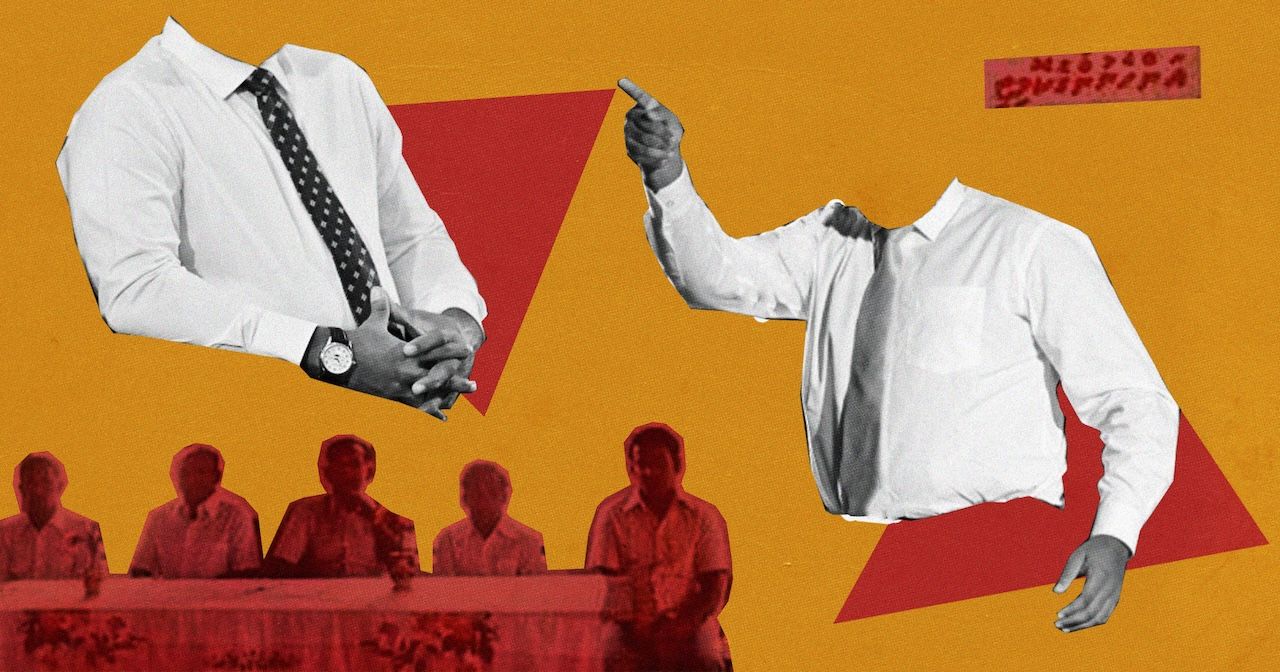
Artwork: Dosain
17 Sep, 20:16
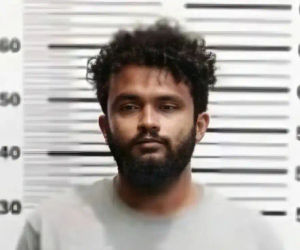
Six years after he was dismissed as tourism minister and three years after the charges against him were dropped, Ali Waheed was back on a stage in Kulhudhuffushi. He took the podium at a campaign rally on 5 September for former foreign minister Abdulla Shahid, who is seeking the Maldivian Democratic Party's ticket for the 2028 presidential election.
The event was broadcast live on Raajje TV and SSTV. Among the viewers was one of 13 tourism ministry staff who took the allegations against Ali Waheed to the President's Office in July 2020.
"As it came from MDP, because I also belong to the MDP, it feels like a slap on my face. With allegations, many allegations, in a case where the issue did not move forward," she told the Maldives Independent, speaking on the condition of anonymity.
Ali Waheed was sacked shortly after the female staff shared their accounts with then-President Ibrahim Mohamed Solih. In November 2020, he was charged with sexual assault, sexual abuse, attempted sexual abuse, attempted rape, indecent exposure and soliciting unlawful sexual contact. After the trial began, the Criminal Court lifted a travel ban and allowed him to leave the country for medical treatment in February 2021. He did not return for more than two years. The Prosecutor General's office withdrew the charges in June 2023, citing repeated letters from key witnesses and the alleged victims asking to retract their statements.
But the woman who spoke to the Maldives Independent said she did not want to withdraw her statement. She said she stayed in the case until close to the end and only withdrew after sustained political pressure, which came through both her job and family. She told the PG Office what was happening at the time, she said. It was clear from the first day where she gave her statement that nothing would remain confidential, she added.
Ali Waheed has consistently maintained that the allegations were politically motivated. Appearing on Aslu TV this week, he claimed that the complainants were the girlfriends of men who targeted the MDP government. "Tourism ministry people will know this," he said.
"I was framed," Ali Waheed told the Maldives Independent on Thursday.
"No person convicted of a sexual offence will have a place in my campaign, or in any administration I lead. There is and can be no ambiguity about that," Abdulla Shahid told the Maldives Independent.
He noted the charges were withdrawn and "did not result in a conviction or a finding of guilt." However, he added that such allegations must be taken seriously.
"I believe due process and accountability must both be upheld, and one should not come at the expense of the other," Shahid said.
The withdrawal
Prosecutor General Hussain Shameem told parliament in August 2024 that the charges against Ali Waheed had been taken back to avoid re-victimising survivors. It followed repeated appeals from them to drop the case, he said.
After they sent several letters, Shameem said he personally met with them and impressed upon them the importance of pursuing the case. While witnesses can be forced to testify, he questioned whether it was right to compel vulnerable survivors and other witnesses.
"Is it alright to have victims of sexual violence to feel like state institutions and courts are forcing them to testify under duress? Forcing survivors of sexual violence who are already traumatised to do something they don’t want to and re-victimising them. is this justice we stand for?” he asked lawmakers at the time.
“Exercising a power just because the law allows it without considering any other factors is not something a legal expert would do.”
"I’ve already spoken publicly about it. I believe I have already answered these questions," he said on Thursday.
The cost
The accounts surfaced gradually. Talk of a separate case involving an MP's husband assaulting a foreign woman on a safari boat circulated first. Women began connecting their own experiences to it, telling colleagues they trusted.
"Each person would say, this kind of thing happened to me too," she recounted. None of them knew how far it went, she said. That only became clear at the President's Office: "That is when I even learned about my colleagues – the extent of what they had gone through."
The survivor said she informed the PG office about facing pressure.
"That pressure was coming at me from various people to drop it. That things were coming at me politically as well. That I was being threatened in connection with my job too,” she said.
The prosecutors assured full support but she understood the limits: "I also accept that we can't have a police officer stationed behind us all the time."
She was frightened to go out in the early days.
"Quite often, especially in those very first days, I even said, I told them that when I went out onto the street I kept seeing the same face and I was extremely frightened during that period," she recalled. "Those days were really something like that. I even stopped leaving the house."
The pressure reached her through her family as well.
“Pressure came at me from a lot of people, in a lot of different ways, even through family members, to make me withdraw this statement. So much pressure, I say, but even if I explain it like this, I don't think the pressure can really be understood. It was to the point where I had to take it. To the point where I had to."
One other complainant held out alongside her. The other woman told her she did not want to withdraw either, but she also spoke of facing pressure, without divulging details.
She recounted uneasiness about confidentiality from the day she first went to the police station.
"In a very short amount of time a lot of stories began spreading. These are things we noticed within the police as well. This is my opinion, not everyone's," she said.
In April 2024 statements given by complainants were published online. They detailed a pattern of harassment and sexual assault by a minister against women who worked for him.
She said she did not know whether the ministry had a committee or any other body that could have handled a complaint. It was the height of the pandemic. Few staff came in to work and offices were not functioning normally.
When the women met President Solih, she said he offered "a sympathy face" and little else. But one thing that followed was encouraging.
"It was something that gave us a lot of courage, because he was removed from his position the following day. So that was something that he did for the good of everyone perhaps," she said. "That was something he did really well, that day."
She said a proper trial might have brought a great deal to light. "Such a big case, plus a lot of people – I don't think even in the history of the Maldives."
The toll
She said the case returns whenever it is politically useful. Reporters come back to the women each time.
"Every time something comes up politically, every media outlet starts contacting us. This is even harassment actually at this point," she said. "For us it is not easy reliving it. And every time these things circulate on social media. I don't know. People don't have empathy."
She said most people do not understand what it does to the person at the other end of it. Taking the accounts up again makes it worse for the victim, she said. "What I want to say is, actually in Maldives, the victim gets victimised a lot. In Maldives what women receive is more no matter what a man does."
She said harassment is often explained away as something a woman invited, through what she wore or how she carried herself.
Nevertheless, asked what she would tell a woman in the same position, she said she would tell her to complain.
"Even if things are like this in Maldives, I will still say it – now, tomorrow and in the future. If I see someone struggling with that. At least people would know, people would have an idea about this person," she said. "When we share those stories, at least there will be some people out there who will believe the accounts to some extent. So I will still say, go for it."
She said the cost of speaking is facing public scrutiny. As things stand, it is treated as though Ali Waheed were the one harassed, she said.
The pattern
Contacted by the Maldives Independent, Ali Waheed suggested the public was more concerned about the cases of other men who "hold higher office than me in MDP right now!," naming a top official alleged to have been ensnared in a webcam blackmail scandal in 2011, and Hassan Ismail, whom he identified as the campaign manager of the Bodu Badhalu reform package championed by former President Mohamed Nasheed and former economic minister Fayyaz Ismail, the presidential candidate of the rival MDP faction.
Hassan Ismail, Fayyaz's brother and former communications secretary at the President's Office, was accused of sexually harassing The Edition's editor Rae Munawar in February 2019. In a detailed account published in The Wire in July 2020, she recounted how he propositioned her at a meeting, offering favourable treatment for her newsroom and an ambassadorship for her father. She complained to the President's Office and lodged cases with both the police and the Anti-Corruption Commission. Hassan Ismail denied any wrongdoing.
Ali Waheed and Hassan Ismail are not the only men to have faced allegations of sexual misconduct or violence against women while holding public or party office.
Rae Munawar cited complaints filed against former Elections Commission member Amjad Musthafa in October 2017. A copy seen by the Maldives Independent at the time described a work trip to Kabul on which Musthafa insisted on sharing a room with two female employees over successive nights. Musthafa, who did not respond to repeated approaches at the time, went on to become a member of Employment Tribunal. After a stint as the chief judicial administrator, he was reappointed to the tribunal last July.
In November 2018, four junior staff accused then-foreign minister Mohamed Asim of sexual harassment.
In 2019, the MDP withdrew support for Thinadhoo North candidate Abdul Mughni citing “serious allegations” of domestic violence raised on social media by his ex-wife. Supporters in the party's southern stronghold protested. Mughni published a letter from the police stating no domestic violence against him was on record. He denied the allegations and stressed that he had never been charged. Days later, Nasheed, then MDP president, appeared at a rally in Thinadhoo and draped a sash on Mughni, confirming his candidacy. He went on to win the seat.
The episode prompted calls for background checks and proper vetting of primary candidates.
The Maldives Independent reported on workplace sexual harassment in 2017 when the social media campaign Mi Verin Koba documented high-profile cases involving men in positions of power. Among them was Mohamed Fahmy Hassan, whom parliament had removed as chair of the Civil Service Commission over sexual harassment. He went on to become High Commissioner to Malaysia in July 2015.
Upon assuming office in November 2023, President Dr Mohamed Muizzu appointed Fahmy as a state minister for foreign affairs. He was dismissed four days later following widespread criticism. At a press conference, Muizzu blamed a lack of proper vetting. However, Fahmy was reappointed in April 2024. He remains in the post.
Former Vnews editor 'Mundu' Adam Haleem, who was caught on security camera physically assaulting a female employee, was appointed chief of staff at the speaker's residence in August 2024.
The party
Neither the government nor the MDP appear to have a vetting process in place.
Nasheed, now the MDP chairperson, could not be reached for comment.
Asked if the MDP has any rule or process for assessing a candidate or campaign figure who has faced sexual offence allegations, former MP Rozaina Adam, leader of the party's women's wing, told the Maldives Independent that she was not aware of any, "because things cannot be decided based on allegations."
If the party takes actions based on unproven allegations rather than sound legal grounds, the accused would be entitled to take the party to court, she argued.
"I don’t know whether it’s true or not since the issue never came to court. But I usually give the benefit of the doubt to victims," she said of Ali Waheed's case.
Since the rally where he appeared was part of an individual's primary campaign, it was up to the candidate rather than the party, she said.
"An allegation can also be made, for example beyond sexual harassment, even towards us. They call us thieves. Allegations are made – corruption, stealth, just many false allegations. If we are to like act upon it, that would be very unfair," she said.
"For example, I know what is said about me are blatant lies, so it would be very unfair for example if, based on an allegation, when I am trying to contest or do something, if the party takes action, just because some people said so."
The record
A 2013 Human Rights Commission report on workplace harassment showed that over a fifth of the women surveyed had been sexually harassed. The 2014 law on sexual harassment and offences was a landmark one in a country that previously lacked any means through which women could seek help.
But more than a decade later, only a fraction of cases reported to the police are prosecuted. Even fewer result in convictions.
In 2017, the Maldives Independent spoke to a journalist who was grabbed from behind in a near-empty newsroom by a man who turned out to be her boss. The incident was recorded on office CCTV. He admitted it to a supervisor. But she was told the managing director saw no need for action and that she would be disgraced if she went to court. She left the job. The man did not.
"In the Maldives, it's always the women that get blamed," she said.
Discussion
No comments yet. Be the first to share your thoughts!
No comments yet. Be the first to join the conversation!
Join the Conversation
Sign in to share your thoughts under an alias and take part in the discussion. Independent journalism thrives on open, respectful debate — your voice matters.
Support Independent Journalism
Help us keep the news free and fearless
Give once
$
or
Become a memberfrom $5/month