
A job offer, a contested resignation and a seven-year fight with Transparency Maldives
A court ordered the money set aside after the NGO failed to pay.
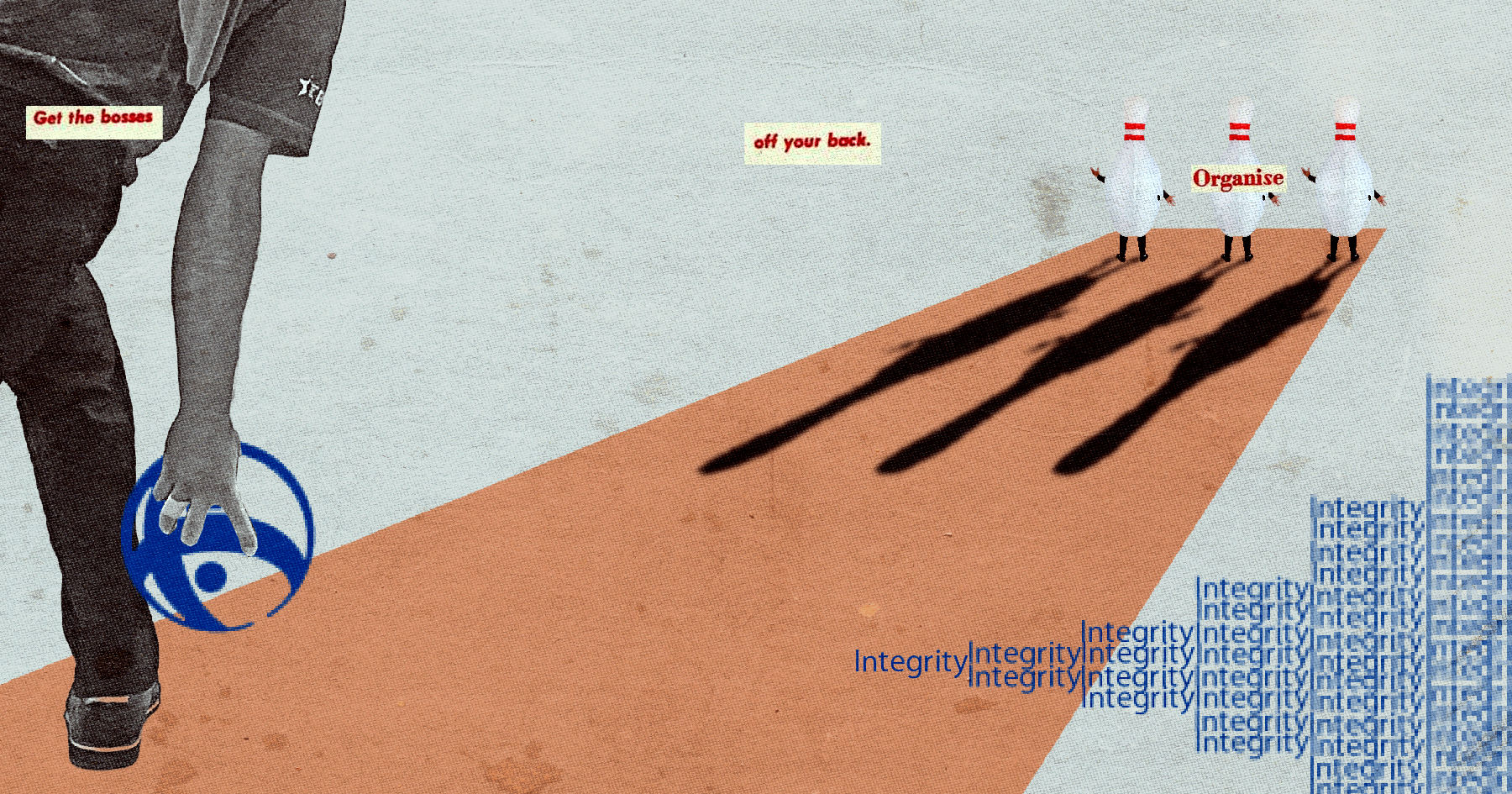
Artwork: Dosain
23 Jul, 17:12
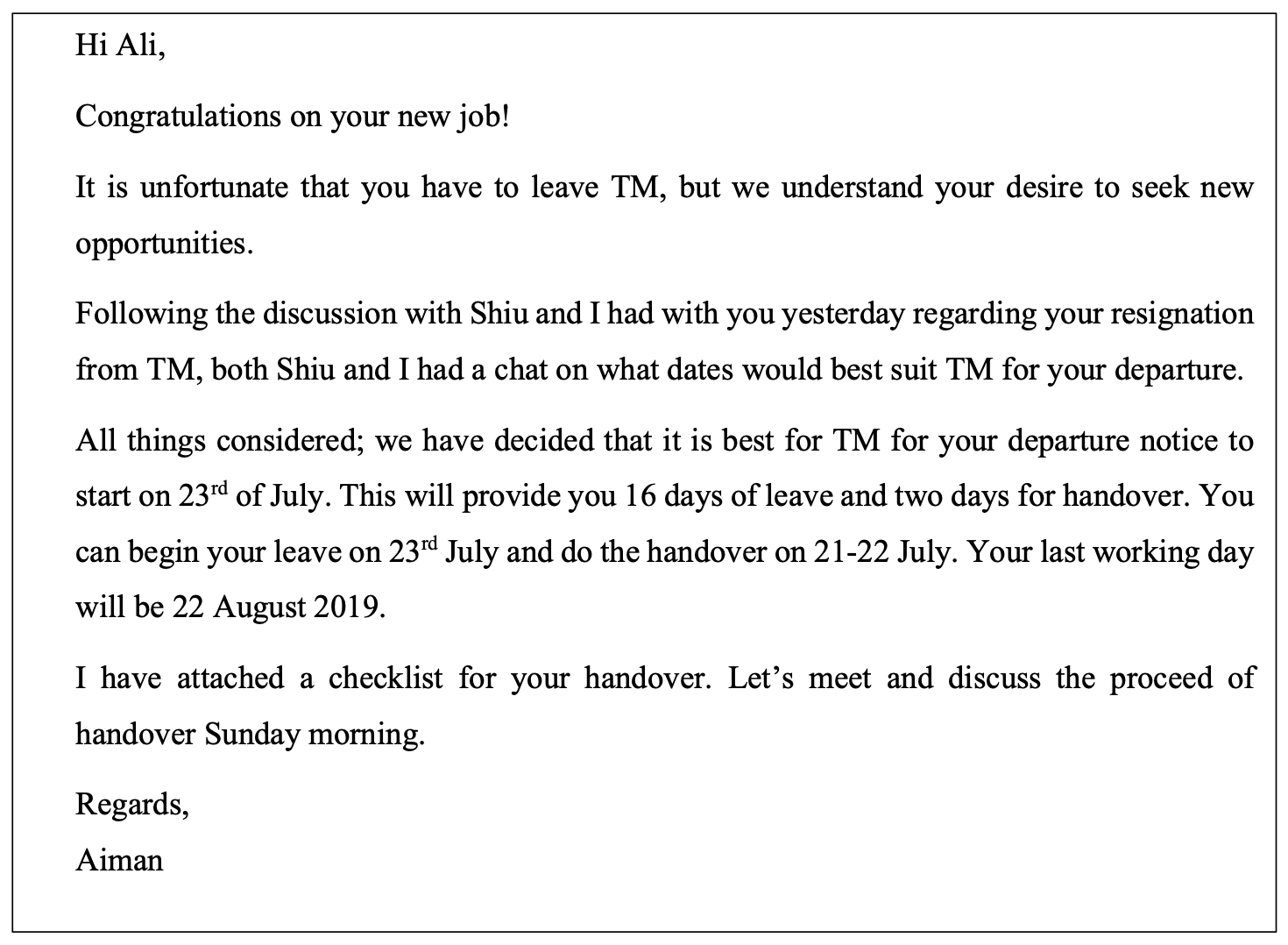
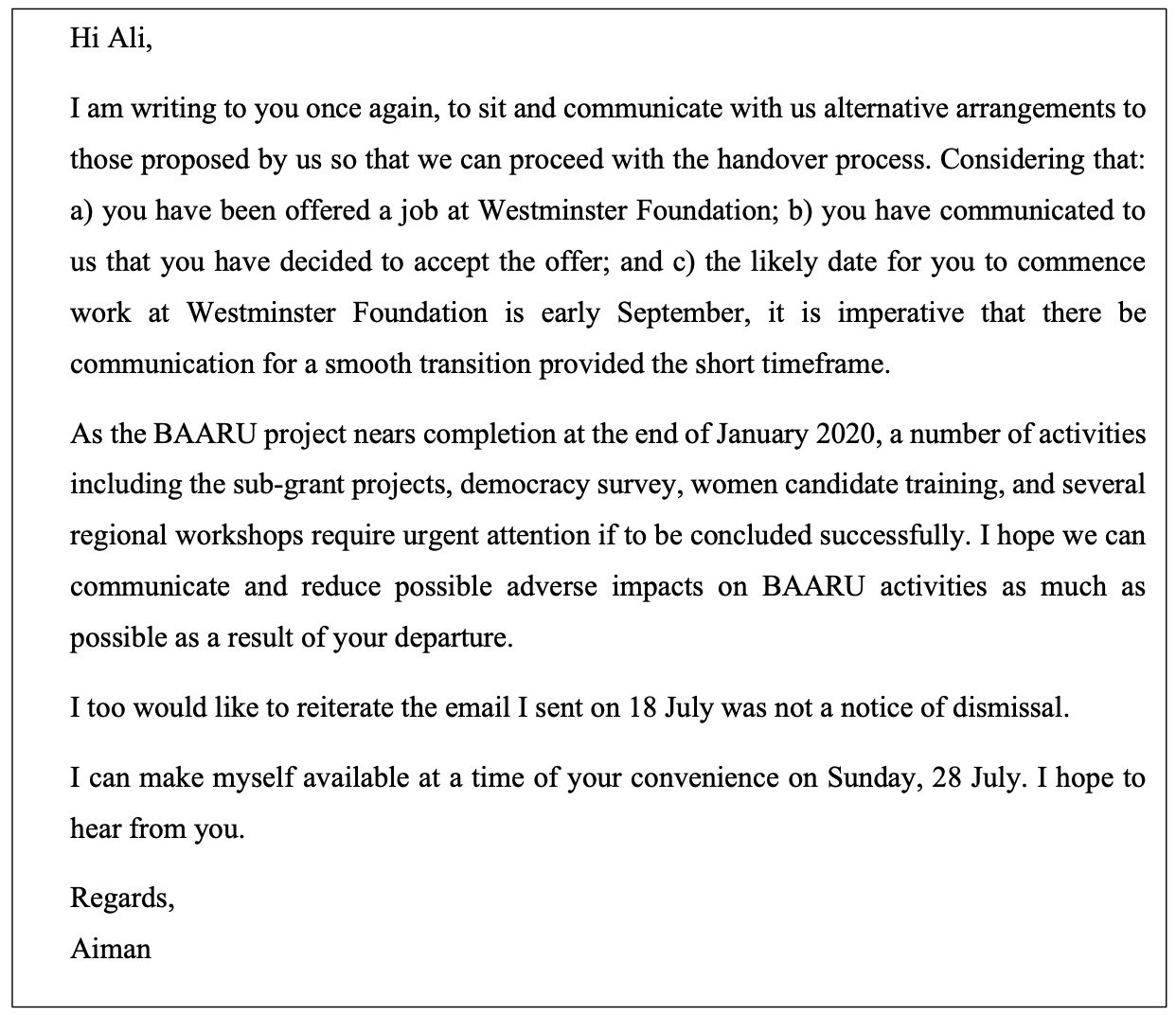
"Congratulations on your new job!" the email began. It arrived on July 18, 2019, days after Ali Shareef told two senior colleagues at Transparency Maldives about an offer from another organisation. It went on to set out a schedule: leave from July 23, handover on July 21 and 22, and a final working day of August 22.
But Shareef had not resigned. The Employment Tribunal and the High Court have since found that the exchange the email opened amounted to a notice of termination. Both determined that Shareef's resignation that followed six weeks later was one his employer forced.
Last Sunday, the Civil Court ordered Transparency Maldives to hold the sum it owes Ali Shareef – MVR 356,932 (US$23,100) – in its bank accounts. It came after the anti-corruption watchdog failed to pay within the three days the court had ordered. Shareef had asked the court to freeze the organisation's accounts and release the money to him. Transparency Maldives says its accounts have not been frozen and that the order requires only that the uncontested amount be withheld.
What the courts found
The Employment Tribunal ruled that Shareef had been constructively dismissed under section 26 of the Employment Act. It was the conduct of his employer, rather than any choice of his own, that ended his job, it concluded. The tribunal ordered Transparency Maldives to reinstate him, to treat him as never having left, and to pay the salary and allowances he would have earned between his departure and the date of its ruling, all within 14 working days.
Transparency Maldives appealed on four grounds. In a judgment delivered on February 17, 2026, a three-judge High Court bench dismissed all four and upheld the tribunal. One judge dissented on the fourth ground alone. No judge at either level has disagreed that Shareef was constructively dismissed.
The court held that the July 18 emails constituted a notice of termination in breach of clause 11 of Shareef's employment contract, which required a month's written notice for an employee of his length of service. It found that fixing the dates of his annual leave without consulting him breached section 41(a)(1) of the Employment Act. It found that removing him from the organisation's all-staff WhatsApp messaging group, together with his isolation at the office, amounted to unequal treatment contrary to article 37(b) of the constitution.
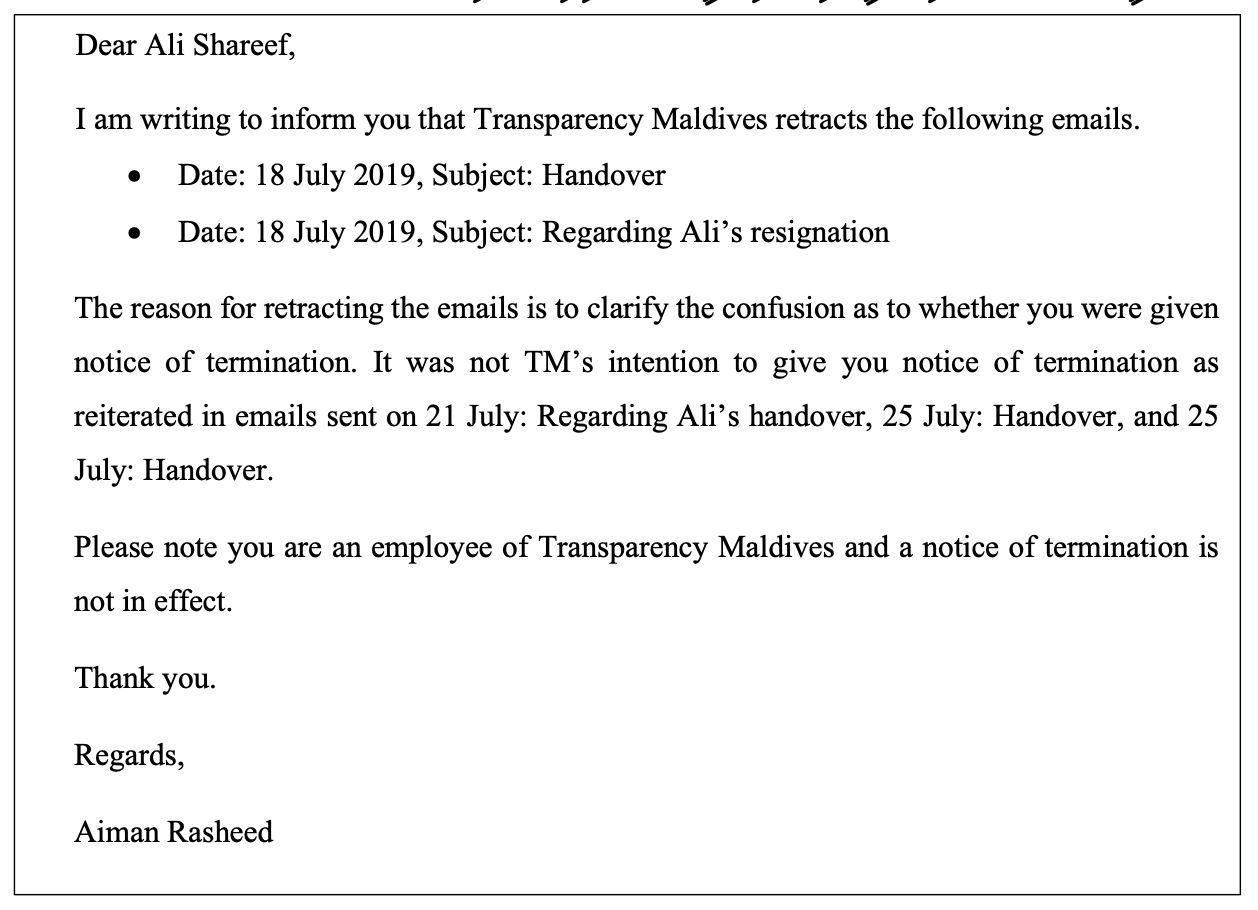
On the retraction, the court found that Transparency Maldives had produced nothing beyond its own assertion to show that withdrawing the emails on August 12 was corrective action. While the July 18 notice had gone to the whole staff, the retraction went to Shareef alone, the judges noted.
The court applied the last-straw doctrine from the English case Kaur v Leeds Teaching Hospitals NHS Trust: a final act need not be serious enough on its own to end a contract if it contributes to a cumulative breach that makes the job untenable.
How it happened
Shareef joined Transparency Maldives in January 2014. From March 2017 he was senior project coordinator on the BAARU project, under a contract running from April 1, 2018 to January 31, 2020.
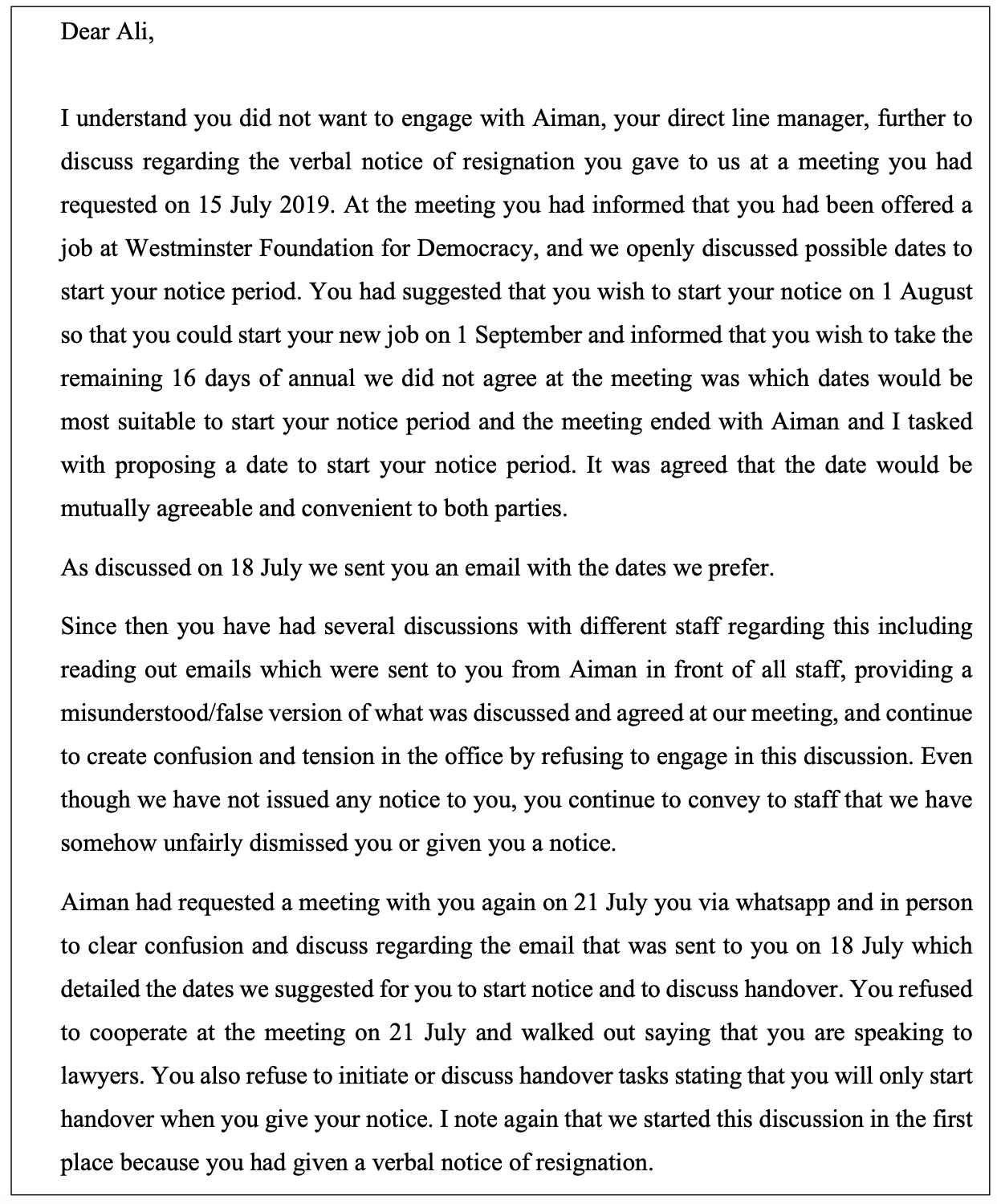
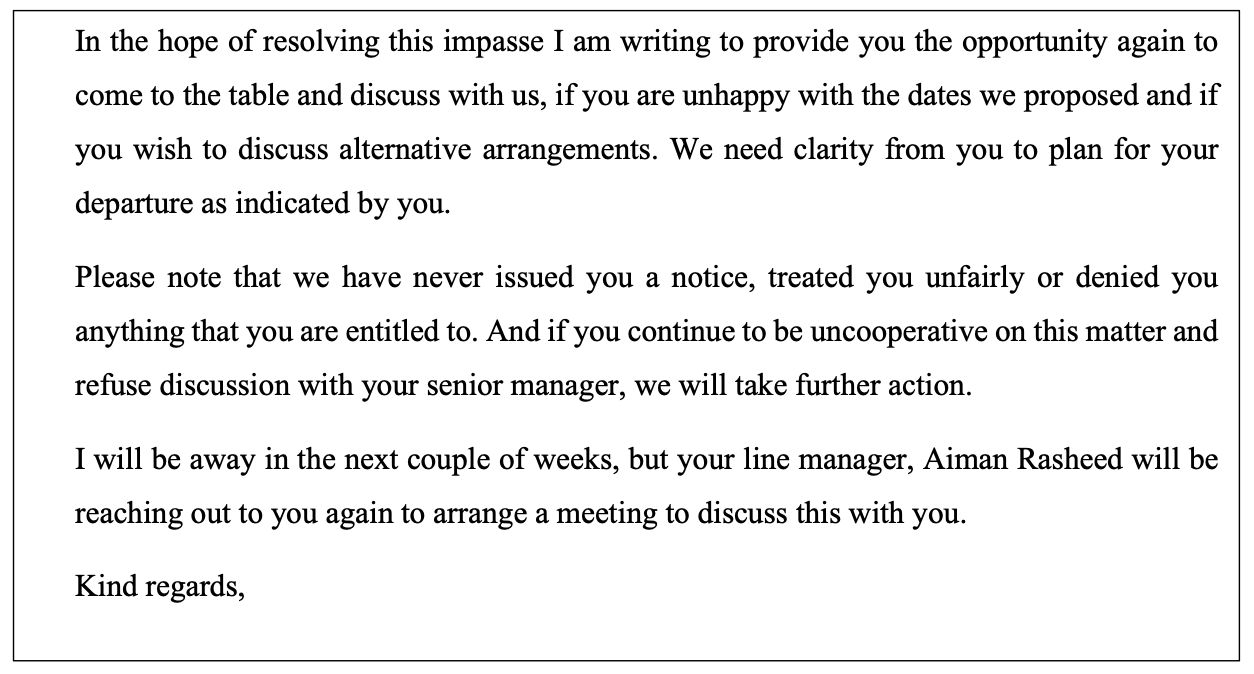
On July 17, 2019 he met two senior colleagues and told them about an offer from the Westminster Foundation for Democracy. On July 18 his line manager, Aiman Rasheed, emailed him the departure schedule; Maryam Shiuna, then-executive director, emailed separately the same day, telling him she was pleased for him and setting out why a fast transition suited the organisation.
Shiuna, who went on to become president of the Anti-Corruption Commission under the previous administration, is currently chairwoman of Transparency Maldives' board of directors.
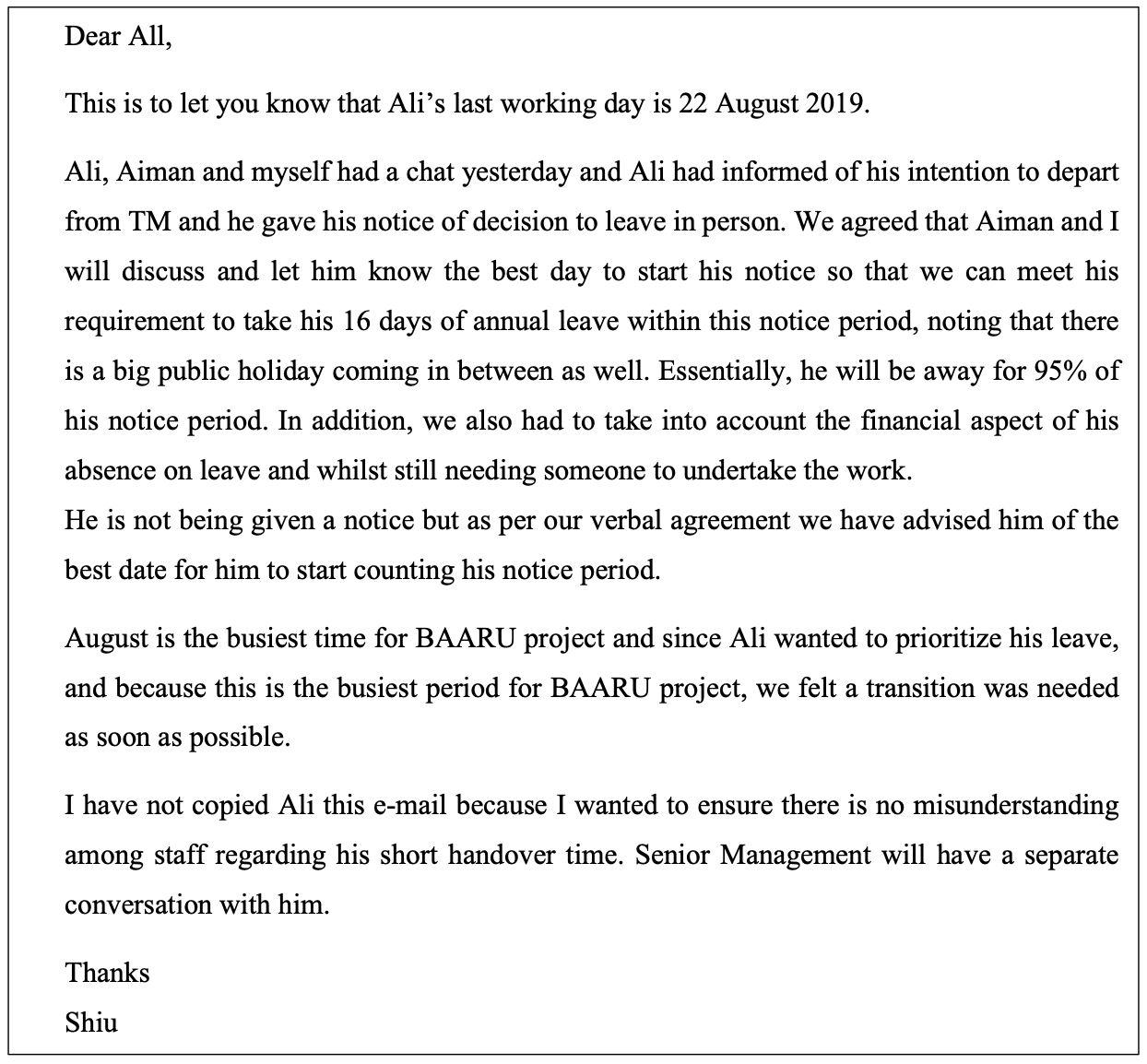
On July 25, an email went to the rest of the staff announcing that Shareef's last working day would be August 22. It stated that he had not been given notice. It had not been copied to him "to ensure there is no misunderstanding among staff" about his short handover.
Shareef filed at the employment tribunal on October 27, 2019, following an earlier case he had lodged in July and withdrawn in October. On July 30 he had been removed from the all-staff WhatsApp group, called "Whatever," the day after that first filing.
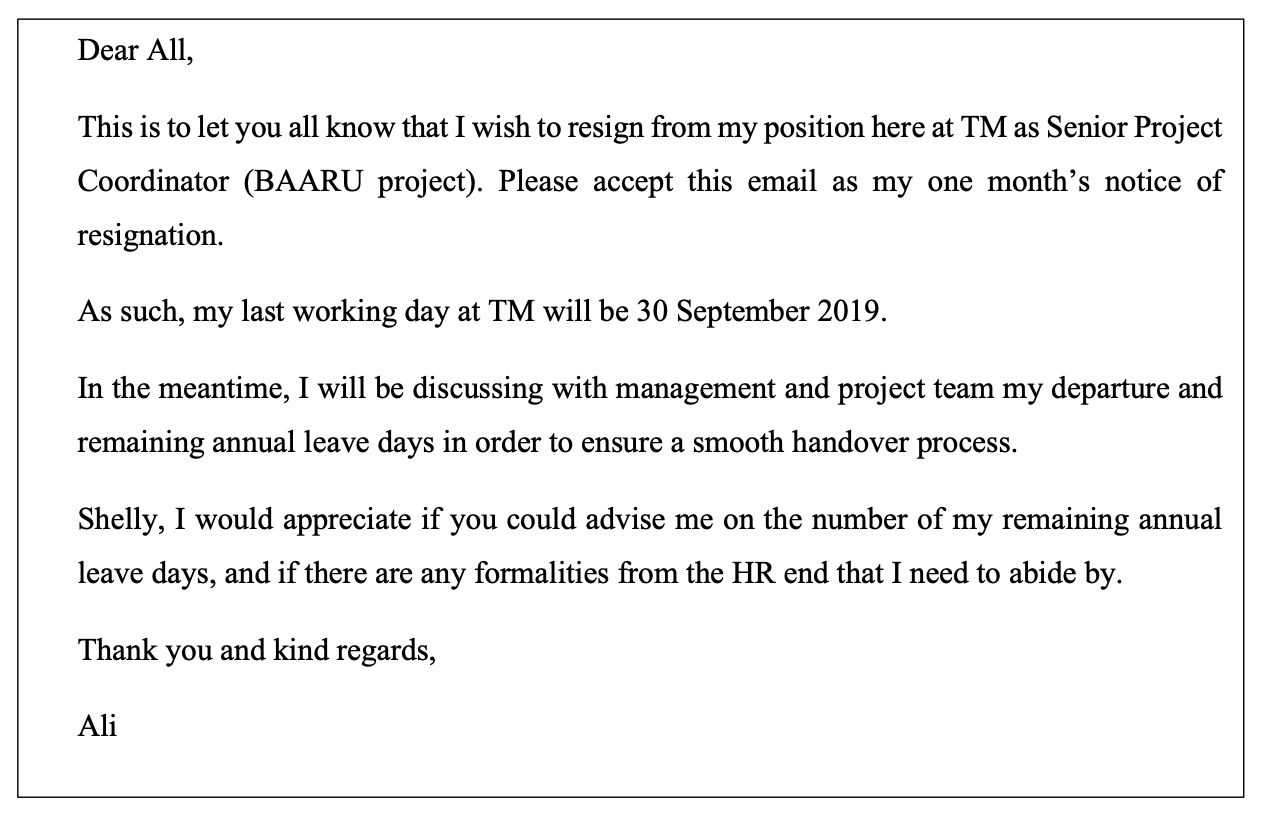
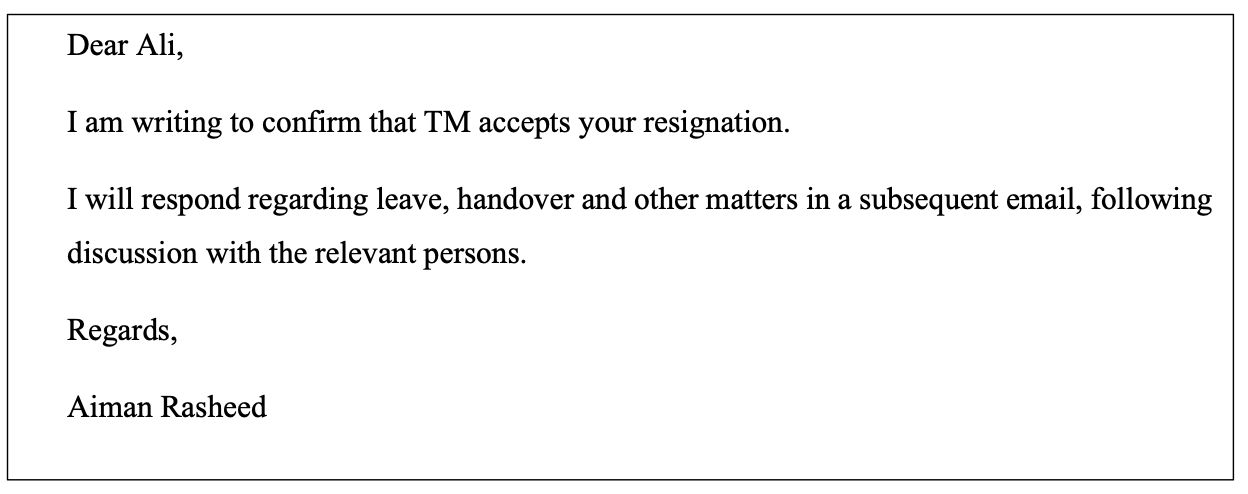
On August 8, he wrote to the organisation's board. On August 12, Aiman Rasheed emailed him retracting the two emails of July 18 and confirming that no notice of termination was in effect. Shareef gave notice on September 1, left on September 30, and wrote to the board a second time that day. He said he received no substantive reply.
A colleague who gave evidence to the tribunal, Ahmed Naeem, described the office atmosphere as "toxic," said senior management had stopped speaking to Shareef, and said other staff became reluctant to engage with him as a result.
Enforcement
Following the High Court judgment, Shareef went to the Civil Court to enforce the award. On May 5, his lawyers asked the court to freeze the organisation's accounts in order to recover the outstanding amount. In June, the court ordered Transparency Maldives to pay within three days. When the deadline passed without payment, Shareef sought urgent enforcement action, asking the court to freeze the sum in the organisation's accounts and pay it to him directly.
What the court granted was narrower than what Shareef asked for. He had sought an order freezing Transparency Maldives' accounts and directing the court to pay him from them. The court instead ordered that the sum owed be held. Mihaaru, which first reported the order, initially described the accounts as frozen and later corrected the report to say only the compensation amount was covered. Transparency Maldives told the Maldives Independent that its accounts have not been frozen, that no written judgment ordering payment has been issued, and that neither it nor its lawyers have received formal notice of any decision in the enforcement case.
At the High Court, Shareef's side put the amount owed at MVR 950,520, covering October 2019 to July 22, 2023. The sum now held is what the Civil Court determined to be the outstanding MVR 356,932 that the tribunal's award calculated to the date of its March 2021 ruling.
Shareef told the Maldives Independent that his claim covers a further MVR 1,316,288.44 for the period from the tribunal's March 2021 decision to February 20 this year, when he lodged the enforcement case at the Civil Court.
Shareef had also asked the High Court to order Transparency Maldives to cover MVR 50,000 in legal costs, on the grounds that the case had reached the court twice. An earlier appeal was struck out in February 2023 when the organisation failed to appear for a hearing. The court declined, finding no abuse of process.
What Shareef says
"They were perfectly well aware I was seeking new opportunities, applying for jobs," Shareef told the Maldives Independent. "Even in preparing for the job interview. So it's not like they didn't know, or I was doing this behind their back."
TM's management "were very supportive up until this," Shareef said. The Westminster Foundation for Democracy role mattered to him in particular, he said, because he had studied parliamentary reform and WFD's project at the time was on the subject.
Shareef said he informed TM's management the day after receiving the offer, "which I thought I was doing in good faith, so I didn't think there would be any negative consequences like this would come." It was well understood among TM staff that resignation required written notice under the contract, he added, so "in the absence of anything like that I did not think things would reach this level."
Shareef described his relationship with Aiman and Shiuna before the dispute as "very, very close." He said he had spent six years with TM, including a period of no-pay leave, having joined at the age of 23.
"We were in our mid-early, late 20s," he said. "You can imagine we were close, we were tight. We had a lot of fun, really no falling out or anything. We were very, very close. Beyond colleagues, we even hung out personally." He said that closeness made what followed "very surprising."
WFD withdrew its offer before his proposed start date, leaving him without either job.
Shareef said he remained unemployed until 2021, calling it "a very painful few years." He said the Maldives' NGO sector is small and that people talk: "my fall out, if I am friends with you, is your fall out." He said he retreated from social life during this period. "I was in a bad place mentally, and I wasn't doing the talking, I shut down and basically withdrew. I was just home." The Covid-19 pandemic compounded the difficulty, he recalled, as jobs, particularly in the NGO space, became scarce.
Shareef referred to a specific instance he connects to the dispute: he applied for two positions at the UNDP and was unsuccessful. Later at a friend's wedding, a senior UNDP staffer approached him in a matter that suggested to him that person had already formed a negative view of him. "I strongly think it has something to do with 'okay, now this guy has some beef with TM, we work closely with TM, so we can't have him here,'" he speculated.
"My good faith disclosure was seen as a notice, in retrospect," he said.
What TM says
A spokesperson for TM told the Maldives Independent that to date, the Civil Court has not issued a written judgement ordering the payment of any amount in the case in question. Furthermore, a final verdict in the enforcement proceedings has not been issued and no formal communication of any decision has been relayed to TM or its legal counsel, she noted.
"TM has also taken steps to pursue further legal remedies and is currently awaiting a response regarding its appeal at the Supreme Court of the Maldives. TM will fully comply with all prevailing laws and court orders and respect the processes of the judiciary,” the spokesperson said.
She added that TM continues to engage in the proceedings through its legal counsel. During the ongoing Civil Court proceedings, the judge instructed the uncontested amount to be withheld in TM's accounts as per the civil procedure code. However, the organisation's bank accounts have not been frozen, she stressed.
TM has maintained that the July 18 emails were never a termination notice, merely a proposal on departure dates, sent after Shareef himself gave verbal notice. Once confusion arose, it said, the August 12 retraction was genuine corrective action. The fact that Shareef kept working after August 22 showed the notice had been voided and the contract affirmed, TM argued.
It denied isolating him, saying he'd been added to a project-specific WhatsApp group and had himself withdrawn from senior staff. Since his role was tied to the EU-funded BAARU project, with a contract ending January 31, 2020, TM says any award should be capped at about four months' pay, not run to the date of judgment.
The High Court rejected each point in turn: the "proposal" did not survive the fact that staff, not just Shareef, had been told his last day. The retraction did not undo what followed it. TM's own earlier submissions to the tribunal had described long-serving project staff, including Shareef, as effectively permanent, a position the court found it could not reverse on appeal.
But one judge would have sent the case back. Hussain Mazeed agreed with the majority on the first three grounds but held that the tribunal had never determined whether Shareef was a permanent employee or one hired for a fixed term, a question he said had to be settled before any remedy could be fixed.
The dissenting judge would have remitted the case to the tribunal to decide it. He did not rule on what Shareef was owed.
Discussion
No comments yet. Be the first to share your thoughts!
No comments yet. Be the first to join the conversation!
Join the Conversation
Sign in to share your thoughts under an alias and take part in the discussion. Independent journalism thrives on open, respectful debate — your voice matters.
Support Independent Journalism
Help us keep the news free and fearless
Give once
$
or
Become a memberfrom $5/month