

Maldives condemns Iran at UN days after Muizzu called for strikes on Israel "day and night"
Public mood rejects sectarian framing and pushes president off-script.
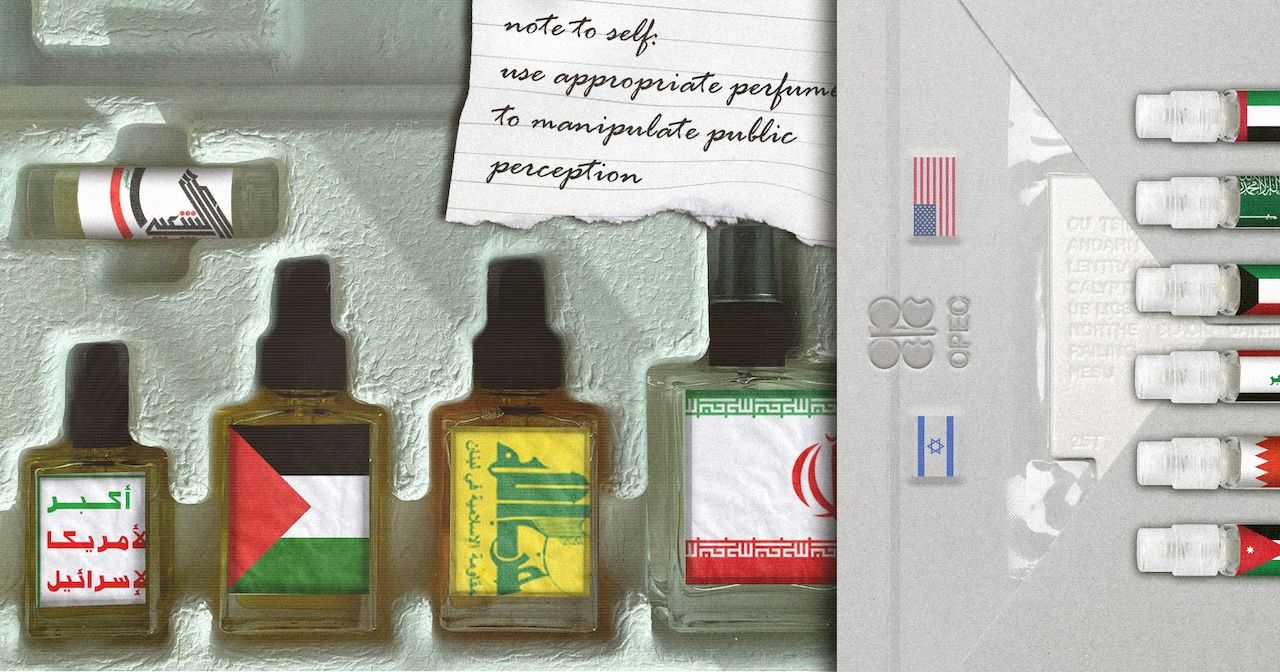
Artwork: Dosain
26 Mar, 17:32
President Dr Mohamed Muizzu said on March 23 that if Iran was going to strike back, it should attack Israel "day and night," and target "US and Israel sites in the region," not Arab-Islamic countries where Muslims will face harm.
Days later, the Maldives co-sponsored a resolution at the UN Human Rights Council condemning Iran's "unprovoked attacks" on seven Gulf states. In her statement in Geneva, Permanent Representative Dr Salma Rasheed described the attacks on Iran as "illegitimate" but made no mention of Israel or the US-Israeli military campaign.
The gap between the UN position and the president's remarks – aimed at a domestic audience weeks before council elections – reflects growing sentiment against the Gulf-aligned stance. The evident public mood repudiated a prominent scholar's sectarian case against Iran this week, and appears to have pushed the president into some of the most combative foreign policy language uttered by a Maldivian head of state.
"If Iran is to attack, it should directly attack Israel. That's what we believe. They can just go ahead and attack Israel day and night. We really want it to happen that way," Muizzu said at his weekly press briefing on Monday. "But when you attack Muslim Arab countries, it will be Muslims who are killed, it will be the places of Muslims that are damaged. Rather, Iran's attacks on Israel [should be against] the two parties fighting this war, attacking Iran – American and Israeli sites in the region – in a way that doesn't harm Muslims in the area. That is I think how this should happen. That is, I believe, the Maldives government's policy."
He unequivocally ruled out any military, diplomatic, or logistical use of Maldivian territory or airspace for the war.
The UN statements came later in the week. In the first, Dr Salma Rasheed called on the international community to halt Israel's "destabilising actions and aggression." The second statement on Wednesday – in which she "strongly condemned the attacks by Iran against the civilians and critical infrastructure of GCC" – drew an immediate backlash.
Former MP Rozaina Adam posted a video of Rasheed's remarks and called her failure to condemn Israel's campaign in Gaza, Palestine, and Lebanon "a slap on the faces of the people of Maldives." The opposition MDP's Women's Wing leader accused her of being "an accomplice in the genocide" and demanded she never again speak on behalf of Maldivian citizens. "Don't you know that 169 little girls were killed in Iran?" she wrote.
The theological case
Rozaina's fury echoed the response when Sheikh Ahmed Sameer told his 60,000 Facebook followers on Sunday that Iran's leaders were unworthy of Muslim solidarity. Sameer, one of the country's most prominent Salafi scholars, posted a detailed theological case against mourning Supreme Leader Ayatollah Ali Khamenei, arguing that the writings of Khamenei and his predecessor Ayatollah Khomeini revealed them to be adherents of a "deviant Shia creed" who disparaged the Prophet's companions and corrupted the Quran. He posted the book covers of Khomeini's Kashf al-Asrar (Unveiling of Secrets) and Khamenei's Al-Khawas wa al-Lahazat al-Masiriyya (The Elite and Fate-Determining Moments).
"Even if we wish for the destruction of the Jewish state by Iranian attacks, there is no point in glorifying these people for the purpose of supporting Islam and the Muslim Ummah," Sameer wrote. "I have written this not based on hearsay from others, but from what I have personally read in their books."
More than 900 comments and 600 shares later, the overwhelming verdict was a rejection of the sectarian framing.
"We don't care what kind of people Iranians are. The reality that we can see today is that Iran is much better than Sunni Arab Islamic countries," read the top-reacted comment, from one of Sameer's own most engaged followers. It drew 107 reactions.
"Where were the Sunni Muslims when hundreds of thousands of innocent Palestinians were being killed?" wrote another commenter. "When their young children were being slaughtered, what did these Sunni Muslims do to stop it? Didn't the people of Gaza starve because of these Sunni states and Israel working together? The majority of Maldivians believe Iran's strikes on Israel are retaliation for the massacres in Gaza. That is why we support Iran. Is that clear?"
"These are complete lies," read a comment with 74 reactions. "These are Jew-loving sheikhs who support Saudi Arabia. They are spreading hatred to make Maldivians hate Iran because they cannot bear to see Iran succeed and Israel suffering."
Many accused Sameer of acting on behalf of Saudi-aligned interests. "The pattern is obvious," one wrote. "When Saudi stipends are cut, scholars like these go quiet."
Some challenged the scholarship itself. One commenter reported verifying the books Sameer had cited, finding that Kashf al-Asrar was written by Khomeini in 1943, not Khamenei, and that the other, checked against the Princeton University Library catalogue, dealt with Islamic sociology rather than the accusations Sameer attributed to it. "Your evidence does not hold up," the commenter wrote. "If you have actual evidence – Khamenei's own words, from his books, with chapter and page – then bring it."
Others mounted a detailed theological rebuttal, citing the 2004 Amman Message – a declaration endorsed by more than 500 Islamic scholars from 84 countries, including senior Saudi-affiliated academics – which explicitly recognises Shia jurisprudence as a legitimate Islamic school and prohibits declaring its adherents non-Muslim. Several commenters shared Khamenei's own 2010 fatwa prohibiting insults against the Prophet's companions and wives, a fatwa praised by al-Azhar.
A minority defended Sameer. "Sheikh spoke the truth," one supporter wrote. "I'd like to know where these critics studied Islamic law." Another argued that Sameer was simply cautioning against elevating Iran's leaders to sacred status, not opposing their fight against Israel.
Some simply acknowledged Sameer's theological argument and declared it irrelevant. "We pray that God grants Iran victory over Israel and America in this war," one commenter wrote. "That is not an endorsement of their religious views or their fatwas. Thank you for the information, Sheikh."
In a more measured critique, a commenter questioned the topic's bearing on Maldivian public discourse. "This is not a debate Maldivians want or need," they wrote. "It is not even in the national curriculum, because it is a political dispute in Islamic history, not a theological one. The real question is why, at a moment like this, anyone would stoke division among people who are united in anger at what is happening to Palestine."
Former President Maumoon Abdul Gayoom, an Azhar-educated scholar, weighed in on Sunday: "Don't say I am a Sunni Muslim, Shia Muslim or Salafi Muslim! We are all Muslims. Those are all what adversaries say to divide us."
The pattern has been consistent across platforms over the past weeks. On a Qatar Tribune Facebook post about Muizzu's phone call with the Qatari Emir, the majority of 140 comments were from Maldivians declaring they "stand with Iran." On local news sites, the most-engaged comments questioned how the Maldives could claim to support Palestine while following the lead of states hosting the US military bases used in the strikes.
Regardless of its Shia theology, most Maldivians perceive Iran as the only state actor willing to confront Israel militarily. The Gulf states, by contrast, are seen as silent at best, complicit at worst. Since October 2023, public opinion has been reshaped by the Gaza war, driven by watching 75,000 deaths to the point of compelling a president to call for strikes on US military bases hosted by Gulf allies.
On Thursday morning, Islamic Minister Dr Shaheem Ali Saeed responded to the fallout, urging Maldivians not to let the country "fall into Sunni-Shia sectarian bigotry" and calling on the public and scholars to uphold religious unity and the country's centuries-old Sunni creed. Only qualified scholars should address such matters, he wrote, in an implicit rebuke of the debate ignited by Sameer's post.
Off-script
On March 3, at his first press conference after the war, Muizzu was pressed multiple times about the absence of any statement of condemnation or formal condolence. He refused to condemn Khamenei's assassination, declared solidarity with the Gulf states and deflected repeated questions by saying the Maldives would follow "Arab Islamic nations." The foreign ministry issued a statement condemning "attacks from all sides" and calling for de-escalation.
The president's next briefing three weeks later – where he called on Iran to attack Israel "day and night" and appeared to encourage strikes on US military bases – coincided with the visit of US special envoy for South and Central Asia Sergio Gor. According to the US State Department, the envoy was due to meet senior officials to "advance security cooperation" and "commemorate 60 years of diplomatic ties."
But a meeting scheduled with the president on Monday was cancelled. Gor left the Maldives after talks with the foreign minister and defence minister. The only acknowledgement of the visit from the Maldives government was a tweet from the foreign ministry. Gor tweeted on Tuesday evening that he had met the ministers to discuss “bilateral issues and regional dynamics."
It was a question about the envoy's purpose that prompted Muizzu's bellicose remarks. He began by referring to two official statements that "harshly" condemned the US-Israeli strikes and calling the war a violation of international law. He then went on excoriate Israel as "unacceptable" to the Maldivian government. The Maldivian people "will never forgive" the oppression of the Palestinian people, he said.
On the US envoy, Muizzu said his administration will "maintain close relations with all countries where it benefits the Maldives. We'll have a 'Maldives First' policy. So when the American government requests for an American leader or a senior official to come to the Maldives, for the Maldives to deny that opportunity would be very unusual for the Maldives."
Muizzu said he wanted to see what Gor wished to discuss, but "if it's about this war, there's nothing for me to talk about. No Maldivian territory will be provided for this war or any war."
The fallout
In the aftermath, pro-government social media accounts circulated a translation alongside video of Muizzu's remarks that stripped out all references to the United States and Israel.
State Minister of Defence Muaz Haleem sought to reduce the president's comments to an abstract principle: that retaliation should be directed at aggressors, not bystanders. He accused "politically partisan media outlets" of misrepresenting the president and warned that freedom of expression "must not risk undermining national security."
The Maldives Media and Broadcasting Commission followed with a press release titled "Utmost Care in Responsible Reporting," citing code of conduct provisions on national security and the prohibition of manipulated content "for the purpose of inciting hatred." It did not specify what had been distorted.
The state broadcaster's Dhivehi-language coverage diverged notably from the diplomatic language used by the Maldives mission in Geneva. "Maldives calls to stop the actions of the Jews," read the Public Service Media's headline. The conflation of a state with an entire religious group is routine in PSM's coverage, a house style that Maldivian diplomats do not replicate in their English-language communications. PSM's coverage of the Iran resolution co-sponsored by the Maldives buried the condemnation and led instead with calls for ceasefire and de-escalation.
Hassan Kurusee – an anonymous but widely followed Maldivian social media figure and outlet for whistleblower material – meanwhile actively pushed Muizzu's remarks to an international audience, tagging US intelligence agencies and embassies across the region and calling for the expulsion of Maldivian ambassadors from Washington. The American commentator Jackson Hinkle reposted the quotes to 1.3 million views.
The tourism industry raised the alarm about potential consequences. "Guests are asking if the president really said that,' one senior staff member at a five-star resort told Adhadhu. "Butlers are having to find ways to smooth it over." Another source said staff were personally calling guests to reassure them the country was safe at a time when arrivals had already fallen due to the disruption of Gulf transit routes.
The Maldives' dependence on Gulf financing runs deep. Saudi Arabia and the UAE have funded infrastructure projects, invested in tourism, and provided budget support for decades. At a press briefing on Wednesday, Finance Minister Moosa Zameer noted that the Abu Dhabi Fund for Development had agreed to roll over a US$ 100 million bond due in April.
A separate sukuk repayment due on April 8, the country's largest single debt obligation at US$ 500 million, was itself raised through Islamic bond markets that depend on Gulf investor confidence. Zameer, who previously served as Muizzu's foreign minister, called Iran's attacks on the Gulf states "unacceptable."
"For example, it's like attacking the Maldives saying there are American tourists here. That's how I believe. But that shouldn't happen," he said.
"I believe Iran will attack America if America attacks Iran, wouldn't they? That's not something we encourage. We don't want this war. We definitely don't want to see this war. It has caused a lot of damage for us."
Discussion
No comments yet. Be the first to share your thoughts!
No comments yet. Be the first to join the conversation!
Join the Conversation
Sign in to share your thoughts under an alias and take part in the discussion. Independent journalism thrives on open, respectful debate — your voice matters.
Support Independent Journalism
Help us keep the news free and fearless
Give once
$
or
Become a memberfrom $5/month

