
Why the Commonwealth matters
Neither alliance nor trading bloc, but a habit of working together.
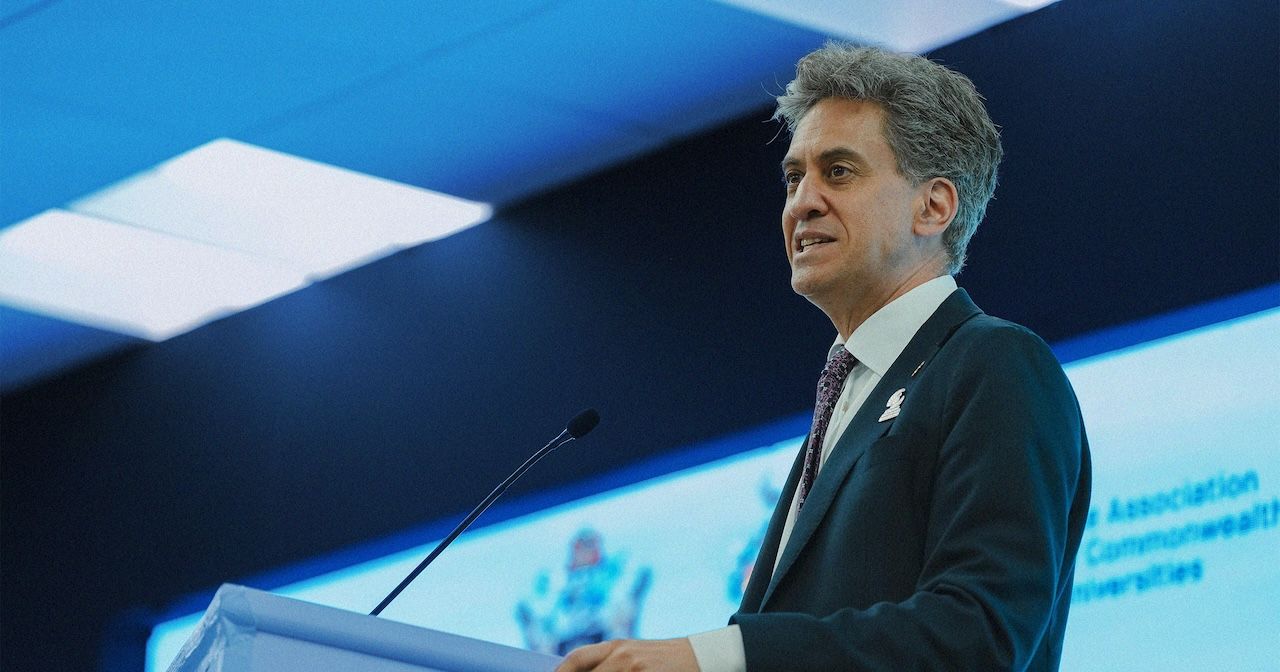
Artwork: Dosain
2 hours ago
I have spent much of the last quarter century living and working in Commonwealth countries or countries that wanted to join the Commonwealth. One of the things I have learned is, bizarrely, that the Commonwealth is quite difficult to explain.
It is not an alliance. It is not a trading bloc. And with 56 countries and more than 2.5 billion people, its members certainly do not agree about everything.
But I think that, in some ways, is the point.
The Commonwealth brings together an extraordinarily varied collection of countries, large and small, developed and developing, from every part of the world. What binds them together is not uniformity, but a long-established habit of talking to each other, a set of shared values and, at its best, a willingness to turn those relationships into something practical.
That seems particularly relevant from where I sit in Malé.
Maldives returned to the Commonwealth in 2020. One very tangible consequence is that Maldivians can once again apply for Commonwealth Scholarships. This year another Maldivian was selected for a Commonwealth Master’s Scholarship.
I like that example because it cuts through some of the grander language that inevitably surrounds international organisations. For one person, a Commonwealth Scholarship can be life-changing. And when that person returns home with new knowledge, experience and friendships, Maldives benefits too.
There are of course bigger challenges where the Commonwealth can make a difference.
Spend any length of time in Maldives and it is impossible not to understand the importance of the ocean. It is a source of food, livelihoods, identity and unimagined, perhaps unimaginable, natural beauty. It is also inseparable from the workings of an economy in which tourism plays such an important role.
And, sadly, it leaves Maldives acutely exposed to climate change.
For a Small Island Developing State, climate change is not an abstract debate about something that might happen in a few decades. The practical questions are much more immediate. How do you make islands and infrastructure more resilient? How do you protect the marine environment while creating jobs and growth? And how does a relatively small country navigate an extraordinarily complicated international climate-finance system?
These are areas where cooperation matters. Maldives is a member of the Commonwealth Clean Ocean Alliance, and the Commonwealth Climate Finance Access Hub helps vulnerable countries build capacity and develop projects capable of attracting investment. The UK and Maldives are also working together on marine conservation, ocean governance and sustainable growth in the blue economy.
That is the sort of Commonwealth I find most convincing: practical, collaborative and focused on problems which individual countries cannot easily solve on their own.
There is another side to it too. Commonwealth countries have made commitments to democracy, good governance and the rule of law. We will not always agree about how those principles should be applied, and no Commonwealth country can claim perfection. But maintaining a forum in which those conversations can take place frankly and respectfully has genuine value, particularly at a time when the international environment has become more divided.
That was part of the discussion as Commonwealth leaders met in Antigua and Barbuda for this year's Heads of Government Meeting. The UK's priorities there were economic resilience and growth, climate resilience and democratic resilience. The summit is now over. The focus now is what happens next.
For the UK and Maldives, there is plenty to do. Maldives has long punched above its weight as a voice for Small Island Developing States. With COP31 underway in Antalya, there is more that we can and should do together on climate finance, adaptation, clean energy and ocean resilience.
And there will be countless less visible connections too: students studying abroad, businesses finding partners, officials exchanging expertise, athletes competing and people discovering that they have rather more in common than they expected.
Perhaps that is the Commonwealth's real strength. It doesn't require 56 countries to agree about everything. It gives them reasons to keep talking, opportunities to work together and, more often than you might think, the ability to get useful things done.
For me, that is more than enough reason to keep investing in it.
Nicholas David Low is the UK's High Commissioner to the Maldives.
All comment pieces are the sole view of the author and do not necessarily reflect the editorial policy of the Maldives Independent. If you would like to write an opinion piece, please send proposals to editorial@maldivesindependent.com.
Discussion
No comments yet. Be the first to share your thoughts!
No comments yet. Be the first to join the conversation!
Join the Conversation
Sign in to share your thoughts under an alias and take part in the discussion. Independent journalism thrives on open, respectful debate — your voice matters.
Support Independent Journalism
Help us keep the news free and fearless
Give once
$
or
Become a memberfrom $5/month