

Too many players, not enough chairs: the Maldives' looming crisis
The music will stop: what Turchin's cycles of collapse tell us.
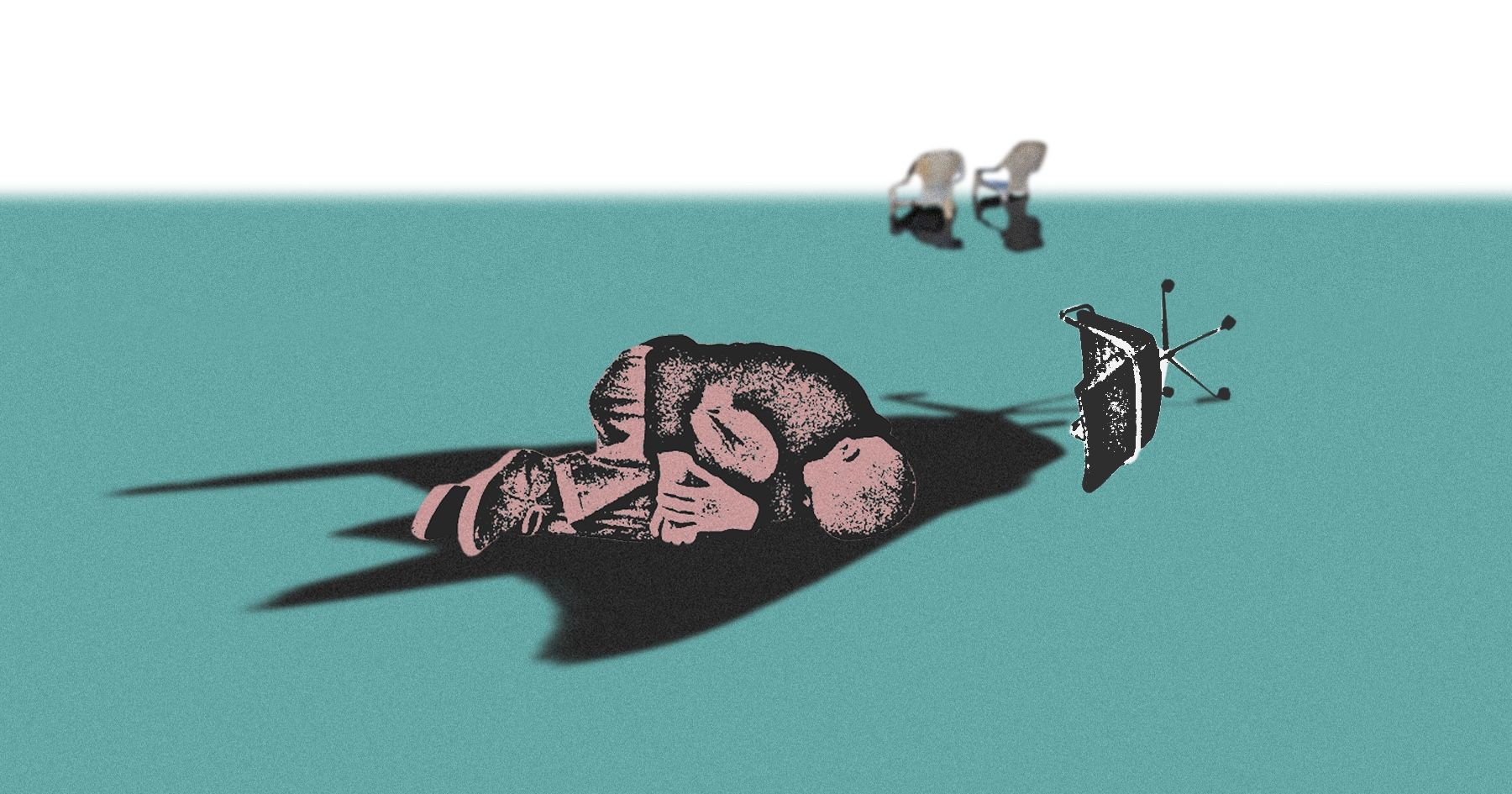
Artwork: Dosain
21 Jun, 14:46
To the outside world, the Maldives remains a pristine picture-postcard escape – a fragmented constellation of luxury resorts floating safely above geopolitical storms. But back in the congested urban grid of Greater Malé, and across the localised island communities, a far more volatile domestic reality is simmering. Our political commentators usually analyse this friction through a narrow lens: personalised political rivalries, the shifting alliances of the ruling elite, or the heavy-handed influence of foreign loans.
However, if we lift our gaze above the daily political theatre and apply the macro-historical frameworks found in Peter Turchin's groundbreaking 2023 book End Times, a deeply unsettling picture emerges. Turchin, a complexity scientist trained as a theoretical biologist who founded cliodynamics (the mathematical modelling of historical societies), argues that human societies experience predictable cycles of stability and collapse. At the heart of his structural-demographic theory are two twin engines of instability: popular immiseration and elite overproduction.
When these two forces peak simultaneously, the result is almost always social turbulence, institutional decay and political violence. Looking candidly at the contemporary Maldives, it becomes clear that our nation is structurally on the exact same trajectory.
The grinding gears of popular immiseration
Turchin defines popular immiseration not merely as absolute poverty, but as a widening gap between a population's economic expectations and their actual material reality. It happens when an economy grows, but the fruits of that growth are heavily concentrated at the very top, while the purchasing power, standard of living and economic security of the working and middle classes drastically shrink.
For decades, the Maldives has boasted a high GDP per capita relative to its South Asian neighbours, driven almost entirely by luxury tourism. Yet the average Maldivian feels progressively poorer.
The hyper-concentration of economic activity in the Greater Malé area has created an artificial, suffocating scarcity of housing. Greater Malé holds more than 40 per cent of the national population, only a fraction of whom own land on the small island; the rest are forced to rent at exorbitant prices, with young families handing over more than half of their monthly income to landlords. Meanwhile, global inflation, a volatile domestic currency and structural state debts have dramatically driven up the cost of basic food items, utility services and healthcare.
The economic model itself functions as a funnel of wealth away from the populace. The vast billions generated by the tourist industry bypass the domestic labour market; resorts are predominantly foreign-owned or controlled by a handful of local tycoons, and much of the operational labour is outsourced to a vulnerable, low-wage migrant workforce. The local youth, despite being highly literate and digitally connected, are locked out of meaningful economic advancement. They face a job market bifurcated between low-paying, precarious service work and heavily rationed civil service positions. This is textbook popular immiseration: a population that is increasingly educated, structurally squeezed and profoundly disillusioned.
Elite overproduction and the game of chairs
If popular immiseration creates the dry tinder of revolution, Turchin argues that elite overproduction provides the spark. This concept refers to a phase where a society produces far more aspirants to elite status – wealthy individuals, university graduates and political contenders – than the system has stable, lucrative positions to accommodate.
In End Times, Turchin uses a simple game of musical chairs to illustrate the danger. To borrow his image: if you have 10 players and nine chairs, the game is orderly. But if you increase the number of players to 50 while keeping the chairs at nine, the competition becomes cutthroat. The players stop respecting the rules, they start knocking over the furniture, and eventually the game devolves into a free-for-all brawl.
The Maldives has reached a point of hyper-elite overproduction. Over the last two decades, a vast expansion of higher education, combined with the rapid accumulation of wealth among a new class of tourism-enriched brokers, has created a massive cohort of individuals who expect power, influence and state patronage.
Because our economy is structurally narrow – lacking robust industrial, technological or corporate sectors – the ultimate "chair" everyone is fighting for is state power. The government is the ultimate dispenser of wealth, fishing licences, resort leases and high-paying board seats.
Consequently, the political class has expanded exponentially. We see this in the ballooning size of political appointments under successive administrations. Every new president must hand out hundreds of state-minister and political director roles – political appointees now run well over 1,000 – just to appease the ravenous appetite of the coalition partners who helped them win.
But the state cannot manufacture enough chairs to keep up with the supply of aspirants. For every political ally rewarded with a diplomatic posting or a lucrative infrastructure contract, there are dozens of bitter, passed-over contenders. These frustrated, surplus elites have no incentive to maintain the stability of the system. Instead, they become "counter-elites", actively working to subvert the government, exploit public anger and weaponise popular immiseration to orchestrate the next political upheaval.
The breakdown of the social compact
When elite overproduction and popular immiseration collide, the political landscape undergoes a dangerous mutation. The ruling elites become desperate to hold onto their chairs, often turning to authoritarian measures, judicial manipulation or state-sponsored bribery to suppress their rivals. At the same time, the counter-elites drop all pretences of democratic norms, relying on hyper-partisan media, radical populism and systemic obstruction to delegitimise the sitting government.
We have watched this exact script play out over the last decade in the Maldives. Electoral transitions have rarely brought structural peace; instead, they trigger vindictive cycles of political prosecutions, shifting coalition betrayals and volatile swings in foreign policy depending on which elite faction has captured the state. The institutions meant to provide systemic checks and balances – the parliament, the judiciary, the anti-corruption bodies – are treated merely as weapons in an elite tribal war.
While the elites fight their vicious game of musical chairs, the structural vulnerabilities of the Maldives are ignored. The existential threat of climate change, the ticking time bomb of sovereign debt defaults and the slow collapse of the social safety net are secondary concerns to a political class consumed by the immediate anxieties of survival and self-enrichment.
Can we break the cycle?
The core warning of Peter Turchin's End Times is that these structural cycles do not self-correct smoothly. If left unaddressed, they almost always culminate in a structural crisis – a breaking point marked by state insolvency, civil unrest or institutional collapse.
If the Maldives is to avoid this fate, our political discourse must move beyond the superficial obsession with personalities. It is not enough to simply replace one ruling party with another if the underlying machinery remains unchanged.
Averted crises historically require the elites to do the most unnatural thing: willingly give up a portion of their privileges to re-stabilise the system. For the Maldives, this means implementing aggressive structural reforms to curb popular immiseration, such as meaningful wealth and corporate taxation on the tourism sector, direct state investment in genuinely affordable housing, and a deliberate decentralisation that provides economic autonomy to the outer atolls.
Simultaneously, we must cool the engines of elite overproduction by drastically reducing the size of the political state apparatus, curbing patronage networks and establishing strict, transparent meritocracies that strip the state of its role as an elite piggy bank.
The current peace in our islands is an illusion sustained by the quiet wealth of isolated tourist islands. But history, as Turchin warns, is unforgiving. If the Maldivian state continues to squeeze its populace while producing a volatile surplus of power-hungry elites, the music will eventually stop – and our fragile democracy will find itself without a chair.
Mohamed Mamduh is a co-founder of Hotelier Maldives and presently managing editor at Maldives Wellness Review and managing partner at Maldives Wellness Promoters, a company that markets the Maldives for wellness travellers.
All comment pieces are the sole view of the author and do not necessarily reflect the editorial policy of the Maldives Independent. If you would like to write an opinion piece, please send proposals to editorial@maldivesindependent.com.
Discussion
No comments yet. Be the first to share your thoughts!
No comments yet. Be the first to join the conversation!
Join the Conversation
Sign in to share your thoughts under an alias and take part in the discussion. Independent journalism thrives on open, respectful debate — your voice matters.
Support Independent Journalism
Help us keep the news free and fearless
Give once
$
or
Become a memberfrom $5/month

