

The police reform that wasn't "botched"
Critics are judging a marathon by the first mile: ex-police chief.
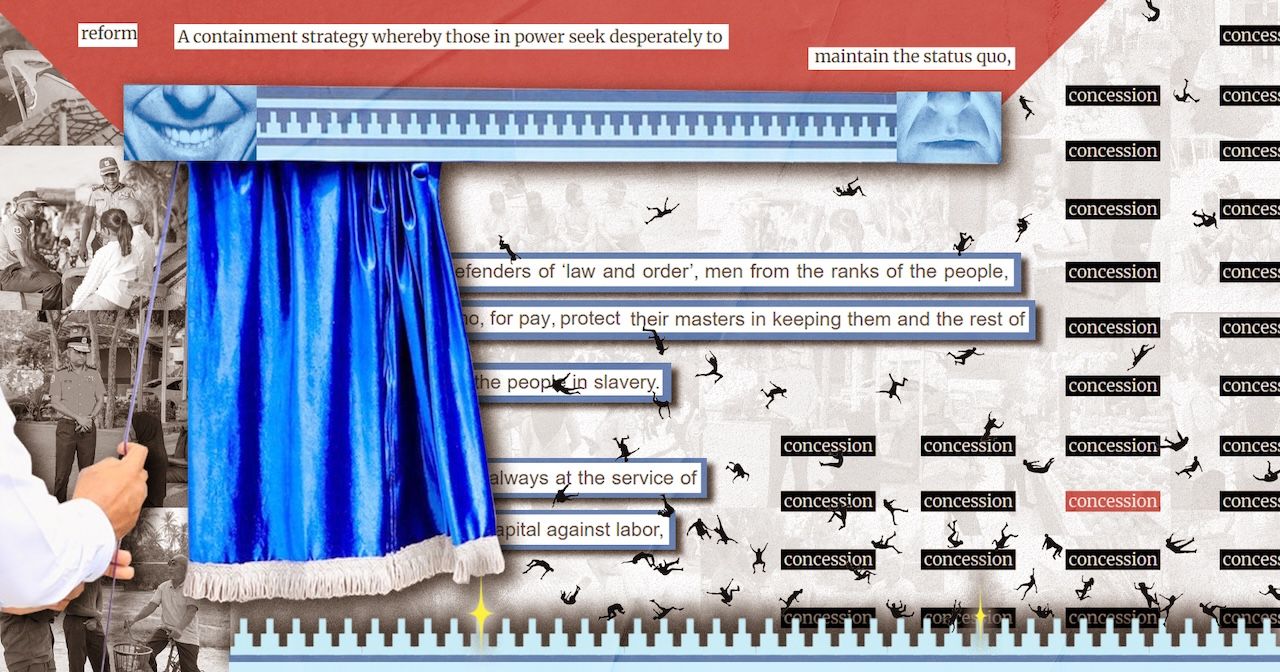
Artwork: Dosain
23 Mar, 16:18
Editor's note: This op-ed is a response to Saif Fathih's column 'Too late to lament: Solih's botched police reform.'
Recent commentary arguing that police reform under President Ibrahim Mohamed Solih’s administration was “botched” deserves a closer look.
While critical oversight is a cornerstone of any functioning democracy, these labels often oversimplify a deeply complex institutional transition. To evaluate the progress of the Maldives Police Service (MPS) fairly, one must look beyond political headlines and consider the historical and structural realities of building a modern security apparatus in a young democracy.
It is important to remember that the MPS, as a civilian entity, is in its institutional infancy. Until 2004, policing was a function of the National Security Service, operating under a military command structure. For an organization to pivot from decades of paramilitary tradition to a rights-based, civilian-led model is not a task for a single legislative cycle. Mature democracies, such as the United Kingdom, have spent nearly two centuries refining their policing models through constant trial, error, and legislative adjustment. Expecting a small island state to achieve total cultural and structural transformation within five years is not just optimistic; it is disconnected from the reality of public administration.
The foundation of reform: the 2020 Police Act
The most significant achievement of the Solih administration was the ratification of the Maldives Police Service Act of 2020. This was not a minor administrative update; it was a comprehensive attempt to redesign the DNA of the institution. The Act introduced several structural pillars intended to align the service with international democratic standards.
Chief among these changes was the introduction of external oversight through a Police Board. By establishing an independent body to oversee promotions and leadership appointments, the law aimed to insulate the service from the political whims that have historically plagued Maldivian institutions. Furthermore, the Act created a clearer legal framework for accountability, emphasizing professionalism and public centric service. Whether one agrees with every specific provision, the 2020 Act represented a serious, formalized effort to move policing away from its legacy of centralized authority and toward a model of transparency.
The friction of implementation
Where critics often find ammunition is in the implementation phase. However, friction in implementing reform is not a sign of failure; it is often a sign of the reform’s depth. Changing a police organization is notoriously difficult worldwide because these institutions develop rigid internal cultures. When new laws alter the path to leadership or impose stricter oversight, internal resistance is an inevitable byproduct.
In the Maldives, this friction was amplified by legal disputes regarding the removal and re-appointment of senior officers. These tensions created a period of institutional uncertainty, which critics labeled as mismanagement. In reality, these are the standard “growing pains” of structural reform. When an administration attempts to disrupt the status quo to enforce higher standards, the status quo fights back. To suggest that these challenges render the reform “botched” ignores the fact that significant change rarely happens without institutional turbulence.
Policing in a polarised environment
Another factor often neglected in the “success vs. failure” debate is the highly polarised political landscape of the Maldives. In an environment where political competition is fierce and public institutions are frequently weaponised in political narratives, the police service occupies an impossible position.
When the police exercise their authority, they are often accused of political bias by the opposition. Conversely, when they show restraint, they are accused of weakness by those in power. In such a climate, the public perception of the police is rarely a reflection of the institution’s actual professional progress; rather, it is a reflection of the political grievances of the day. This makes it difficult for the public to notice incremental improvements in training, community engagement, and operational transparency that occurred during the Solih administration.
The long arc of change
Institutional reform is a marathon, divided into distinct stages. The first stage is the legal framework; changing the laws to set a new standard. The second is structural; reorganizing departments and oversight to match the new law. The third, and most difficult, is cultural; embedding professional norms so deeply that they become the default behavior of every officer on the street.
The Maldives is currently navigating the transition between the structural and cultural stages. Critics who label the reform a failure are often judging the institution on the final stage: cultural transformation, while ignoring that the first two stages were successfully initiated. Cultural change takes decades, not years. It requires a consistent commitment to the principles of the 2020 Act across multiple administrations.
A broader perspective
Describing the reform effort as a failure oversimplifies a nuanced reality. The Solih administration initiated the most serious attempt to modernize Maldivian policing since the service’s inception. It established the legal architecture for accountability and dared to challenge entrenched institutional hierarchies.
The true test of reform is not whether the institution reached perfection in a single term, but whether the trajectory has shifted toward greater independence and professionalism. While the process was imperfect and remains incomplete, the Maldives Police Service is operating under a more robust legal and oversight framework today than it was a decade ago. Building a democratic police force is not an event with a fixed end date; it is an ongoing process of evolution. The story of Maldivian police reform is far from over, and its current status is much more promising than the “failed” narrative suggests.
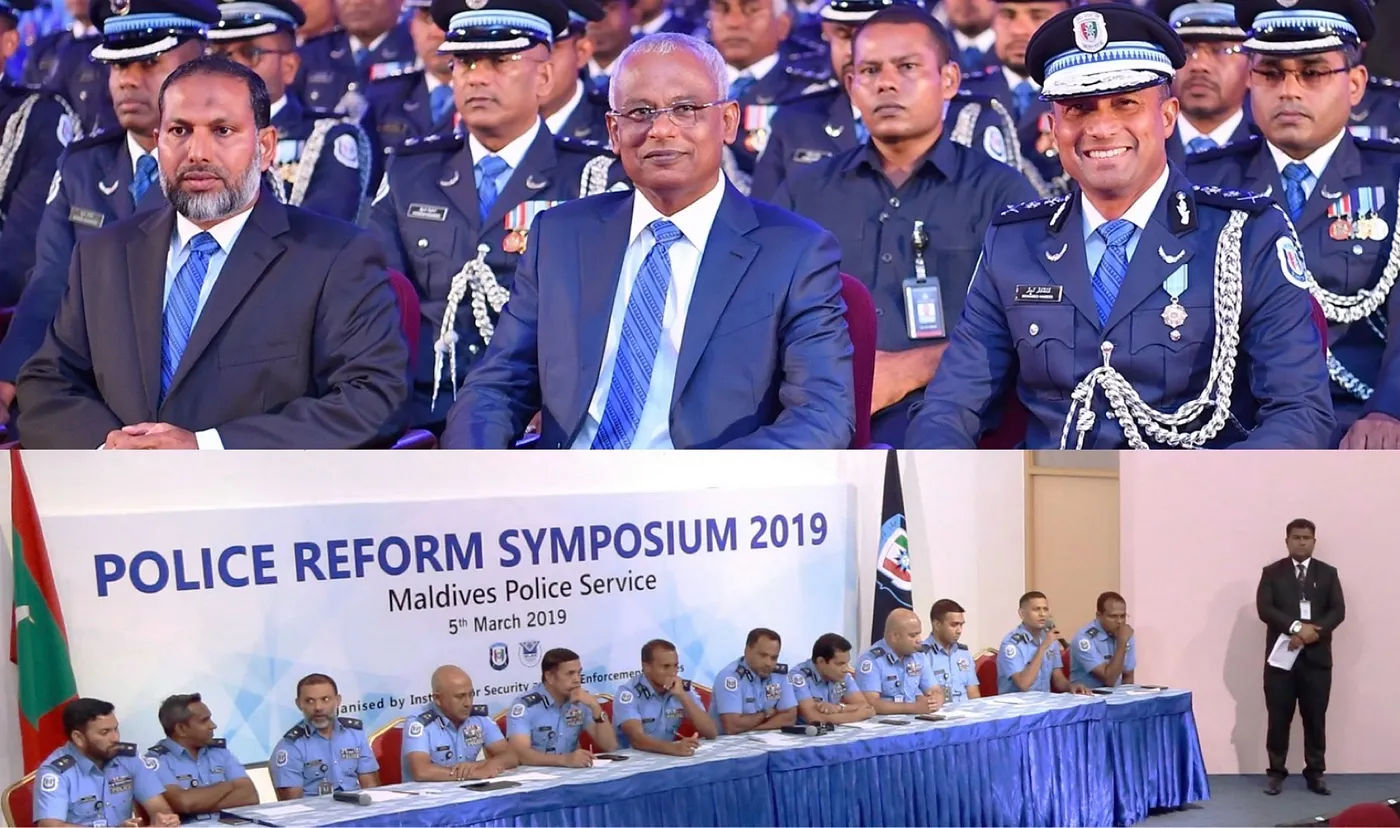
Mohamed Hameed served as the commissioner of police from 2019 to 2023.
All comment pieces are the sole view of the author and do not reflect the editorial policy of the Maldives Independent. If you would like to write an opinion piece, please send proposals to editorial@maldivesindependent.com.
Discussion
No comments yet. Be the first to share your thoughts!
No comments yet. Be the first to join the conversation!
Join the Conversation
Sign in to share your thoughts under an alias and take part in the discussion. Independent journalism thrives on open, respectful debate — your voice matters.
Support Independent Journalism
Help us keep the news free and fearless
Give once
$
or
Become a memberfrom $5/month

