
Strategic autonomy or strategic exposure?
Muizzu’s Pakistan deals risk drawing the Maldives into others’ rivalries.
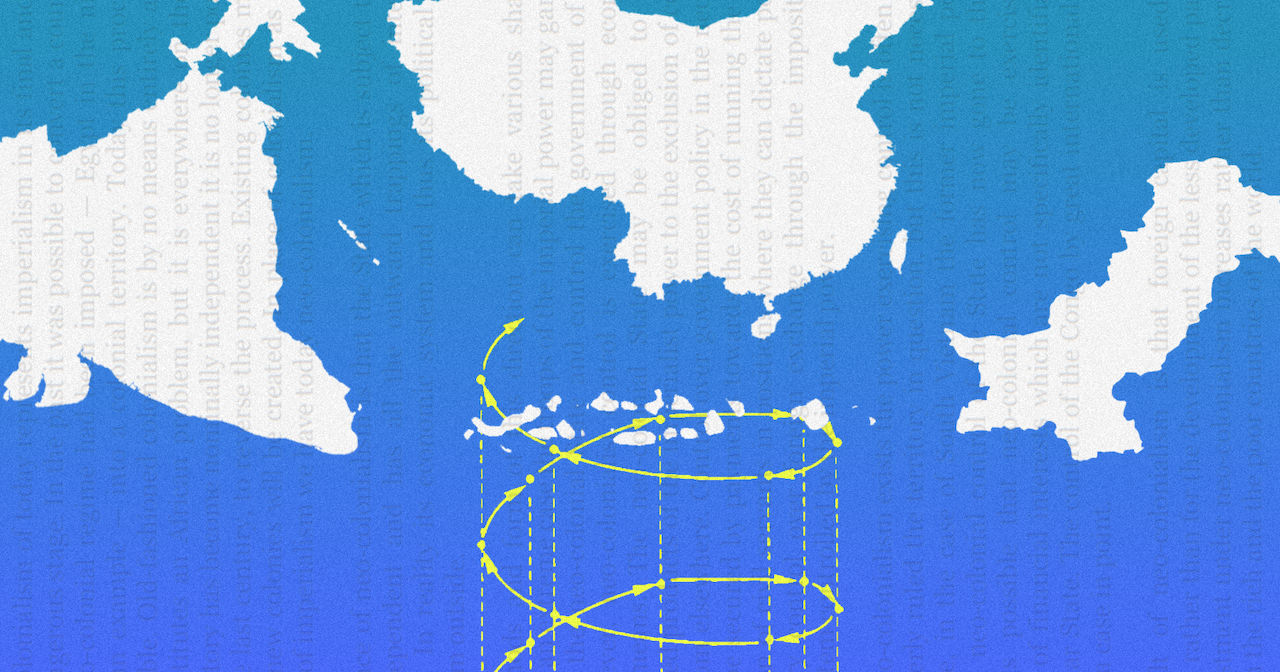
Artwork: Dosain
1 hour ago
Almost all Maldivians will tell you that they want their country to remain independent and sovereign, including when it comes to foreign policy decisions.
“Strategic autonomy” is the catchphrase often used in foreign policy circles. At its core, it means the country being free to make the foreign policy and security decisions it wants, and act without relying too much on foreign powers.
But the actions by sitting President Mohamed Muizzu, who recently returned from a state visit to Pakistan where he signed a raft of agreements including in defence and maritime security, raise questions about whether Maldives is losing that very ability to remain strategically autonomous.
A government has every right to review foreign military arrangements. But there is a difference between asserting sovereignty through careful diplomacy, and pursuing it through behaviour or rhetoric that risks undermining trust with a vital neighbour.
Let’s not forget that during Muizzu’s campaign for president in 2023, he rode to power on the back of the “India Out” movement, making the presence of Indian military personnel in the Maldives a central political issue. His government subsequently sought their withdrawal. Following his state visit to China in January 2024, his public remarks further heightened tensions with India.
The “India Out” campaign grossly oversimplified the nature and purpose of Indian aviation assets operating in Maldives. The two Indian helicopters and the Dornier aircraft provided important capabilities, including medical evacuation, search and rescue, and emergency assistance. The helicopters, able to reach remote islands without airstrips, saved the lives of countless Maldivians – a point Muizzu’s India Out campaign conveniently chose to overlook.
Their use also involved defence and maritime-security considerations, making it essential to examine the actual mandates, command arrangements and safeguards governing their operation.
During my tenure as defence minister, I attended the relevant parliamentary committee to brief members on agreements with India. During Mohamed Ghassan Maumoon’s tenure as defence minister, he also attended the committee to brief parliament on those agreements. This is how sensitive defence and security arrangements should be handled: through parliamentary engagement, explanation and accountability, while protecting information that genuinely requires confidentiality.
India is our closest neighbour, a major power and an important partner in our security and economic environment. Our maritime security, emergency response, medical evacuation, search and rescue, trade, essential supplies and economic stability are connected to the health of our relationship with India. Maintaining constructive relations with India is not a concession of sovereignty; it is essential to our national interest.
Muizzu’s recent trip to Islamabad will have, no doubt, strained relations with India. We should not exaggerate India’s recent statement regarding that trip, or assume that punitive action is inevitable. But neither should we dismiss its strategic significance.
Pakistan is a sovereign country with which the Maldives can maintain constructive relations. The issue is not whether we should cooperate with Pakistan. It is whether President Muizzu has adequately assessed how the agreements he signed on his trip may be interpreted in New Delhi, given the way in which he came to power and the longstanding differences between India and Pakistan.
That context matters. The government first made the presence of Indian personnel a defining symbol of sovereignty and then pursued new defence and maritime-security arrangements with Pakistan. Even if each decision can be defended separately, their combined effect may create uncertainty about the Maldives’ strategic direction.
Small states must be particularly careful about how their actions are perceived. Agreements that offer legitimate benefits in training, technology, maritime security or cybersecurity can also carry wider diplomatic implications. Their consequences depend on their actual provisions, implementation and safeguards, not simply the announcements made at signing ceremonies.
This is why the Government must explain what the agreements signed in Pakistan entail, what national security objectives they serve, what obligations they create and what safeguards protect Maldivian interests. Parliament must have appropriate oversight, as it has had through briefings by successive defence ministers on agreements with India.
There is also an economic dimension that cannot be ignored. Tourism is the backbone of our economy, while trade, essential imports, connectivity and development cooperation are vital to our stability. A deterioration in regional relationships risks these. This does not mean that India will necessarily take adverse measures. It means that a responsible government must assess possible consequences before making strategic commitments.
The president must also explain how his government intends to maintain a coherent foreign policy across its relationships with India, China and Pakistan. Strategic autonomy should allow the Maldives to cooperate with different partners without becoming dependent on any one of them or being drawn into their disputes.
The Maldives cannot control the rivalries of larger powers. But we can control whether our own decisions unnecessarily expose us to them.
President Muizzu came to power promising to defend sovereignty. He must now demonstrate that his policies are delivering security and stability, rather than creating uncertainty about the country’s strategic direction.
We in the opposition have a responsibility to scrutinise these decisions and demand answers. This is not about defending one foreign power against another. It is about asking whether the government has a clear strategy, whether it has properly assessed the risks, and whether the Maldivian people and parliament are being given sufficient information about commitments made in their name.
The real measure of an independent foreign policy is not how forcefully a government declares its independence, but how effectively it safeguards the country’s freedom of action, security and prosperity.
Strategic autonomy must give the Maldives greater freedom and security, not leave us wondering whose rivalry we may have to manage next.
Mariya Ahmed Didi is a former lawmaker and minister of defence.
All comment pieces are the sole view of the author and do not necessarily reflect the editorial policy of the Maldives Independent. If you would like to write an opinion piece, please send proposals to editorial@maldivesindependent.com.
Discussion
No comments yet. Be the first to share your thoughts!
No comments yet. Be the first to join the conversation!
Join the Conversation
Sign in to share your thoughts under an alias and take part in the discussion. Independent journalism thrives on open, respectful debate — your voice matters.
Support Independent Journalism
Help us keep the news free and fearless
Give once
$
or
Become a memberfrom $5/month

